Is Tether the Key to Crypto’s Future? ?
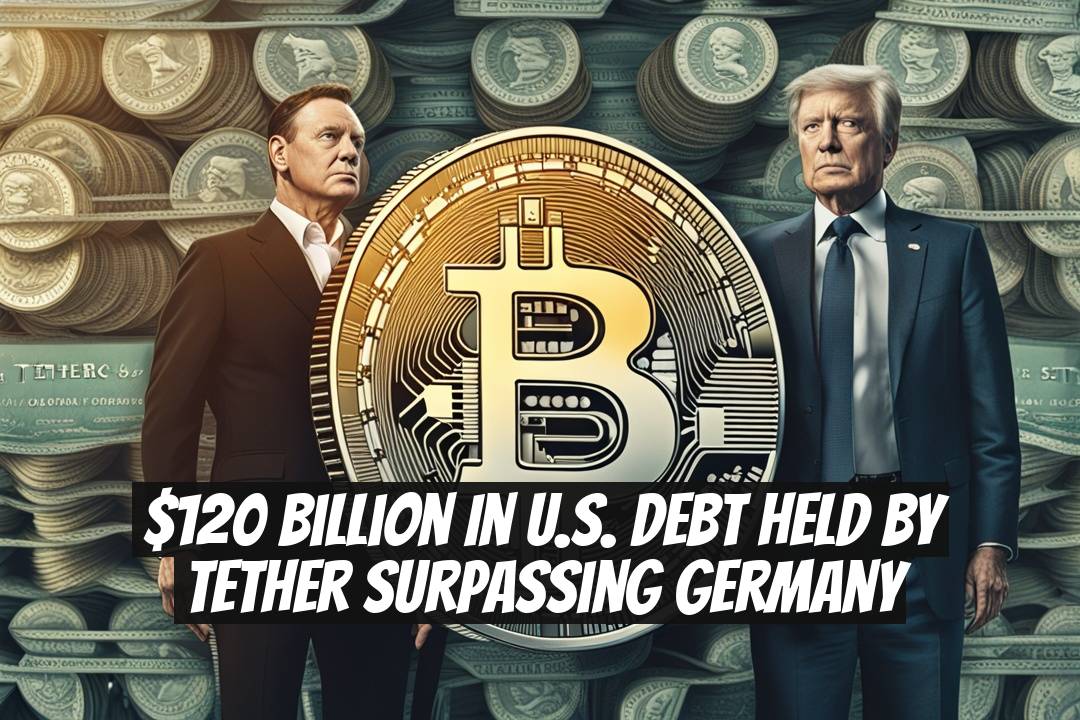
Hey there, fellow crypto enthusiast! Let’s dive into a topic that’s sparking quite a conversation in our community: Tether and its colossal holdings in U.S. debt. You heard it right! Tether now splashes a massive $120 billion in short-dated U.S. Treasuries, putting them ahead of Germany and securing a hefty spot as the 19th largest holder globally.
Key Takeaways:
- Tether holds $120 billion in U.S. debt, surpassing Germany.
- They made $1 billion in profit last quarter, investing wisely in T-bills and gold.
- Growing demand for stablecoins like USDT supports the U.S. dollar and Treasury sales.
Subscribe to our Social Media for Exclusive Crypto News and Insights 24/7!
So, what does this mean for us as potential investors? Well, let’s dig a little deeper!
Tether’s Treasure Trove: The Stability Shield ?
The recent data shows Tether, the issuer of USDT, has cultivated a rather conservative balance sheet while still moving dollar liquidity at scale. Remarkably, Tether’s reserve consists of about $98.5 billion in T-bills, plus around $23 billion in repurchase agreements and cash equivalents.
Imagine that moment when you’ve found stability in the middle of financial chaos-Tether’s gold investments cushioned them during the tumultuous crypto market swings. If you’ve ever watched your investment plummet, you know how comforting that stability feels. Knowing that Tether has a buffer that can stabilize USDT even when the broader crypto market shakes is definitely something worth considering.
Personal Insight: In my humble opinion, the more resilient stablecoins are, the better off we all are as investors. It’s like having a safety net while tightrope walking over a sea of volatility.
The Regulatory Ripple Effect ️
Now, let’s shift gears a bit and talk about regulatory developments. Everyone’s got their eyes glued to Congress as they deliberate over the Stablecoin Transparency and Accountability for a Better Ledger Economy (STABLE) Act. If enacted, this legislation could mandate that all stablecoin issuers disclose detailed reserve information.
You might be thinking, “What’s in it for me?” Well, a clear regulatory framework could potentially attract more capital into fully backed stablecoins like USDT. Tether themselves have hinted that any fresh inflow would likely fuel more Treasury purchases, interlinking stablecoin growth with U.S. debt markets.
But here’s the kicker: what happens if lawmakers drag their feet? Coinbase’s CEO, Brian Armstrong, is warning us that $240 billion worth of institutional capital could pack its bags and head for greener pastures abroad.
Practical Tip: Keep an eye on regulatory news and developments. They can shake up the entire market landscape. Consider setting up alerts or subscribing to trusted crypto newsletters to remain informed.
The Ripple of Demand ?
You know what’s fascinating? The total stablecoin market cap has skyrocketed to $243 billion, up over 72% from last year! Tether not only leads the pack with 62.35% market dominance but also boasts a whopping $152 billion valuation. That’s one impressive growth spurt!
This increase is fueling wallet activities, and you can see more transactions flying around. The implication is that stablecoins are becoming more integrated into everyday financial operations, and that’s a promising sign.
Tether & the U.S. Debt Market: Friends or Foes? ?

Now, let’s tackle the big juicy question-are stablecoins like Tether becoming a support pillar for U.S. debt markets, or is this relationship more like an on-and-off romance? Some analysts argue that the massive buying spree could foster a more connected bond between stablecoins and the demand for U.S. Treasury bills.
Even if regulatory haze pushes stablecoin operations offshore, there’s an undeniable reality. The need for dollar-denominated assets remains because stablecoins’ value relies heavily on their dollar peg.
Emotional Insight: I can’t help but feel a sense of optimism that stablecoins could emerge as a robust vehicle for financial innovation. But, there’s also tension in the air. Our beloved crypto world is navigating through regulatory uncertainties, which keeps all of us on our toes.
What’s the Bottom Line? ?
So, where do we stand? Tether’s financial muscle and strategic investments in U.S. Treasuries present a fascinating dynamic. It’s a bit like watching a thrilling play unfold; will Congress step up and give these assets a place at the table, or will they let opportunities slip through their fingers?
As you ponder over what your next move will be, think about this: How would the crypto landscape look if stablecoins solidified their role as key players in global finance?
Are you ready to embrace the future, or will you let it pass you by while you’re caught up in the daily grind? Let’s chat about it!