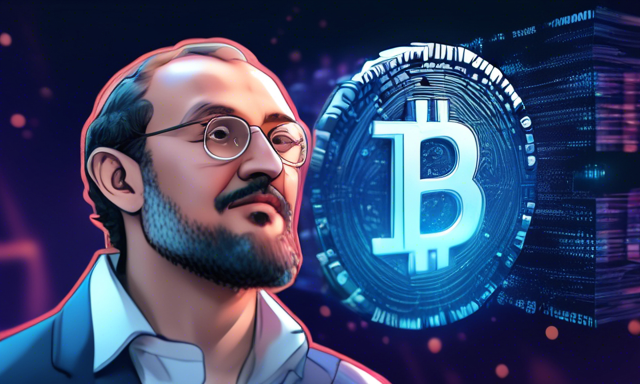
Charles Hoskinson Explores the Intersection of Blockchain and AI
At the Ai4 2024 conference held at MGM Grand, Las Vegas from August 12-14, Cardano founder Charles Hoskinson delivered a keynote speech. The speech centered on the challenges and opportunities inherent in merging blockchain technology with artificial intelligence (AI). Romain Pellerin, CTO at Input Output, provided a summary of the key points discussed during Hoskinson’s address.
Blockchain as the Foundation for AI
- Hoskinson proposed that blockchain technology could serve as a foundational layer for AI by creating a decentralized marketplace for data, models, and inference.
- By leveraging blockchain’s capabilities as an incentive and trust layer, AI could establish decentralized marketplaces for various components.
- The fusion of blockchain and AI has the potential to revolutionize how data, models, and inference are exchanged and utilized in the digital landscape.
Subscribe to our Social Media for Exclusive Crypto News and Insights 24/7!
Evolution and Challenges of Blockchain
- During his speech, Hoskinson outlined the evolution of blockchain technology from its early stages to the current era.
- He highlighted the obstacles faced by blockchain in transitioning from a system of transferring information to one that deals with transferring value.
- The decentralized nature of blockchain technology presents governance challenges, especially in the realms of autonomy and control.
Governance and Autonomy in Blockchain and AI
- Hoskinson emphasized the critical role of governance in both blockchain and AI technologies, particularly in decentralizing infrastructures.
- The need for innovative governance structures that balance decentralization with efficient management and integrity was underscored.
- Challenges related to data collection, sharing, and privacy were discussed, with tokenization and incentives proposed as potential solutions to these issues.
Data Privacy and Regulatory Concerns
- The intersection of AI and blockchain also raises concerns about data privacy, prompting the need for advanced solutions like fully homomorphic encryption.
- Hoskinson emphasized the importance of aligning these technologies with ethical and legal frameworks to ensure responsible development and deployment.
- Regulatory challenges faced by emerging technologies such as blockchain, AI, quantum computing, and synthetic biology were highlighted as areas of concern.
Practical Applications and Integration Challenges
- Hoskinson pointed out practical applications of blockchain within AI contexts, such as royalty management and vehicle identity systems.
- While integration of AI and blockchain faces technical challenges and the first-mover problem, complementary solutions could emerge to address these obstacles.
- By securing data and reducing hacking incidents, blockchain has the potential to address the data economy’s current dominance by monopolies in the West.
Future Prospects and Considerations
- In conclusion, Pellerin reflected on the technical and philosophical challenges of merging blockchain and AI.
- Harnessing the full potential of these technologies requires careful coordination, alignment of incentives, and a focus on governance, data privacy, and ethical concerns.
- The intersection of blockchain and AI presents both challenges and opportunities for innovation in the digital landscape.
Closing Thoughts on Cardano and the Future
At press time, ADA traded at $0.3382.