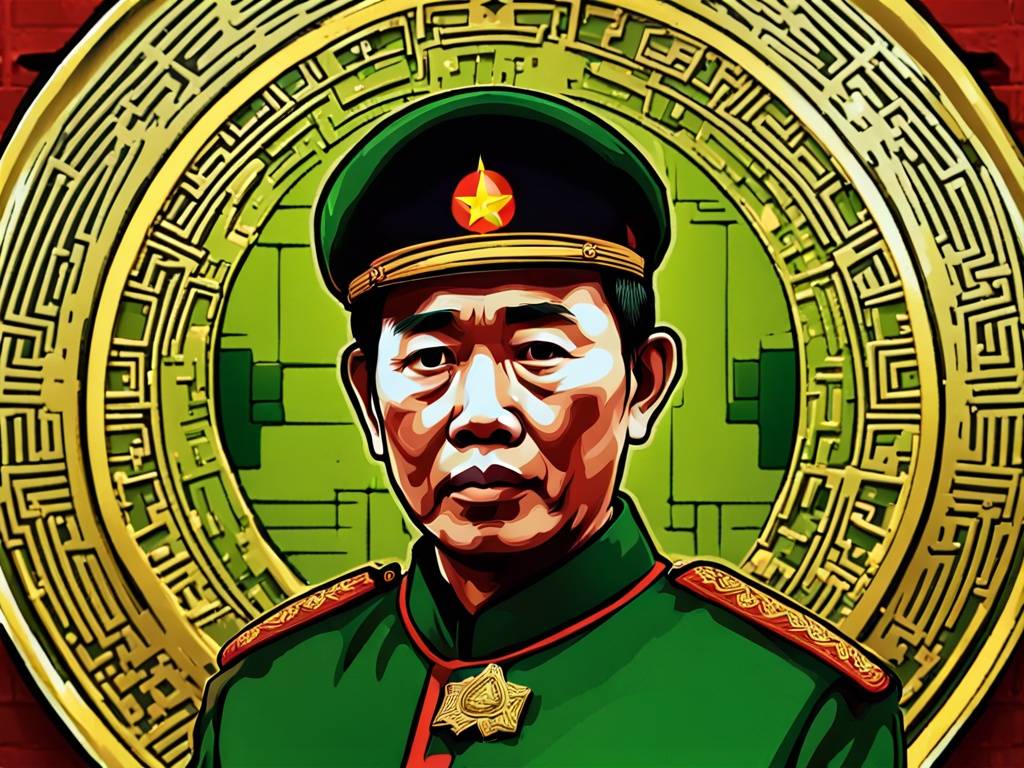
The Alarming Trend of Using High-Profile Accounts for Crypto Scams
Imagine chilling at a café with a warm cup of coffee, and you overhear a conversation about the latest cryptocurrency buzz. Now, picture this: a high-profile political figure, like Myanmar’s junta leader, suddenly endorsing a new cryptocurrency. It sounds thrilling, right? But wait-what if that endorsement is nothing but a sophisticated scam? This kind of scenario is becoming tragically common in the ever-evolving cryptosphere, and a recent incident involving Myanmar brings it into sharp focus.
Recently, the official X account of Min Aung Hlaing, the military leader of Myanmar, was reportedly hacked. Hackers seized this account to promote a fraudulent cryptocurrency, which they branded as the “first national crypto” of Myanmar. While at first glance, it might seem like an exciting development in the crypto world, the reality is more sinister. This event emphasizes the necessity of caution and education in a market notoriously vulnerable to deception.
### Key Takeaways
Subscribe to our Social Media for Exclusive Crypto News and Insights 24/7!
- The hack of Myanmar’s junta leader’s X account highlights a disturbing trend in crypto scams.
- The incident created a false sense of legitimacy around a potentially fraudulent cryptocurrency.
- Observers noted that state-sponsored digital currencies often contradict the principles of decentralization.
- Cybersecurity threats targeting political figures are on the rise.
- Vigilance and source verification are essential for crypto investors today.
### A Disturbing Pattern Emerges: Crypto Scams and Political Figures
On February 22, the seemingly official posts about this new cryptocurrency began to erupt in the digital realm. Hackers, leveraging the reputation of a political leader, shared wallet addresses and various details about launches that quickly raised red flags. Imagine being a casual observer, perhaps a novice investor who stumbles upon this announcement-initial excitement quickly turns into confusion as the posts are modified or deleted. The urgency and enthusiasm about this new national crypto morph into suspicion and distrust almost overnight.
What makes this scenario even more disconcerting is how it taps into existing fears around financial control and legitimacy. One user made a poignant observation that state-backed digital assets may primarily serve as an avenue for financial oversight rather than true innovation. Given that many countries under economic sanctions consider cryptocurrencies as a potential workaround for traditional financial systems, this brings into question the integrity of what appears to be “official” tokens.
### The Consequences of Digital Vulnerability
Isn’t it ironic? Cryptocurrency, often heralded as a bastion of decentralization and autonomy, is now facing threats from its very own fabric-scammers using the allure of these concepts to lure unsuspecting individuals. After all, if a government leader is associated with a coin, it must be above board, right? Wrong.
Take, for example, a coffee shop in your neighborhood that announces it’s launching a new specialty drink endorsed by a celebrity chef. Initially, the buzz builds up excitement, but it later turns out to be a ploy to offload subpar products. This kind of misrepresentation can lead to financial loss, and that’s exactly what fraudulent crypto promotions aim to do.
#### A Broader Spectrum of Concerns
This incident is not isolated. Similar attacks have plagued other nations, like a recent case where scammers impersonated Saudi Arabia’s Crown Prince to push fake crpyto. Even former political figures, such as Malaysia’s Mahathir Mohamad, have found their accounts hijacked for the same dubious purpose. Each time this happens, the credibility of cryptocurrencies takes a hit, leaving legitimate projects to bear the brunt of the fallout.
Here’s where it gets really interesting: Some analysts are suggesting that a misrepresentation like this could reshape how cryptocurrencies are perceived, particularly in countries that are geopolitically isolated and seek alternative financial routes. Nevertheless, using established figures for fraudulent schemes only serves to erode trust and may lead to tighter regulation of the crypto market at large-as seen with industries that have faced misdeeds.
### Staying Vigilant in a Sea of Misinformation
So, how do we, as potential investors, navigate this minefield? The answer lies in diligence. Pretend you’re a detective going through clues to uncover the truth about any cryptocurrency promotion. Investigate sources-check for official statements, verify wallet addresses, and consult community forums for opinions seasoned investors might have on such matters. Seek to understand the motives behind any token launch.
For instance, let’s imagine you’re excited about the next “big” thing in crypto, but remember your buddy Mike, who tried to invest in that new trendy on-demand car service only to have the entire venture crash before it even launched? It’s essential to learn from those experiences and channel that skepticism into your crypto explorations.
### Conclusion - Reflecting on the Future of Crypto
As the world of cryptocurrency continues to interweave with global politics, it’s clear that these incidents challenge our understanding of legitimacy and security. While the potential for cryptocurrency to empower individuals is immense, the ways in which it can be weaponized against them are equally alarming. As I sit here, contemplating the evolving landscape, I can’t help but ask: In a world ripe with misinformation, how can we learn to differentiate genuine innovation from mere opportunism?
Let’s make sure to tread carefully and keep our eyes peeled, because the crypto world is indeed a wild ride-one that demands both curiosity and caution.
And hey, if you’re still curious about the lurking dangers of scams in the crypto sphere, why not check out these key topics? You might find them quite illuminating:
Myanmar crypto hack, crypto scams, political figures fraud.