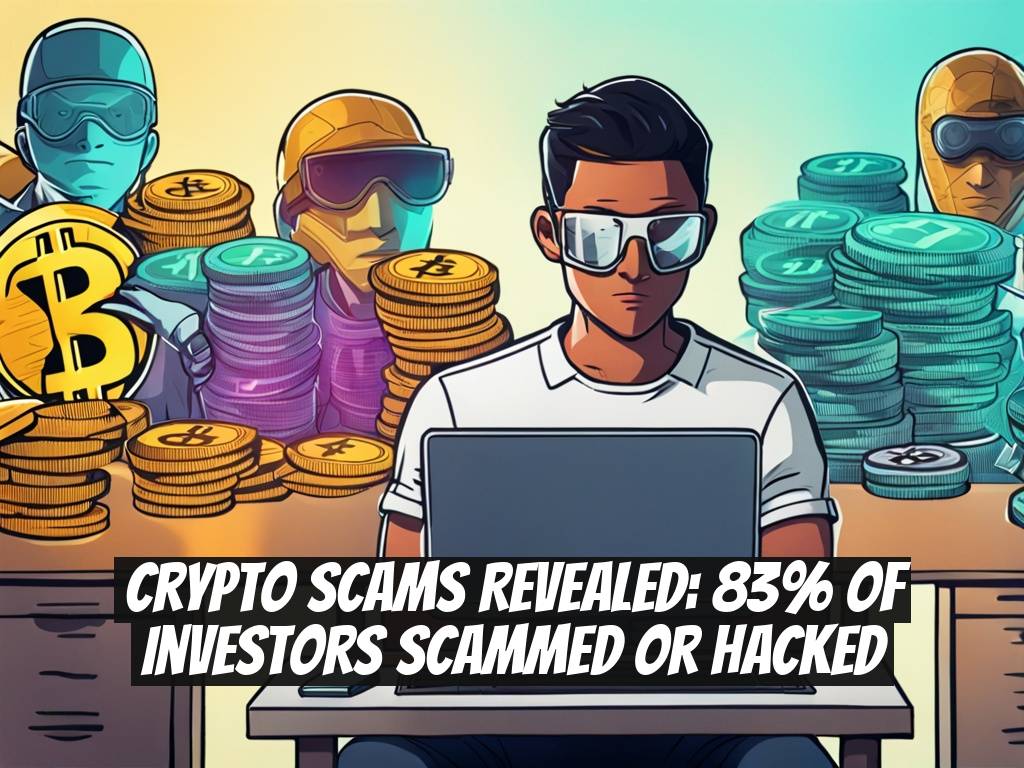
? Crypto Scams: The Shocking Reality for Investors in 2025 ?
When you step into the crypto world, it’s like diving headfirst into an ocean of opportunity and risk. You’re surfing the waves of innovation, but lurking beneath the surface are some serious predators-scammers waiting to drag you under. It’s not just a rumor; a study by ChainPlay and Storible is shaking things up, alerting us that an astounding 83% of cryptocurrency investors have faced the wrath of scams or hacks at least once by 2025. Now, how wild is that?
Key Takeaways:
- 83% of crypto investors have been scammed or hacked.
- Average loss per victim: $2,622.
- Social media impersonation accounts for 34% of scams.
- Centralized exchanges (CEX) incur greater financial losses compared to decentralized exchanges (DEX).
- AI technology is evolving to empower scammers, creating a new class of crypto hackers.
Subscribe to our Social Media for Exclusive Crypto News and Insights 24/7!
This is like showing your entire wallet to a pickpocket and hoping for the best; it’s not very smart, right? Just last week at my local coffee shop, I overheard some dudes discussing their wild gains and crazy losses, and it hit me-many folks are still oblivious to the lurking dangers.
?️️ The Scam Landscape: What’s Going On?

You know what’s heart-wrenching? To think that, on average, crypto investors can lose about $2,622 due to these scams. That’s a whole weekend binge in NYC or a few months of student loans for some! You might wonder where most of these tactics come from. Turns out, social media impersonation reigns supreme, racking up 34% of scams. Imagine seeing a fake account that looks just like your favorite crypto influencer talking about a “hot new investment” but it’s all smoke and mirrors.
Then you’ve got the more traditional methods, like hacking exchanges (21%) and phishing (18%). It’s frightening to think that almost every crypto project faces eight phishing attacks and seven fake Twitter accounts trying to deceive potential investors. This isn’t just casual trolling; it’s a well-planned attack exploiting human trust and the sheer excitement in the crypto space. Seriously, how many times have you clicked that "follow" button without double-checking?
? Centralized vs. Decentralized: Where the Hacks Hit Harder

Let’s break down the consequences further with some numbers, ’cause who doesn’t love a good stat? Recent analyses show that DEXs (Decentralized Exchanges) are attacked more frequently-64% of the time, to be exact. But here’s the kicker: CEXs (Centralized Exchanges) experience fewer attacks but suffer way higher financial damages. Picture this: CEX users reportedly lost over $26.4 billion, while DEX users lost around $800 million. So, while DEXs are under attack like a high school quarterback on prom night, CEXs are taking the brunt of the financial hit, nearly 27 times greater!
? AI: The Hacker’s New Best Friend

Now, when you think about the future of these scams, we can’t ignore the role of AI. Yeah, that same tech that’s revolutionizing everything from shopping to self-driving cars is now beefing up the skill set of hackers. AI bot software is capable of automating attacks, making them even more sophisticated than before. Imagine bots that can analyze vast amounts of data and execute complex plans without needing a human to push buttons-that’s genuinely terrifying. Basically, these bad boys can learn and adapt, crafting new types of cyber-attacks that leave us mere mortals in the dust.
It’s like fighting a fictional superhero who can anticipate your moves before you even think them! This dark side of tech is something we need to grapple with, especially when seeking safety in the crypto arena, which already feels like walking a tightrope in a hurricane.
Practical Tips to Stay Safe

Okay, enough doom and gloom. How do we combat this crazy scam landscape? Here are some practical pointers to keep your investment as safe as possible:
- Double-Check Accounts: Always verify that accounts are authentic. Look for that blue checkmark; trust me, it might save you some heartache.
- Use Hardware Wallets: Don’t keep all your assets on exchanges. Invest in hardware wallets for long-term holdings-think of them as your personal crypto safe.
- Educate Yourself: Scammers are betting on your ignorance. The more you know about how these scams work, the less likely you are to fall for them.
- Report Suspicious Activity: If you see something, say something! Report scams so others don’t get caught in the net.
- Stay Tight on Security: Enable two-factor authentication everywhere. Make it as hard as possible for criminals to get into your accounts.
? Final Thoughts
As we trudge through this wild west of digital currencies, it’s essential to stay vigilant and informed. The reality is that scams are always going to be part of the game. But by being aware and taking those extra precautions, you can certainly play it smarter.
So here’s a question to leave you pondering: In a space so innovative and vibrant, how can we balance our desire for opportunity while still safeguarding our investments against looming dangers? Let me know what you think!