? What Does Fair Use Mean for the Crypto Market? Let’s Dive In!
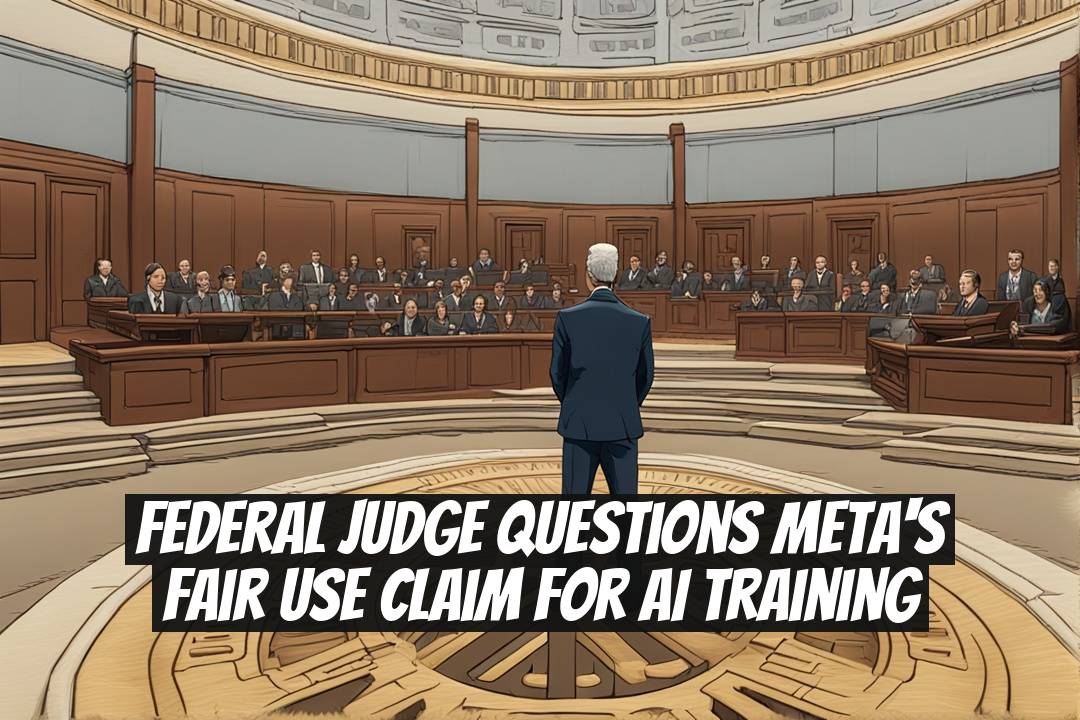
Hey there! So, recently, a federal judge in San Francisco raised some eyebrows with his critical take on Meta’s claim that it can legally use copyrighted works to train its AI models. I know, it sounds super legal-y and all, but stick with me; this has some hefty implications for the entire crypto and tech landscape, especially in India!
Key Takeaways:
- Meta’s fair use defense challenged in court.
- Judge questions the transformative nature of AI training.
- Copyright debates may impact the future of AI in the crypto space.
Subscribe to our Social Media for Exclusive Crypto News and Insights 24/7!
Alright, let’s break this down. Picture this: you’re a talented author or creator, and your work is being used without your permission to train an AI system that could easily churn out stuff similar to yours. Yikes, right? This is precisely what Judge Vince Chhabria is grappling with. During the hearing, he expressed his skepticism about fair use. He pointed out that using someone’s copyrighted work without compensation could "obliterate the market" for that person’s creations.
? What’s at Stake?
So why should we, as crypto analysts or potential investors, be concerned about this? Well, the interplay between copyright laws and AI technology is crucial. If the courts side with Meta, it might lead to a huge shift where other companies feel they can use copyrighted content freely for AI training. For a young woman in India looking to make sense of this tech world, this creates a precarious landscape.
Think about it: If companies are free to use and remix content without paying creators, we might see budding innovations but at the expense of original creators’ livelihoods. This could lead to fewer unique ideas in the marketplace-a bummer for creativity and possibly a stumbling block for startups in the crypto space looking for unique content.
? Research Insights

The potential court ruling could also impact valuation in the tech and AI sectors. For instance, if Meta is forced to pay authors for their content, it could mean reduced margins for these companies. The AI industry is already estimated to be worth billions, and any increase in operational costs could affect investment. Companies in the crypto space often rely on tech advancements to create competitive products; you can see how this legal landscape can ripple through market strategies.
? Practical Tips for Investors
- Stay Informed: Keep track of these legal battles-it can affect the companies you may want to invest in.
- Look for Adaptability: Is the company adaptable to changes in copyright laws? They need to evolve to survive!
- Follow Creator Rights: Support platforms that respect copyright and creator rights. This not only helps accountability but also ensures the survival of innovative ideas.
? My Personal Take
Honestly, it’s disheartening to see how the market might overlook individual creators. As I connect the dots between tech and creativity, I find myself rooting for a balance between innovation and fairness. After all, we need that creativity to keep pushing boundaries. If artists and authors can’t thrive, where does that leave us in the grand scheme of things?
? On a Broader Scale
This isn’t just a local or even national issue; it’s a global debate. Countries have different takes on copyright and AI. Perhaps we’ll see a more unified stance come forth! This topic strikes a personal chord with me, being part of a culturally rich nation like India. We’re bursting with stories and talents, and we wouldn’t want them to be swept under the rug just because some AI can mimic them, right?
? Final Thoughts
So, as we sit back and watch how this all unfolds, I can’t help but wonder: how can we create a system that fosters both innovation and protects creative rights? It’s a real puzzle, and I’d love to hear what you think! Are we heading towards a fierce battle between tech giants and creators, or is there a way to find common ground?
Let’s chat more about this!