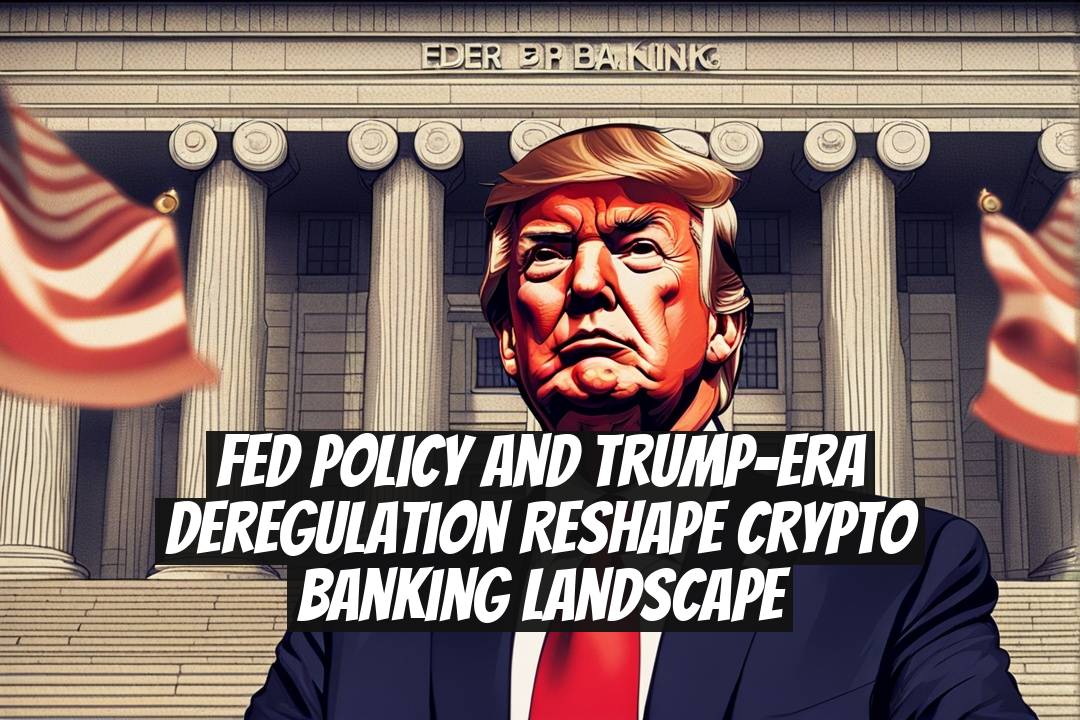
How Does the U.S. Fed’s Changing Tune on Crypto and Deregulation Actually Shape Your Crypto Banking Experience?
If you’re an investor or just crypto-curious, you’ve probably heard buzzwords like "Fed policy," "Trump-era deregulation," and "crypto banking landscape" thrown around. But what do these shifts really mean for the crypto market and, more importantly, for you? Let’s delve deep-not just at the surface-into how the Federal Reserve’s recent policy changes combined with deregulation trends from the Trump administration are shaking up crypto banking, creating fresh opportunities, and throwing in new risks along the way.
Key Takeaways:
The Federal Reserve and other banking regulators are moving from strict, crypto-specific oversight to a more principles-based, risk-focused approach.
Trump-era deregulation established a looser regulatory environment that reinforced banks’ freedom to engage with crypto activities without heavy-handed supervisory approvals.
This regulatory landscape encourages innovation but demands that banks independently manage crypto risks to ensure safety and soundness.
For investors, this means more banks can offer crypto-related services, but due diligence remains crucial to avoid pitfalls.
- Staying informed, understanding risk management practices banks are required to follow, and employing practical strategies can better position you in this evolving market.
Subscribe to our Social Media for Exclusive Crypto News and Insights 24/7!
Let’s unpack all this step by step.
? From Strict Supervision to Flexibility: What the Fed’s New Moves Mean for Crypto Banks ?
Back in the early 2020s, as crypto started intertwining with traditional finance, regulators including the Federal Reserve (Fed), the Office of the Comptroller of the Currency (OCC), and the FDIC took a sort of cautious stance. They required banks to get advance approvals for any new crypto activities, creating a bottleneck that many in the crypto space saw as overbearing. But recently, that has sharply changed.
In July 2025, the Fed and its banking counterparts issued a joint statement-more a guide than a rulebook-highlighting that banks offering crypto-asset safekeeping services should do so with strong risk management but without the need for special approvals beforehand[1][3][5]. The Fed even shut down its Novel Activities Supervision Program, which was initially created to closely monitor banks’ crypto involvement, stating their expertise has matured enough to handle crypto activities within regular supervision[2]. Essentially, the Fed says: "We know what we’re doing now; banks, handle your crypto risks wisely."
This pivot signifies a regulatory philosophy shift from strict gatekeeping to trust-based oversight, emphasizing banks’ own risk assessments within the framework of existing safety and soundness principles.
?️ Trump-Era Deregulation: The Backdrop Shaping Today’s Crypto Banking Environment ?️
Long before these recent Federal Reserve moves, the Trump administration laid the groundwork by advocating deregulation across various sectors, including banking. During this era, federal regulators took a less interventionist stance, scaling back agency restrictions to spark innovation and economic growth.
In crypto banking, this translated to easing rules that previously made banks join the crypto ecosystem with hesitation. The regulatory pullback gave banks encouragement to experiment with crypto safekeeping and trading services without needing to navigate heavy supervisory hoops. Thus, Trump-era deregulation effectively unlocked the doors for banks to develop crypto capabilities faster.
? What This Means for the Crypto Market: Opportunity Meets Risk ️
On the surface, this deregulated and principles-based environment seems like an open invitation for banks to expand crypto offerings. More banks embracing crypto means more infrastructure, liquidity, and services for you, the investor. For example:
Enhanced crypto custody options at federally regulated banks bring greater security compared to unregulated wallets.
Increased access to crypto-linked banking products boosts mainstream adoption and integration with traditional finance.
- Banks can innovate on payment systems, lending, and investment products that leverage crypto assets.
But-and it’s a serious but-this also places the onus on banks to actively manage the unique legal, operational, technological, and compliance risks inherent in crypto[1][4]. The joint guidance from Federal regulators didn’t create new rules but stresses that banks must have robust control environments and technical expertise before diving into crypto safekeeping[4]. Without such diligence, banks risk operational failures or compliance breaches, which could ripple negatively to investors.
From an investor’s standpoint, this means:
Do your homework: Just because a bank offers crypto custody doesn’t automatically mean it’s bulletproof. Understand the bank’s risk controls where possible.
Diversify wisely: Spreading crypto holdings between trusted custodians and possibly decentralized wallets can lower counterparty risks.
- Stay updated: Regulatory landscapes evolve rapidly. Keep an eye on ongoing Fed guidance and action.
? Friendly Advice: Navigating the Crypto Banking Wave With Confidence ?
Think of this new regulatory climate like the wild west tamed by seasoned sheriffs (the Fed and regulators) who now trust local deputies (banks) to patrol responsibly. As a crypto investor or enthusiast:
Ask banks about their crypto risk management policies.
Look for banks that disclose cybersecurity measures and insurance coverage for digital assets.
- Pay attention to any warnings or advisories from regulators about particular banks or crypto offerings.
And remember, just as you wouldn’t leave your valuables with a stranger, don’t entrust crypto assets to institutions without validating their governance and capabilities.
? Personal Insights: What I See Ahead in the Crypto Banking Landscape ?
The Fed’s transition from micro-managing crypto banks to a principles-based supervision is a strong signal that crypto is embedding itself firmly in mainstream finance. Trump-era deregulation helped accelerate this by creating breathing room for experimentation.
However, with greater freedom comes greater responsibility. I expect an era where competitive pressures push banks to excel not only at crypto innovation but also at transparency and rigorous risk controls. Failures or scandals here won’t be tolerated and could lead to swift policy reversals or crackdowns.
For investors, this environment spells exciting new products but also means you need to be more savvy than ever. Crypto banking isn’t just about riding the next tech wave; it’s about knowing who you partner with in this new hybrid space.
So, are you ready to explore the evolving crypto banking world armed with knowledge and caution? How will you balance excitement with smart risk management?
For further understanding, check out these key topics:
Sources:
[1] https://www.gtlaw.com/en/insights/2025/7/federal-banking-regulators-issue-guidance-on-risk-management-for-crypto-asset-safekeeping-activities [2] https://www.coindesk.com/policy/2025/08/15/u-s-fed-officially-scraps-specialist-group-meant-to-oversee-crypto-issues [3] https://www.federalreserve.gov/newsevents/pressreleases/bcreg20250714a.htm [4] https://www.consumerfinsights.com/2025/07/federal-banking-regulatory-agencies-issue-guidance-on-crypto-asset-safekeeping/ [5] https://www.occ.gov/news-issuances/bulletins/2025/bulletin-2025-17.html