
Can Bitcoin Mining Ride the AI Wave to Unprecedented Profits?
If you’ve been following the crypto scene recently, you might have noticed an intriguing trend: Bitcoin mining profits are hitting new all-time highs fueled by AI integration and cloud contracts. Yes, you read that right-mining isn’t just about crunching numbers to validate Bitcoin transactions anymore. The merging of AI workloads and cloud services with traditional mining operations is reshaping profitability and the industry’s future. Let’s dive into what this means for the crypto market, and why it could be the golden ticket for savvy investors.
? Key Takeaways: Bitcoin Mining Profits, AI Integration & Cloud Impact
- Bitcoin mining profits are increasing despite halving and rising costs thanks to hybrid models that combine mining with AI compute and cloud contracts.
- AI’s skyrocketing energy demands present both a challenge and an opportunity for miners to diversify income streams.
- Repurposing mining facilities into GPU-powered AI data centers significantly lowers new infrastructure costs and boosts profitability.
- Cloud mining via AI-enhanced platforms is expanding access and generating sustained passive income for investors.
- Strategic partnerships and energy contracts that accommodate AI needs are critical for miners to stay competitive.
Subscribe to our Social Media for Exclusive Crypto News and Insights 24/7!
? How Bitcoin Mining and AI Make Strange Bedfellows: The New Gold Rush
You might be scratching your head wondering, how does AI fit into Bitcoin mining profits? At first glance, these seem worlds apart. Bitcoin mining focuses on solving cryptographic puzzles using specialized ASIC hardware, while AI computing needs GPUs to crunch massive datasets. But as it happens, they both thrive on massive electrical power and data center infrastructure. As Bitcoin block rewards were slashed to 3.125 BTC after the 2024 halving, miner revenues took a serious hit. Combine that with rising electricity prices and maintenance costs, and the old mining business model looked shaky at best[1][4].
Here’s where the magic happens: many Bitcoin mining companies already own megapower data centers with direct access to cheap electricity, cooling, and automation expertise-exactly the ingredients AI cloud services need. By retrofitting these facilities with GPUs, miners can rent out computing power for AI training and inference. This hybrid approach isn’t just a fallback-it’s more profitable and resilient because AI workloads generate consistent revenue when crypto markets dip[1][3].
Energy Tug of War: Miners vs. AI on the Power Grid

The industry is at an energy crossroads. AI data centers’ electricity consumption is projected to reach 240 terawatt-hours (TWh) by 2027, outpacing Bitcoin mining’s 160 TWh[2]. This shift entails a tough competition for power contracts. AI offers about 25 times more revenue per kilowatt-hour than Bitcoin mining, making it an economical favorite for energy providers. This has forced miners to rethink their strategies: many are participating in demand-response programs, integrating renewables, and diversifying into high-performance computing (HPC) beyond traditional Proof-of-Work mining[2].
The takeaway here is clear: energy flexibility and AI readiness are no longer optional; they’re survival prerequisites. Miners with the foresight to secure adaptable energy arrangements or partner with AI firms stand poised to thrive. The others risk losing costly energy contracts and facing obsolescence[2][3].
? Cloud Contracts & AI: Doubling Down on Profit Margins
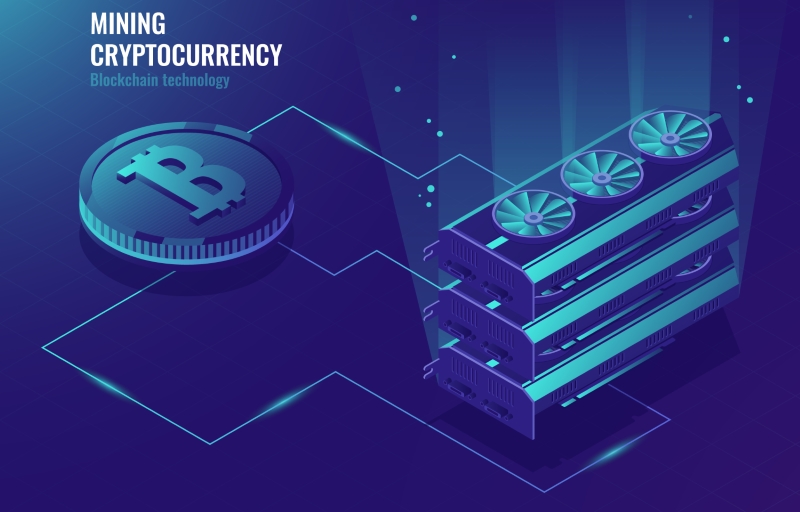
Cloud crypto mining platforms powered by AI have exploded onto the scene in 2025. Services like Magicrypto fuse user-friendly cloud mining with zero-entry investment, allowing even beginners to benefit from Bitcoin and Dogecoin mining remotely[5]. What’s more fascinating is that existing mining companies are capitalizing on their infrastructure by offering AI cloud computing services, reaching margins as high as 98% thanks to operational efficiency and the ability to repurpose facilities without multi-year construction delays[4].
To put it into perspective:
- Traditional AI data centers cost $8M-$12M per megawatt, with multi-year build times.
- Bitcoin mining infrastructure costs only about $0.3M-$0.8M per megawatt, leveraging existing assets.
- Bitcoin mining costs have risen sharply, with Q2 2025 costs around $70,000 per Bitcoin mined, squeezing margins.
By bridging the two, miners unlock quicker ROI and steady cash flow during crypto market downturns[4].
? What This Means for the Crypto Market: Stability Meets Innovation

From a crypto analyst perspective, this coupling of AI and Bitcoin mining could stabilize what has historically been a volatile ecosystem. Miners’ revenues traditionally oscillate with BTC price swings and halving events. Now, non-crypto income from AI cloud contracts cushions earnings, potentially reducing sell pressure on mined Bitcoin during bear phases. This stability might encourage longer-term investment in mining infrastructure, reinforcing security for the Bitcoin network.
Moreover, the fusion of AI and crypto mining may attract a new wave of institutional capital keen to exploit tech synergy. However, this also heightens regulation scrutiny, as data centers face environmental and energy usage concerns. Transparent green energy commitments and ESG compliance will become key competitive advantages[10].
? Practical Tips for Investors & Miners Navigating This Transition
If you’re considering diving into Bitcoin mining gains amid this AI-integration trend, here are some friendly pointers:
- Look for mining firms with AI cloud contracts or GPU compute capabilities. These hybrid players show stronger profit resilience.
- Prioritize miners with flexible, renewable, or demand-response energy agreements. Energy cost is the biggest profit lever.
- Explore cloud mining platforms with AI-enhanced efficiency and transparent operations. They lower barriers and risks for newcomers.
- Keep a close eye on Bitcoin prices and network transaction fees, both crucial for miner profitability.
- Diversification is key: consider holdings in related AI computing infrastructure and crypto mining stocks.
? Personal Insights: Why This Could Be a Game-Changer
Personally, I find this hybridization of Bitcoin mining and AI computing downright exciting. It’s like watching two powerful forces converge into a more energy-efficient, profitable, and future-proof sector. Mining companies leveraging their existing data centers to power AI workloads extend the life cycle of their infrastructure and buffer against Bitcoin price volatility. For investors, this is a compelling story of adaptability and innovation.
Also, the environmental narrative becomes more nuanced. Instead of massive electricity consumption being purely criticized, miners are learning to pivot - repurposing excess capacity and even collaborating with AI firms to optimize energy use. This can spur eco-friendly practices and sustainable growth, which the crypto community desperately needs.
But here’s the million-dollar question: Will the AI boom permanently outgrow Bitcoin mining’s place in the energy ecosystem, or can the two coexist symbiotically for years to come?
Are you ready to see Bitcoin mining evolve from a standalone endeavor into a powerhouse AI-integrated industry? The next decade could hold the secrets.
Explore more about Bitcoin Mining Profits, AI Integration, and Cloud Contracts to stay ahead in this exciting crypto landscape!
Sources:
[1] https://cointelegraph.com/explained/the-35b-shift-how-bitcoin-miners-are-cashing-in-on-ai
[2] https://www.ainvest.com/news/bitcoin-mining-profitability-age-ai-navigating-energy-demand-shifts-2509/
[3] https://www.datacenters.com/news/bitcoin-miners-pivot-to-ai-data-centers-a-strategic-shift-in-2025
[4] https://www.moomoo.com/community/feed/from-bitcoin-mining-to-ai-profits-doubled-due-to-business-115049502343174
[5] https://coincentral.com/is-cloud-mining-still-profitable-discover-the-5-leading-cloud-mining-platforms-2025-for-bitcoin-dogecoin-ai-driven-daily-income/
[10] https://www.chainup.com/blog/crypto-mining-industry-trends-insights/