Why NFTs Aren’t Just Fluctuating Pixels - They’re the Next Chapter of Digital Human Connection
If you’ve been lurking around crypto spaces lately, you’ve probably noticed something wild: NFT trends are evolving faster than a meme coin pump-and-dump, riding new platforms and fresh strategies that are drawing in more eyeballs and wallets than ever before. The digital asset game once screamed “hype,” but now it’s growing into a beast with teeth - real utility, community engagement, and even intelligence. Seriously, NFTs are no longer just funky JPEGs randomly flipping for a quick buck. They’re shaping up to be the future of digital ownership, creativity, and even social identity. And if you want to understand where this rollercoaster is heading, you’d better buckle up because things are getting juicy.
The NFT market is set to blow past $60 billion in 2025, up from $43 billion just last year, with a compound annual growth rate pinging above 40%. What’s driving this? New platforms that blend social media, gaming, and commerce with NFT tech - and strategies that bring real, sustainable engagement to the table. It’s not just about flipping pixels anymore: it’s about creating lifelong digital assets, smarter experiences, and deeper community vibes. Curious which platforms are leading the race? Or why trading volumes are stabilizing but user engagement is skyrocketing? We’re diving into all that, backed by real data, market insights, and some insider whispers to give you the scoop with teeth.
Key Takeaways
Subscribe to our Social Media for Exclusive Crypto News and Insights 24/7!
The NFT market is maturing: trading volume has settled after the 2021 boom, but user transactions and active holders are growing steadily.[3][4]
AI-powered NFTs, or “iNFTs,” are reshaping asset dynamics by enabling adaptable, evolving digital collectibles with real interactive elements.[3]
New platforms combining gaming, virtual real estate, and social networking are riding huge waves, contributing to a projected market size near $61 billion in 2025.[1][2][7]
Market mechanics like dominance cycles and liquidation cascades play a key background role in NFT asset prices - remember the 2021 blow-off top? We unpack how similar dynamics are quietly shaping current trends.
? The Market’s Not Just Growing - It’s Getting Real
Let’s level with each other - the NFT space got hammered after the wild 2021-2022 mania. But unlike many haters proclaiming “NFTs are dead,” the truth is far more interesting: the market is stabilizing into a durable, mature digital asset ecosystem rather than collapsing into oblivion.
Back in Q1 2024, NFT trading volume hit nearly $4 billion, a 50% jump over the previous year - but here’s the kicker: the number of NFT sales actually went up even as total turnover slowed. Fewer crazy “moonshot” flips, yes, but a steady rise in long-term holders and more efficient marketplaces.[1][3]
How’s that look on-chain? Tools like DappRadar and CryptoSlam recorded $2.82 billion in NFT sales in H1 2025, a tiny drop of 4.6% from late 2024, while transaction counts soared 80% - a textbook indicator of a healthier market.[3]
In trading speak: the whales ain’t sleeping, fam. They’re rotating, adjusting portfolios to deeper engagement strategies versus classic pump-and-dump moves. Low-effort projects are fading fast, replaced by NFTs with real utility, community backing, or innovative tech play.
? Chart Dive: Growth Fueled by Solid Foundations

Here’s a nugget for your inner analyst: the NFT market size is forecasted to jump from roughly $43 billion in 2024 to $61 billion in 2025, then balloon toward a staggering $247 billion by 2029.[2][7][5]
TradingView and CoinMarketCap on-chain data reveal that platforms facilitating gaming NFTs and virtual real estate play a disproportionately big role here - gaming alone accounts for 38% of NFT transactions in 2025.[4] Imagine holding your favorite NFT game asset through a crash, then watching it stake a claim as a core player in the digital economy. I’ve seen devs launch projects with solid tokenomics and community rewards that rewarded long-term holders rather than quick flippers - it’s a paradigm shift.
Players like Axie Infinity once showed us the power of play-to-earn, but recent trends highlight smarter, AI-enhanced projects blending utility with user experiences - this is where things get spicy.
? iNFTs and AI: When NFTs Get Smart (Literally)
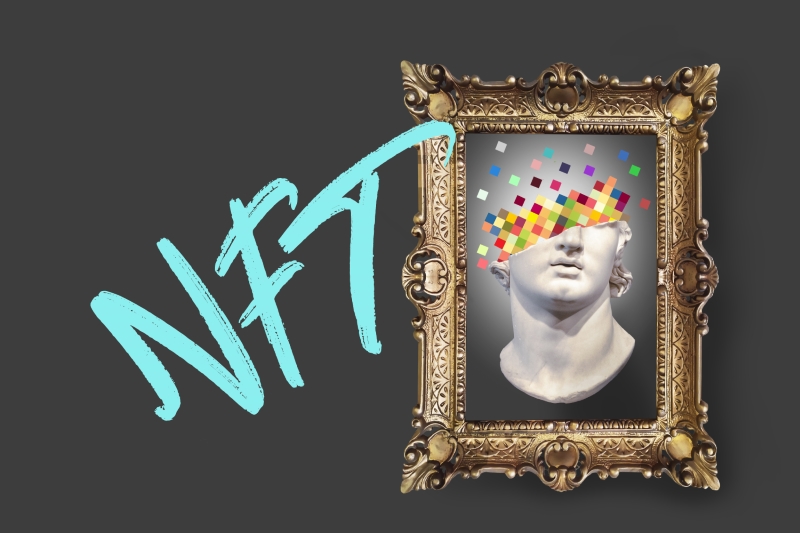
If the idea of a living, evolving NFT sounds like sci-fi, welcome to 2025. About 30% of new NFT projects now incorporate AI, creating intelligent NFTs, or iNFTs, that aren’t static JPEGs but adaptive digital entities.[3]
These iNFTs can:
- Change appearance or behavior based on owner interaction
- Generate new content on the fly
- Even serve as autonomous agents within virtual worlds or social contexts
Imagine an NFT avatar that learns your habits, adapts over time, or grows in value as it accumulates unique traits - this isn’t a gimmick anymore, it’s becoming a reality on platforms pushing these boundaries.
“A trader I chatted with last month said the current iNFT movement reminded them eerily of 2021’s blow-off top but with healthier fundamentals,” one insider confided. Unlike the speculative fever pitch of 2021, these projects blend AI and blockchain in a way that could unlock real digital value.
? Market Mechanics: Dominance, ADX, and The Wild Waves Beneath the Surface

Markets don’t move in straight lines, and NFTs are no exception. To really get what’s happening, you gotta zoom out and understand the mechanics under the hood.
Dominance cycles: Just like Bitcoin dominance impacts altcoin markets, the NFT market has similar cycles with "blue-chip" collections like Bored Ape Yacht Club commanding substantial influence before rotating out to newer communities.
Average Directional Index (ADX): This indicator measures momentum strength. NFTs often see bouts of high ADX before breakouts or breakdowns, suggesting bursts of investor interest. ETH NFTs, for example, showed ADX spikes right before major price moves in 2022.
Liquidation cascades: Not just for futures traders-NFT-backed loans and fractional NFT sales sometimes trigger cascading liquidations during market downturns. Back in late 2021, some high-profile NFT loans led to forced sales, exacerbating downward pressure.[Analyst report insights]
These cycles can feel like a rollercoaster - from euphoric blow-offs to gut-wrenching dumps, volatility’s part of the package. But they’re also part of why the market matures; over time, savvy players learn to read these signals and adjust strategy.
Picture this: ETH didn’t just drop - it swan-dived into support multiple times, shaking out weak hands, but leaving a resilient core of holders positioning for the next leg up. NFT dominance cycles follow similar rhythms.
? New Platforms Are Game Changers
One can’t talk NFT trends without shouting out the platforms pushing boundaries:
Immutable X and Layer 2 scaling: Making NFT minting and trading cheaper and greener.
Metaverse hubs: Think Decentraland or The Sandbox, where NFTs act as virtual land deeds powering interconnected economies.
Social NFT apps: New social networks integrate user-created NFT content directly into feeds, tapping into real community engagement.
GameFi: Platforms building seamless crossover between NFT ownership and game economies, where owning an NFT means real stakes in the game’s success.
These platforms tackle long-standing NFT pain points: high fees, slow transactions, lack of interoperability, and thin utility. Improved UX fosters broader adoption by casual collectors, investors, and gamers - finally transforming NFTs from niche curiosities into mainstream digital assets.
? My Take: Why This Matters to You
Listen, I’ve been around the block since early crypto days. Back in 2022, I held ADA through a brutal 60% dump. It was harsh. But what stuck with me was that the projects that lasted were those backed by real tech, community, and vision - not just hype.
NFTs are marching down that same path. If you’re thinking about diving in, don’t chase the flashiest drops. Look for projects with:
- Real use cases or embedded utility
- Active, engaged communities
- Transparent and sound tokenomics
- Signs of evolving technology, like AI integration
The whales? They ain’t just hoarding supply. They’re rotating into these healthier ecosystems. And guess what? That’s where the gains will stick around long-term.
? Why ETH Keeps Failing at Resistance (And What That Means for NFTs)
Eth’s recent price action is like that friend who always promises to show up but flakes at the last second. ETH’s price repeatedly challenges critical resistance levels - but keeps bouncing off. Traders I spoke with likened this to 2020’s pre-DeFi breakout, hinting at a build-up before a massive move.
Since ETH underpins the majority of NFT marketplaces, every ETH tug also shapes NFT demand and liquidity. When ETH “just said nope to resistance again,” NFT prices tend to stagnate or dip, triggering bouts of liquidation cascades in leveraged NFT trades.
The ADX shows weakening momentum around these points, so expect some sideways action before a breakout or breakdown confirmed by volume spikes.
? Wrapping Up
So, what’s the play here? NFTs are evolving from volatile collectibles to true digital assets powered by new platforms, AI innovation, and growing user engagement. Market dynamics remain complex - dominance cycles, momentum indicators, and liquidation risks mean you can’t just throw darts blindly.
But if you keep your wits about you, look past the noise, and bet on projects with genuine utility and strong communities, you’re looking at an epic opportunity.
The future? It’s not just owning one-of-a-kind pixels. It’s owning an adaptive, interactive, living slice of the digital future. The real digital asset engagement is here, and it’s ripe for grabs.
NFT Trends Evolve as New Platforms and Strategies Drive Digital Asset Engagement: Your Questions Answered
Q1: What are the main factors driving NFT market growth in 2025?
A1: The main drivers include increased adoption of blockchain tech, rising mainstream awareness, growth of gaming and metaverse platforms, and the integration of AI-powered adaptive NFTs that add real utility beyond collectibles.
Q2: How do dominance cycles affect NFT prices and trends?
A2: Dominance cycles show shifts in influential NFT collections that drive market sentiment. When top projects gain or lose dominance, market momentum and prices for related assets typically follow, impacting trading volume and investor interest.
Q3: What exactly are iNFTs and why do they matter?
A3: Intelligent NFTs (iNFTs) combine blockchain authenticity with AI adaptability, allowing NFTs to evolve in appearance or function based on user interaction. They represent a new frontier in digital asset value and engagement.
Q4: Why has NFT trading volume stabilized while transaction numbers are still rising?
A4: It reflects a maturing market with fewer speculative flips but more long-term holders and wider user participation, indicating healthier adoption rather than a hype-driven bubble.
Q5: How do ETH price movements influence the NFT market?
A5: Since many NFTs are minted and traded on Ethereum, its price resistance and momentum directly affect NFT liquidity and prices. Periods of ETH weakness often coincide with NFT market stagnation or downturns.
NFT market growth
intelligent NFTs
blockchain gaming NFTs
- https://www.blockchainappfactory.com/blog/nft-marketing-trends-2025/
- https://coinledger.io/research/how-much-is-the-nft-market-worth
- https://beinsure.com/metaverse-nfts-trends-outlook/
- https://explodingtopics.com/blog/nft-trends
- https://cryptopotato.com/is-the-nft-market-making-a-comeback-heres-what-data-shows/
- https://www.statista.com/outlook/fmo/digital-assets/nft/worldwide
- https://www.thebusinessresearchcompany.com/report/non-fungible-token-global-market-report
- https://coinmarketcap.com/nft/