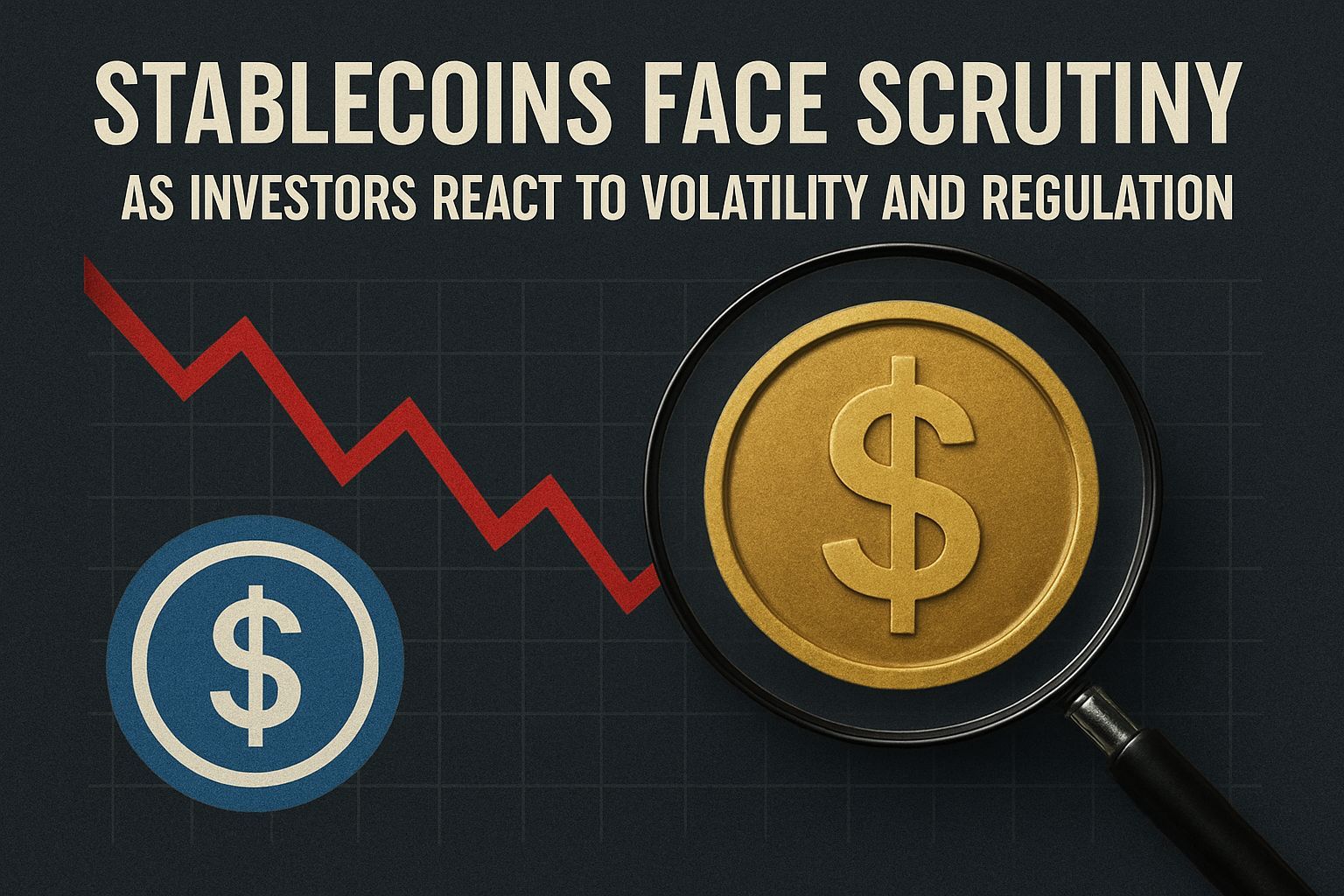
Why Are Stablecoins Suddenly in the Spotlight? Let’s Unpack the Buzz
The world of cryptocurrencies is no stranger to drama, but stablecoins - those cryptocurrency tokens designed to maintain a stable value by pegging to assets like the US dollar - have recently faced intense scrutiny. As investors grapple with volatility and evolving regulations, the stablecoin sector is undergoing a transformative moment. What does this mean for the broader crypto market? And how should investors navigate these shifting tides? Let’s dive deep, unpacking the latest regulatory frameworks, market reactions, and practical insights all wrapped in a conversational vibe as if we’re chatting over coffee.
Stablecoins have surged in popularity because they aim to combine the efficiency of cryptocurrencies with the stability of traditional currencies. Yet, as volatility returns and regulators tighten their grip, investors are on edge, wondering about risk, trust, and long-term potential.
Key Takeaways Why Stablecoins Are Facing the Heat
Subscribe to our Social Media for Exclusive Crypto News and Insights 24/7!
- Stablecoins are under increasing regulatory scrutiny globally, with frameworks focusing on licensing, reserve backing, and consumer protections.[1][2]
- The U.S. GENIUS Act, introduced in July 2025, sets key federal regulations for payment stablecoins, creating licensing and compliance requirements with major implications for issuers and users.[2][3][5]
- Investors react cautiously as volatility persists, raising concerns about liquidity, backing assets, and systemic risk in crypto markets.[4][6]
- Regulatory clarity may eventually boost market confidence but demands significant compliance efforts from issuers and market participants.[3][5]
- Practical tips for investors include understanding issuer trustworthiness, monitoring regulatory developments, and diversifying exposure to mitigate risks.
? Stablecoins & Regulation: What’s Changing and Why It Matters
Global regulatory bodies are moving fast to bring stablecoins into clearer legal frameworks. The UK’s Financial Conduct Authority (FCA) and Bank of England (BoE) have outlined rules requiring authorized issuers only, robust 1:1 reserve backing with liquid assets, and stringent liquidity requirements to prevent market shocks.[1] Meanwhile, the US has taken a giant leap with the GENIUS Act, which harmonizes federal and state regulations and imposes licensing and reserve rules on stablecoin issuers, including banks and non-banks-and it’s a big deal for market uniformity.[2][3][5]
Why this rush? Regulators want to avoid socializing the risk of stablecoins, which have close ties to fiat currencies but operate largely outside traditional banking controls. The risks of liquidity runs or crashes have real consequences for financial stability, as stablecoins become a growing part of payment ecosystems.[7]
What’s fascinating about the GENIUS Act is the creation of the Stablecoin Certification Review Committee (SCRC), chaired by top US financial regulators, that vets state-level frameworks for consistency.[2] It’s sophisticated but still leaves open questions about access to Federal Reserve facilities for non-bank issuers, a key factor for preventing panic withdrawals.[4]
? What Stablecoin Volatility Means for Investors and Crypto Markets

Stablecoins were once chalked up as a "safe haven" in the crypto chaos, but recent events have shown they aren’t immune to turbulence. Algorithmic stablecoins, for example, which rely on supply-demand programming rather than backing assets, have proven especially fragile.[6] Fiat-backed stablecoins are generally considered safer but depend heavily on transparency and quality of their reserves. If investors doubt those reserves, confidence evaporates quickly.
For the average investor, stablecoin volatility triggers a question: Is the ‘stable’ in stablecoins still trustworthy? A loss of peg or regulatory clampdowns can lead to rapid sell-offs, affecting liquidity and potentially triggering market ripple effects across crypto assets.[6]
Moreover, the evolving regulatory landscape means issuers must ramp up compliance, potentially slowing innovation or raising costs, which might reduce yields or the attractiveness of some stablecoins compared to traditional money market funds or bank deposits.[4]
? Diving Into the Research: Stability Mechanisms Under the Microscope

Understanding the nuts and bolts of how stablecoins maintain value is key for investors:
- Fiat-backed stablecoins hold equivalent reserves of fiat currency or short-term government securities-think of it as a 1-to-1 promise backed by cash or cash equivalents in a bank. This “core backing asset” approach reduces risks but requires strict auditing and regulatory oversight.[1][6]
- Over-collateralized stablecoins back tokens with multiple assets to hedge risk but are more complex and potentially vulnerable to broader market swings.[6]
- Algorithmic stablecoins do not hold reserves but use dynamic algorithms to expand or contract supply. This method can be innovative but volatile and is currently viewed by regulators with skepticism due to past instability.[6]
Regulation focuses mainly on fiat-backed stablecoins for now because they are easier to control and monitor.[1] But the other models raise important questions about transparency, systemic risk, and investor protections.
? The Impact on the Crypto Ecosystem: Innovation Meets Caution
The dual forces at play-increased regulation and investor wariness-could either pave the way for mainstream adoption or stall stablecoin innovation. Experts argue that clear frameworks like the GENIUS Act will bring legitimacy to stablecoins, encouraging more institutional involvement and smoother integration with traditional finance.[3][5]
At the same time, heavier compliance burdens might squeeze smaller or crypto-native issuers, potentially leading to market consolidation favoring banks or large institutions. This could reduce the diversity and decentralization that crypto enthusiasts cherish.[2][4]
Ultimately, stablecoins sit at a crossroads: Will they become the trusted "digital dollars" powering the next generation of payments, or will they remain high-risk tokens subject to regulatory upheaval and market shocks?
? How Investors Can Navigate the Stablecoin Maze
If you’re looking to include stablecoins in your portfolio or use them for transactions, here are some handy tips to keep your feet on the ground:
- Do your homework: Understand the issuer’s backing assets and transparency practices. Prefer those with clear reserve audits and regulated structures.[1][6]
- Stay updated on regulation: The regulatory landscape is shifting fast, so keep an eye on new rules, especially in your country, to avoid surprises.[2][3]
- Diversify stablecoin holdings: Don’t put all your eggs in one basket. Mixing stablecoins with different backing models and issuers can mitigate risk.
- Avoid chasing yield: Some stablecoins offer interest or yield-like products that might be tempting but could expose you to hidden risks or regulatory issues.[4]
- Watch liquidity: In times of turmoil, liquidity matters. Use stablecoins that hold a portion of reserves as on-demand deposits, which help speed redemptions.[1]
? Personal Insights: The Balancing Act of Hope and Caution
From my perspective as a crypto analyst, this stablecoin scrutiny phase is totally expected-and frankly, a good thing. The crypto world needs clarity and trust, especially for something billed as ‘stable.’ Volatility and regulatory uncertainty have kept many serious investors on the sidelines.
But the picture is not all doom and gloom. The evolving frameworks aim to patch weaknesses and make stablecoins safer - think of it as crypto’s growing pains on its way to adulthood. Investors who embrace due diligence and patience stand to benefit from this maturing landscape. On the flip side, those who ignore these changes risk shocks and losses.
Stablecoins could truly revolutionize payments and liquidity in crypto, but only if played smartly-by regulators, issuers, and investors alike.
? Wrapping It Up: Ready to Stay Ahead in the Stablecoin Game?
In the end, stablecoins remain one of the most promising yet complex parts of the cryptocurrency universe. Their evolution is intertwined with massive regulatory efforts and investor reactions to pronounced volatility. The key question: Will we see stablecoins become the trustworthy backbone of digital payments or stumble under regulatory and market pressures?
As an investor, the answer hinges on staying informed, embracing cautious innovation, and never losing sight of the fundamentals-transparency, liquidity, and strong regulatory compliance. So, what’s your stablecoin strategy going to be in this new era of scrutiny and opportunity?
Explore more about stablecoin regulation, stablecoin market volatility, and crypto market impact of stablecoins to stay ahead of the curve.
Sources:
[1] https://www.ey.com/content/dam/ey-unified-site/ey-com/en-gl/industries/banking-capital-markets/documents/ey-gl-global-stablecoin-regulation-comparison-09-2025.pdf
[2] https://www.morganlewis.com/pubs/2025/09/the-genius-acts-stablecoin-regulatory-scheme-promotes-uniformity-but-may-fall-short
[3] https://www.oliverwyman.com/our-expertise/insights/2025/aug/how-to-navigate-stablecoin-strategy-under-genius-act-rules.html
[4] https://www.jpmorgan.com/insights/global-research/currencies/stablecoins
[5] https://www.ssga.com/us/en/intermediary/insights/genius-act-explained-what-it-means-for-crypto-and-digital-assets
[6] https://www.elliptic.co/blockchain-basics/stablecoin-security-risks-in-2025-full-risk-assessment-guide-elliptic
[7] https://cepr.org/voxeu/columns/multi-issuer-stablecoins-threat-financial-stability
[8] https://www.sidley.com/en/insights/newsupdates/2025/08/hong-kong-implements-new-regulatory-framework-for-stablecoins
[9] https://www.coincover.com/blog/stablecoins-101-the-ultimate-guide-for-2025