
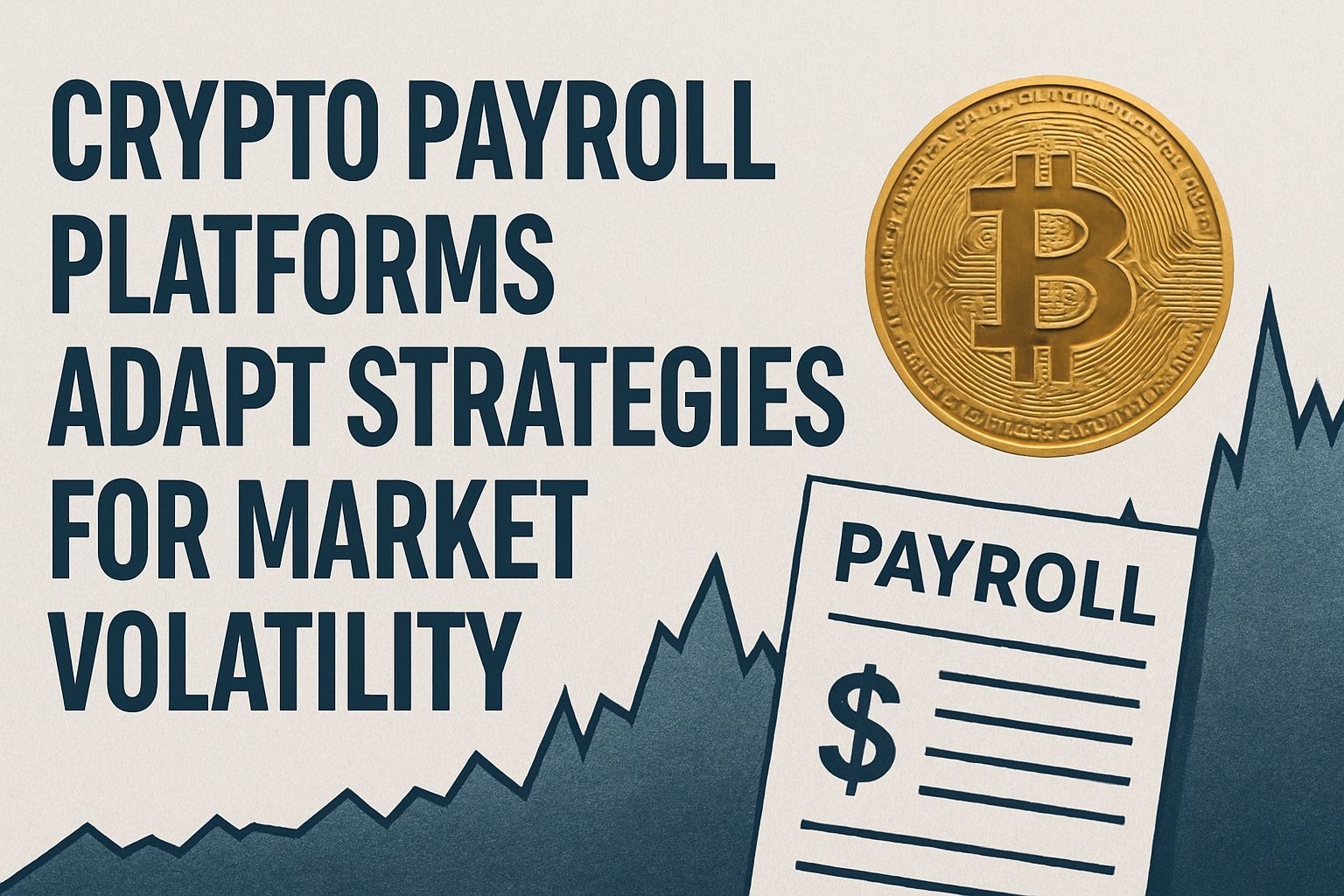
When Your Paycheck is Code: How Crypto Payroll Platforms Are Weathering the Storm (And What You Can Learn)
If you’ve ever watched BTC flash-crash, you know the feeling-your stomach drops, the FUD (fear, uncertainty, doubt) spreads, and you wonder if you’re actually getting paid next month. Now imagine that, but for your salary. That’s the reality for folks getting paid in crypto, and it’s pushing payroll platforms to adapt fast to wild market swings. Crypto payroll platforms are smack in the middle of a revolution, trying to keep up with the rollercoaster of digital assets while meeting compliance demands, cutting costs, and keeping global teams happy[1][4]. Volatility isn’t just a trading risk anymore-it’s a payroll risk. And this new frontier? It’s messy, exciting, and way more human than most people think. Buckle up, because we’re breaking down how the pros are adapting (and what you can steal for your own strategy).
Key Takeaways
- Crypto payroll’s growth is real: Driven by regulatory tailwinds, tech upgrades, and a thirst for global flexibility, 35-40% of businesses could be offering crypto pay by 2026[1]. But volatility is the elephant in the room.
- Platforms are racing to innovate: Live conversion, hybrid pay, stablecoins, and instant settlement are being layered with risk management tools-think on-chain monitoring, dollar-cost averaging, and automated tax compliance[4].
- Volatility isn’t just a trader’s game: Employers and employees both face wild swings in real income. If you didn’t hedge that SOL paycheck, ouch. But platforms that nail multi-currency flexibility and real-time data are winning the early adoption race.
- Institutional adoption isn’t just hype: BTC ETFs, MiCA, and payroll-as-a-service platforms like Rise and Deel are making crypto salaries legit-but the whales, as always, move first. Retail’s coming, but don’t expect mainstream HR to go all-in overnight.
- Market cycles matter: Dominance, ADX, liquidation cascades-these aren’t just for spot traders. Payroll platforms are watching them too, because you don’t want your salary liquidated before payday.
Subscribe to our Social Media for Exclusive Crypto News and Insights 24/7!
Why Crypto Payroll? (And Why Now?)
Let’s get real: paying global teams in minutes, slashing fees by up to 80%, and ditching borders sounds like a utopian hiring ad[4]. But here’s what’s really changed: Bitcoin’s 2024 ATH, Ethereum’s Layer 2 revolution, and clearer regs (hello, MiCA and U.S. stablecoin bills)[1]. Add a dash of “everything remote” and a pinch of Gen Z crypto curiosity, and you’ve got a recipe for disruption.
But-and it’s a big but-if you’ve ever seen your portfolio bleed 30% in a week, you know why most folks still want their rent check in stable dollars, not internet money. That’s why stablecoins like USDC, USDT dominate crypto payroll, grabbing over 90% of all crypto salary transactions[3]. For risk-averse employers, that’s a no-brainer. But for the degens? There’s still room for BTC, altcoins, and even tokens with real utility. The platforms getting this right aren’t just payment rails-they’re full-spectrum compensation strategists, blending the best of DeFi, CeFi, and HRIS into one slick dashboard.
The Market’s Mood Swings-And How Payroll Platforms Are Keeping Up

“You’ve seen this before, right? BTC teasing breakout then faking out. Imagine that, but with your rent money.”
? Volatility: The Nasty Side of Crypto Salaries
Crypto’s price swings aren’t just a chart watcher’s pastime-they’re a payroll headache. If you’re paying devs in Matic or SOL, what happens when the market tanks right before payday? Suddenly, your team’s salary buys fewer groceries. Employers have to peg that salary to a real-time fiat value, which means constant FX headaches (except “FX” here means “coingecko.com anxiety”)[3]. Platforms are responding with instant conversion tools-swap that ETH for USDC at settlement, lock in the fiat rate, and everyone sleeps a little easier.
But here’s the rub: volatile coins mean volatile income. Employees who opt-in for crypto salaries are, in essence, taking on market risk. And not everyone wants that ride. That’s why hybrid payroll is growing-mix fiat and crypto, let folks choose, and hedge both ways[1]. One payroll ops aficionado at a major EOR told me, “The teams that get this right treat crypto payroll like options trading. You’d never go all-in naked, so why would you with your paycheck?”
? Dominance Cycles, ADX, and the Payroll Pulse
If you’re a chart fiend, you know BTC dominance cycles and ADX signals can make or break your weekly P&L. But what’s wild is how these same dynamics now ripple into payroll. When BTC’s dominance spikes, altcoins bleed, and payroll platforms see a flood of “convert to stablecoins now!” requests[3]. On-chain analytics show this in real time-stablecoin inflows spike during bear markets, while bull runs see more employees HODLing their original pay.
Historical example: When ETH “swan-dived into support” during the 2022 merge, payroll ops teams at web3 startups had to manually intervene, converting payouts to stables or fiat. Fast-forward to 2025, and that’s automated, with some platforms even offering “volatility protection” add-ons-a sort of insurance against wild swings.
And liquidation cascades? They’re not just for leverage traders. If a payroll platform holds collateral in volatile assets, a flash crash could expose both employer and employee to unintended losses. Hence, the smartest platforms are keeping reserves in stables or highly liquid, low-vol assets. You’re not running a hedge fund, folks; you’re running payroll.
Platforms on the Frontlines: Who’s Winning (And Who’s Just Surviving?)
Let’s break down the players. Rise is leading the pack for pure-play crypto payroll, offering everything from USDC/USDT to 100+ coins, instant settlement, and smart contract automation[4]. If you’re a web3 shop paying global teams, you’re likely on their radar. Deel, meanwhile, is the go-to for “80% fiat, 20% crypto” hybrid models, nailing compliance and contractor management for traditional firms dipping toes into crypto[4].
Why does Rise win for crypto-native firms? Lower fees, more coin options, and crypto-first support. But if you’re a Fortune 500, Deel’s compliance muscle is hard to beat.
Micro-Stories: When Payday Meets Crypto Chaos
Back in 2022, I held ADA through a 60% dump. Brutal. But that taught me one thing: volatility is only romantic until it’s your grocery money. Fast forward to 2025, and I’m hearing stories from payroll admins at DAOs-ETH payouts tanked, devs weren’t thrilled, and HR had to scramble for answers. The lesson? Crypto payroll works, but only if you build in real-time hedges and clear communication.
Or take the case of a LatAm remote team paid in USDT: when the local peso crashed, their USDT salaries suddenly bought way more. Sure, they got lucky, but that’s crypto-risk and reward, live and unedited.
Institutional Moves, Retail Realities
The big boys are coming. With MiCA now live and the Fed easing in 2025, liquidity’s flooding back into risk assets[1]. BTC ETFs are gobbling up inflows, and payroll platforms are partnering with TradFi gatekeepers for smoother compliance and custody.
But here’s the thing-retail’s not out of the game. For freelancers, digital nomads, and web3 builders, crypto payroll isn’t just a hedge; it’s the way to get paid. The question is, can platforms bridge the gap between hedge fund-grade risk tools and human-friendly UX? That’s the real battleground.
Expert Insights: What the Whales Are Saying
“A trader I spoke to said this looked eerily like 2021’s blow-off top-lots of hype, but the real adoption’s in the plumbing, not the price charts.”
Another dev at a payroll-as-a-service unicorn dropped this gem: “We can’t just copy TradFi payroll and slap a BTC logo on it. Crypto’s volatility demands we rethink everything-from settlement windows to employee onboarding to tax reporting. If we don’t, we’re setting people up for an avoidable mess.”
The Road Ahead: Hybrid, Human, and Hedged
Crypto payroll’s not going away. But it’s also not going full crypto overnight. The smart money’s on hybrid models: fiat for bills, crypto for growth, and lots of choice in between. Platforms that nail this-Rise, Deel, and a few hidden gems-are building moats by blending DeFi rails, CeFi compliance, and HRIS simplicity.
So what’s the play? If you’re an employer, test the waters with a hybrid approach. If you’re an employee, only go full-crypto if you’re ready to treat your paycheck like a trading portfolio. And if you’re a web3 true believer, well-congrats, you’re living on the bleeding edge. Just don’t forget to hedge.
FAQ: Your Burning Questions on Crypto Payroll and Volatility Strategies
SEO-Optimized FAQ Header
Crypto Payroll Volatility: Your Top Questions Answered (Scroll Down for the Real Talk)
Q1: What exactly is a crypto payroll platform?
A1: It’s a service that lets employers pay salaries in cryptocurrency, either fully or partially. These platforms handle everything from compliance and tax reporting to instant global transfers, often at a fraction of traditional banking costs-think Rise, Deel, or BitPay as major players[1][4].
Q2: How do crypto payroll platforms handle market volatility?
A2: Most lean on stablecoins (like USDC or USDT) to keep salaries steady, but the savviest offer real-time conversion, hybrid pay (mix of fiat and crypto), and even volatility insurance features. Employees can often choose how much risk they want to take on[3][4].
Q3: What are the biggest risks for companies using crypto payroll?
A3: The main headaches are wild price swings (“Do my employees get paid 30% less if ETH crashes?”), tricky tax compliance, and operational risks like smart contract bugs or gas fee spikes. That’s why most serious platforms build in safeguards and automation[3].
Q4: How does crypto payroll affect employees’ take-home pay?
A4: If you get paid in a volatile coin, your actual salary value swings with the market. Stablecoin payrolls avoid this, but pure crypto payouts can mean more (or much less) in your pocket, depending on timing and market moves[1][3].
Q5: Are hybrid payroll options actually popular?
A5: In 2025, hybrid payrolls (mixing fiat and crypto) are growing fast, letting employees and employers split risk and reward. Early data suggests hybrid’s the sweet spot for most firms dipping into crypto payroll, avoiding going all-in on volatility[1][4].
Q6: How does institutional adoption impact crypto payroll?
A6: As regulators get clearer (like MiCA in the EU), and as TradFi giants jump in, crypto payroll becomes more legit and liquid. But retail still leads on pure crypto adoption, while big firms tend to favor hybrid or stablecoin models for stability[1][2].
stablecoin payroll
hybrid crypto salaries
volatility hedging






