Can a Central Asian Nation Turn Seized Crypto Into a Game-Changer for Digital Finance?
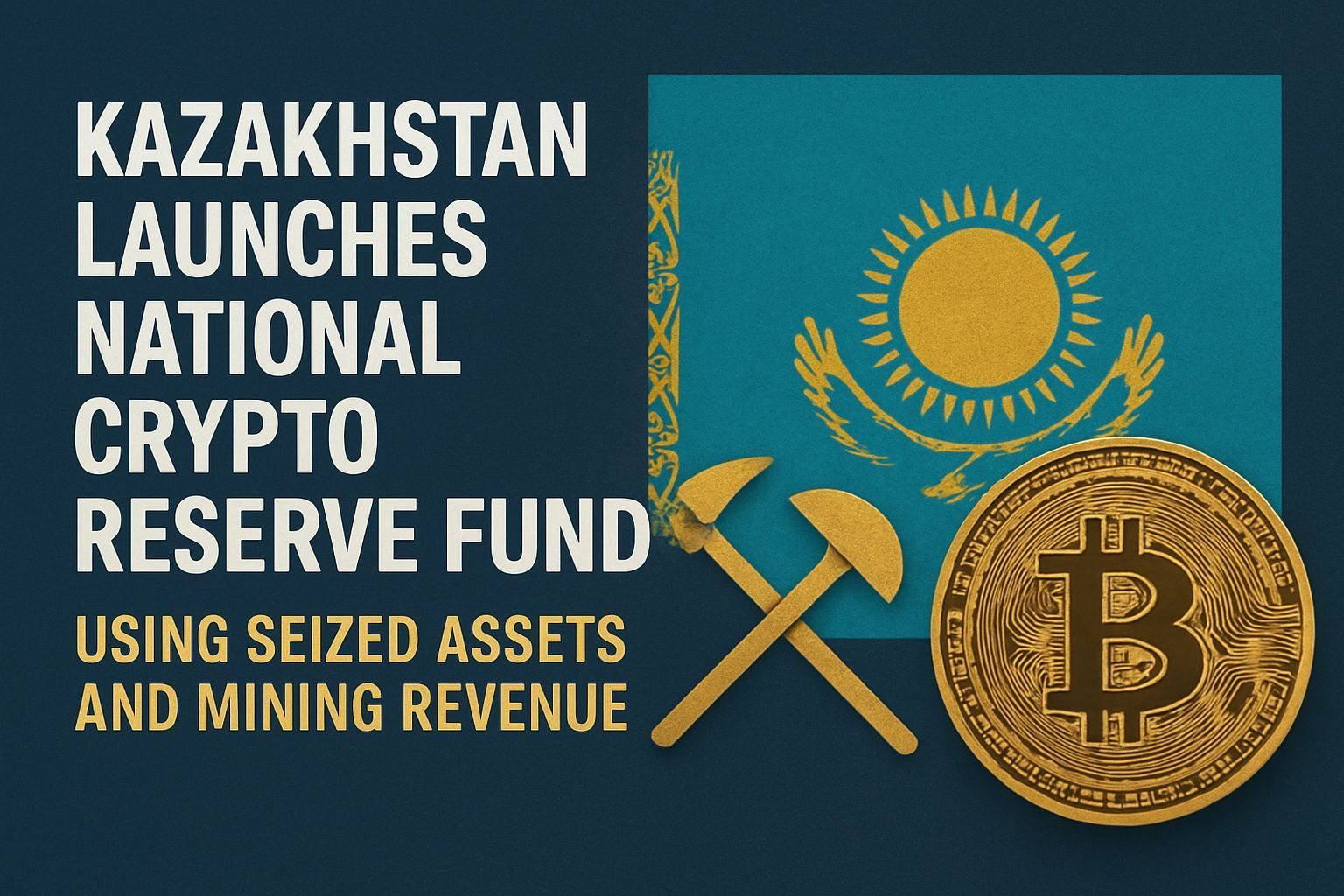
Kazakhstan is making waves in the crypto world by launching a National Crypto Reserve Fund valued between $500 million and $1 billion, funded primarily through seized digital assets and mining revenue. This bold move signals that Kazakhstan is not just embracing cryptocurrencies but institutionalizing them as a strategic part of its national wealth. For investors and crypto enthusiasts, this announcement is packed with implications about how sovereign nations might maneuver in the rapidly evolving blockchain landscape.
Key Takeaways:
- Kazakhstan’s new crypto reserve fund will be capitalized by seized crypto assets, repatriated funds, and state-managed bitcoin mining profits.
- Instead of holding cryptocurrencies directly, the fund will invest in crypto ETFs and shares of blockchain-related companies.
- The initiative aims to diversify Kazakhstan’s economy away from oil dependence by integrating digital assets into sovereign wealth.
- The fund will operate within Kazakhstan’s Astana International Financial Centre (AIFC), the country’s hub for fintech and blockchain ventures.
- Potential risks around fund governance and transparency highlight the importance of regulatory oversight and asset custody protocols.
Subscribe to our Social Media for Exclusive Crypto News and Insights 24/7!
? How Kazakhstan’s Crypto Reserve Fund Could Reshape the Market
Kazakhstan’s announcement to launch a national crypto reserve fund backed by seized assets and mining revenue is more than a headline; it’s a strategic pivot. By capitalizing on assets previously locked up or deemed illicit, the government is transforming dormant resources into a serious investment vehicle. This repurposing can provide a model for other countries wrestling with how to handle confiscated digital wealth.
Instead of taking the risky route of holding cryptocurrencies outright - subject to wild market swings and security challenges - the fund opts to invest in exchange-traded funds (ETFs) and shares of crypto-centric companies. This approach aligns with a risk-managed strategy that appeals to conservative sovereign investors, while still getting exposure to the digital asset economy[1][2][4].
From a market perspective, Kazakhstan’s move could help legitimize cryptocurrencies as part of official state reserves. As more governments explore digital assets-not just as a speculative play but as sovereign instruments-the crypto industry gains credibility and stability. This reserve fund, expected to be operational by early 2026, also strengthens the ecosystem tied to Bitcoin mining and fintech innovation within Kazakhstan’s Astana International Financial Centre[3].
?Why This Matters for Investors
- Diversification Beyond Oil: Kazakhstan’s economy has long depended on oil exports. Crypto investments offer an alternative source of national wealth, which is crucial given the volatility of global energy markets.
- Indirect Crypto Exposure: By focusing on ETFs and blockchain-related equities, the fund can reduce price volatility risk while still harnessing the growth potential of digital assets.
- Enhanced Sovereignty: Managing seized and repatriated assets under the government’s watchful eye helps curb illicit activity linked to crypto, while converting these holdings into structured national capital.
?️ Challenges & Risks: Governance and Transparency
No good story is complete without hurdles. Despite the promise, analysts caution about Kazakhstan’s fund governance. As of late 2025, detailed protocols on capital allocation, custody, and auditing remain unpublished, raising concerns about transparency and operational risk[5].
Failure to establish robust standards could shake investor confidence or replicate past regulatory oversights that caused some $15 billion of crypto assets to flee Kazakhstan[5]. Ensuring clear asset segregation, independent audits, and strong regulatory frameworks will be absolutely critical for maintaining the fund’s credibility.
? The Bigger Picture: Kazakhstan’s Place in the Global Crypto Landscape
Kazakhstan joins a growing list of countries embracing digital assets as national reserves, echoing moves by the U.S. and European governments. The U.S., for instance, has been pooling seized cryptocurrencies into a national reserve to use strategically rather than liquidate them hastily[4].
Kazakhstan’s fund exemplifies how digital assets may become tools for economic diversification and digital sovereignty. The government’s initiative also leverages existing national strengths in crypto mining - a venture Kazakhstan has actively encouraged - by channeling mining revenues back into this fund, effectively closing the loop between production and investment[3].
For crypto markets, such participation by sovereign entities introduces an element of stability previously missing. Institutional involvement often brings more predictable capital flows and a check on wild speculative swings, something retail investors have long desired.
? Practical Tips for Investors Observing Kazakhstan’s Crypto Fund
Keep an eye on official fund disclosures: Transparency will be key. Watch for updates on governance frameworks and asset custody.
Follow ETF and blockchain company performance: Since the fund will invest indirectly, performance in these sectors will affect returns.
Evaluate geopolitical and regulatory shifts: Kazakhstan’s crypto regulatory environment has evolved quickly. Stay informed about new laws that could influence fund operations or mining.
Assess mining industry health: The state-run mining sector fuels part of the reserve. Mining efficiency, energy costs, and technology upgrades can impact fund inflows.
Diversify crypto exposure: Kazakhstan’s choice not to hold cryptocurrencies outright suggests balance matters. Consider blending direct crypto holdings with regulated derivatives or shares for more stable positions.
? My Take - A Crypto Analyst’s Perspective
Kazakhstan’s national crypto reserve fund is a pioneering attempt to meld government-controlled digital assets with a cautious investment framework. It smartly sidesteps the volatility of direct crypto holdings by investing in ETFs and companies, while leveraging seized and mining-generated assets provides a cost-effective capital base.
However, its success hinges on operational transparency and robust governance. The crypto market’s skepticism about institutional crypto funds is real, given prior debacles elsewhere. Kazakhstan must demonstrate clear custody policies, risk controls, and audit practices early on to gain lasting trust.
From an investor’s point of view, the move signals growing acceptance of digital assets as sovereign economic tools, which bodes well for crypto’s mainstream adoption. Yet, it also reminds us that these ventures remain complex, requiring a careful balance between innovation, regulation, and prudent risk management.
Will Kazakhstan’s experiment inspire other resource-heavy nations to embrace crypto as part of their economic future? That remains an open question and one worth watching closely as 2026 unfolds.
Explore further with these insightful reads:
National Crypto Reserve Fund Kazakhstan
Kazakhstan Crypto Mining Revenue
Seized Crypto Assets Kazakhstan
Sources:
[1] https://thecryptobasic.com/2025/11/07/kazakhstan-to-establish-1-billion-national-bitcoin-fund/
[2] https://cryptobriefing.com/kazakhstan-crypto-reserve-fund-2024/
[3] https://bitcoinist.com/national-crypto-reserve-fund-by-kazakhstan-2026/
[4] https://bitcoinmagazine.com/news/kazakhstan-plans-1-billion-national-crypto
[5] https://www.ainvest.com/news/kazakhstan-1b-crypto-fund-risk-averse-approach-digital-asset-integration-2511/
[6] https://news.bitcoin.com/kazakhstan-to-form-1b-crypto-reserve-by-2026-report/
[7] https://www.tradingview.com/news/coinpedia:b2013369f094b:0-kazakhstan-launches-crypto-reserve-fund-using-seized-assets-and-mining-revenues/
[8] https://www.cryptopolitan.com/kazakhstan-is-building-1-billion-cryptocurrency-reserve/