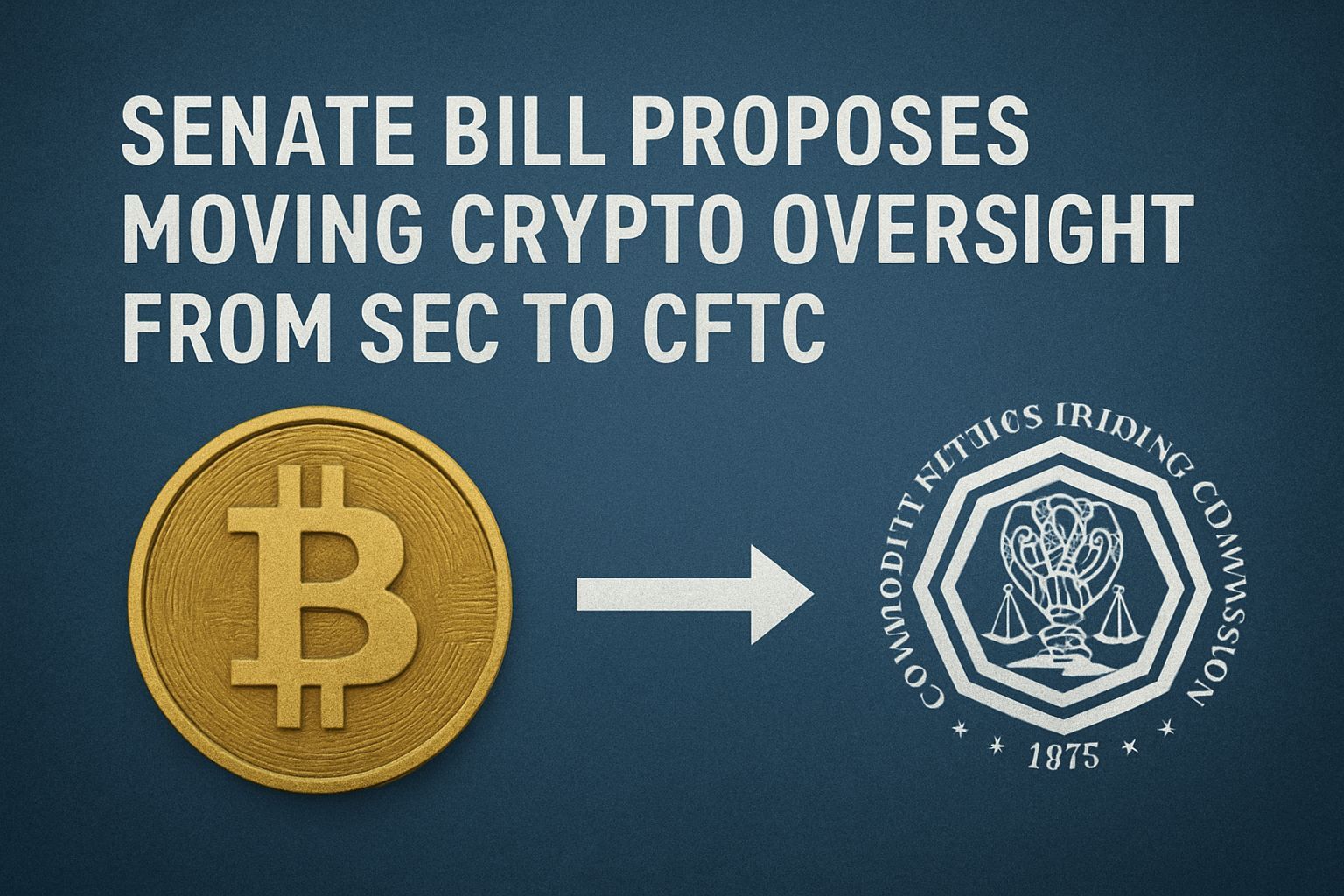
Crypto Regulators’ Tug of War: SEC vs. CFTC - What’s Next?
If you’ve been following the crypto scene lately, you’ve probably caught wind of the latest buzz: a Senate bill proposes moving crypto oversight from the SEC to the CFTC. Yeah, that’s right - the rulebook on who watches over digital assets might get flipped. This change isn’t just another tweak; it could shake the very foundations of how crypto markets operate in the U.S. The bill, driven by bipartisan muscle, aims to reclassify most cryptocurrencies as digital commodities and officially hand their regulation to the Commodity Futures Trading Commission (CFTC), pulling authority away from the Securities and Exchange Commission (SEC). If you’re wondering what this mix-up means for your favorite assets, market dynamics, and the broader blockchain ecosystem, buckle up - it’s a wild ride ahead[1][2].
Key Takeaways
The Senate bill advocates shifting primary crypto regulation from the SEC to the CFTC, focusing on spot digital commodity markets.
Digital assets like Bitcoin and Ethereum would be classified predominantly as commodities, easing regulatory confusion.
The legislation aims to beef up the CFTC’s resources and enforcement powers to deal with fast-growing and complicated digital markets.
SEC would still oversee crypto fundraising and investor protections, maintaining a dual-regulation approach.
The bill builds on the House-passed CLARITY Act and is awaiting further Senate committee negotiations before becoming law.
Subscribe to our Social Media for Exclusive Crypto News and Insights 24/7!
? Why the Push to Shift Crypto Oversight?
Honestly, this move caught everyone off guard. The SEC’s been the heavyweight champ in crypto regulation for years, chasing down initial coin offerings (ICOs) and peppering enforcement actions left and right. But here’s the catch - many cryptocurrencies, including giants like Bitcoin (BTC) and Ethereum (ETH), don’t really fit the traditional security mold the SEC uses. Traders and developers have been scratching their heads for ages over what counts as a security versus a commodity.
Enter the CFTC - the agency traditionally overseeing futures and derivatives but with expertise in commodities markets. The Senate bill, spearheaded by Senators John Boozman and Cory Booker, argues that having the CFTC regulate spot digital commodity markets brings clearer rules and better regulatory harmony. This bipartisan proposal builds on the House’s earlier CLARITY Act and tries to solve a fundamental dilemma: how do you apply classic regulatory frameworks to a digital-first financial world?[1][2][3]
? Market Mechanics and What Could Change

Let’s get technical for a sec. If the CFTC takes over spot crypto regulation, that impacts several market mechanics and investor behaviors:
Dominance Cycles: BTC’s market dominance shifts could become even more pronounced. Historically, during times of regulatory uncertainty, Bitcoin often shines as the “safe haven,” driving its dominance higher. But with the regulatory scene being clarified, altcoins might get a leg up - the kind of market-wide “risk-on” energy that sends alt-season into overdrive.
ADX Movements: Average Directional Index (ADX) signals for crypto pairs might see clearer trend confirmations post-legislation. Why? Improved regulatory clarity reduces market noise, making trend-following indicators like ADX more reliable for institutional and retail traders alike.
Liquidation Cascades: Those sudden flash crashes that result from leveraged positions blowing up? They might become less frequent. Enhanced regulatory oversight through the CFTC could enforce stricter margin requirements on exchanges, tamping down the wild liquidation spirals that crypto veterans dread.
Back in mid-2022, I held ADA stock through a brutal 60% dump. It was like watching a slow-mo train wreck - messy, ugly, but hugely educational. The lesson? Clear regulatory frameworks prevent that kind of chaos. The bill could set the stage to avoid repeat calamities and usher in a more stable environment[1][4].
? What Analysts Are Saying: Pro and Con
Here’s a gem from a trader I chatted with last week: “This reminds me eerily of 2021’s blow-off top where no one knew who was watching the crypto playground. Centralizing oversight under the CFTC could be the calm after the storm - or at least a clearer storm warning.”
Experts from Bank of America have flagged the regulatory fragmentation as a key factor holding back crypto’s institutional adoption. According to their latest research, consistent regulatory frameworks drive asset inflows and market maturity[1][3].
On the flip side, skeptics argue that this change might lead to overlaps and jurisdictional confusion - after all, fundraising and securities laws remain under the SEC’s thumb, which could keep legal headaches alive. Also, the CFTC historically regulates derivatives and futures, so stepping into spot markets might require a steep learning curve and build-up of new internal resources before enforcement can be as effective[2][5].
? What This Means for Exchanges & Investors

You’ve seen this before, right? BTC teasing a breakout and then faking out. So, imagine exchanges right now strategizing as they peek over their regulatory shoulder. Under CFTC rules, spot crypto exchanges will have to meet stricter custody, transparency, and anti-fraud standards.
If you trade on platforms like Coinbase or Binance.US, expect:
More rigorous compliance checks.
Greater emphasis on custody safeguards and self-custody rights, something the bill and regulators have underscored as a "core American value."
Possibly slower product launches initially as exchanges align with new standards.
For investors, this might mean less drama from enforcement surprises and clearer paths to understand what risks you’re walking into.
? Live Market Vibes & Data Insights
At the moment, Bitcoin is holding around $34,500 while ETH is awkwardly testing resistance near $2,100 - looks like ETH just said “nope” and dropped back to support, again, triggering wave after wave of stop-loss liquidations on leveraged positions (source: TradingView data, Nov 10, 2025). The ADX on BTC/USD lately has been creeping above 25, signaling strengthening trends but not explosive momentum - probably reflecting trader caution ahead of regulatory clarity.
Meanwhile, onchain analytics from Glassnode reveal a subtle rotation of “whales” shifting USDT stablecoin holdings into BTC and ETH futures contracts, maybe positioning ahead of expected regulatory changes. The whales ain’t sleeping, fam. They’re rotating[4].
? So… What’s Next? And Should You Care?
Look, this bill isn’t law yet. It’s got a few more hoops - merging with Senate Banking Committee proposals, ironing out the bill’s fine print, and surviving the usual Washington wrangling, including budget debates and political grandstanding.
But if it passes, the effects could be profound:
Clearer rules could draw more institutional money to crypto markets, smoothing out volatility and providing better price discovery.
Smaller players gain clarity on compliance, potentially lowering barriers for decentralized finance (DeFi) projects to innovate without fear of surprise enforcement.
It might accelerate homepage adoption of digital commodities as mainstream financial tools rather than risky “securities.”
Here’s a question for you: imagine holding SOL through that suspected regulatory shakeup - would you be selling at the first sign of uncertainty, or doubling down because you believe clearer rules signal maturity? That’s the kind of strategic thinking smart investors are chewing on right now.
Whatever your stance, one thing’s pretty clear: the crypto regulatory saga is far from over, but this latest rationale for shifting oversight to the CFTC could mark a fresh chapter - hopefully with clearer signals, less noise, and more room for fun (and profits).
Senate Bill Proposes Moving Crypto Oversight From SEC to CFTC: FAQs You’ll Want to Know
Q1: What does moving crypto oversight from the SEC to the CFTC actually mean?
A1: It means the primary regulator for spot market crypto trading would switch from the SEC, which treats cryptocurrencies mostly as securities, to the CFTC, which views them as commodities. This aims to simplify rules and reduce regulatory confusion[1][2].
Q2: How will this shift affect crypto investors and traders?
A2: Investors might see clearer protections and market rules, possibly fewer surprise enforcement actions. Traders could benefit from exchanges having to meet stricter custody and transparency standards, reducing risks like sudden liquidation cascades[4].
Q3: Does the SEC lose all crypto regulatory power then?
A3: Nope. The SEC would still regulate crypto fundraising and investor protection matters. So initial coin offerings (ICOs) and securities-related tokens remain under SEC purview[2][3].
Q4: Why do some people prefer the CFTC over the SEC for crypto regulation?
A4: Because many major cryptocurrencies act more like commodities than securities. The CFTC’s experience with derivatives markets and focus on commodities arguably fits crypto’s structure better, potentially fostering innovation while protecting markets[1][3].
Q5: Could this shift lead to delays or confusion during the transition?
A5: Possibly, yes. The bill still needs refinement and may require agencies to build new capabilities. Also, dual oversight on different aspects of crypto might cause some initial jurisdictional overlap[5].
Q6: How might this legislation impact the broader cryptocurrency market?
A6: It could promote market stability and increase institutional participation, as clearer rules reduce perceived risks. This may also accelerate crypto’s legitimacy in mainstream finance[1][4].
crypto regulation shift
commodity futures trading commission
clarity act crypto
- https://cryptobriefing.com/crypto-market-regulation-cftc-shift/
- https://freedomforallamericans.org/clarity-act-2025/
- https://www.agriculture.senate.gov/newsroom/rep/press/release/boozman-booker-release-bipartisan-market-structure-discussion-draft
- https://www.lw.com/en/us-crypto-policy-tracker/regulatory-developments
- https://www.coindesk.com/policy/2025/11/10/senate-ag-releases-long-awaited-version-of-crypto-market-structure-legislation