

Coinbase is Leaving Delaware for Texas-Here’s Why This Matters More Than You Think
The Crypto World’s Biggest Corporate Rebellion Just Got Real
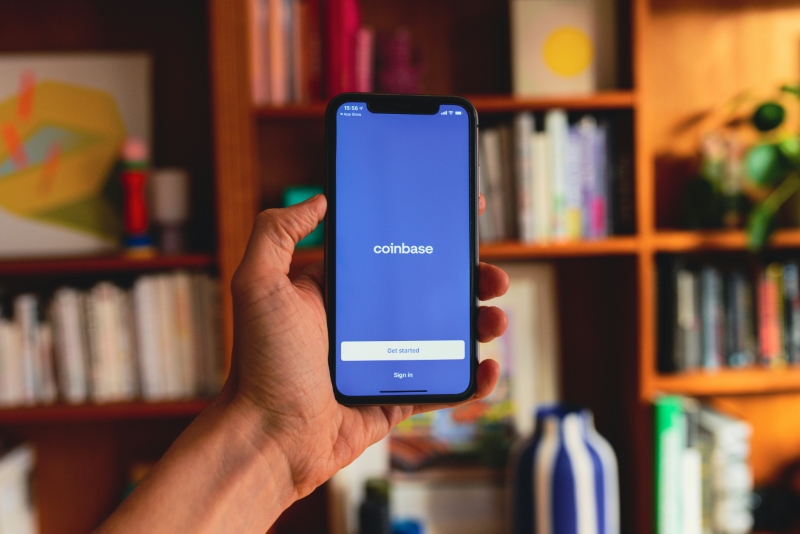
Look, I’ll be straight with you. On November 12, 2025, Coinbase just made a move that signals something we’ve all been whispering about: Delaware’s dominance in corporate law is cracking. The largest publicly traded cryptocurrency exchange in the U.S. filed to reincorporate in Texas, and honestly? It’s not just about tax breaks or cheaper lawyers. This is about a fundamental shift in how crypto companies view their legal future-and what it means for the broader industry’s legitimacy.[1][3]
Coinbase received backing from 78.4% of voting power to make this happen.[1] That’s not a slim margin. That’s a resounding "get us out of here" from shareholders who are tired of Delaware’s unpredictable court rulings and litigation nightmares. And Coinbase? They’re not alone in this exodus. Tesla already made the jump in June 2025, SpaceX followed, and now we’re watching what looks like a genuine "Dexit" movement reshape corporate America’s legal landscape.[1][8]
Here’s the thing though: this isn’t just business news. It’s a watershed moment for crypto’s legitimacy. When the biggest legitimate player in digital assets decides Delaware’s framework no longer cuts it, Wall Street takes notice. And when Wall Street takes notice, regulatory clarity follows. This move, wrapped in legalese and SEC filings, actually tells a story about where crypto’s going-and where the smart money’s already positioned itself.
Key Takeaways
- Coinbase officially filed with the SEC on November 12, 2025 to reincorporate from Delaware to Texas, with 78.4% shareholder approval securing the move.[1]
- Delaware’s legal environment has become unpredictably litigious, pushing even massive corporations to reconsider their traditional home state.[1][7]
- Texas offers concrete advantages: a Strategic Bitcoin Reserve (SB 21), specialized business courts, lower litigation risks, and a genuinely pro-crypto regulatory stance.[1][3]
- This isn’t cosmetic-the move signals broader institutional confidence in crypto and Texas’s commitment to becoming a Web3 hub.[1][5]
- Market implications are real: companies fleeing Delaware suggests a recalibration of corporate governance priorities, with innovation and predictability now trumping tradition.[6]
?️ Why Delaware Lost the Plot (And How We Got Here)
Okay, so here’s the backstory nobody really talks about. Delaware used to be the place. Back in the day, if you were a company wanting clean corporate governance, predictable court rulings, and legal certainty, Delaware was your guy. The Delaware Court of Chancery was legendary-specialized judges who actually got business law. They made decisions quickly. They made them consistently. That consistency was worth paying premium legal fees for.
Subscribe to our Social Media for Exclusive Crypto News and Insights 24/7!
Then something shifted.
Paul Grewal, Coinbase’s Chief Legal Officer, didn’t mince words about this.[1][5] In his Wall Street Journal op-ed, he basically said: "Delaware promised us predictability. What we got instead was chaos." He specifically called out "unpredictable outcomes" from the Delaware Chancery Court as a deal-breaker.[7] And this matters because when your company’s legal framework becomes a liability instead of a shield, you start shopping around.
The tipping point? Delaware’s invalidation of a high-profile executive compensation package.[3] That decision rippled through corporate boardrooms everywhere. If even established executives couldn’t rely on Delaware’s protections, what was the point?
Coinbase’s board approved the reincorporation on October 29, 2025, and here’s what’s interesting: the company framed this move not as a reaction to Delaware, but as a proactive choice for Texas.[1] That’s strategic messaging. They’re not running away-they’re running toward something better.
? Texas Isn’t Playing Around Anymore

Let me paint you a picture. Five years ago, if someone told you Texas would become a serious contender for corporate law dominance, you’d laugh. Texas? Really? But then something happened. Texas got intentional about attracting innovation.
First came Senate Bill 21, which established the Texas Strategic Bitcoin Reserve-basically a state-level commitment to holding Bitcoin on the books.[1] Not metaphorical support. Actual, tangible BTC reserves. That’s a signal. That’s saying, "We’re not just crypto-curious; we’re crypto-committed."
Then Texas amended its Business Organizations Code in May 2025, including a 3% ownership threshold for derivative suits.[1] Translation? It became harder to sue companies into oblivion with frivolous shareholder suits. That matters more than most people realize.
But here’s where it gets really smart: Texas also established specialized business courts and robust statutory protections for boards and shareholders.[3][8] These aren’t knockoffs of Delaware’s system. They’re purpose-built frameworks that learned from Delaware’s missteps.
Governor Greg Abbott, who’s been openly supportive of digital assets, created an environment where innovation doesn’t get bogged down in legal uncertainty.[1] You’ve got a state government actively courting crypto companies, a legal framework designed for speed and predictability, and a growing tech ecosystem. Suddenly, Texas doesn’t look like a consolation prize anymore-it looks like the smart play.
? What This Means for Coinbase’s Bottom Line (And Yours)
Here’s what the market doesn’t talk about enough: reincorporation isn’t just legal theater. It’s financial architecture. When you reduce litigation risk, you reduce legal costs. When you gain predictability, you reduce uncertainty premiums built into operational budgets. Over years, that compounds.
Coinbase reported Q3 2025 earnings that beat expectations by 45%.[4] The company’s market capitalization sits around $82 billion.[6][8] This reincorporation move-which the company structured as a tax-free reorganization with zero operational changes-signals management’s confidence in the company’s trajectory.[1]
Here’s what won’t change: Coinbase’s Nasdaq listing, capital structure, offices, or day-to-day operations remain exactly the same.[1] This is purely about legal domicile and governance framework. But that "purely" matters. A lot.
Think about it this way: Coinbase’s executives can now focus on actually building crypto infrastructure instead of worrying about Delaware courtroom drama. That bandwidth translates into better products, faster innovation, and lower structural overhead. For investors, that’s the kind of tailwind nobody prices in until it shows up in earnings.
The move also sends a message to institutional investors who’ve been sitting on the sidelines: "Look, even the most regulated, most scrutinized crypto company trusts this framework." That’s legitimacy currency. That’s the kind of thing that unlocks new capital flows.
? The Bigger Picture: Dexit Isn’t Fringe Anymore
Honestly, when Tesla made the move in June 2025, some people treated it like an outlier-Elon being Elon, right? But then SpaceX followed. Now Coinbase. You’re starting to see a pattern.
The "Dexit" movement-companies leaving Delaware for alternative states like Texas and Nevada[8]-has moved from fringe to mainstream. And here’s what’s wild: these aren’t small startups testing a thesis. These are blue-chip companies making deliberate, high-stakes decisions about where to legally exist.
For the crypto industry specifically, this is huge. Remember when crypto was treated like the Wild West by corporate America? When legitimate companies avoided anything blockchain-adjacent because of regulatory fog? That era’s closing. Now the largest crypto exchange is making the same calculation as Tesla’s Elon Musk and moving to greener pastures.
Coinbase CEO Brian Armstrong emphasized the company’s core ethos in his own statement: "Coinbase has always been about increasing economic freedom… Texas has a strong culture of celebrating builders."[5] That’s not just PR. That’s alignment between a company’s values and its legal jurisdiction. When that clicks, you get momentum.
? The Fine Print: What Changes and What Doesn’t
Let’s ground this in reality for a second. The SEC filing confirmed this is structured as a reorganization with no fundamental changes to the company’s structure.[1] Coinbase remains a publicly traded company. It still operates under federal securities law. It still answers to the SEC. It still pays federal taxes.
What does change? The state laws governing internal corporate affairs-like board duties, shareholder rights, and derivative suit procedures-now follow Texas law instead of Delaware law. That’s the friction point that was creating litigation risk and uncertainty.
The reincorporation process itself began in early 2025 when a special committee reviewed the alternatives and recommended the move in April.[1] So this wasn’t a snap decision. This was methodical, deliberate strategic planning by people whose entire job is understanding corporate governance.
Here’s a question worth sitting with: if Delaware’s framework were truly unbeatable, why would a $82 billion company voluntarily shoulder the transaction costs and legal complexity of reincorporation? Answer: because the current system was costing them more than the move itself.
? What This Signals About Crypto’s Institutional Future
Pull back for a second and think about the optics. Coinbase-the company that went public in April 2021, the company that’s had to battle regulators and skeptics constantly-is now reshaping itself around pro-crypto governance. That’s not defensive. That’s offensive. That’s how you move from "we tolerate crypto" to "we’re building for crypto."
The timing matters too. This comes after crypto’s maturation in 2024-2025. After institutions understood you could actually make money in this space without everything exploding. After Bitcoin touched six figures and Ethereum carved out its niche as infrastructure. Coinbase’s move to Texas isn’t a bet on crypto’s future anymore-it’s a statement that crypto has a future, and Texas is the right place to build it.
What we’re watching is institutional validation at scale. When your stock’s on Nasdaq and you’re making serious money, you don’t make moves like this lightly. You make them because the math works and the market’s shifted.
? The Honest Take: Why This Matters for Your Portfolio
Look, I’m not going to pretend this directly pumps or dumps your favorite altcoin tomorrow. It doesn’t work that way. But here’s what it does do: it removes structural uncertainty around the most legitimate on-ramp into crypto for regular people and institutions.
Coinbase’s entire business model depends on being trustworthy. On being the company your grandmother can use to buy Bitcoin without worrying about it disappearing overnight. Every bit of legitimacy-every regulatory win, every legal certainty-is infrastructure for that thesis.
When you reduce the company’s legal risk profile, you’re making it a less speculative investment. And you know what happens when a speculative asset becomes less speculative? It attracts capital that was previously on the sidelines.
? Frequently Asked Questions: Coinbase’s Move to Texas and What It Means for Crypto’s Future
Q1: Why did Coinbase specifically choose Texas over other states like Nevada or Florida?
A1: Texas offered a combination of infrastructure Coinbase couldn’t pass up. The state established the Strategic Bitcoin Reserve through Senate Bill 21, demonstrating genuine pro-crypto commitment.[1] Texas also recently amended its Business Organizations Code with a 3% ownership threshold for derivative suits,[1] and created specialized business courts designed for modern corporate governance.[3] While Nevada and Florida have also attracted corporate reincorporations, Texas provided the most comprehensive framework combining legal predictability, pro-innovation messaging from Governor Abbott, and explicit cryptocurrency support-making it the more compelling choice for a crypto-native company.[1][5]
Q2: Does this reincorporation change where Coinbase operates or how it serves users?
A2: No. The move is purely structural at the legal level. Coinbase remains a Nasdaq-listed company, maintains its current capital structure, and continues operating as a remote-first organization without a single headquarters.[1][8] Your ability to buy, sell, and trade crypto on the platform remains identical. The reincorporation was structured as a tax-free reorganization with zero operational disruption.[1] Think of it like changing your mailing address without moving your actual house.
Q3: What makes Delaware’s legal system less attractive now compared to the past?
A3: Delaware’s Delaware Court of Chancery, once legendary for predictability and speed, has become increasingly unpredictable in recent years.[1][7] The court’s invalidation of a high-profile executive compensation package signaled that even established legal protections could be overturned.[3] Paul Grewal, Coinbase’s Chief Legal Officer, specifically cited "unpredictable outcomes" from Delaware courts as a primary driver for leaving.[1][5] Essentially, the state lost its reputation as offering consistency, making companies vulnerable to litigation risk they couldn’t reliably predict or defend against.
Q4: Is Coinbase the first major company to make this move, or part of a larger trend?
A4: Coinbase is actually part of an emerging "Dexit" movement. Tesla relocated its incorporation to Texas in June 2025, followed by SpaceX.[1][8] This represents a broader shift where even massive, established companies are reconsidering Delaware’s advantages versus alternatives. The movement signals that states like Texas have successfully positioned themselves as competitive alternatives, offering specialized business courts, lower litigation risk, and more predictable legal frameworks than Delaware currently provides.[3][8]
Q5: How does this move affect Coinbase’s regulatory relationship with the SEC and federal agencies?
A5: Federal oversight remains completely unchanged. Coinbase still operates under SEC regulations, federal securities law, and all applicable federal statutes.[1] The reincorporation only affects state-level corporate governance laws-essentially how the company handles internal affairs like board duties and shareholder rights. Federal regulators and crypto oversight continue exactly as before. This is why the move was structured as a reorganization with zero operational impact.[1]
Q6: What’s the practical impact for Coinbase shareholders and potential investors?
A6: For existing shareholders, the main benefit is reduced legal uncertainty and litigation risk, which typically translates to lower operational costs over time-potentially supporting better earnings margins. For potential investors, it signals management confidence and alignment with a business-friendly jurisdiction, reducing governance-related uncertainties that previously created risk premiums. The move also sends a message that even the most regulated crypto company trusts Texas’s legal framework, providing institutional-grade legitimacy to crypto infrastructure investment.[4][6][8]
Connect Deeper Into Crypto Research
Explore more perspectives on institutional adoption and market dynamics through resources like crypto institutional adoption, understand how blockchain regulatory frameworks evolve, and stay informed on exchange market dominance trends.
- https://www.coinspeaker.com/coinbase-reincorporates-texas-following-tesla-delaware-exit/
- https://www.xt.com/en/blog/post/why-coinbase-chose-texas-over-delaware-for-corporate-reincorporation
- https://cryptobriefing.com/coinbase-to-leave-delaware-reincorporate-in-texas/
- https://coinlaw.io/coinbase-dexit-texas-over-delaware/
- https://www.crowdfundinsider.com/2025/11/255512-coinbase-exits-delaware-moves-incorporation-to-texas/
- https://www.financemagnates.com/cryptocurrency/coinbase-heads-to-texas-leaving-delawares-legal-risks-behind/amp/
- https://benzatine.com/news-room/coinbase-follows-teslas-footsteps-shifts-incorporation-to-texas
- https://dallasinnovates.com/greener-pastures-in-texas-coinbase-leaving-delaware-to-reincorporate-in-texas/






