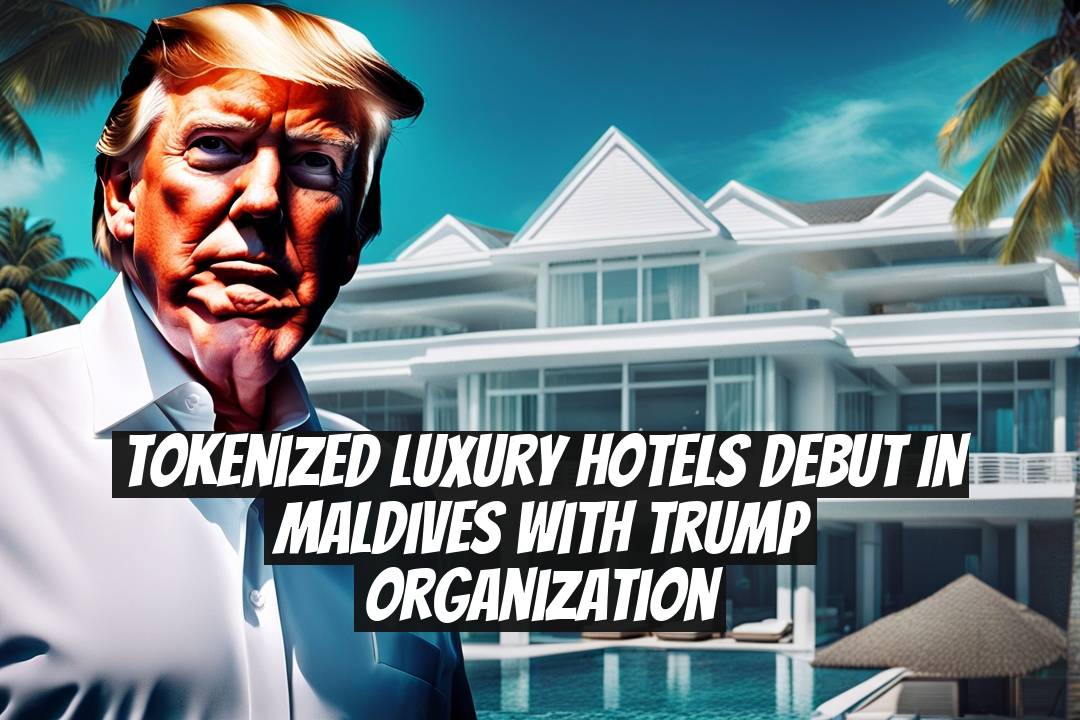
The Future of Luxury Investment is Here: Trump’s Revolutionary Tokenized Hotel in the Maldives
? What Happens When Blockchain Meets Five-Star Hospitality?
Imagine stepping into a world where you don’t need millions in liquid capital to own a piece of the world’s most exclusive luxury resorts. The Trump Organization and Saudi Arabian real estate powerhouse Dar Global just announced something that’s about to shake up both the hospitality and crypto industries simultaneously. The Trump International Hotel Maldives isn’t just another luxury development-it’s a game-changing pilot project that tokenizes the entire development phase from day one, allowing everyday investors and crypto enthusiasts to purchase digital shares in a premium resort before a single brick is laid.
This announcement marks the world’s first tokenized hotel development project, and honestly, as someone who’s been tracking the intersection of real estate and blockchain for years, this is the kind of moment that historians will point back to as transformational. We’re not talking about tokenizing a completed asset here-that’s been done before. We’re talking about democratizing the investment process itself, from the ground up, in real-time. The resort, located just 25 minutes by speedboat from Malé, the Maldives capital, will feature approximately 80 ultra-luxury beach and overwater villas and is scheduled to open by the end of 2028.
Subscribe to our Social Media for Exclusive Crypto News and Insights 24/7!
? Key Takeaways You Need to Know Right Now
- The Trump International Hotel Maldives represents the world’s first tokenized hotel development project, allowing investors to buy digital shares from the early stages
- The luxury resort will feature 80 ultra-premium beach and overwater villas with an expected opening in late 2028
- Real estate tokenization is projected to reach a $4 trillion market by 2035, making this project part of a massive industry shift
- Dar Global and The Trump Organization are combining luxury hospitality innovation with blockchain technology for unprecedented investor access
- This tokenization model fundamentally differs from traditional real estate investments by offering fractional ownership opportunities from inception
? Breaking Down the Revolution: What Makes This Different?

Here’s the thing that really gets me excited about this announcement-it’s not just about putting real estate on the blockchain. That’s almost table stakes at this point. What’s genuinely innovative here is that Dar Global and The Trump Organization are tokenizing the development phase itself. This is fundamentally different from previous tokenization models that typically only tokenize completed properties.
Think about traditional real estate investment for a moment. You’ve got accredited investors with substantial capital, lengthy due diligence processes, limited transparency into construction phases, and minimal liquidity until the property is completed and sold or refinanced. Now imagine flipping that entirely. With tokenization of the development phase, investors can:
- Purchase fractional ownership stakes from the earliest stages of development
- Access real-time updates on construction progress via blockchain records
- Potentially benefit from appreciation as the project progresses through different development phases
- Maintain better liquidity through secondary token markets
- Enjoy transparent, immutable records of ownership and fund allocation
Eric Trump, Executive Vice President of The Trump Organization, captured this perfectly when he stated that "this development will not only redefine luxury in the region but also set a new benchmark for innovation in real estate investment through tokenization." That’s not just marketing speak-that’s a recognition that we’re witnessing a structural shift in how capital flows into premium real estate.
? The Crypto Market Implications: A Crypto Analyst’s Deep Dive

From my perspective as someone who’s spent considerable time analyzing how blockchain technology intersects with traditional finance, this announcement carries enormous implications for the cryptocurrency market. Let me break down why this matters far beyond the Maldives:
? Legitimacy Through Enterprise Adoption

First, we’re seeing legitimacy being established through enterprise-level adoption. When you have the Trump Organization-a brand that’s been synonymous with luxury real estate for decades-putting their reputation behind a tokenized asset, you’re essentially getting a stamp of approval on the technology itself. This matters immensely for institutions that have been on the sidelines.
The institutional hesitation around crypto assets hasn’t primarily been about the technology-it’s been about application and credibility. When major real estate developers and hospitality groups start using tokenization as their primary investment model, it forces Wall Street and traditional finance to reckon with the reality that this isn’t going away. It’s transforming into infrastructure.
? Market Size Projections and What They Mean

According to Deloitte Center for Financial Services research, real estate tokenization is projected to become a $4 trillion market by 2035. Let that number sink in for a moment. Four trillion dollars. That’s larger than the entire current cryptocurrency market capitalization, and it’s specifically allocated to real estate tokenization alone.
Now, here’s where it gets interesting for crypto markets. Every dollar that flows into real estate tokenization infrastructure requires blockchain technology, smart contracts, decentralized exchanges or secondary markets for trading, staking mechanisms, governance tokens potentially, and the underlying cryptocurrency infrastructure to facilitate transactions. We’re essentially talking about a multi-trillion-dollar inflow into blockchain-based financial infrastructure.
If the Maldives project succeeds-and based on the brand power and development expertise involved, there’s every reason to believe it will-you’ll see a cascade of similar projects. Other luxury hotel chains will evaluate tokenization. Developers in other jurisdictions will lobby for regulatory clarity to enable similar projects. This creates a virtuous cycle of adoption that directly benefits:
- Layer 1 and Layer 2 blockchain networks hosting these assets
- Stablecoins used in cross-border real estate transactions
- Decentralized finance protocols enabling fractional ownership and trading
- Specialized real estate tokenization platforms
- Oracle services providing valuation data
? Regulatory Framework Evolution
Here’s something that doesn’t get enough attention: this project will force regulatory evolution. The fact that Dar Global is London-listed (LSE: DAR) and operating alongside The Trump Organization means this project will navigate multiple regulatory jurisdictions simultaneously. The Maldives government, UK regulatory bodies, potentially SEC oversight depending on the investor base, and various other frameworks.
When major projects like this have to work within existing regulatory frameworks, they either demonstrate the adequacy of current rules or expose gaps that regulators must address. Either way, we get clarity. And clarity is worth billions to the crypto industry because it reduces the uncertainty premium that currently suppresses institutional investment.
? The Investment Opportunity: Understanding the Mechanics
Let’s get practical about what this actually means for investors. The Trump International Hotel Maldives tokenization creates several distinct opportunities within the real estate and crypto ecosystems:
Direct Asset Ownership Through Tokens
You’ll be able to purchase tokens representing fractional ownership in the development rights and future revenues of the property. These aren’t speculative tokens without backing-they represent actual real estate development progress and future hospitality revenues. This is fundamentally different from many crypto projects because the underlying asset is tangible, auditable, and generates actual cash flows.
Development Phase Appreciation
As the property moves from planning through construction to opening, the value proposition changes. Early investors participate in the value creation that occurs as the project becomes more de-risked. A token purchased during early development might represent ownership in a project with 30% execution risk. That same token at property opening represents ownership in an operating, revenue-generating asset. That risk reduction typically translates to value appreciation.
Revenue Sharing and Yield Generation
Once the resort becomes operational, tokens likely represent claims on resort revenues-either through dividend distributions or other mechanisms yet to be announced. Luxury resorts in the Maldives command premium nightly rates. A property with 80 villas, operating at even moderate occupancy rates (let’s say 70%), generating average revenue of $1,500+ per villa per night, creates roughly $42 million in annual gross revenue.
Liquidity and Secondary Markets
Unlike traditional real estate investments where you’re locked in until you can sell the entire property, tokenized assets can have active secondary markets. This allows investors to adjust their exposure, realize gains, or rebalance portfolios-something that’s historically been difficult with real estate.
? The Technology Stack: What’s Actually Happening Under the Hood
For those of us deep in crypto, understanding the technical implementation matters. While specific details about blockchain platform, smart contract architecture, and custodial arrangements haven’t been fully disclosed, we can make some educated assessments based on industry best practices:
Blockchain Platform Selection
Given the enterprise nature of this project and the need for institutional-grade security, I’d expect to see either Ethereum (for maximum accessibility and DeFi integration), or potentially a specialized blockchain focused on tokenized assets. The choice matters because it affects:
- Transaction costs for buying and selling tokens
- Integration with existing DeFi lending protocols
- Regulatory clarity in major markets
- Institutional custody solutions available
Smart Contract Framework
The tokens will likely be ERC-20 tokens (or equivalent on other chains) representing fractional ownership. These would be governed by smart contracts that handle:
- Revenue distribution mechanics
- Voting rights for tokenholders on major property decisions
- Escrow mechanisms for development funding
- Redemption or buyback provisions
Custody and Security
For an institutional-grade property like this, assets would almost certainly be held in qualified custody. This might involve partnerships with traditional trust companies working alongside blockchain-native custodians, or specialized real estate tokenization platforms with institutional-grade security.
? The Maldives Location Factor: Strategic Brilliance
Choosing the Maldives for this pioneering project wasn’t accidental. The Maldives has several strategic advantages that make it ideal for a first-of-its-kind tokenized hotel development:
Established Luxury Tourism Infrastructure
The Maldives is already a premium destination for ultra-high-net-worth individuals. Over 1.7 million tourists visit annually, with average spend among luxury resort guests exceeding $1,000 per night. This established market reduces revenue projection uncertainty.
Regulatory Openness
The Maldives government has been relatively progressive regarding blockchain and fintech innovation. This openness to technology adoption makes it more feasible to implement tokenization at scale without prohibitive regulatory obstacles.
Geographic Appeal
Twenty-five minutes by speedboat from Malé, the resort’s location hits the sweet spot-exclusive and remote enough for luxury positioning, yet accessible enough for practical operations and investor visits.
Currency and Payment Dynamics
Operating in a jurisdiction with active cryptocurrency adoption discussions creates natural synergies with blockchain-based payments and settlements.
? Practical Implications for Different Investor Types
Let me break down what this means for different classes of investors, because the opportunity landscape varies significantly:
Retail Crypto Investors
This project opens doors that were previously closed. Historically, retail investors couldn’t access luxury real estate development opportunities at scale. Tokenization changes that. A retail investor with $5,000 can now own a piece of a $500 million luxury development. That’s genuinely transformative.
The trade-off is that you’re participating in a long-term investment with a timeline extending to 2028 and beyond. You’re not getting short-term trading gains (unless the token appreciates significantly on secondary markets). But you’re getting exposure to an asset class that typically only wealthy individuals can access.
Institutional Investors
For family offices, hedge funds, and institutional allocators, this project serves as a proof-of-concept for a new asset class. If it succeeds, it validates the entire tokenized real estate infrastructure play. This makes it a strategic investment beyond just the project returns-you’re betting on an emerging ecosystem.
UHNW Individuals
Ultra-high-net-worth individuals might view this differently-not as an investment opportunity but as a way to diversify existing real estate holdings while gaining exposure to tokenization infrastructure evolution. If you already own luxury properties globally, adding tokenized exposure represents a different risk/return profile.
Crypto-Native Funds
For crypto investment funds, this represents an opportunity to demonstrate that digital assets can back real-world financial infrastructure. This helps with the ongoing narrative challenge that crypto has legitimate enterprise applications beyond speculation.
? Personal Insights: Why This Moment Matters
From my perspective, what makes this announcement particularly significant is the timing and execution. We’re at a juncture where three separate trends intersect:
First, the regulatory environment has evolved to the point where major institutions can confidently pursue blockchain-based projects without expecting executive-level legal risk. The SEC, FCA, and other regulators have made it clear that properly structured tokenized assets are permissible.
Second, the technology is mature enough. We’re not dealing with alpha-stage blockchain networks or experimental smart contract protocols. Ethereum, and competing chains, have been battle-tested through billions of dollars in transaction volume. The infrastructure works.
Third-and this is crucial-real estate investors are hungry for new capital sources. Traditional real estate financing has been compressed by rising interest rates, regulatory scrutiny on lending, and demographic shifts in investor capital pools. Tokenization represents a new capital formation method, and it’s less capital-intensive for developers to pursue than traditional debt/equity splits.
What I find most compelling is that this isn’t a speculative crypto play. The underlying asset has genuine economics. A 80-villa luxury resort in the Maldives generates substantial revenues. That cash flow ultimately backs the token’s value. We’re not dealing with the speculative token dynamics that have characterized much of crypto-we’re dealing with real asset economics wrapped in efficient digital ownership structures.
That distinction matters enormously for how institutional capital evaluates these opportunities.
? What Comes Next: The Cascade Effect
If the Trump Maldives project executes successfully, we should expect to see:
Rapid Proliferation of Similar Projects
Other hospitality groups will announce tokenized developments. You’ll see it in luxury hotel chains, resort operators, and boutique property developers. Within 24 months, this won’t seem novel-it’ll seem like standard practice.
Infrastructure Development
Specialized platforms will emerge focused specifically on real estate tokenization. These will handle legal documentation, compliance, token issuance, secondary market trading, and investor relations. Companies in this space will become significant enterprise software opportunities.
Regulatory Clarification
Government bodies will move toward formal frameworks for real estate tokenization rather than case-by-case interpretations. This clarity will accelerate adoption substantially.
Capital Reallocation
Billions of dollars currently sitting in traditional real estate vehicles will explore tokenized alternatives for better liquidity and fractional access. This creates tailwinds for the underlying blockchain infrastructure.
Integration with DeFi
We’ll see tokenized real estate integrated into decentralized finance protocols. This enables:
- Lending against real estate tokens as collateral
- Derivatives strategies around real estate exposure
- Liquidity pools mixing real estate tokens with stablecoins
- Complex investment vehicles that weren’t previously possible
? Addressing the Challenges Head-On
I’d be remiss if I didn’t acknowledge the legitimate challenges and risks in this space:
Liquidity Challenges
Not every token will have deep secondary market liquidity. Early investors need to assume their investment has limited liquidity until the asset matures or generates sufficient trading volume. This is a real concern that shouldn’t be glossed over.
Regulatory Fragmentation
While this project navigates regulatory frameworks successfully, differing approaches across jurisdictions could complicate things for international investors. A token tradeable in the UK might face restrictions elsewhere.
Technology Risk
Smart contracts are scrutinized, but bugs and unexpected behaviors still occur. Investors are assuming some technical risk inherent to blockchain systems.
Market Risk
The Maldives tourism market depends on global economic conditions. A recession reducing luxury travel demand would impact resort revenues and token valuations.
These aren’t reasons to avoid the opportunity-they’re reasons to approach it with informed perspective rather than hype-driven enthusiasm.
? The Big Picture: Why This Matters Beyond Crypto
Here’s what I keep coming back to: this isn’t just a crypto moment, though it certainly is that. This is a real estate moment. This is a hospitality moment. This is a capital formation moment.
For centuries, real estate has operated on dynamics established when geographic distance and information asymmetry made centralized ownership structures necessary. Tokenization removes those constraints. It doesn’t change the fundamental economics of real estate-supply, demand, location, usage patterns all matter as much as ever. But it changes how capital accesses those economics.
That’s genuinely transformative.
? The Conversational Truth: What Investors Actually Want to Know
When I talk to potential investors about opportunities like this, the real questions that matter are usually simple:
- Will this actually work? (Yes, the team has credibility and the economic fundamentals are sound)
- Can I really own a piece of it? (Yes, if you meet qualification requirements)
- What happens if I need my money? (That depends on secondary market development, which is the key variable)
- Could I actually lose everything? (Yes, always possible with real estate investments during economic downturns)
Those are the real considerations beneath all the innovation narrative.
? A Question to Carry Forward
Here’s something to ponder as you consider what comes next: if real estate-humanity’s oldest and most trusted asset class-finally meets blockchain technology in a mature, institutional implementation, what does that say about the future of other asset classes moving to decentralized infrastructure? If $4 trillion of real estate ends up on blockchain by 2035, does that inevitably follow for securities, commodities, and derivatives?
blockchain hospitality investment
[1] https://www.coindesk.com/business/2025/11/17/trump-s-maldives-hotel-will-be-a-tokenized-real-estate-project [2] https://www.prnewswire.com/in/news-releases/dar-global-and-the-trump-organization-announce-two-global-firsts-trump-international-hotel-maldives-and-the-worlds-first-tokenized-hotel-development-project-302616868.html [3] https://www.thestreet.com/crypto/business/trump-organization-tokenization [4] https://www.luxurytraveladvisor.com/hotels/trump-organization-dar-global-announce-worlds-first-tokenized-hotel-development-maldives