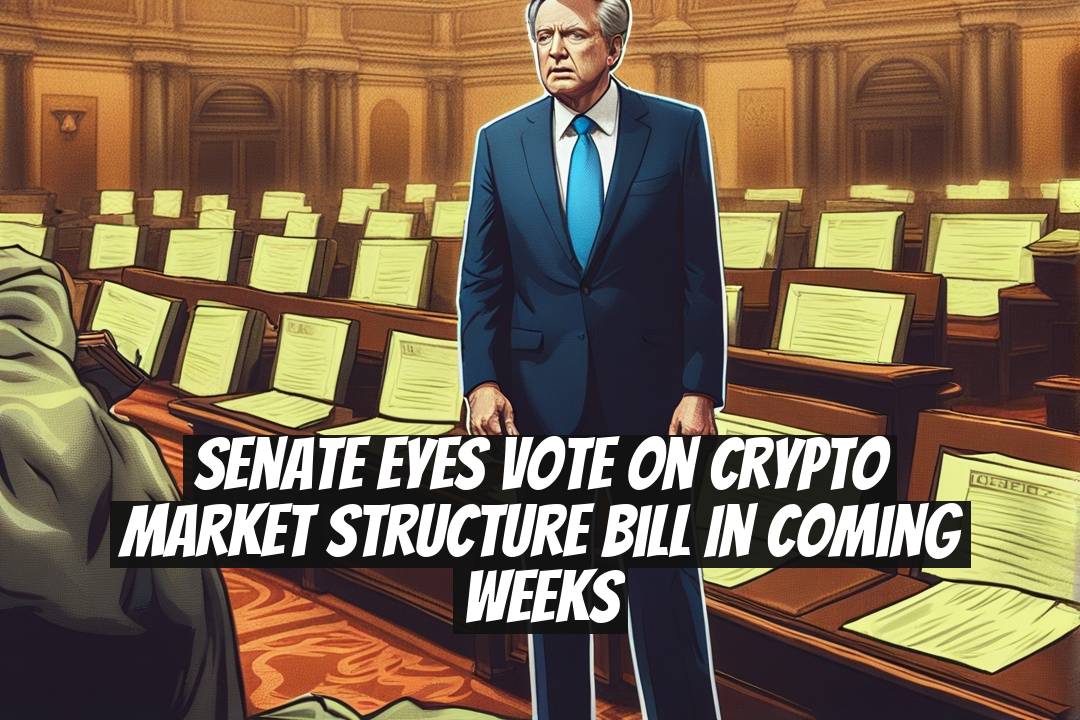
Senate’s Crypto Showdown: Could This Be the Market Shakeup We’ve Been Waiting For?
The Senate is gearing up for a vote on the crypto market structure bill in the coming weeks, and if you’re wondering how this might rattle the digital asset universe - you’re not alone. This isn’t just another legislative snooze fest. It’s shaping up as a landmark moment that could rewrite the rules on how cryptocurrencies are regulated in the US, affecting everything from institutional adoption to your favorite DeFi projects. The bill could set the stage for stronger consumer protections, clearer jurisdiction lines between the SEC and CFTC, and a US bid to become the unquestioned crypto epicenter of the globe.
Key Takeaways:
The Senate Banking and Agriculture Committees plan markup votes on separate but related crypto market structure bills, potentially in December 2025[1][3].
The Agriculture Committee’s draft focuses on defining digital commodities and empowering the Commodity Futures Trading Commission (CFTC) over spot market oversight[2].
The Banking Committee’s bill addresses securities-related digital asset issues, including DeFi - a hotly debated turf war with the SEC[1][3].
Both committees must reconcile their bills before the Senate floor vote, with hopes the legislation could reach President Trump’s desk early in 2026[1][5].
Industry insiders stress the bills are still evolving, especially around DeFi and stablecoins, and final text may differ substantially following further negotiation[2][3].
Subscribe to our Social Media for Exclusive Crypto News and Insights 24/7!
? What’s Really in the Bill(s)? A Deep Dive for the Crypto-Wise

Okay, you want the juicy details? The Senate Ag committee’s draft label digital assets not quite as securities but more like “digital commodities” - kinda like a gold standard for cryptos. That means: the CFTC, traditionally overseeing commodities like oil & corn, could step up as the chief regulator for crypto spot markets (think Coinbase, Binance spot trading). This would clarify years of regulatory limbo, where SEC and CFTC have tangled over who police what[2].
Meanwhile, the Senate Banking committee’s been cooking up its own bill focused more on crypto securities-the tokens that act like stocks or shares-plus regulatory rules for DeFi protocols, stablecoins, and broader investor protections[1][3]. This dual-track approach means two powerful committees hashing out what’s crypto’s future: Is Ethereum a commodity or a security? Who watches the decentralized exchanges? These questions will define the bill’s final shape.
Lobbyists and insiders whisper this process is far from finished, especially for DeFi - with brackets still in draft texts signaling unresolved points (yep, still some “TBDs” to iron out)[2]. Digital Chamber’s CEO Cody Carbone told Crypto In America that the Banking committee is likely to lead on DeFi rules, since that’s their SEC turf[3].
? Market Mechanics & What This Means for Traders
Now, let’s nerd out with some market insights. The last few weeks saw BTC flirting with the ADX (Average Directional Index) signaling increased trend strength, while ETH swan-dived into critical support zones below $1,900 (on TradingView). The ongoing uncertainty around legislative direction is no doubt adding to market hesitation here.
Picture this: the whales ain’t sleepy; they’re rotating positions, anticipating big swings once the bill passes. A trader I chatted with said it “looks eerily like the 2021 blow-off top,” where hype and regulation fears sent ripples through market dominance cycles. BTC dominance recently nudged back over 45%, but altcoins like SOL and ADA are still clinging on, despite liquidation cascades seen last summer that shredded up to 60% of investor capital in those tokens.
Why does this matter? Because the bill influences not just investor confidence but the liquidity and volatility mechanics in crypto trading. For example, tighter stablecoin regulations might disrupt DeFi liquidity pools, while clearer exchange regulation could reduce fraud but squeeze some margin trading volumes. Long story short: traders should buckle up.
? Real Talk: What’s At Stake & Why You Should Care

Imagine holding SOL through that 2022 crash - brutal, right? Now think if clear laws had been in place then to protect retail holders and crack down on pump-and-dump scams. That’s what this bill aspires to fix. But it’s a double-edged sword. Overregulation might stifle innovation, while underregulation leaves markets exposed to the same volatility nightmare.
The Senate’s approach - bipartisanship on steroids - could set the US apart from China’s outright bans or Europe’s bickering regulations. If it works, this bill puts the US square on the crypto map as a regulation innovator rather than laggard. As Senator Tim Scott put it bluntly on Fox Business, “We’re aiming to make America the crypto capital of the world,” with hopes the bill gets to the Senate floor soon and onto the President’s desk[1][5].
? Proprietary Analyst Insight: Expect Twists

From my conversations with market makers and institutional analysts, here’s a hot take: expect the banking committee’s DeFi regulations to spark drama. DeFi is the wild west - decentralized, permissionless, not easily slammed into traditional regulatory boxes. Whatever shape those rules take, they’ll be a blueprint used globally for years - and we could see major shifts in protocol funding, governance, and even user onboarding.
Plus, look out for how stablecoins are classified. That’s the linchpin for crypto’s daily use as “digital cash.” Bank of America’s recent research suggests stablecoin clarity could accelerate institutional trading flow by 30% or more, driving next-level adoption[1][4].
? But Wait - Why ETH Keeps Failing at Resistance
On-chain data from CoinMarketCap and TradingView recently showed ETH battling a stubborn resistance at about $2,050 for weeks - reminiscent of past cycles. The ADX hinted a strong breakout threat, yet liquidity crunches around options expiries forced sell-offs, triggering liquidation cascades - a painful ripple for many retail holders.
Remember 2021? ETH was on fire until a sudden regulatory fear spike tanked prices overnight. The same pattern’s creeping back. Makes you wonder: is this bill buzz the catalyst or the excuse? The real kicker is market psychology and dominant traders’ moves, which reflect both technicals and macro sentiment.
? What’s Next & How You Can Prep
So, what’s your game plan? Here’s a quick checklist:
Keep an eye on December’s Senate committee markups - that’s the first official legislative “drop” you don’t want to miss[1][3].
Follow volume shifts and open interest on major options expiries - these often hint at institutional positioning in anticipation of law changes[5].
Diversify your portfolio with a focus on assets less exposed to regulatory uncertainty (some “mature blockchain systems” mentioned in the bill).
Stay nimble: if the bill pulls a 2021 blow-off top, you don’t want to be the last one holding the bag.
FAQ: Senate Eyes Vote on Crypto Market Structure Bill - What You Gotta Know
Q1: What is the crypto market structure bill about?
A1: It’s proposed legislation aiming to clarify how digital assets are regulated in the US, splitting oversight between the CFTC and SEC, and setting rules for commodities, securities, DeFi, and stablecoins.
Q2: Why does the Senate split crypto regulation between two committees?
A2: Because crypto spans commodities and securities, the Senate Agriculture Committee handles commodities (CFTC’s domain), while the Banking Committee tackles securities and financial markets (SEC’s turf).
Q3: How could this bill impact everyday crypto investors?
A3: It could improve consumer protections, reduce fraud, and provide clearer legal frameworks, but also potentially add regulatory hurdles that affect market liquidity and token availability.
Q4: What are the main sticking points in the current bill drafts?
A4: DeFi regulation, stablecoin classification, and defining what qualifies as digital commodities versus securities are top unresolved issues still under negotiation.
Q5: When is the Senate expected to vote on the bill?
A5: Markup votes in committees are anticipated in December 2025, with a full Senate floor vote possibly early 2026, pending reconciliation of both committee bills.
Crypto Regulation
DeFi Legislation 2025
Stablecoin Market Impact
- https://cryptobriefing.com/crypto-bill-markup-vote-senate-banking-december/
- https://www.coindesk.com/policy/2025/11/15/state-of-crypto-what-s-in-the-new-crypto-market-structure-draft
- https://www.cryptoinamerica.com/p/crypto-market-structure-legislation
- https://www.congress.gov/bill/119th-congress/house-bill/3633/text
- https://www.theblock.co/post/379422/scott-crypto-market-bill-next-month