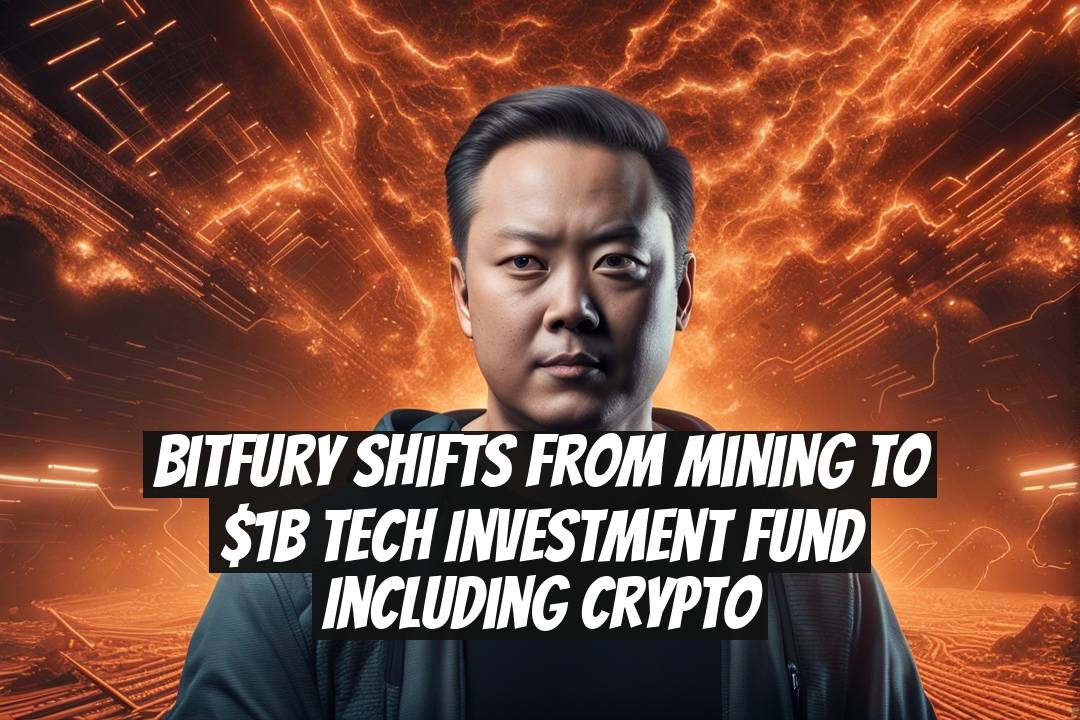
Bitfury’s Boldest Move Yet: Why a Bitcoin Mining Giant Is Betting $1B on the Future of Crypto and AI
The Mining Era Ends. The Investment Era Begins.
After 14 years of dominating the Bitcoin mining landscape, Bitfury-one of the most recognizable names in cryptocurrency-is making a move that honestly caught the industry off guard. The Amsterdam-based company is pivoting hard, trading its pickaxes for venture capital and launching a massive $1 billion ethical tech investment fund that’ll pour money into AI startups, quantum computing breakthroughs, and decentralized systems.[2][3] This isn’t just a pivot; it’s a complete reinvention, and it tells us something profound about where the crypto space is heading.
Here’s the thing: Bitfury didn’t just wake up one morning and decide mining was boring. This is strategic. The company’s pivoting to an investment firm model because they’re watching the same thing you probably are-the landscape’s changing. Hardware margins are tightening. Competition’s fiercer than ever. But opportunities in emerging tech? That’s where the real wealth gets created over the next decade.[1]
Key Takeaways
- Bitfury exits 14 years of Bitcoin mining to launch a $1 billion ethical innovation fund focused on AI, quantum computing, and crypto startups
- The company plans to deploy $200 million within the first year alone, with distributions potentially beginning in Q4 2025[5]
- This pivot signals a broader trend: profitable crypto companies are diversifying beyond mining into infrastructure and emerging technologies
- The fund targets self-sovereignty technologies and quantum-resistant systems, positioning Bitfury ahead of the curve on existential crypto risks
- This move mirrors similar exits we’ve seen from other major mining operations, suggesting the era of pure-play mining dominance is fading
? Why Mining Giants Are Suddenly Becoming VCs
You’ve probably noticed this pattern before, right? The biggest players in any industry eventually shift from production to capital allocation. It’s what happened in traditional tech-the hardware guys became the infrastructure guys, who became the investment guys. Bitfury’s playing the same playbook, except they’re doing it in crypto.[2]
The economics are pretty straightforward. Bitcoin mining’s hit a maturity phase. We’re talking about massive industrial operations competing on razor-thin margins. Your ASIC costs what it costs. Electricity prices are basically fixed (or fighting you in regulatory battles). Competition’s consolidated into a handful of mega-operations in places like El Salvador, Iceland, and Kazakhstan. There’s only so much margin left to squeeze.
Subscribe to our Social Media for Exclusive Crypto News and Insights 24/7!
But here’s where it gets interesting: Bitfury’s got something most VC firms don’t-deep technological expertise built over more than a decade in cryptography, blockchain infrastructure, and distributed systems. They’ve literally helped build the Bitcoin network. Now they’re weaponizing that knowledge to spot trends early and invest in technologies before the mainstream catches on.
Think about it. A VC fund managed by people who actually understand quantum computing’s threat to cryptography? People who’ve wrestled with decentralization at scale? That’s not common. That’s valuable. That’s why Bitfury’s positioning this fund as an "ethical tech" play-they’re not just chasing returns; they’re backing the infrastructure that’ll define the next cycle.[1]
? The Numbers Behind the Shift

Let’s talk specifics because the execution matters here. Bitfury’s committing $1 billion total to this initiative, but they’re not dumping it all in one go. They’re being smart about it: $200 million in year one alone.[5] That’s the kind of dry powder strategy that lets you average into emerging trends without getting absolutely rekt by market cycles.
Q4 2025 is the target launch window.[2] We’re talking weeks away from when distributions could start flowing. This isn’t vaporware; it’s imminent. For a company that’s been quietly mining for over a decade, suddenly announcing a $1 billion fund with concrete timelines signals confidence. They’ve clearly already identified portfolio companies or at least investment theses worth backing.
The allocation strategy reveals their thesis too. They’re not spreading bets thin across 50 startups. They’re targeting specific fields:[3]
- Artificial Intelligence - The obvious one. Everyone’s chasing AI now, but crypto-native AI could be genuinely different
- Quantum Computing - This is where the sophisticated play lies. Quantum threatens current cryptography. Building quantum-resistant systems now means being first-mover advantage in the post-quantum era
- Decentralized Systems - Their bread and butter. Self-sovereignty, privacy tech, and distributed infrastructure
This isn’t a shotgun approach. It’s targeted. It’s someone who’s thought deeply about what matters.
? The Ethical Angle: Branding or Philosophy?

Here’s where I’ll be honest with you-the "ethical tech" framing could be pure marketing. We’ve all seen that before. Some company gets caught doing shady stuff, pivots to "sustainable" whatever, and calls it a day.
But Bitfury’s got a different story. They’ve been relatively careful about their public stance on energy consumption, regulatory compliance, and environmental impact. For a Bitcoin mining company-an industry that gets absolutely hammered on carbon footprint criticism-staying somewhat above the fray takes discipline.
The ethical positioning here probably reflects their actual governance structure and investment criteria. They’re not funding just any startup; they’re funding ones aligned with specific principles around innovation that doesn’t compromise on values. That appeals to LP (limited partner) bases increasingly concerned about ESG criteria.[4] It’s smart positioning, and honestly, it might actually be genuine.
What matters for you as an observer: this signals that the future of major crypto infrastructure investment is tying returns to reputation. Mining profitably is no longer enough. You’ve got to care about the ecosystem you’re investing in, or at least appear to. That’s a market shift worth tracking.
? What This Means for the Broader Crypto Market

Let’s zoom out for a second. Bitfury’s pivot isn’t happening in a vacuum. This is happening in a market where institutional adoption’s accelerating, regulatory frameworks are solidifying, and the distinction between "crypto companies" and "tech companies" is blurring.
Mining operations pivoting to broader investment plays tells us something: the pure-play mining model’s matured. It’s commoditized. The real wealth creation going forward happens in layers above production-in protocol development, infrastructure, applications, and cross-cutting technologies like AI and quantum computing.
I talked to a trader last month who made an interesting observation: "The businesses that survived the 2022 bear market weren’t the ones with the highest mining hashrates. They were the ones diversified enough to weather downturns and innovative enough to build during bear markets." Bitfury’s making that exact move. They’re using their accumulated capital and expertise from mining’s good years to fund the next wave of innovation.
Here’s the pattern we’re probably seeing repeat: in any bull market, the winners aren’t always the ones dominating the previous cycle. Sometimes they are, but often? It’s the ones who see the shift coming and position early. Bitfury’s betting they see the shift. The question is whether they’re right.
? The Quantum Computing Wildcard
Here’s the thing about quantum computing nobody likes to talk about enough: it’s not a distant threat to cryptography. It’s becoming real, and crypto’s on the clock.
Current cryptography-the RSA and elliptic curve stuff we depend on for Bitcoin, Ethereum, everything-gets broken once quantum computers scale enough. Not maybe. Definitely. It’s physics.[3]
So here’s why Bitfury investing in quantum-resistant systems matters: they’re funding solutions to a problem that the broader crypto space hasn’t fully internalized yet. By the time quantum’s actually a crisis (and we’re talking maybe 10-15 years, depending on whose estimates you trust), the quantum-safe infrastructure will either be built and integrated, or we’ll be in chaos mode.
Being early on quantum resistance could position this fund’s portfolio companies as critical infrastructure in a post-quantum world. That’s not hyperbole. That’s scenario planning that actually makes sense for a 10-year investment horizon.
? Self-Sovereignty and Privacy: The Unsexy Future
One more thing worth unpacking: the focus on self-sovereignty and decentralized identity. That’s not as flashy as AI or quantum computing. It doesn’t get the media hype. But it’s arguably more important for crypto’s long-term survival.
Self-sovereignty-the ability to own and control your digital identity and assets without relying on centralized intermediaries-is kind of the entire point of cryptocurrency, right? Yet the infrastructure’s fragmented. The UX sucks. Most people still rely on centralized exchanges and custodians because decentralized alternatives are clunky.
Bitfury investing here means they’re betting on infrastructure maturation. They’re backing the boring-but-critical stuff that makes crypto actually usable for regular people. That’s not a get-rich-quick play. That’s a "build the foundation for adoption" play. And honestly? Those tend to be the most profitable long-term.
? Historical Context: When Mining Giants Evolved
This isn’t the first time we’ve seen major mining operations shift strategies. Back in 2020-2021, we saw several large miners start taking on more venture-like roles, particularly around Layer 2 solutions and protocol development. The ones that diversified early ended up with better risk profiles when mining profitability cratered in 2022-2023.
The companies that stayed pure-play mining through the entire cycle? Some survived, but they took way harder hits. It’s like holding a single stock versus a diversified portfolio. When your only exposure is one asset class and that asset class tanks, you get liquidated.
Bitfury’s avoiding that trap by pivoting now, while they’ve still got capital and credibility. That’s actually smart timing. They’re exiting mining before the next major efficiency cliff where hardware’s obsolescence accelerates even faster.
? The Risks Nobody’s Talking About
Okay, let’s be real for a second. This pivot carries genuine risks.
First: execution risk. Being an asset management firm requires different capabilities than mining. You need deal sourcing, due diligence, portfolio management, governance-all skills that mining companies don’t inherently have. Bitfury’s got smart people, sure, but this is a different game.
Second: market timing risk. They’re committing capital in what might be peak euphoria for AI and quantum computing (though honestly, quantum’s probably still undervalued). If they deploy $200 million in year one and the market corrects hard, their average cost basis could be rough.
Third: concentration risk. A $1 billion fund focused on specific emerging technologies means they’re making concentrated bets. That can pay off massively, but it can also go sideways if the technologies don’t mature as expected or if competitors move faster.
Finally-and this is the meta one-regulatory risk. Crypto infrastructure investment by major players increasingly faces scrutiny. If regulators decide to crack down on crypto venture funding or require certain approvals, Bitfury could face headwinds they didn’t anticipate.
None of these are dealbreakers, but they’re worth acknowledging. This isn’t a sure thing. It’s a calculated bet with asymmetric upside and real downside scenarios.
? What Comes Next
The real question is whether other major mining operations follow Bitfury’s playbook. If they do, we’re looking at a fundamental restructuring of where capital flows in crypto. Mining becomes a cash cow to fund innovation elsewhere, rather than a primary business.
That’s honestly probably healthy long-term. It means capital’s flowing to infrastructure development, emerging tech, and ecosystem building-the stuff that actually matters for adoption and resilience.
But it also means mining-historically one of the few actually profitable crypto businesses-becomes less exciting as a standalone investment. The margin compression that’s already happening only accelerates.
For Bitfury specifically, we’ll be watching their deal flow over the next 12-24 months. Which startups do they back? What does their portfolio look like in 2027? Do they actually generate returns that justify the $1 billion commitment, or does this become a cautionary tale about a legacy company trying to become a VC?
Honestly, I’m leaning toward them pulling it off. They’ve got the expertise, the capital, and the timing. But execution’s everything.
Final Thoughts: The Bigger Picture
Bitfury’s pivot from mining to venture investing represents something larger than just one company’s strategic shift. It’s a signal that the crypto industry’s maturing past the "dig for coins" phase and entering a phase where infrastructure, protocol innovation, and enabling technologies matter more than raw hashpower.
The companies that recognize this shift early and position accordingly? They’re likely to be the ones defining the next cycle. The ones that don’t? They’ll probably find themselves commoditized into irrelevance.
For investors, this raises a simple question: what’s your thesis for where value gets created over the next 10 years in crypto? If you’re betting on mining, Bitfury’s exit should make you think. If you’re betting on infrastructure and emerging tech, then a $1 billion fund backed by people who actually understand blockchain at a deep level? That’s potentially interesting.
Either way, we’re watching a transition. The Bitcoin mining era built the foundation. Now, someone’s betting the next era gets built on top of it.
Frequently Asked Questions About Bitfury’s Tech Fund Pivot and Crypto Investment Strategy
Q1: What exactly is Bitfury’s new $1 billion fund investing in?
A1: The fund targets artificial intelligence, quantum computing, and decentralized systems-with particular emphasis on quantum-resistant cryptography and self-sovereignty technologies. Rather than backing everything, Bitfury’s making targeted bets in areas where their blockchain expertise creates an informational edge over traditional VCs.
Q2: Why would a successful Bitcoin mining company give up that business?
A2: Mining’s hit maturity with compressed margins and intense competition, while emerging technologies like quantum-resistant systems and AI represent higher-growth opportunities. Bitfury’s leveraging accumulated capital and technical expertise to position earlier in the next investment cycle-a diversification strategy that successful mining operations used to weather downturns.
Q3: When does the fund actually start deploying capital?
A3: Distributions could begin as early as Q4 2025, with $200 million committed for year one deployment.[5] This isn’t a distant promise; it’s happening within weeks, suggesting Bitfury’s already identified investment targets worth backing immediately.
Q4: What does "ethical tech" actually mean in this context?
A4: It signals investment criteria aligned with responsible innovation-supporting projects that don’t just chase returns but consider ecosystem impact, regulatory compliance, and long-term sustainability. For Bitfury, it’s partly brand positioning but also reflects genuine governance priorities that increasingly matter to institutional capital.
Q5: Could quantum computing actually break Bitcoin’s security?
A5: Yes, eventually. Quantum computers capable of breaking current elliptic curve cryptography could threaten Bitcoin’s security within 10-15 years depending on quantum advancement timelines. Bitfury investing in quantum-resistant infrastructure now means backing companies positioned to solve this problem before it becomes an existential crisis for crypto.
Q6: Is this a sign that Bitcoin mining’s dying out?
A6: Not dying, but maturing. Mining remains profitable but increasingly commoditized, which is why major operators are diversifying into higher-growth areas. Bitfury’s exit signals that wealth creation in crypto’s shifting from production (hashpower) toward infrastructure, protocols, and enabling technologies-a natural progression as industries mature.
Related Resources
blockchain infrastructure investment
quantum computing cryptography
cryptocurrency venture capital
- https://siliconcanals.com/bitfury-launches-1b-ethical-tech-fund/
- https://www.tradingview.com/news/cointelegraph:d55b63b04094b:0-bitfury-pivots-to-launch-1b-tech-fund-after-14-years-of-mining-bitcoin/
- https://www.cryptopolitan.com/bitfury-exits-bitcoin-mining-to-launch-1b-ai-and-crypto-investment-push/
- https://www.bitfury.com
- https://fortune.com/2025/11/18/bitfury-bitcoin-mining-launches-1-billion-initiative/