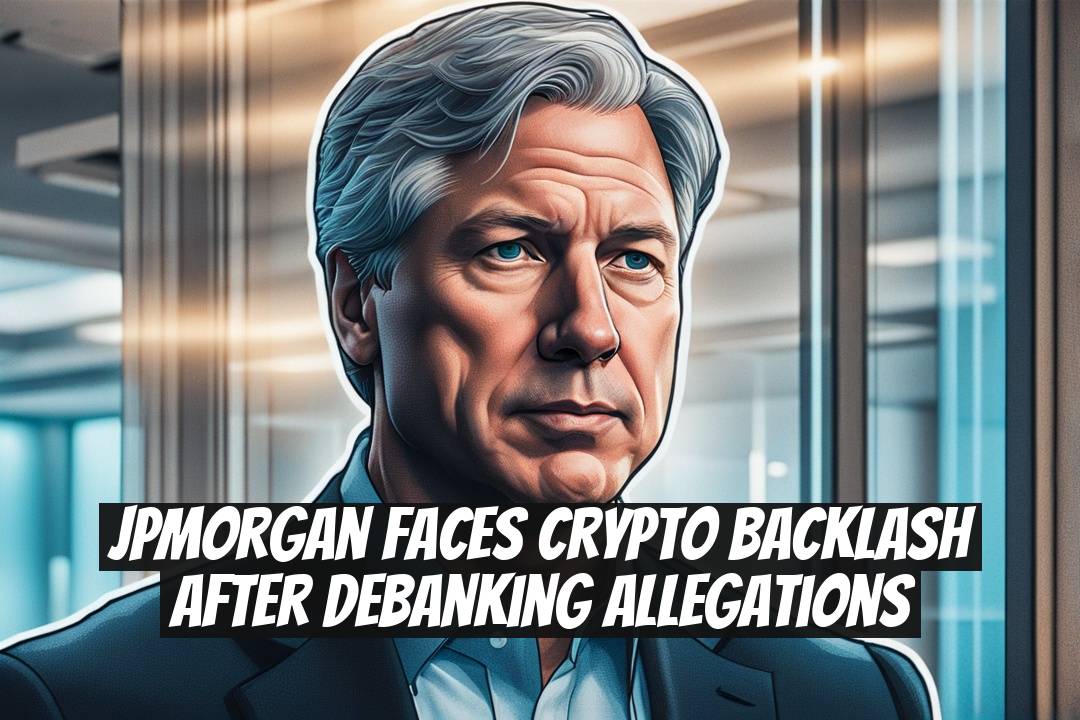
When a Banking Giant Turns Its Back: JPMorgan’s Crypto Clash Ignites Firestorm
If you thought the crypto wars with Wall Street were yesterday’s news, think again. JPMorgan, the colossal banking titan, is back in the hot seat, facing a massive backlash after fresh allegations of crypto debanking hit the headlines. This time it’s not just murmurs in dark corners-the fallout is loud, public, and investor wallets are paying attention. The stakes feel even higher with MSCI’s looming decision to exclude major crypto treasury firms from indexes, potentially triggering billions in outflows. Put simply: the relationship between crypto’s decentral dream and JPMorgan’s centralized power is hitting a boiling point that could reshape market dynamics yet again.
Key Takeaways
- JPMorgan faces calls for boycott after closing Strike CEO Jack Mallers’ bank accounts citing “concerning activity,” stoking fears of covert crypto debanking despite presidential pushes against the practice[1][3].
- MSCI’s January 2026 proposal to exclude crypto treasury-heavy firms threatens passive institutional capital flows, signaling $2.8 billion outflows from Strategy Inc., and $8.8 billion industry-wide[1][5].
- The crypto community sees JPMorgan’s moves as part of an alleged “Operation Chokepoint 2.0,” a shadowy federal pressure campaign to throttle crypto’s financial lifelines[3][4].
- Technical market indicators like Bitcoin dominance cycles and ADX movements indicate growing tension; historical cycles show how this kind of pressure can create liquidation cascades and violent price adjustments.
- Expert voices suggest JPMorgan’s strategy might backfire, fostering a growing “crypto rebellion” with whales and retail investors rotating funds out of traditional banks and into DeFi and decentralized exchanges.
Subscribe to our Social Media for Exclusive Crypto News and Insights 24/7!
? The Spark: Jack Mallers Gets Debanked-Again
You probably heard the news - Jack Mallers, CEO of Strike, one of the most prominent crypto payment apps, got blindsided last month when JPMorgan suddenly slammed the door on his accounts. Their reason? “Concerning activity,” which, let’s be honest, sounds as vague as your crypto portfolio’s hopes in a bear market[3][4].
Mallers wasn’t just some fringe player; his father’s been a private client at JPMorgan for over 30 years. Yet, no detailed explanation was offered-JPMorgan’s reply basically boiled down to, “We can’t tell you more.” That opacity reeks of an old playbook many in the crypto world call “Operation Chokepoint 2.0,” an alleged Biden-era federal program targeting crypto firms by pressuring finance gatekeepers to cut off services[3][4].
This is despite the Trump administration’s executive order in August 2025 explicitly banning banks from shutting accounts just because they’re tied to crypto[3]. But since when has an executive order always stopped a bank from flexing their muscle? To many, this closure echoed a disturbing déjà vu, stirring old fears that crypto debanking never truly ended.
? MSCI’s Crypto Index Policy: The Silent Avalanche
While Mallers’ case grabbed headlines, there’s a stealthier disruptor brewing under the radar - MSCI’s proposed new index rules start January 2026, excluding companies with more than 50% of their balance sheets in crypto assets[1][5].
Now, why does that matter? Well, getting kicked out of MSCI means institutional funds tracking those indices might dump shares on autopilot. Strategy (formerly MicroStrategy), a Bitcoin treasury behemoth, stands directly in the crosshairs, potentially facing $2.8 billion in outflows. Add other crypto-listed firms, and the tally climbs into the $8.8 billion range. That’s a tsunami in terms of liquidity and price impact.
Imagine the stress on these companies’ stock prices and, by extension, the crypto assets they hold. We’ve seen something similar before: back in 2022, when regulatory clampdowns and de-listings triggered massive sell-offs, ETH and BTC didn’t just dip-they swan-dived through support levels, sparking liquidation cascades across derivatives markets. Waves like these shake the system, and whales? They’re rotating assets quickly, anticipating these moves.
? Market Mechanics: What’s Happening Behind the Curtain?

If you’re a seasoned trader watching BTC’s dominance charts recently, you know this story’s not just about politics or drama. It’s about the rhythm of the market itself.
Bitcoin’s dominance, which cycles between phases of accumulation and distribution, is flirting with a critical juncture. Its current ADX (Average Directional Index) readings show rising trend strength but also increasing volatility - a typical setup before a major break. Remember the 2021 blow-off top? A trader I spoke to said this looked eerily familiar in terms of volume spikes and weakening support zones.
Here’s the kicker: when these index exclusions hit, and banks like JPMorgan pull out or get boycotted, expect forced liquidations to cascade. That ripples through DeFi lending pools, triggers margin calls, and triggers wider market tremors. The BTC-ETH pair has been relatively resilient, but sectors like memecoins and altcoins? They often get crushed first in these bouts.
Looking at real-time TradingView charts, you see the spikes in BTC perpetual swaps liquidation volumes, hinting that deep-pocketed players are getting nervous. It’s a grind - bulls and bears battling for momentum amid the looming regulatory and institutional shifts.
? Insider Intel and Expert Opinions

The crypto community’s not just reacting emotionally. Many analysts suggest JPMorgan’s high-handed approach could backfire spectacularly.
Paolo Ardoino, Tether’s CEO, put it bluntly on social media: "Bitcoin will withstand the test of time. Those trying to suppress it will fail because they can’t stop people choosing freedom”[4]. Strong words, right? And it’s not just bravado-on-chain data reveals whales moving funds away from traditional banking routes toward more permissionless venues.
Interestingly, a Bank of America report emphasized that Bitcoin’s correlation with gold is tightening, and some analysts see BTC potentially reaching $165,000 if the “debasement trade” continues[3][1]. In volatile environments, BTC often behaves like digital gold, especially when banks undermine access, pushing investors to refuge in decentralized assets. It’s almost poetic how control attempts just fuel demand.
? Boiling Point: Boycott Buzz and What’s Next?
Crypto influencers and institutional advocates aren’t sitting on their hands. Rumbling calls to boycott JPMorgan are echoing loud words on Twitter, Clubhouse, and various crypto forums[1][5]. Grant Cardone, a real estate investor and vocal Bitcoin supporter, publicly pledged to withdraw millions from JPMorgan and consider legal action due to similar banking hurdles.
This mass pushback could encourage more businesses to embrace crypto-native banking or decentralized finance products, accelerating the unbanking of traditional institutions themselves. Can JPMorgan hold its line without losing relevance in a market hungry for openness and innovation?
? Charts and Live Data: Tracking the Fallout
| Metric | Latest Value (Nov 2025) | Commentary |
|---|---|---|
| BTC Dominance | 48.3% | Approaching resistance zone; volatile |
| ETH/USD | $2,120 | Failed twice at $2,200; bears pushing |
| BTC Liquidations (24h) | $125 million | Elevated liquidation in spot & futures |
| Strategy Inc. Stock Price | $150 | Down 15% after MSCI news; liquidity squeeze |
| MSCI Crypto Index Exclusions | Jan 2026 | Set to trigger large market moves |
Live data from CoinMarketCap and TradingView confirm heightened volatility and volume surges, classic signs of distress and rotation.
So, What’s Your Play?
Back in 2022, I held ADA through a 60% dump. It was brutal, no sugarcoating it. What that taught me is-markets hate uncertainty, but they love shaking out weak hands to load the next rally.
With JPMorgan’s crypto debanking drama unfolding, this might be the perfect storm for savvy investors who know when to hold, when to pivot, and when to laugh at the absurdity of it all. After all, when giants fall or choke you out, sometimes the little fish swim faster.
Crypto Community Reacts: FAQ on JPMorgan’s Debanking Drama and Market Impact
Q1: What exactly is crypto debanking and why is JPMorgan accused of it?
A1: Crypto debanking refers to banks cutting off financial services to crypto-related businesses or executives without clear reasons. JPMorgan is accused after closing Strike CEO Jack Mallers’ accounts, citing vague "concerning activity," sparking fears they continue to target crypto despite regulatory pushback[3][4].
Q2: How will MSCI’s new index exclusion rules affect crypto treasury firms?
A2: MSCI plans to exclude firms with over 50% crypto assets from key indexes starting January 2026, risking massive passive fund outflows. This could pressure these companies to reduce crypto holdings or face stock price drops due to liquidity crunch[1][5].
Q3: What market indicators should crypto investors watch amid this turmoil?
A3: Key signals include Bitcoin dominance cycles, ADX trend strength, and liquidation volumes in futures markets. High volatility combined with institutional sell-offs often trigger liquidation cascades and sharp price swings.
Q4: Does JPMorgan’s debanking indicate wider regulatory pressure on crypto?
A4: It suggests ongoing tension between traditional finance and crypto, possibly linked to federal initiatives like the alleged "Operation Chokepoint 2.0," which some interpret as subtle efforts to restrict crypto’s banking access even amid executive orders[3][6].
Q5: What strategies can investors use to navigate this environment?
A5: Diversifying into decentralized finance, keeping an eye on market technicals, and being prepared for liquidations can help. Experienced traders often embrace volatility as opportunity, while cautious investors should monitor policy developments closely.
crypto debanking
JPMorgan crypto controversy
cryptocurrency market analysis
- https://www.thestreet.com/crypto/policy/jpmorgan-faces-major-boycott-after-fresh-crypto-debanking-allegations
- https://bitcoinmagazine.com/business/jack-mallers-debanked-by-jpmorgan
- https://www.theblock.co/post/380099/strike-jack-maller-jpmorgan
- https://www.cryptopolitan.com/jp-morgan-faces-bitcoin-boycott/
- https://www.americanbanker.com/news/jpmorgan-says-its-facing-federal-probe-over-debanking
- https://coinnews.com/news/jpmorgan-faces-intensifying-backlash-from-crypto-community-after-account-closures/
- https://www.foxbusiness.com/politics/florida-ag-probes-jpmorgan-chase-over-alleged-de-banking-trump-media
- https://tradingview.com/chart
- https://coinmarketcap.com/