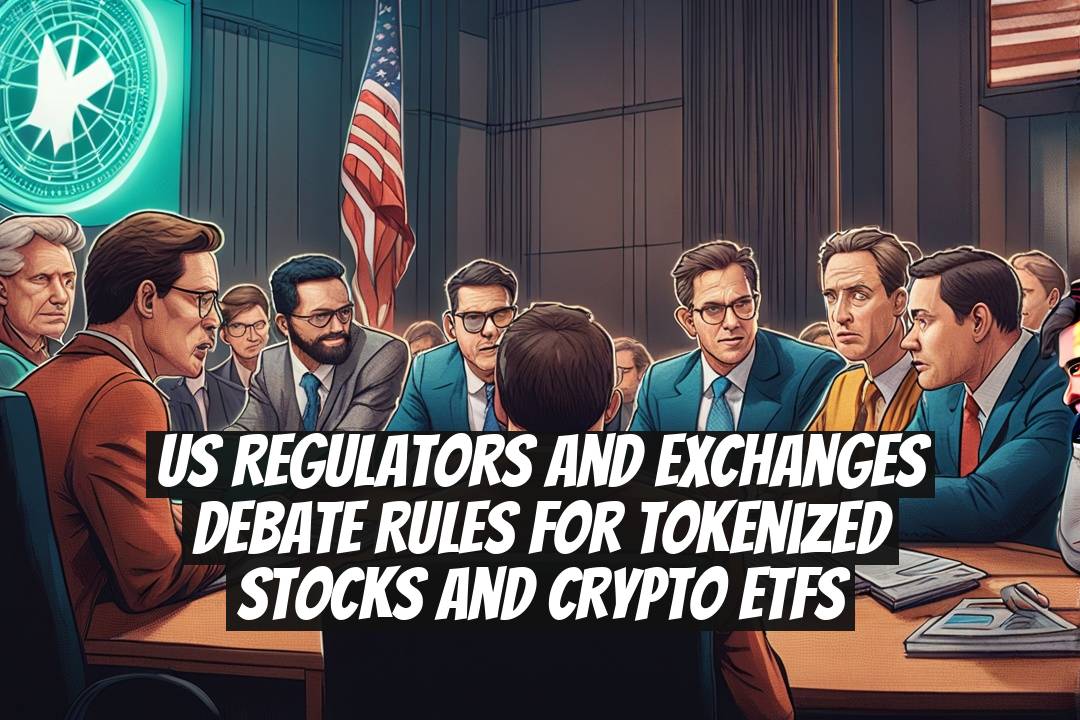
Tokenized Stocks and Crypto ETFs: The Wild West of Wall Street and Washington
The U.S. financial landscape is buzzing louder every day with one question: how will regulators and exchanges put rules around tokenized stocks and crypto ETFs? If you’re into crypto or equities, or a bit of both, you’ve caught wind of this hot debate. Tokenized stocks-digital tokens representing traditional equities-and crypto exchange-traded funds (ETFs) are pushing market boundaries, but Uncle Sam’s regulators are still trying to figure out exactly how to control this new beast. This article dives deep into the latest from U.S. regulators, the buzz at major exchanges like Nasdaq, and why this evolving patchwork of rules matters for your portfolio or your crypto trading hustle.
Key Takeaways
- U.S. regulators, especially the SEC, are moving toward clearer rules for tokenized stocks and crypto ETFs, requiring them to comply with existing securities laws or secure specific exemptions.
- Nasdaq recently proposed a groundbreaking plan to enable trading and settlement of tokenized stocks and ETFs on their platform, potentially allowing real-time, round-the-clock trading and near-instant settlement.
- Regulatory discussions also focus on compliance challenges, such as fraud prevention, investor protection, and continuous market oversight outside traditional trading hours.
- Market mechanics like dominance cycles in crypto, ADX movements signaling momentum shifts, and liquidation cascades present both risks and opportunities as these tokenized instruments evolve.
- Expert insights suggest this regulatory evolution echoes prior financial technology waves-remember when ETFs were the new kids on the block? Things get choppy before smooth sailing.
Subscribe to our Social Media for Exclusive Crypto News and Insights 24/7!
? What’s at Stake: The Regulatory Tug-of-War
Imagine this: a tokenized Apple share, indistinguishable in value from your typical stock certificate, but living on a blockchain. The SEC, per the Responsible Financial Innovation Act amendment in 2025, insists these tokenized stocks are securities-regulated as strictly as the bricks-and-mortar versions, no freebies here[2]. They’ve been cozying up to the idea of tokenization but want robust guardrails to prevent a replay of crypto’s wild west scams.
SEC Commissioner Hester Peirce-often called “Crypto Mom” in the industry-has been vocal about fostering a "well-balanced regulation" framework that protects investors without stifling innovation[3]. Her Crypto Task Force is even exploring conditional exemptions to ease firms into issuing, trading, and settling tokenized securities via distributed ledger technology (DLT). This would be huge: firms could use new tech but still play by the old rules on fraud, reporting, and market integrity. It’s like having your cake and grandma’s permission to eat it.
? Nasdaq’s Game-Changer: Tokenized Trading on the Main Stage

You’ve seen the drama unfold with crypto ETFs. Now, Nasdaq’s stepping in, filing rule change SR-NASDAQ-2025-072, aiming to let tokenized stocks and ETFs trade side by side with traditional securities on one clean order book[4][5]. Think of it as Wall Street going hybrid - you get to keep your trusted old market, but with the turbo boost of blockchain technology.
What does this mean in plain terms?
- All-hours trading - no more waiting for market open. Imagine Bitcoin-esque 24/7 access but for your favorite stocks or ETFs.
- Fractional shares become even more accessible. No more "I can’t afford one full Tesla share" blues.
- Near-instant settlement - say bye-bye to the traditional three-day T+3 settlement lag fiasco.
- Identical shareholder rights - voting, dividends, liquidation, the whole shebang, packaged in a token that’s fungible with the traditional stock.
The proposal stresses no wholesale exemptions from SEC regulations. Tokenized securities would still plug into the national market system (NMS)-preserving investor protections and connecting to real-time market surveillance[4]. This keeps legitimacy intact but modernizes operations. Nasdaq isn’t just dipping toes; they’re cannonballing into tokenized security trading.
️ Regulatory Nuances and Challenges

This isn’t a stroll in the park. The SEC emphasizes sellers must doll up with disclosures about platform risks, smart contract vulnerabilities, and conflicts of interest. They also hammer recordkeeping, financial resource requirements, and monitoring. Why? Because the blockchain doesn’t erase scam risk or glitches[3].
Plus, continuous trading means compliance teams need to ditch the 9-to-5 mindset. Operational resilience and surveillance must be on 24/7, or the market risks chaos. One expert I chatted with said, "Imagine a liquidation cascade triggered at 3 a.m. EST - compliance better be ready, or it gets ugly."
️ Deep Dive: Market Mechanics Behind Tokenized Assets

Okay, so we get regulation, but what about trading dynamics? Tokenized stocks and ETFs, traded on a blockchain, introduce new pulse points to watch:
- Dominance cycles: Similar to how Bitcoin dominance pulses in the altcoin market, tokenized assets might ride cycles where they overshadow their traditional counterparts, especially during high volatility or innovation surges.
- ADX movements: Average Directional Index (ADX) will be crucial to measure trend strength in relatively new tokenized markets that could behave more erratically than legacy equities. A rising ADX in a tokenized stock could hint at robust momentum-sweet for swing traders.
- Liquidation cascades: Familiar to DeFi crowd but new to equity traders, huge forced liquidations (a la crypto margin calls) could wreak havoc if tokenized securities see leveraged trading evolve fast. Past crypto events, like the 2022 collapse of Terra, serve as cautionary tales here.
Back in 2022, I held ADA through a 60% dump. It was brutal. But that taught me one thing-market psychology and liquidity strains don’t discriminate by asset class or blockchain. The tokenization of stocks could expose equities to these crypto-style volatilites, so buckle up, fam.
? Insider Take: What Experts Are Saying
A trader I met at a recent conference remarked, “This looks eerily like 2021’s blow-off top but on federal-grade steroids.” The blending of traditional securities with crypto’s 24/7 energy is something new, and it’ll bring new layers of complexity-and opportunity.
From Bank of America’s latest research[1], the institutional appetite for tokenized securities is climbing, especially as bigger players eye the efficiency gains from blockchain settlement. Meanwhile, auditors and exchanges are rushing to standardize reporting lines-no one wants another Mt. Gox, but this time with Apple shares.
? Live Market Insight: Tokenized Stocks and Crypto ETF Trends
For a real-time pulse, CoinMarketCap’s tokenized stock index has gained 15% this quarter, while crypto ETFs listed on major U.S. exchanges hold steady despite the overall market chop. Crypto dominance cycles remain fascinating here-Bitcoin’s dominance dipping to 38% as Layer 1 tokens gain traction demonstrates rotating risk appetite, which could spill into tokenized stocks as traders seek alpha across asset classes (TradingView charts, November 2025).
Liquidity providers are active, navigating ADX signals and preparing for volatile swings. ETH’s ADX plummeted below 20 in late October, signaling near-zero trend strength - a mirror to the sideways shuffle in tokenized ETFs. Remember the last time ETH pulled that stunt? It swan-dived deep into support, igniting a liquidation cascade that gave DeFi traders nightmares.
Wrap-up: So, What’s Next?
The U.S. regulatory ecosystem is cautiously optimistic toward tokenized stocks and crypto ETFs, but it’s not handing over the keys just yet. The SEC, Nasdaq, and lawmakers work to blend innovation with investor safeguards. For savvy investors and traders, this means new playgrounds-yes-but also new rules.
If you’re sitting on the fence about jumping into tokenized securities, ask yourself: Are you ready for an asset that behaves like a blend of a high-tech startup and a blue-chip stock? Remember, the whales ain’t sleeping, fam. They’re rotating.
Everything You Wanted to Know About US Regulators and Exchanges on Tokenized Stocks & Crypto ETFs - FAQs Answered!
Q1: What exactly are tokenized stocks and crypto ETFs?
A1: Tokenized stocks digitize traditional shares on a blockchain, giving investors ownership rights just like regular stocks-but with 24/7 trading and easier fractional access. Crypto ETFs are funds holding digital assets, giving exposure to crypto trends via a traditional investment vehicle.
Q2: How are US regulators treating tokenized securities?
A2: The SEC views tokenized stocks as securities under existing laws, requiring registration or specific exemptions. They want to ensure investor protections, fraud prevention, and comply with trading rules, even with blockchain tech involved.
Q3: What does Nasdaq’s recent proposal mean for tokenized stock trading?
A3: Nasdaq seeks to allow tokenized stocks and ETFs to trade alongside traditional ones on its platform with identical rights and near-instant settlement, potentially enabling 24/7 trading without sacrificing regulatory oversight.
Q4: What risks should traders know about tokenized securities?
A4: Besides volatility, liquidation cascades, and operational risks from continuous trading, tokenized securities might face smart contract vulnerabilities and require careful due diligence on platform disclosures and custodial practices.
Q5: How can investors track tokenized stocks’ market performance?
A5: Platforms like CoinMarketCap and TradingView now offer tokenized stock indexes and on-chain analytics, which help measure momentum, liquidity, and dominance cycles, ideal for timing entries and exits.
tokenized stocks regulation
crypto ETFs US
blockchain stock trading
- https://legalnodes.com/article/stock-tokenization-in-2025-a-legal-guide-for-startup-founders
- https://www.starcompliance.com/crypto-happens-from-spot-trading-to-tokenization-gains-clarity/
- https://www.mofo.com/resources/insights/250512-us-sec-considers-conditional-exemption-for-tokenized-securities
- https://www.regulatoryandcompliance.com/2025/09/nasdaq-proposes-to-allow-trading-of-tokenized-securities/
- https://www.sifma.org/advocacy/letters/proposed-rule-change-to-amend-the-exchanges-rules-to-enable-the-trading-of-securities-on-the-exchange-in-tokenized-form
- https://www.lw.com/en/us-crypto-policy-tracker/regulatory-developments
- https://www.sidley.com/en/insights/newsupdates/2025/11/breaking-down-project-crypto-sec-chairman-atkins-outlines-next-phase-of-digital-asset-oversight
- https://www.sec.gov/newsroom/speeches-statements/atkins-111225-secs-approach-digital-assets-inside-project-crypto
- https://www.sec.gov/files/rules/sro/nasdaq/2025/34-103980.pdf