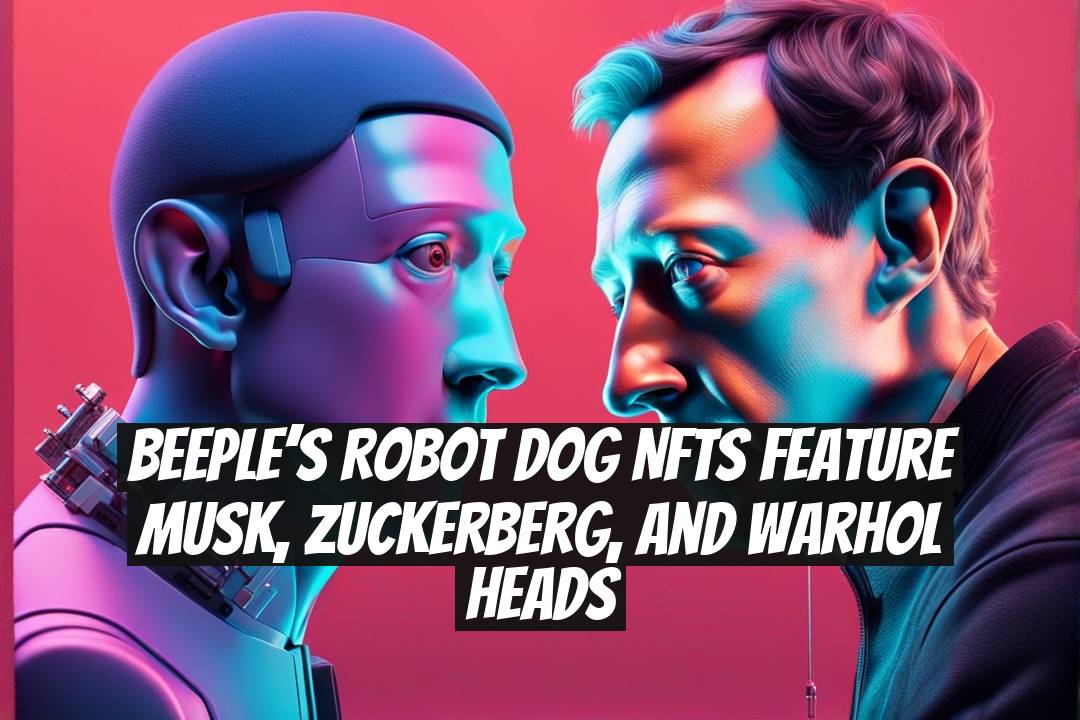
What Happens When Billionaires Become Robot Dogs That Poop Art?
Imagine walking into Art Basel Miami Beach and instead of seeing a painting of Elon Musk or Mark Zuckerberg, you see them as robot dogs with hyper-realistic heads, walking around a plexiglass pen, snapping photos, and then-yes, really-pooping out prints from their backsides. That’s exactly what digital artist Beeple just pulled off with his new installation, Regular Animals, where robot dog NFTs feature Musk, Zuckerberg, and Warhol heads, turning tech moguls and art legends into a pack of AI-powered, image-generating, print-ejecting canines. It’s absurd, it’s satirical, it’s dystopian, and it’s also one of the most talked-about crypto-art moments of 2025.
Beeple’s robot dog NFTs feature Musk, Zuckerberg, and Warhol heads, but they’re not just a viral spectacle-they’re a commentary on how algorithms, AI, and digital power now shape what we see, how we see it, and who controls that view. And for anyone paying attention to the crypto market, this isn’t just art; it’s a signal flare about where NFTs, digital ownership, and AI-generated content are headed next.
? Key Takeaways
Subscribe to our Social Media for Exclusive Crypto News and Insights 24/7!
- Beeple’s Regular Animals is a 2025 Art Basel Miami Beach installation featuring $100,000 robot dogs with hyper-realistic heads of Elon Musk, Mark Zuckerberg, Jeff Bezos, Pablo Picasso, Andy Warhol, and Beeple himself.
- Each robot dog takes photos, processes them with AI in the style of the head it wears (e.g., Musk = schematics, Zuckerberg = metaverse-style, Picasso = Cubist), and then “poops out” printed images.
- Some of these prints come with QR codes that link to NFTs, creating a hybrid physical-digital collectible.
- All robot dog NFTs feature Musk, Zuckerberg, and Warhol heads sold out during the VIP preview at Art Basel, showing strong demand for high-concept, celebrity-linked digital art.
- The project reflects how AI and tech leaders increasingly mediate our perception of reality, which has deep implications for the future of NFTs, digital identity, and crypto culture.
? Beeple’s Robot Dog NFTs: Musk, Zuckerberg, and Warhol as Canine Avatars
So, what exactly is going on with Beeple’s robot dog NFTs that feature Musk, Zuckerberg, and Warhol heads? Let’s break it down.
At Art Basel Miami Beach 2025, in the new Zero10 digital art section, Beeple (real name Mike Winkelmann) debuted Regular Animals-a pack of autonomous robot dogs, each wearing a hyper-realistic mask of a powerful figure: Elon Musk, Mark Zuckerberg, Jeff Bezos, Pablo Picasso, Andy Warhol, and even Beeple himself. These aren’t just static sculptures; they’re moving, interacting, and constantly taking photos of their surroundings with front-facing cameras.
The twist? They don’t just store those images. They process them through AI, reinterpret them in the “style” of the head they’re wearing, and then-get this-tip backward into “poop mode” and eject printed certificates from their hindquarters. Some of these prints come with QR codes that give collectors access to NFTs, which are literally handed out in bags labeled “Excrement Sample.” Yes, that’s a real thing. And yes, it sold out instantly.
Each robot dog NFTs feature Musk, Zuckerberg, and Warhol heads is priced at $100,000, in an edition of two plus one artist’s proof. And according to The Art Newspaper, all the works sold during Wednesday’s VIP preview, including Beeple’s self-portrait dog, which reportedly sold first-something even Beeple admitted was “balsy” and surprising. [4]
? How the Robot Dog NFTs Actually Work (Yes, They Poop)

Let’s get into the mechanics, because this is where it stops being just a meme and starts feeling like a crypto-art prophecy.
Each robot dog is equipped with:
- A front-facing camera that constantly captures its environment.
- An AI system that ranks and reinterprets those images based on the “personality” of the head it wears.
- A print mechanism that ejects physical certificates from its rear, like a very high-end, very weird dog.
So, Elon Musk’s robot dog spits out images that look like technical schematics or blueprints. Zuckerberg’s dog generates metaverse-style, digital-looking images. Picasso’s dog produces Cubist reinterpretations. Warhol’s dog? Probably something pop-art, saturated, and repetitive. And Beeple’s own dog? Well, that’s a self-referential loop of digital absurdity.
The printed certificates are labeled as “100% pure GMO-free, organic dogs*** originating from a medium adult dog anus,” which is both hilarious and deeply on-brand for Beeple’s satirical, internet-native style. [3] But more importantly, some of these prints come with QR codes that link to NFTs, creating a hybrid collectible: part physical art object, part digital ownership token.
This is a big deal for the NFT space, because it shows how high-end digital art is evolving beyond static JPEGs into interactive, AI-driven, multi-layered experiences. [2]
? What Beeple Is Really Saying (And Why It Matters for Crypto)
Beeple isn’t just making robot dogs for the shock value. He’s making a point-one that hits hard for anyone who’s been paying attention to how tech and AI are reshaping culture.
In his own words, “Mark Zuckerberg and Elon Musk own algorithms that control what we see and decide how we see the world. When they want to make a change, they don’t have to lobby the UN, they don’t have to go to Congress, they just make a change.” [3]
That’s the core of Regular Animals: the idea that we’re increasingly viewing reality through the lens of a few powerful tech leaders and AI systems. Their platforms, their algorithms, their aesthetics-they’re the new gatekeepers of perception. And Beeple is turning them into robot dogs that literally poop out curated versions of reality.
For the crypto market, this is a wake-up call. NFTs started as digital collectibles, but they’re becoming tools for commentary, satire, and even social critique. When Beeple’s robot dog NFTs feature Musk, Zuckerberg, and Warhol heads sell out at $100K each, it’s not just about celebrity worship. It’s about the market’s appetite for art that reflects the digital age’s power structures, absurdities, and contradictions.
? What This Means for the Crypto and NFT Market
Alright, let’s put on the crypto analyst hat for a minute.
Beeple’s robot dog NFTs feature Musk, Zuckerberg, and Warhol heads are more than an art stunt. They’re a data point in a much bigger trend:
High-Concept NFTs Are Back in Demand
After the NFT crash of 2022-2023, many people wrote off the space as a bubble. But Beeple’s $100K robot dogs selling out instantly shows that when the concept is strong, the market is still very much alive. It’s not about random PFPs anymore; it’s about narrative, context, and cultural relevance.Hybrid Physical-Digital Collectibles Are the Future
The fact that these robot dogs produce physical prints with QR codes for NFTs is huge. It bridges the gap between the physical art world (Art Basel, galleries, collectors) and the digital/crypto world. This hybrid model could become the standard for high-end NFT projects.AI + NFTs = The Next Big Wave
These robot dogs aren’t just displaying pre-made images. They’re using AI to reinterpret reality in real time. That’s a preview of what’s coming: NFTs that are not static, but dynamic, evolving, and personalized. Think AI-generated art that changes based on the owner, the environment, or even market sentiment.Celebrity and Power Figures as NFT Icons
Musk, Zuckerberg, Bezos, Picasso, Warhol-these are all figures who’ve shaped culture in their own way. By turning them into robot dog NFTs, Beeple is tapping into the fascination with power, influence, and digital legacy. Expect more projects that use recognizable faces and personas as NFT avatars, especially as AI makes it easier to generate and manipulate likenesses.The “Poop Mode” Economy
Let’s be real: the idea of NFTs being distributed as “excrement samples” is genius. It’s a direct jab at the absurdity of the art and crypto markets, where value is often arbitrary and performative. But it also hints at a new kind of utility: NFTs as byproducts of an experience, not just the main event.
? Practical Tips for Investors and Collectors
If you’re thinking about how to position yourself around projects like Beeple’s robot dog NFTs feature Musk, Zuckerberg, and Warhol heads, here’s what I’d suggest:
Look for Projects with Strong Concept + Execution
Not every robot dog NFT will sell for $100K. What made Beeple’s work stand out was the combination of a powerful idea, high production value, and placement at a major art fair. When evaluating NFT projects, ask: Is this just a gimmick, or is there real depth?Pay Attention to Hybrid Physical-Digital Models
Projects that blend physical art with digital ownership (like prints with QR-linked NFTs) are likely to attract both traditional art collectors and crypto natives. These could be more resilient in volatile markets.Watch for AI-Driven NFTs
The next wave of NFTs won’t just be static images. They’ll be AI-generated, interactive, and possibly even autonomous. Think about how you can get exposure to platforms and artists who are pushing this boundary.Don’t Ignore the Satire
Beeple’s work is funny, but it’s also a warning. The same platforms and algorithms that make NFTs possible are also shaping how we see the world. As an investor, it’s worth asking: Are you betting on the technology, or are you also aware of the power structures behind it?
? My Personal Take: Why This Feels Like a Turning Point
As someone who’s been watching the crypto and NFT space for years, Beeple’s robot dog NFTs feature Musk, Zuckerberg, and Warhol heads feel like a turning point. It’s not just that they sold out. It’s that they did so with a project that’s so obviously a critique of the very world that made them possible.
It’s like the NFT market is finally growing up. It’s not just about making money anymore; it’s about making sense of the digital age. And Beeple, with his $69 million Christie’s sale and his daily internet-native collages, is perfectly positioned to be the court jester who tells the truth in the language of memes and absurdity.
When I saw that Beeple put his own face on one of the robot dogs, and that it sold first, I couldn’t help but laugh. It’s a power move, a self-own, and a commentary all in one. It says: “I’m part of this circus, and I know it’s ridiculous-but I’m also going to profit from it.”
? So… What Are We Really Buying?
At the end of the day, Beeple’s robot dog NFTs feature Musk, Zuckerberg, and Warhol heads aren’t just about owning a piece of art. They’re about owning a piece of the conversation: about AI, about power, about how we see the world through algorithms and celebrity avatars.
So here’s the question I keep coming back to:
If our reality is increasingly filtered through the eyes of tech moguls and AI systems… are we collecting art, or are we just collecting the poop they leave behind?
Beeple’s robot dog NFTs feature Musk, Zuckerberg, and Warhol heads
robot dog NFTs feature Musk, Zuckerberg, and Warhol heads
Beeple’s robot dog NFTs
[2] https://www.artsy.net/article/artsy-editorial-beeple-debuts-robot-dog-installation-starring-elon-musk-andy-warhol-art-basel-miami-beach
[3] https://petapixel.com/2025/12/05/beeple-robot-dogs-photos-elon-musk-mark-zuckerberg-miami-art-basel/
[4] https://www.theartnewspaper.com/2025/12/04/beeple-robot-dogs-elon-musk-art-basel-miami-beach
[5] https://www.fanpage.it/innovazione/tecnologia/zuckerberg-e-musk-trasformati-in-cani-robot-con-teste-giganti-il-video-girato-sul-ring/