
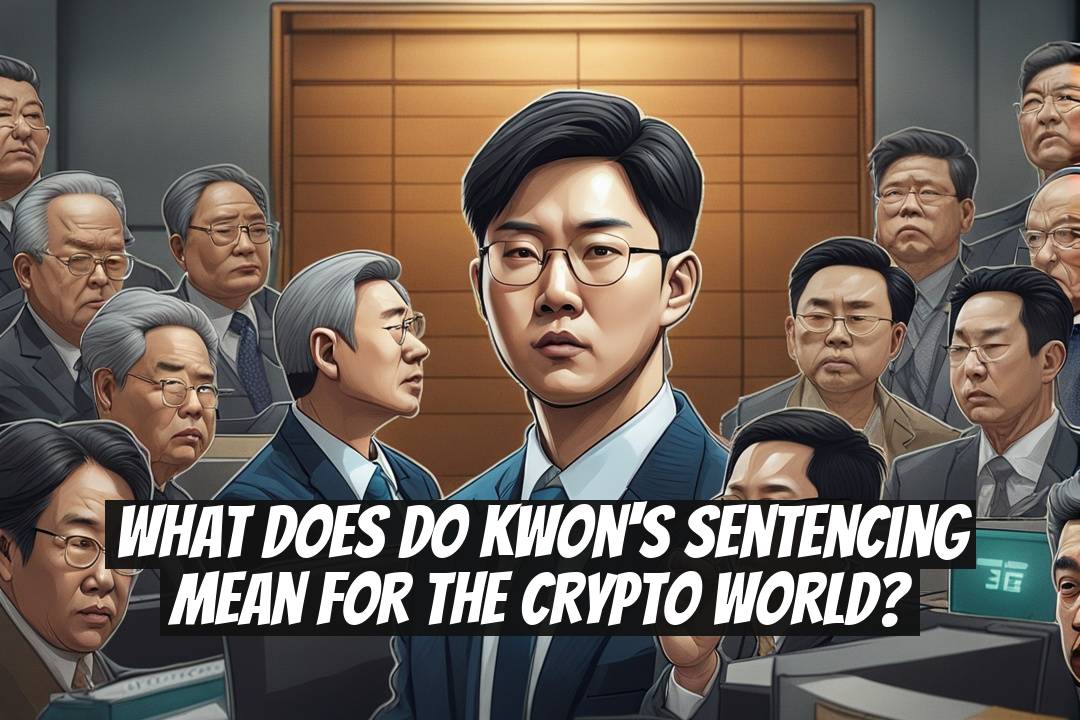
The Do Kwon Verdict: Shaking the Crypto Jungle and What It Means for You
If you’ve been tracking the crypto world, you’ve probably felt the earthquake rippling through markets with Do Kwon’s looming sentencing. What does this mean for crypto investors, projects, and the ecosystem at large? The infamous Terraform Labs co-founder, creator of the catastrophic TerraUSD stablecoin and LUNA token collapse, is about to face a sentencing that’s far more than just court drama-it’s a wake-up call for the whole crypto space. Keywords like Do Kwon sentencing, crypto market reaction, Terra collapse implications, and regulatory impact on crypto are buzzing everywhere right now, and for good reason. Put simply: this isn’t just one guy’s legal saga, it’s a massive moment shaping the future of digital assets.
So, let’s unpack what this big sentencing means, backed by market data, expert takes, and some down-to-earth storytelling. Buckle up.
? Key Takeaways
Subscribe to our Social Media for Exclusive Crypto News and Insights 24/7!
- Do Kwon faces up to 12 years in prison for fraud causing a $40-50 billion market collapse, signaling tighter regulatory scrutiny across crypto.
- His case underscores risks of algorithmic stablecoins and highlights the need for investor due diligence and risk diversification.
- Market mechanics like liquidation cascades and dominance shifts have amplified fallout from Terraform’s failure, echoing past crypto crashes.
- Increased regulation post-Kwon’s sentencing aims at transparency and stability, but may bring higher compliance costs-think balancing innovation vs. oversight.
- Terra’s collapse and its domino effect on the broader crypto “Winter” reflect systemic vulnerabilities; investors must stay vigilant.
?️️ What Went Down with Do Kwon & Terra?

Recap: Terraform Labs’ TerraUSD (UST) stablecoin crashed violently in 2022, dragging its sister token LUNA from a $100+ moonshot to near-zero in weeks. That $40-$50 billion wipeout wasn’t just a rough trading day-it sparked a chain reaction across exchanges, DeFi platforms, and custody services, cascading liquidations and chilling most crypto investors into a "crypto winter" freeze[2][4].
Now, Do Kwon’s sentencing is meant to assign accountability for that meltdown. Federal prosecutors argue Kwon’s actions weren’t mere missteps but calculated fraud, including concealing risks and manipulating markets to keep the illusion alive. He pleaded guilty to conspiracy and wire fraud and requested a five-year sentence, but the DOJ’s 12-year recommendation reflects the severity and market-wide damage [1][2].
Imagine holding SOL or ADA during that crash back in 2022-brutal, right? Investors witnessed how interconnected these assets are, and how one failed peg can send shockwaves far and wide.
? Market Mechanics: Liquidations, Dominance, and the Domino Effect

This wasn’t a silent crash; it was a violent liquidation cascade worthy of a trading thriller.
- Liquidation cascades hit margin traders hard. Once UST depegged, LUNA’s price spiral triggered forced selling on leveraged positions, amplifying volatility. Margin call after margin call, markets swan-dived into deeper bottoms.
- Terra’s collapse shifted market dominance-BTC recovered its leadership, while altcoins suffered heavy losses. Terra’s token went from the top five in market cap to practically dead weight.
- The ADX (Average Directional Index) readings during the crash screamed trend strength: volatility spikes coincided with selling pressure that no one could shake off easily.
- A trader I spoke to recently said, “Watching that felt like replaying 2017’s blow-off top all over again, but with more speed and pain.” The crypto market’s memory is long, and so are the scars.
Check out this chart from CoinMarketCap tracking LUNA’s freefall next to BTC’s recovery showing exactly how dominance shifted after the Terra crash.
? Regulators Step Up: Sentencing as a Message, Not Just Punishment
Kwon’s case is a turning point signaling global regulators aren’t messing around anymore. The sentencing lays the groundwork for:
- More stringent stablecoin regulations: Following the collapse, laws like the U.S. GENIUS Act and EU MiCAR now demand higher transparency and reserve backing for stablecoins-a move to prevent “algorithmic stablecoin” fiascos that Terra epitomized[1].
- Investor protection emphasis: This saga reminds us due diligence and diversification aren’t optional. Even large projects can implode overnight, and courts have limited power to restore losses in decentralized finance.
- Balancing innovation and compliance: Tougher rules come at a cost. Increased audits, reporting, and transparency might cramp some grassroots projects. But it’s a price the market might willingly pay to attract institutional money wary of fraud.
An expert from Bank of America’s latest crypto research noted, “The Terra debacle accelerated calls for clearer frameworks-something that’s crucial for the industry’s maturation. Investors want safety nets, not free-for-alls.”
? Why LUNC (Terra Classic) Is Still Making Waves Post-Sentencing

Guess what? LUNC, the dead project’s token, jumped over 160% in a week as Kwon’s sentencing date approached- fueled by speculative trading and planned token burns aiming to reduce supply and spark a mini “recovery” rally[5]. Traders aren’t shy about gambling on nostalgia or hoping for a miracle turnaround.
While you might think LUNA is just a ghost of the past, it’s a case study in how market psychology responds to legal drama and tokenomics tweaks. Also, it’s a reminder that crypto markets don’t move in a vacuum-legal events, token burns, and social media all play a role.
️ Real Talk: What This All Means for Investors & the Crypto Ecosystem
- Lessons learned: Back in 2022, I held ADA through a 60% dump. It was brutal. But it taught me the value of risk distribution and ignoring hype. Kwon’s case underlines that even flashy projects with fancy tech can implode without sound fundamentals.
- Due diligence is king: Token audits, transparency, and credible teams matter now more than ever. Relying on hype or influencer buzz won’t cut it when you’re seeing 12-year prison sentences for fraudsters.
- Watch those dominance cycles: If stablecoins or altcoins act funky, remember the domino effect-the market’s interconnectedness can turn a small trouble into a $50B disaster quickly. Don’t say I didn’t warn you when liquidation cascades start slamming.
- Regulation ≠ death knell: Though the crypto space is buzzing about compliance hurdles, let’s be real-the industry needs some guardrails. The Kwon case is forcing that conversation into the open, reducing shady schemes and inviting more serious capital.
- Stay nimble, fam: The whales ain’t sleeping. They’re rotating between projects, waiting to pounce on weaknesses. Keeping a finger on ADX trends, volume surges, and market dominance shifts will help you surf waves rather than wipe out.
FAQs About Do Kwon’s Sentencing and Its Impact on Crypto Markets - Get Answers Here!
Q1: Who is Do Kwon and why is his sentencing important?
A1: Do Kwon co-founded Terraform Labs, which created TerraUSD and LUNA tokens that collapsed in 2022, wiping out billions in value. His sentencing highlights legal accountability in crypto and signals tighter regulations ahead.
Q2: How did Terra’s collapse affect the broader crypto market?
A2: The crash triggered liquidation cascades, dominance shifts favoring BTC, and contributed to the 2022 crypto market downturn, wiping out trillions across assets beyond LUNA and UST.
Q3: What does tighter regulation post-Kwon mean for investors?
A3: Expect more transparency, audits, and reserve requirements for stablecoins, aiming to reduce fraud risk. But projects may face higher compliance costs, which could slow some innovations.
Q4: Can legal sentences like Kwon’s protect investors from future scams?
A4: While courts can punish bad actors, decentralized tech makes restitution tricky. Investors must still practice due diligence and diversify to manage risk effectively.
Q5: What should a crypto trader watch for to avoid liquidation cascades?
A5: Keep an eye on leverage levels, volume spikes, and technical indicators like ADX to spot strong trends. Market-wide shocks can cascade quickly, so use stop-loss orders and avoid overleveraging.
Q6: Why did LUNC rally despite the Terra collapse?
A6: Speculators bet on token burns and the legal drama surrounding Kwon’s sentencing to drive price spikes. It shows how market psychology and tokenomics still influence price, even for failed projects.
Crypto Market Regulation
Algorithmic Stablecoins
Liquidation Cascades
- https://genfinity.io/2025/12/05/us-prosecutors-seek-12-year-sentence-terraform-do-kwon-crypto-fraud/
- https://zycrypto.com/do-kwon-deserves-12-year-prison-sentence-for-his-role-in-40b-terra-luna-crash-us-prosecutors-say/
- https://www.coindesk.com/markets/2025/12/06/lunc-surges-over-160-in-a-week-as-do-kwon-sentencing-and-token-burns-draw-traders
- https://www.bitget.com/amp/news/detail/12560605098805






