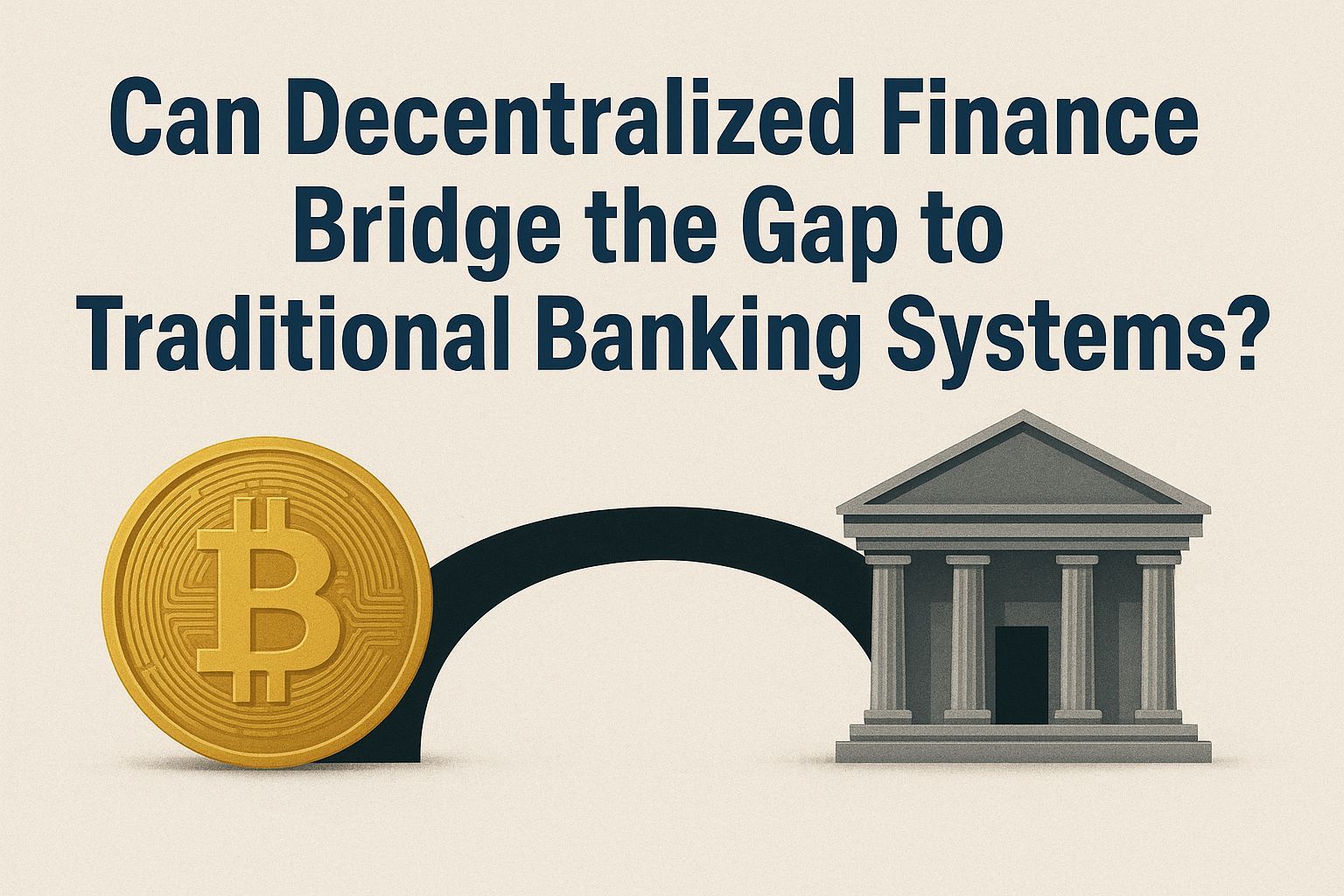
DeFi: The Rebel Ally, Not the Bank Killer
Hey, savvy crypto head-can decentralized finance bridge the gap to traditional banking systems? Straight up, the data says DeFi isn’t storming the castle yet. It’s more like a scrappy sidekick: killer for access and speed, but leaning on TradFi’s guardrails for real-world muscle. Sources paint a picture of coexistence, not conquest-think DeFi handling the wild inclusivity plays while banks lock down stability.
Key Takeaways
- DeFi crushes accessibility: No ID hassles, 24/7 global access via wallet-perfect for the unbanked[1][2][3].
- TradFi holds the fort: Regulations, insurance, and legal backups keep it king for big money and safety nets[2][4][6].
- Interactions are real: US data shows DeFi TVL shocks trigger Fed rate cuts and lending boosts, hinting at symbiosis[5].
- Risks clash hard: Smart contract hacks vs. bank fraud protection-DeFi’s transparent but brittle[1][2][6].
Subscribe to our Social Media for Exclusive Crypto News and Insights 24/7!
Picture this: You’re in a rural spot, no bank branch for miles. DeFi lets you lend ETH collateral on Aave, snag higher yields, all peer-to-peer. No paperwork. Boom-instant finance[3]. But swap that for wiring millions cross-border? TradFi’s days-long grind wins with dispute resolution and AML shields[2]. You’ve seen it-those DeFi exploits where millions vanish in a smart contract glitch. Banks? They insure your ass.
Accessibility: DeFi’s Superpower, TradFi’s Achilles Heel

DeFi flips the script on who gets in the game. Traditional setups demand credit checks, minimums, residency proofs-locking out billions, especially in emerging markets[1][3]. DeFi? Wallet and internet. Done. Lend, borrow, trade 24/7, no borders[2][4]. Lower fees too-gas beats bank wire charges any day[2].
But here’s the rub: TradFi’s barriers built empires of trust. DeFi’s openness invites rugs and hacks. Still, it’s bridging gaps-financial inclusion for the excluded[1][2].
| Feature | Traditional Banking | DeFi |
|---|---|---|
| Control | Centralized banks & regs | Smart contracts & nodes[2][3] |
| Access | ID, credit, geography | Wallet only[1][4] |
| Speed | Days for cross-border | Near-instant[2] |
| Fees | High maintenance | Gas fees, often lower[2][3] |
| Transparency | Opaque ledgers | Public blockchain[1][3] |
Analogy time: TradFi’s like a velvet-rope club-exclusive, safe. DeFi’s the street party-anyone’s welcome, but watch your wallet.
Transparency and Control: Open Books vs. Iron Fists

DeFi’s blockchain logs every move. Verify loans on Compound yourself-total visibility cuts fraud risks[1][3]. User owns assets outright, no bank custody drama[1]. TradFi? Private books, institutions hold your keys. Stable? Sure. Trust me, bro? Kinda.
Power shift’s wild. DeFi spreads control via networks-no single boss[1][4]. TradFi concentrates it in boards and regulators[2][4]. Innovation? DeFi iterates fast-auto-compounding yields, composable protocols[4]. Banks? Legacy tech drags ’em down[4].
Risks and Real-World Clashes: Where the Bridge Wobbles

DeFi replicates TradFi services-lending crypto against crypto collateral, DEX trading, derivatives-all unregulated[6]. ECB calls it a "new unregulated non-bank system," echoing TradFi but decentralized[6]. Vulnerabilities? Smart contract bugs, no insurance[2][4]. TradFi fights back with solvency rules, fraud nets[2].
Deep dive from academic grind: VAR models on US/India/UK data (2018-2024) link DeFi TVL to bank metrics. US impulse responses? TVL spikes prompt Fed rate slashes, juicing commercial loans[5]. It’s interplay, not isolation-monetary policy reacts to DeFi growth[5]. Harvey et al. (NBER) nod to this future blend: DeFi stirring TradFi pots[5].
Honestly, that caught even analysts off-guard-whales rotating into DeFi, but banks adapting with custody plays. Remember 2022 exploits? Brutal. One holder locked ADA through a 60% dump-taught ’em code audits matter[4 implies via risks].
The Hybrid Horizon: Bridging, Not Breaking
Sources scream potential synergy. DeFi drives inclusion/innovation; TradFi stability/protection[1][4]. Community governance meets regs? Power to users, not just suits[4]. But regulatory fog looms-will DeFi mature without cracking[1][6]?
You’re pondering: Hold that DeFi position through volatility? Data says pair it with TradFi buffers. The gap’s narrowing, fam-not bridged, but damn close.
- https://www.coinmetro.com/learning-lab/decentralized-finance-vs-traditional-finance
- https://www.skyriss.com/guides/decentralized-finance-defi-vs-traditional-banking-whats-the-future
- https://www.tencentcloud.com/techpedia/101086
- https://decen-masters.com/blog/defi-vs-traditional-finance-complete-2025-comparison-guide
- https://www.businessperspectives.org/index.php/journals/banks-and-bank-systems/issue-458/interaction-between-decentralized-financial-services-and-the-traditional-banking-system-a-comparative-analysis
- https://www.ecb.europa.eu/press/financial-stability-publications/macroprudential-bulletin/focus/2022/html/ecb.mpbu202207_focus1.en.html