
The Corporate Bitcoin Revolution: Beyond Retail, Into Boardrooms
When Balance Sheets Met Blockchain-And Nobody’s Looking Back
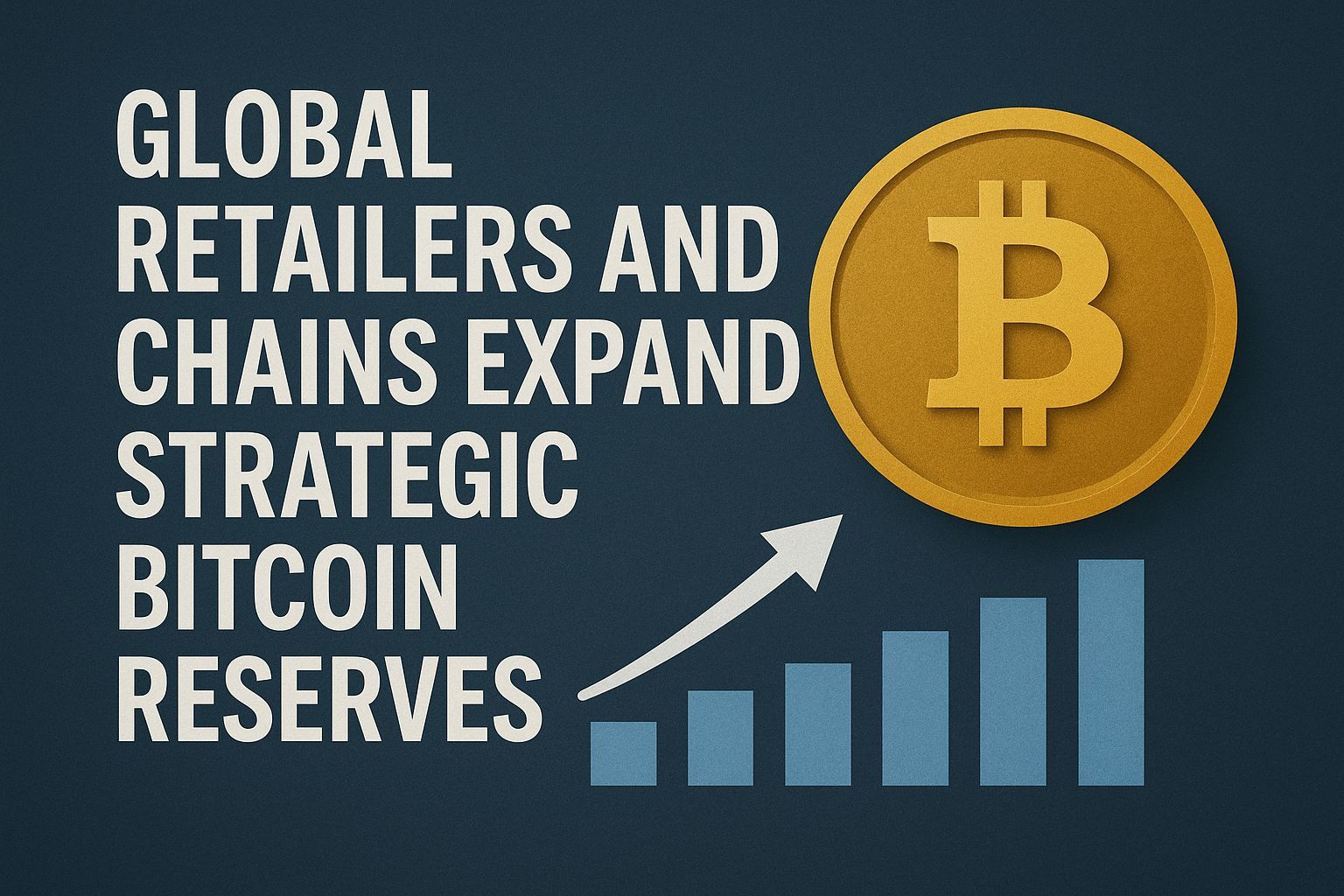
Here’s what’s actually happening in 2026, and it’s way more interesting than your typical "Bitcoin goes up, Bitcoin goes down" narrative. While the original premise suggested retailers are building strategic Bitcoin reserves, the real story emerging from institutional data is far more nuanced-and frankly, more consequential. Institutional adoption has quietly become the backbone of Bitcoin’s credibility, reshaping how Fortune 500 companies, central banks, and financial giants view digital assets. It’s not retail FOMO anymore. It’s corporate treasuries, sovereign balance sheets, and the world’s largest financial institutions deciding Bitcoin deserves a permanent seat at the table.
Key Takeaways
Subscribe to our Social Media for Exclusive Crypto News and Insights 24/7!
- 172 publicly traded companies now hold roughly 1 million BTC-about 5% of total circulating supply-representing a 40% quarter-over-quarter surge in Q3 2025[4]
- U.S. government holds 325,000-328,000 BTC through its newly formalized Strategic Bitcoin Reserve, the largest known government holdings globally[2]
- Retail crypto spending jumped 125% in 2025, with average transaction values approaching $800 per order, yet the institutional narrative is what’s driving long-term adoption[3]
- Central banks are actively testing blockchain infrastructure-the Czech National Bank purchased $1 million in digital assets to gain practical experience, signaling a broader institutional pivot[1]
The Real Story: Institutions Ate Bitcoin’s Lunch (And They’re Still Hungry)
Forget the retail narrative. What’s actually reshaping Bitcoin’s role in 2026 isn’t TikTok day traders-it’s the people running the world’s largest corporations and governments.
Last year, something shifted. Bitcoin stopped being a speculative asset and became infrastructure. At least 172 publicly traded companies were holding Bitcoin by Q3 2025, up a staggering 40% quarter-over-quarter[4]. In aggregate, these corporate treasuries now control approximately one million BTC-roughly 5% of all Bitcoin in existence. That’s not noise. That’s a structural change in how capital allocates.
JPMorgan, one of the world’s most conservative financial institutions, announced plans to accept Bitcoin and Ether as collateral for institutional clients starting through ETF-based exposures, with plans to expand to direct spot holdings[4]. Imagine that: Wall Street’s most buttoned-up bank treating Bitcoin like any other asset class. This isn’t speculation-it’s normalization.
But here’s where it gets really interesting. According to Kraken’s market analysis, a significant driver of Bitcoin’s price discovery now flows through institutional vehicles[5]. U.S.-listed Bitcoin ETFs like BlackRock’s IBIT and digital asset treasury companies collectively represented nearly $44 billion in net spot demand for Bitcoin in 2025 alone[5]. That’s institutional capital, not retail buying on Coinbase with their grocery money.
The Government’s Bitcoin Play: Sovereigns Are Going Long
Here’s something most people missed entirely: governments are now openly building Bitcoin reserves.
The U.S. holds the largest known government Bitcoin reserve at approximately 325,000-328,000 BTC and has formally established a Strategic Bitcoin Reserve, signaling a deliberate shift toward long-term sovereign custody[2]. This isn’t seized Bitcoin sitting in a vault gathering dust. This is intentional policy.
Pakistan announced the creation of a government-led Strategic Bitcoin Reserve in 2026, marking a significant shift in its engagement with digital assets at the sovereign level[2]. El Salvador’s approach represents a deliberate, ongoing policy decision to position Bitcoin as part of sovereign reserve assets with a long-term holding orientation[2]. These aren’t fringe players-they’re nation-states betting their future on blockchain infrastructure.
Even the Czech National Bank confirmed in November that it purchased $1 million in digital assets, including Bitcoin, with the explicit aim of gaining practical experience in holding blockchain-based assets[1]. The bank stated its objectives plainly: test the entire chain of processes associated with purchase, holding, and management of digital assets-from technical administration of keys to anti-money-laundering compliance[1]. In other words, central banks are building the operational infrastructure to scale this.
According to Deutsche Bank analysts Marion Laboure and Camilla Siazon, more national monetary institutions could well hold Bitcoin alongside gold by the end of the decade. Their September analysis argued that across key reserve criteria-volatility, liquidity, strategic value, and trust-there’s room for both assets to coexist on central bank balance sheets within the next five years[1].
Why This Matters: The Diversification Signal

Central banks aren’t rushing into Bitcoin out of FOMO. They’re doing it because they’re terrified about the dollar.
An August Invesco study found that 64% of central banks intended to increase their reserve levels, while 53% planned to further diversify their holdings, with the dollar’s long-term stability a chief motivating factor[1]. The research noted something even more alarming: 72% of central banks now believe U.S. fiscal dynamics are negatively impacting the dollar’s long-term outlook-a notable jump from 64% the previous year[1]. When central banks start hedging against the reserve currency itself, you know the game has changed.
Bitcoin isn’t replacing the dollar tomorrow. But it’s becoming a legitimate diversification tool for institutions that can’t afford to hold all their eggs in one fiat basket.
The Stablecoin Tsunami: Where Retail Actually Meets Institutions

Okay, here’s where retailers actually do enter the picture-but not how anyone expected.
Retail crypto spending jumped 125% in 2025, a signal that shopper preferences are shifting faster than most retailers realize[3]. But the real driver? Stablecoins, not Bitcoin. Consumers are using digital assets, especially stablecoins, to make everyday purchases and high-value transactions[3].
The average transaction value for crypto purchases rose nearly 50% year-over-year, now approaching $800 per order[3]. That’s not retail speculators-that’s actual commerce. Industries seeing the strongest lift include global e-commerce, luxury goods, and B2B payments[3]. Retailers preparing for this change now are positioning themselves to capture a growing wave of digital-first customers[3].
Industry analysts project stablecoin circulation to exceed $1 trillion by 2026[6]. Let that sink in. In one year, we’re talking about more than a trillion dollars in tokenized stable value moving through retail and institutional channels.
The Structural Shift: Maturity Over Hype
Here’s the thing that should actually excite you: Bitcoin market cap dominance remained above 60% throughout 2025, with no sustained breakdown toward sub-50% levels that historically marked speculative late-cycle excess[5]. Translation? This ain’t 2017 or 2021. The market isn’t blowing off into euphoria.
Bitcoin Coin Days Destroyed-a measurement of how long coins are held before they move-reached its highest level on record for a single quarter in Q4 2025[5]. That suggests meaningful turnover from legacy HODLers capitalizing on performance, but it also reveals something deeper: the market is maturing. Long-term holders are taking profits, sure, but new institutional capital is continuously flowing in to replace that supply. It’s a changing of the guard, not a collapse.
The likeliest source of remaining marketable supply is coming from long-term holders exiting positions after years of accumulation[5]. Meanwhile, crypto is competing for attention against strong equity markets, AI-driven growth, and record price action in gold and precious metals. Yet institutional adoption keeps accelerating. That’s the real signal.
Where We’re Headed: Tokenization and Onchain Infrastructure
As regulatory posture has shifted from adversarial to collaborative, incumbents are increasingly exploring onchain distribution and settlement[5]. The tokenization of widely held assets like large-cap U.S. equities could unlock new sources of global demand and onchain liquidity, serving as a catalyst for the next phase of growth much like ICOs or AMMs did in prior eras[5].
JPMorgan plans to accept Bitcoin and Ether as collateral. Large banks are preparing similar services. As regulatory clarity improves, more will enter Bitcoin lending, custody, and settlement, expanding to other tokens as well[4]. Money market funds are increasingly settling redemptions and collateral flows directly onchain[4]. ETF issuers and fund managers are testing onchain wrappers to reduce transfer costs and enable intraday settlements[4].
This is infrastructure being built in real time.
The Bottom Line
Global retailers and institutional chains aren’t building "strategic Bitcoin reserves" in the traditional sense. Instead, institutions-from central banks to Fortune 500 companies to the U.S. government-are building a new financial infrastructure where Bitcoin, stablecoins, and tokenized assets coexist with traditional finance. Retailers are capturing the surface-level benefit through stablecoin payments and crypto-powered loyalty programs. But the real transformation is happening in boardrooms and central banks, where sovereigns and corporations are quietly positioning themselves for a world where digital assets aren’t fringe-they’re foundational.
The question isn’t whether Bitcoin will become part of institutional reserves anymore. It’s how quickly that adoption accelerates in 2026.
- https://internationalbanker.com/banking/will-central-banks-soon-begin-adding-bitcoin-to-their-reserves/
- https://www.bleap.finance/blog/cryptocurrency-reserve-by-country
- https://www.mytotalretail.com/article/crypto-at-the-checkout-how-retailers-can-prepare-for-the-next-evolution-in-2026/
- https://www.svb.com/industry-insights/fintech/2026-crypto-outlook/
- https://blog.kraken.com/crypto-education/crypto-markets-in-2026
- https://www.foley.com/insights/publications/2026/01/crypto-exits-surge-in-2025-momentum-builds-for-an-even-bigger-2026/






