2026: The Year Institutional Capital Finally Makes Its Move in Digital Assets
When Wall Street Stops Experimenting and Starts Integrating
Here’s the thing-2025 was the year crypto proved it could survive without hype. But 2026? That’s when the real game changes. We’re not talking about retail FOMO or another four-year cycle pump. We’re talking about Fortune 500 companies, sovereign nations, and trillion-dollar asset managers quietly embedding blockchain into their actual balance sheets. The setup that’s been brewing for years is finally clicking into place, and the data shows it’s not speculation-it’s infrastructure.
The numbers tell the story. As of mid-December 2025, 164 public companies and governments now hold $148 billion in digital assets, up from fewer than 10 companies back in 2021[1]. That’s not a trend anymore. That’s a shift. And it’s accelerating. Coinbase is reporting that 76% of companies plan to add tokenized assets in 2026, with some allocating 5%+ of their entire portfolios to on-chain instruments[1]. For context, that kind of institutional conviction doesn’t happen by accident.
Subscribe to our Social Media for Exclusive Crypto News and Insights 24/7!
Key Takeaways
- Institutional adoption isn’t coming-it’s already here. Bitcoin holdings in corporate treasuries, ETFs, and countries jumped from near-zero to 17.9% of total BTC supply by December 2025[1]
- Tokenization is the gateway drug. Real-world asset tokenization is moving from buzzword to deployment, fundamentally reshaping how capital flows globally[3]
- Regulatory clarity is finally removing the friction. The shift from enforcement-first to collaborative frameworks is unlocking new products-stablecoins, tokenized deposits, and complex derivatives tied to digital assets[2]
- Stablecoin adoption is about to hit escape velocity. Predictions point to stablecoin market cap hitting at least $500 billion in 2026, with long-term potential exceeding $2 trillion[1]
Why 2025 Was the Setup Year (Not the Payoff Year)
Let’s be real: 2025 didn’t deliver the kind of returns that make headlines. Price action was choppy. Alts got crushed. But here’s what actually happened beneath the surface-the institutional plumbing got installed.
JPMorgan started tokenizing deposits. Robinhood launched tokenized equities. Stripe began building stablecoin infrastructure. These aren’t experiments anymore; they’re production deployments[1]. Sovereign wealth funds established their first digital asset reserves. Retirement platforms lowered barriers to participation. It’s the financial equivalent of installing fiber optic cable before everyone needs it-unglamorous, but absolutely necessary.
The macro conditions were messy in 2025, sure. But according to Pantera Capital, that noise actually masked what was really happening: institutional positioning, macro flows, and market structure effects became the dominant drivers-not speculation, not retail hype[1]. The whales weren’t chasing pumps. They were building positions quietly.
The Tokenization Explosion: When Every Asset Goes On-Chain
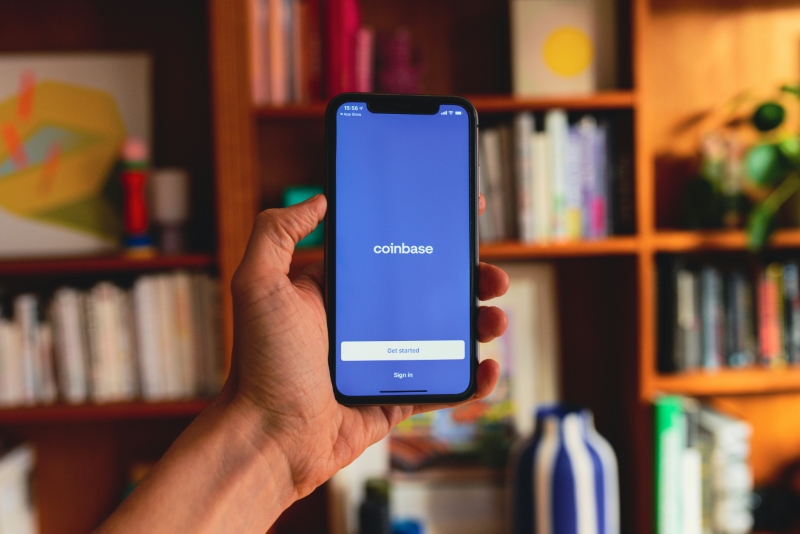
Here’s where 2026 gets really interesting. Asset tokenization isn’t theoretical anymore-it’s happening. We’re talking about converting traditional securities, real estate, commodities, and deposit accounts into blockchain-native instruments.
Why does this matter? Because it fundamentally changes liquidity. Imagine being able to trade a fraction of a New York skyscraper or a Treasury bond with the same ease you send a text message. No settlement delays. No middlemen taking cuts. No geographic friction. That’s the promise, and 2026 is when it starts becoming real[3].
The World Economic Forum calls 2026 "a defining moment for digital assets" precisely because tokenization is accelerating toward enterprise-grade deployment[3]. We’re not talking about niche DeFi protocols anymore. We’re talking about traditional financial institutions fundamentally reimagining how they distribute and settle assets.
One specific bellwether: Morpho, a lending protocol, hit $8.6 billion in TVL by November 2025[1]. That’s not retail liquidity. That’s institutional capital recognizing that on-chain infrastructure can actually deliver better risk-adjusted returns than legacy systems.
The Regulatory Handoff: From Antagonism to Collaboration

Remember when regulators treated crypto like a hostile threat? Yeah, those days are officially over.
The U.S. Treasury convened a Working Group on Digital Assets with an explicit mandate: make America the "crypto capital of the world"[2]. The Office of the Comptroller of the Currency has been granting national trust bank charters to fintech firms, explicitly facilitating their interaction with digital assets and distributed ledger technology[2].
What does that mean in plain English? Banks can now legally build digital asset products without operating in the shadows. Federal preemption and comprehensive federal regulation remove the uncertainty that’s been paralyzing institutional adoption.
And it’s not just the US. Global frameworks are solidifying. The International Institute of Finance noted that 2026 will see multiple forms of money-CBDCs, stablecoins, tokenized deposits, and crypto assets-coexisting across the financial system[4]. The question isn’t which one wins anymore. It’s how institutions allocate across them.
Expect significant rulemaking and interpretive activity from banking regulators at federal and state levels as they implement frameworks like the GENIUS Act[2]. Translation: the pipes are being laid. Fintech firms and traditional institutions are forming partnerships and joint ventures to accelerate deployment[2].
Bitcoin ETF Flows and the Death of the Old Cycle

Bitcoin ETFs represented nearly $44 billion of net spot demand in 2025 alone-yet price performance disappointed relative to expectations[6]. Why? Because supply dynamics have shifted. Institutional capital flowing through ETFs isn’t speculative. It’s strategic allocation.
Here’s the micro-story buried in the data: as regulatory posture shifted from adversarial to collaborative, incumbents started exploring on-chain distribution and settlement seriously[6]. The tokenization of large-cap U.S. equities could unlock new demand sources and on-chain liquidity, serving as a catalyst for the next growth phase-much like ICOs did in 2017 or AMMs did in 2020[6].
The derivatives picture tells you where the smart money actually sits. Open interest stabilized above $80 billion, with elevated levels around $84 billion creating potential liquidation risks if momentum reverses sharply below $90k[5]. But here’s the thing-7-day DeFi liquidations remained near zero despite price volatility[5]. Translation: institutional positioning is conservative. They’re not overleveraged. They’re not hoping for a moonshot. They’re building.
Stablecoins: From Sideshow to Central Stage
Prediction markets traded $28 billion in just the first ten months of 2025, hitting an all-time high of $2.3 billion in a single week[1]. That’s not noise. That’s market infrastructure maturing.
But the real story is stablecoins. The prediction from Pantera Capital and other institutional observers is bold: stablecoins hit at least $500 billion in market cap in 2026, with long-term potential exceeding $2 trillion[1].
Why? Because stablecoins solve the actual problem that’s been choking institutional adoption: settlement friction and counterparty risk. Banks and corporations aren’t racing to hold volatile digital assets. They’re racing to use programmable money that settles instantly and doesn’t fluctuate. Stripe’s building stablecoin infrastructure. Robinhood’s tokenizing equities. JPMorgan’s tokenizing deposits[1]. These are the rails that 2026 depends on.
The M&A Wave Nobody’s Talking About Yet
Prediction markets are consolidating around institutional infrastructure[1]. Translation: acquisitions are coming. The protocols and platforms that built early infrastructure moats are attracting strategic buyers. Why? Because first-mover advantage in institutional plumbing is worth billions.
Venture capital investment in digital-asset companies surged to $19.7 billion in 2025 despite falling deal counts[7]-meaning investors are making bigger, more strategic bets on fewer, higher-conviction targets. That’s exactly what you see before a consolidation wave.
What This Actually Means for 2026
The institutional breakout isn’t a maybe anymore-it’s a when. We’ve got regulatory clarity arriving just as corporate treasuries are building significant positions. We’ve got stablecoin infrastructure hitting production at the exact moment institutions need programmable settlement layers. We’ve got asset tokenization moving from white papers to deployment.
The pieces don’t need to align perfectly. They just need to keep moving in the same direction-and that’s exactly what the data shows.
But here’s the honest take from the sources: this adoption won’t be frictionless. The IIF noted that competing pressures-shrinking balance sheets colliding with the need to invest in tokenization infrastructure-may cause some institutions to stall rather than embrace tokenization immediately[4]. Different institutions have vastly different risk appetites and technological capabilities[4].
What we’re watching for in 2026:
- Utilization rates rising above 40% as a signal that credit markets are tightening
- Sustained ETF flows as institutional capital tests new entry points
- 401(k) and regulatory announcements that might unlock trillions in retirement capital
- Basis APR movements and perp/futures mix shifts toward dated contracts, signaling institutional participation increase[5]
The bottom line? 2026 won’t be the year crypto finally "goes mainstream." It’s the year crypto becomes mainstream infrastructure. The institutions aren’t testing anymore. They’re building.
- https://panteracapital.com/blockchain-letter/navigating-crypto-in-2026/
- https://www.clearygottlieb.com/news-and-insights/publication-listing/2026-digital-assets-regulatory-update-a-landmark-2025-but-more-developments-on-the-horizon
- https://www.weforum.org/stories/2026/01/digital-economy-inflection-point-what-to-expect-for-digital-assets-in-2026/
- https://www.iif.com/LinkClick.aspx?fileticket=dsI9QFbLx2w%3D&portalid
- https://blog.amberdata.io/institutional-crypto-flows-2026-market-analysis
- https://blog.kraken.com/crypto-education/crypto-markets-in-2026
- https://www.foley.com/insights/publications/2026/01/crypto-exits-surge-in-2025-momentum-builds-for-an-even-bigger-2026/