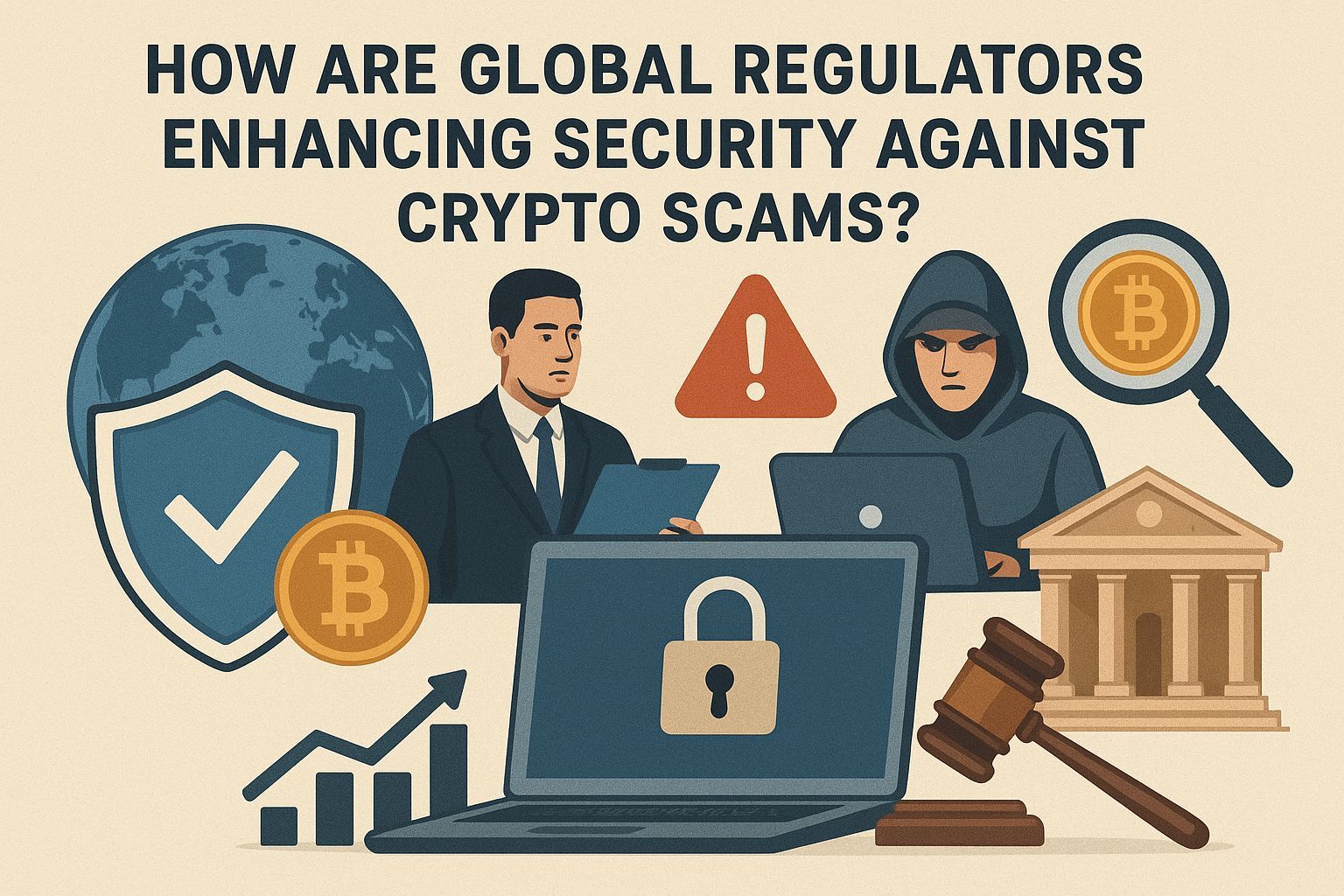
Regulators Are Finally Drawing a Line in the Sand Against Crypto Scammers
Global regulators are ramping up security against crypto scams through mandatory compliance codes, Travel Rule enforcement, and cross-border frameworks like MiCA and CARF, targeting fraud in volatile markets where scams hit record $17 billion in 2025.[5][2] It’s not just talk-these moves are slamming the door on scammers hiding in DeFi shadows and fake platforms.
Key Takeaways
- Scams Bill in Australia mandates banks, telcos, and platforms to share data and block fraud flows-passed February 2025.[1]
- FATF Travel Rule now in 85 jurisdictions, tracking virtual asset transfers to choke money laundering.[2]
- EU’s MiCA and AMLA force crypto firms into bank-level KYC/AML, with on-chain forensics becoming standard.[4][3]
- Enforcement hit new highs: DOJ and allies dismantled scam networks, not just small fries.[5]
Subscribe to our Social Media for Exclusive Crypto News and Insights 24/7!
Australia’s Scams Prevention Framework: No More Free Rides for Fraudsters

Picture this: you’re wiring funds to what looks like a legit crypto exchange, but poof-gone. Australia’s Scams Bill, rammed through Parliament on February 13, 2025, flips the script.[1] It slaps onerous compliance obligations on banks, telcos, and digital platforms under the Scams Prevention Framework. Treasury’s 2023 consultation called out the mess-no clear roles for anyone fighting scams.[1] Now? Mandatory industry codes mean real-time monitoring and data sharing. ASIC’s all over it too, chasing unlicensed crypto ops with their 2024-28 plan zeroing in on tech-enabled scams.[1] Honestly, it’s about time-regulate-by-enforcement was the only game in town, but this adds teeth.
EU and Asia-Pacific: Harmonizing the Chaos, One Rulebook at a Time

Europe’s not messing around. MiCA kicked in late 2024, licensing stablecoin issuers and crypto services with ironclad disclosures.[3][4] Come 2026, the AMLA rolls out as a “single rulebook,” supervising cross-border entities like a hawk-no more juggling 27 national rules.[4] Firms? Expect full transaction monitoring, Travel Rule lock-in, and proactive wallet screening against blacklists. A real-world glimpse from sources: a European bank traced client funds to a ransomware wallet via on-chain analytics-that’s your new normal.[4]
Over in Asia-Pacific, Hong Kong, Singapore, and Thailand are syncing up with National Anti-Scam Centres, money mule crackdowns, and bank-telco alliances.[6] Australia’s banks, even with slowed government rollout, are innovating-CEOs brag about dropping scam rates.[6] You’ve seen this patchwork before, right? Scammers hop borders like frogs on lily pads, but global bodies like FATF, IOSCO, and FSB are closing gaps.[2]
US and Global Enforcement: From Reactive Busts to Backbone-Breaking Ops

Stateside, the CFTC handles commodity-like crypto, FinCEN slams AML rules, and new bills like the GENIUS Act align with MiCA vibes.[3] But the real heat? Chainalysis reports $17B stolen in 2025 scams, fueled by AI impersonations.[5] Regulators shifted gears: DOJ, OFAC, and partners gutted networks like Prince Group, hitting executives, shells, and rails-not just street-level hustlers.[5] TRM Labs echoes: illicit flows hit $15.8B, with stablecoins dominating sanctioned inflows as scammers dodge crypto-native sanctions on Russia-linked ops.[7]
No silver bullets, says Chainalysis-need real-time fraud tools like Alterya, cross-border freezes, and capacity building in weak spots.[5] Imagine holding bags through a pig butchering scam, like those Virginia victims funneled to fake platforms.[9] Brutal. But these enforcements? They’re making cash-outs a nightmare.
Stablecoins and DeFi Under the Microscope: Reserves, Taxes, and Forensics
Stablecoins are the scammers’ best friend-fast, borderless. Regulators demand 1:1 collateral for non-bank issuers (Australia’s APRA watching).[1] Globally, expect reserve audits and VASP scrutiny.[2] CARF, G20-endorsed, gears up for 2027 tax info swaps-get compliant or get pinched.[2] DeFi? Tighter VASP definitions mean Travel Rule everywhere, no more anonymous hops.[2][4]
Market mechanics tie in: with crypto’s October 2025 crash exposing volatility, regs focus on fraud amid cascades.[2] Whales ain’t sleeping-they’re rotating to high-risk spots, but on-chain tools like those nailing ransomware are flipping the script.[4][7] Enforcement’s crypto-native now: sanctions list wallet IDs, forcing stablecoin pivots.[7]
- Travel Rule math: 85/117 jurisdictions live-up 20 from ’24. Tracks sender/receiver data, kills anonymity.[2]
- Scam typology shift: Impersonation + AI = record hauls. But integrated busts broke the “economic backbone.”[5]
- Analogy time: It’s like upgrading from a picket fence to a fortress-still porous if neighbors slack.
These aren’t hypotheticals. Sources paint a 2026 where scams don’t just sting-they get systematically starved. Stay vigilant, fam-compliance is the new edge.
- https://www.gtlaw.com.au/insights/global-legal-insights-blockchain-and-cryptocurrency-regulation-2026
- https://sumsub.com/blog/global-crypto-regulations/
- https://www.1stsource.com/advice/crypto-fraud-and-the-law/
- https://kyc-chain.com/kyc-aml-trends-2026/
- https://www.chainalysis.com/blog/crypto-scams-2026/
- https://www.outseer.com/blog/global-scam-prevention-2026
- https://www.trmlabs.com/resources/blog/2026-crypto-crime-report-key-insights-trm-identifies-record-usd-158-billion-in-illicit-crypto-flows-in-2025-reversing-a-multi-year-decline
- https://www.naag.org/attorney-general-journal/crypto-crackdown-criminal-forfeiture-of-cryptocurrencies-by-states/