Tokenization: Treasury’s Secret Weapon Against Old-School Drag
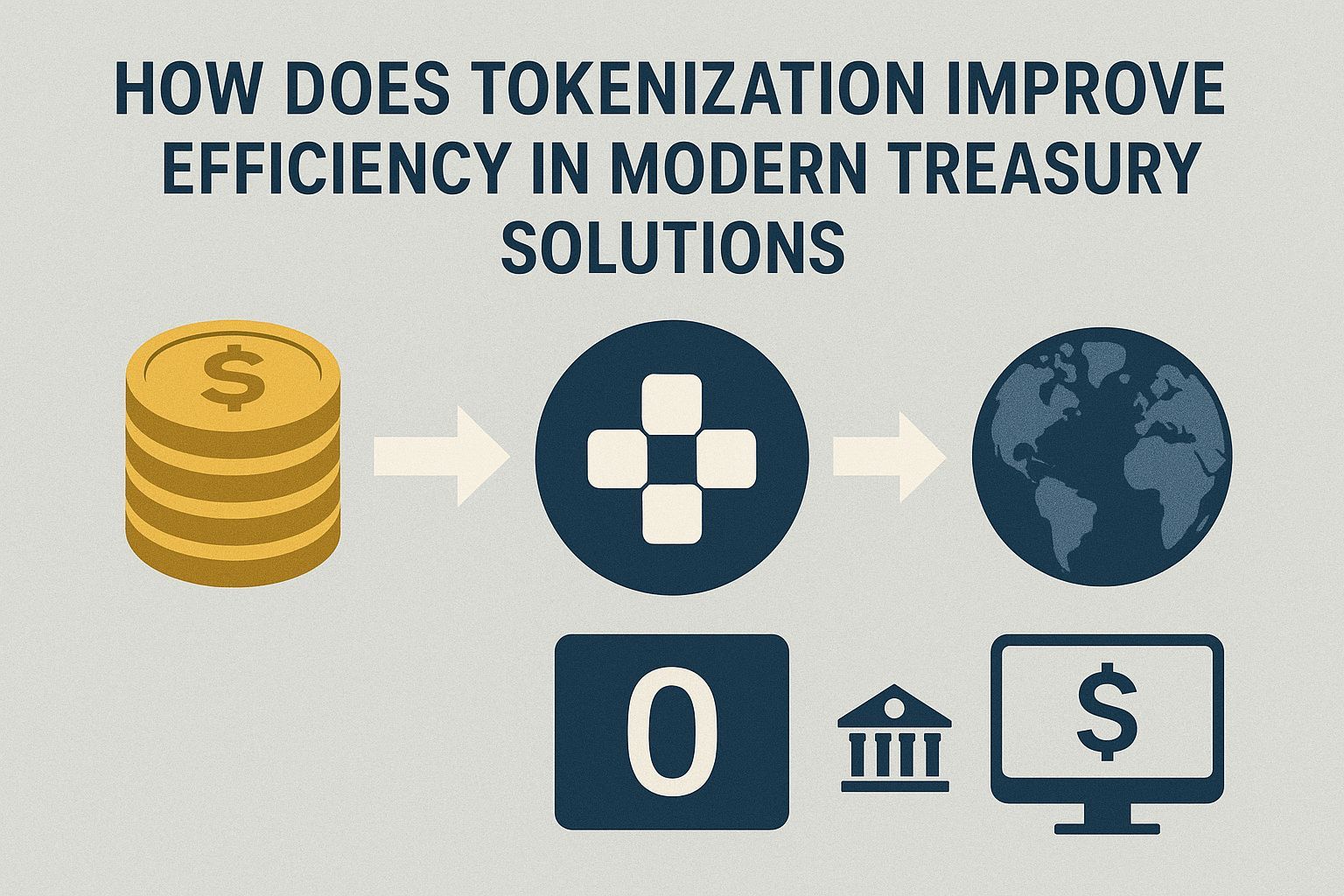
How does tokenization improve efficiency in modern treasury solutions? Straight up, it slashes settlement times from days to seconds, automates cash flows with smart contracts, and unlocks 24/7 liquidity-turning clunky corporate treasuries into lean, on-chain machines that don’t sleep.[1][2][4]
Key Takeaways from the Frontlines
- Near-instant settlements beat T+2 cycles, freeing up capital and nuking counterparty risk.[1][2][3]
- Smart contracts automate the grind-think dividend payouts, compliance checks, and fund allocations happening without a human lifting a finger.[1][4][5]
- Tokenized treasuries are exploding: Market hit $8B+ by Oct 2025, with BlackRock and Ondo leading the charge on 4-5% yields.[6]
- Real-world wins: Santander’s tokenized bond cut admin costs big time via automation.[1]
Subscribe to our Social Media for Exclusive Crypto News and Insights 24/7!
Picture this: You’re a corporate treasurer, staring at spreadsheets, chasing wire transfers that take days. Tokenization? It flips the script. Blockchain turns assets like U.S. Treasuries into digital tokens, settling trades in real-time. No more “capital tied up like a bad bet.” McKinsey nails it-end-to-end tokenized bonds could boost operational efficiency by at least 40% through data clarity and embedded compliance.[2] That’s not hype; that’s math.
Ditching the Middlemen: Costs Plummet, Speed Soars
Traditional finance? It’s like herding cats through a bureaucracy. Brokers, clearinghouses-everyone takes a cut and a day. Tokenization leverages smart contracts (self-executing code on blockchain) to automate compliance, ownership transfers, and even rental income from tokenized property.[1] PwC spells it out for treasuries: Corporate cash managers spend hours tracking movements. Post-tokenization? Transfers hit instantly, then smart contracts auto-split funds for investments or payments. What was multiday drudgery becomes “near-zero” settlement, dodging pricey networks.[4]
You’ve seen repos and collateral fights, right? Tokenized versions automate valuation and margin top-ups 24/7, slashing errors and boosting intraday liquidity.[2] FSB chimes in: Programmability consolidates trade and post-trade, making assets like gold or debt funds easier collateral.[3] Honestly, it’s low-hanging fruit-start internal, scale to inter-bank treasury ops.
Treasuries Go On-Chain: Yield Without the Volatility Hangover
Tokenized Treasuries are the star here. They’re “risk-free” U.S. gov debt wrapped in blockchain magic, exploding from <$100M to over $8B in two years (256% YoY as of Oct 2025).[6] BlackRock, Franklin Templeton, Ondo Finance? They’re printing billions in products yielding 4-5%-stable, on-chain, and composable with DeFi.[5][6]
- Institutions: Transparent fixed-income with lower ops costs.[5]
- DAOs/DeFi: Stable collateral over volatile crypto.[5]
- Corps: Cash mgmt on steroids, 24/7 access.[5]
Chainlink’s take? Brings RWA yield onchain, deeper liquidity, immutable ledgers for regulators. No human error, just automation.[5] Citi adds: Tokenized deposits enable seamless fund transfers, turning money markets into collateral powerhouses.[7] Imagine holding that through a crypto winter-steady yield while alts swan-dive.
Transparency and Liquidity: The Trust Moat
Blockchain’s immutable ledger? Every tx is auditable, tamper-proof. XBTO calls it “unprecedented transparency,” rebuilding trust.[1] DTCC: Settlements in minutes, not days-unlocking trapped liquidity.[8] Broadridge report? Tokenization’s hitting reality, despite barriers, with better tracking and access.[9]
FSB warns of liquidity spikes from atomic settlement, but the upsides dominate: Cost savings, flexibility.[3] McKinsey: Universal digital vault for assets, composable across apps.[2]
Why Treasuries Now? The Efficiency Edge
For modern treasury solutions, it’s a no-brainer. PwC: Bypass DVP delays, gain fraud-resistant single truth.[4] INX quotes the vibe: “Responsible tokenization… expands participation while maintaining protections,” SEC-regulated on ATS like INX.one.[6] Whales ain’t sleeping-they’re rotating into this for real-time liquidity.[7]
Bottom line? Tokenization doesn’t just tweak efficiency; it rewires treasury from reactive to proactive. Your move: Dive into tokenized T-bills before the normies pile in.
- https://www.xbto.com/resources/7-key-benefits-of-tokenizing-real-world-assets
- https://www.mckinsey.com/industries/financial-services/our-insights/from-ripples-to-waves-the-transformational-power-of-tokenizing-assets
- https://www.fsb.org/uploads/P221024-2.pdf
- https://www.pwc.com/us/en/tech-effect/emerging-tech/tokenization-in-financial-services.html
- https://chain.link/article/what-are-tokenized-treasuries
- https://www.inx.co/tokenized-treasuries-the-safest-way-to-earn-yield-on-chain-in-2025/
- https://www.citigroup.com/global/insights/how-tokenized-payments-are-enabling-real-time-liquidity
- https://www.dtcc.com/dtcc-connection/articles/2025/october/08/understanding-asset-tokenization-a-practical-shift-in-finance-b8p41i5aw
- https://www.broadridge.com/de/press-release/2025/broadridge-report-reveals-tokenization-moving-from-hype-to-reality-across-financial-services