Senate’s Crypto Bill Advances-But the Fight’s Far From Over
When Bipartisanship Dies, Partisan Lines Harden
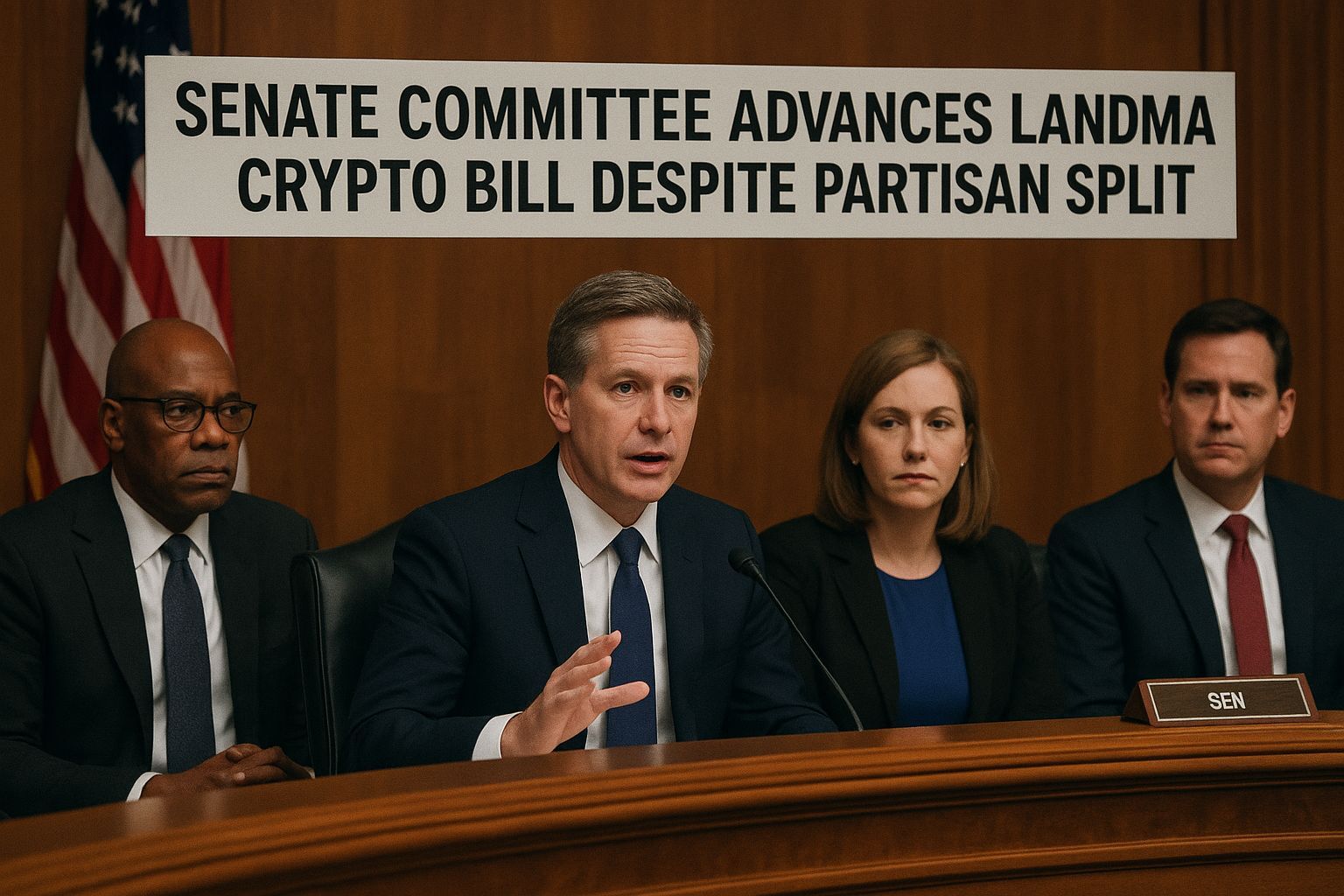
The Senate Agriculture Committee just advanced a landmark cryptocurrency bill along party lines, voting 12-11 Thursday to move forward with what could reshape how digital assets get regulated in America. But here’s the thing-this wasn’t some smooth, unified effort. This was Republicans ramming through legislation after months of negotiations with Democrats completely fell apart.
The bill that passed is called the Digital Commodity Intermediaries Act, and it’s designed to hand new regulatory authority to the Commodity Futures Trading Commission (CFTC) to govern how digital tokens are traded and structured[1]. Chairman John Boozman of the Senate Agriculture Committee decided to go GOP-only after what he described as “fundamental policy disagreements” with his Democratic counterpart, Senator Cory Booker[1].
Subscribe to our Social Media for Exclusive Crypto News and Insights 24/7!
Boozman’s messaging was clear: “The CFTC is the right agency to regulate the spot trading of digital commodities. This bill provides a clear definition of a digital commodity, protects innovation and technology, establishes consumer protection safeguards, and equips the agency with the necessary resources to take on this new responsibility.”[1] Sounds solid on paper, right? But the cracks are showing.
Key Takeaways
- The Senate Ag Committee advanced crypto market structure legislation on a party-line 12-11 vote, rejecting all Democratic amendments[1]
- The bill still needs to merge with a second component handled by the Senate Banking Committee, adding complexity to an already fractured process[1]
- Democrats blocked key ethics provisions, specifically provisions that would ban federal officials and their families from issuing or endorsing digital assets-a direct shot at Trump family crypto interests[1]
- The broader CLARITY Act already passed the House with bipartisan support (294-134) in July 2025, but Senate momentum has stalled[3]
- Coinbase CEO Brian Armstrong pulled support over stablecoin yield disagreements, creating a rift between the crypto industry and traditional banking[2]
The Trump Family Conflict Elephant in the Room

Here’s where it gets spicy. Democrats pressed hard for language targeting ethics issues-you know, the whole thing about federal officials and their families profiting off crypto holdings[1]. Senator Michael Bennet from Colorado specifically introduced an amendment to ban federal officials and their families from issuing or endorsing digital assets[1]. That didn’t survive the party-line vote.
The timing? Yeah, it’s not coincidental. President Trump has an “expanding blockchain empire,” and Democrats weren’t shy about flagging the conflict-of-interest angle[2]. You’ve got Republicans trying to move crypto regulation forward while Democrats are basically saying, “Wait-who’s gonna profit from this again?” It’s political theater meets genuine regulatory concern, and frankly, it’s messy.
The House Already Did This-With Actual Bipartisan Buy-In

Here’s the kicker: the House passed the CLARITY Act way back in July 2025 with legitimate bipartisan support-294 votes to 134[3]. That’s not a narrow squeeze. That’s actual consensus. The Senate? It’s taken six months just to get one committee to vote on one piece of the puzzle.
The House version established broader market structure rules for cryptocurrency issuance and trading[2]. It passed the Financial Services Committee and the Agriculture Committee back in June 2025[3]. Then it sailed through the full House. The Senate was supposed to use it as a “strong template,” according to Senator Tim Scott[3]. Instead, the Senate created its own version, and now we’ve got a Frankenstein situation where the Agriculture Committee passed something that still needs to get merged with whatever the Banking Committee eventually does.
And speaking of the Banking Committee-it’s currently stuck. Why? Because Coinbase CEO Brian Armstrong pulled his support over how stablecoin yields should be treated[2]. The banking lobby’s got its claws in this thing, and now there’s a fundamental disagreement about whether crypto platforms can offer interest on stablecoin holdings. The Senate Banking Committee delayed its markup, and that’s holding up the whole process[2].
Two Bills, Two Committees, One Mess

Think of it like this: the crypto market structure bill is split across two Senate committees because digital assets touch multiple regulatory domains. The Agriculture Committee handles the commodity-trading side (CFTC jurisdiction)[1]. The Banking Committee handles the securities side (SEC jurisdiction)[1][3]. Both bills eventually need to get merged, then reconciled with the House version, and then the full Senate needs to vote.
That’s a lot of moving parts. That’s a lot of places where things can break down. And right now, they’re breaking down at the reconciliation stage before either bill even hits the Senate floor.
The Senate Ag version released on January 21 includes some interesting mechanics: expedited registration and provisional status for digital commodity exchanges and brokers through the CFTC[4]. The registration process would take no later than 180 days after enactment, with provisional status running until 270 days after rulemaking goes final[4]. That’s faster than traditional regulatory timelines, which is something the crypto industry actually wanted.
But that’s also the thing-the crypto industry’s fractured too. Coinbase pulled support because the banking industry wants to restrict how much yield platforms can offer on stablecoins. Armstrong and the banking lobby are basically in a standoff, and Congress is caught in the middle[2].
What Happens Now?
Boozman said he’s “committed to continue working with” Democrats and that “what we want is a bipartisan bill”-but that’s politician speak for “we’re gonna try after we’ve already shown we don’t need you.”[1] The bill’s moving to the Senate floor, but without Banking Committee action, it’s incomplete. Without a deal on stablecoin yields, the industry’s gonna stay divided. And without resolving the ethics concerns, Democrats aren’t coming back to the table.
The House has already moved on. They did their job back in July. Now it’s on the Senate to actually get its act together and either build consensus or admit that partisan gridlock is gonna kill this thing.
For crypto investors and builders, this is simultaneously good and bad. Good because some regulation is coming-the industry’s been asking for clarity for years. Bad because partisan gridlock could mean a watered-down final product that doesn’t actually address what either side wants.
The clock’s ticking, and we’re watching to see if the Senate can pull off what the House already did: actual compromise on digital assets.
- https://www.politico.com/live-updates/2026/01/29/congress/senate-ag-advances-crypto-bill-00754586
- https://fortune.com/2026/01/29/clarity-act-gryfto-crypto-senate-agriculture-committee-booker-trump-banking/
- https://www.lw.com/en/us-crypto-policy-tracker/legislative-developments
- https://www.dwt.com/blogs/financial-services-law-advisor/2026/01/senate-ag-committee-crypto-market-structure-text