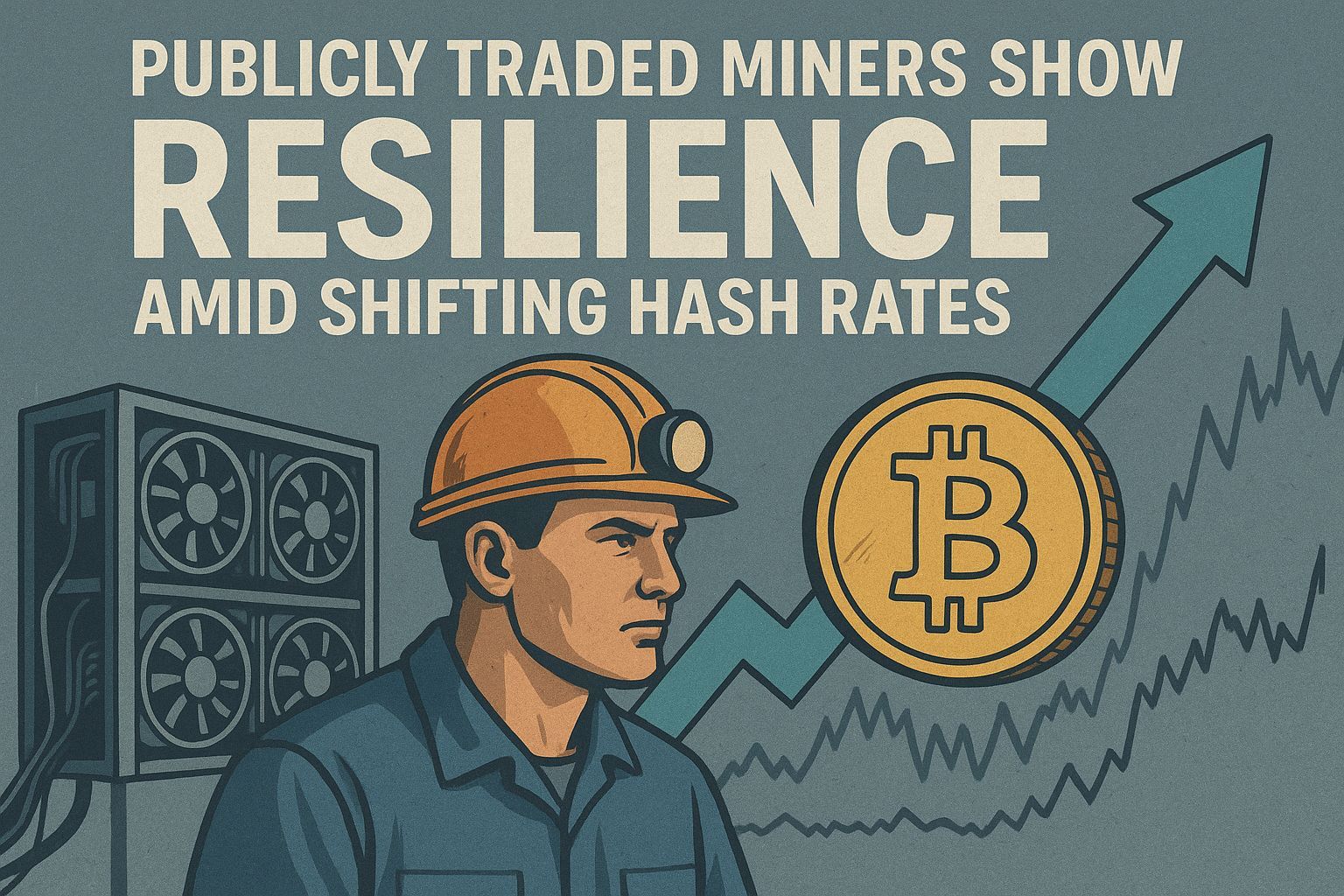
Bitcoin Miners Aren’t Dead-They’re Pivoting Hard Into AI and Data Centers
The Real Story Behind 2026’s Mining Renaissance
Look, the narrative around crypto miners dying out? That’s outdated. What’s actually happening is way more interesting. Publicly traded Bitcoin mining companies are showing serious resilience, but not because mining itself is thriving in the old-school sense. Instead, they’re doing something smarter: leveraging their power infrastructure and technical expertise to pivot into AI and high-performance computing-and the market’s rewarding them for it.[4]
Bitcoin mining companies that landed multi-billion dollar HPC and AI contracts were the real performance leaders in 2025, and that momentum is carrying straight into 2026.[4] This isn’t just a pivot; it’s a survival strategy that’s actually working.
Key Takeaways
- The AI Pivot is Real: Companies like IREN and TeraWulf are converting existing mining infrastructure into AI data centers, opening entirely new revenue streams.
- Market Sentiment is Mixed But Optimistic: Analysts expect 37-40% upside for top miners in 2026, but execution risk and Bitcoin price volatility remain serious concerns.
- Hash Rate Efficiency Matters More Than Ever: With mining difficulty hitting records in 2025, only operators with advanced infrastructure, low-cost power, and operational excellence survive.
- Leverage and Capital Access Are Game-Changers: New financing models (like those in the hosting space) are democratizing mining access while rewiring ROI timelines.
IREN’s Rebound: Australia’s Biggest Miner Flexing New Muscles
IREN Ltd., the largest publicly traded Bitcoin miner by market cap at roughly $14 billion, is basically the poster child for this shift.[1][2] The stock had a wild 2025-started around $12 per share, tripled to over $36, then pulled back. But here’s the thing: analysts are calling for another 40%+ run in 2026, and the company’s starting the year with momentum.[1][2]
The catch? Sentiment’s genuinely mixed. IREN crushed earnings per share last quarter but missed on revenue targets. Short interest spiked near year-end, though it’s improving.[1][2] The company’s also exploring an AI pivot alongside its mining operations, which could either be genius or a distraction-that’s the speculative risk you’re pricing in here.
Subscribe to our Social Media for Exclusive Crypto News and Insights 24/7!
Here’s what makes IREN interesting though: it’s a pure-play miner with scale. Hash rate improvements, treasury Bitcoin holdings, and operational metrics actually matter with IREN because it has the capital to execute on infrastructure upgrades. That’s not true for every miner out there.
TeraWulf’s $670M AI Play: When Mining Infrastructure Becomes a Moat
TeraWulf is running the playbook that’s working in 2026: keep the mining operation humming for cash flow, but build the real future in AI hosting.[1][2]
Last quarter, TeraWulf signed a 10-year hosting agreement with FluidStack expecting $670 million in average annual revenue. That’s not chump change. It’s a long-dated contract that provides visibility and stability-something crypto miners haven’t had in years.[1][2]
Now, the balance sheet side had some noise (net losses widened due to warrant remeasurement), but non-GAAP adjusted EBITDA improved 25% year-over-year to $18.1 million. Translation: the actual operational business is strengthening, even if accounting mark-to-market moves create short-term volatility.[1][2]
This is the template: lock in AI contracts with long runway, maintain mining operations as a cash cow, and let the market reprices the company’s diversified revenue.
Cipher’s Cash Generation Machine

Cipher’s another name getting analyst love, with 37% upside expected going into 2026.[1] The company generated about $72 million in revenue from mining last quarter alone, which is real, tangible cash flow funding growth.[1]
The risks are legit though. Supply chain delays, equipment timing, rising energy costs, and mining difficulty hitting records in 2025 are all eroding margins.[1][4] Payback periods for some mining setups now exceed 1,000 days-that’s brutal compared to years past.[4]
But here’s why Cipher’s balance sheet matters: it’s strong enough to absorb these headwinds and finance AI infrastructure projects without desperate dilution. The company’s shares skyrocketed in 2025, then hit turbulence at year-end, which is pretty normal for this volatile sector.[1]
The Hash Rate Reality: Why Difficulty Matters More Than You Think
Mining difficulty hit records in 2025, and that’s the thing everyone misses. It’s not that Bitcoin mining is dead-it’s that only the operationally excellent, capital-efficient players survive.[4]
Think about it: Bitcoin’s block reward halved from 6.25 BTC to 3.125 BTC during the cycle. Devastating, right? Except Bitcoin’s price roughly doubled, so miners ended up making 16% more in USD despite cutting their Bitcoin output in half.[3] The math actually works if you’re running an optimized operation.
But here’s the catch-that only applies if you’ve got:
- Access to cheap electricity
- Modern ASIC hardware
- Operational excellence
- Scale advantages
The days of running an ASIC in your garage are genuinely over. The future belongs to industrial-scale operations with long-term power contracts and infrastructure that can pivot to AI hosting on a dime.[3]
The Hidden Risk: AI Pivot Distracts from Core Mining
Here’s something the analyst reports acknowledge but don’t emphasize enough: pivoting to AI is risky.[4]
You’re diverting engineering talent and capital from your core mining business into unfamiliar territory. AI and HPC hosting compete against heavyweight incumbents (cloud providers, hyperscalers) who have deeper pockets and more experience. It’s a tech bubble play alongside mining-you’re taking on new execution risk to escape old execution risk.[4]
Some miners will nail it. Others will burn capital chasing AI contracts and end up worse off than if they’d just optimized their mining operations.
Regulatory Headwinds and the Energy Question
Environmental regulations and energy cost pressures aren’t going away.[4] Non-renewable miners especially face rising regulatory costs. Carbon emissions regulations in developed markets could significantly increase operational expenses for high-energy jurisdictions.[4]
Geopolitical risks add another layer-international miners face jurisdiction-specific uncertainty that domestic players don’t have to sweat as hard.[4]
Valuation and 2026’s Real Opportunity
Here’s the thing about Bitcoin mining stocks: they’re volatile amplifiers of Bitcoin price.[4] A significant Bitcoin correction in 2026 would likely slam these stocks harder than the broader market. But if Bitcoin holds or climbs, miners that successfully execute on AI contracts could see genuine upside as the market reprices them as diversified infrastructure plays rather than pure mining bets.
The analyst consensus pointing to 37-40% upside for top miners isn’t crazy-it assumes Bitcoin stays stable and execution on AI pivots progresses.[1][2][4] But it’s not a safe bet. These are speculative, high-risk plays that demand you understand the operational metrics: hash rate trends, power costs, Bitcoin treasury holdings, and AI contract visibility.
The Bottom Line
Publicly traded miners aren’t showing resilience because mining itself is thriving-they’re showing resilience because they’re smart enough to evolve. IREN’s AI flirtation, TeraWulf’s $670M hosting deal, Cipher’s cash generation-these are companies using mining infrastructure as a foundation for something bigger.
That’s the 2026 narrative: not miners vs. obsolescence, but miners vs. themselves, competing on who can best transition to the next thing while maintaining operational excellence on the current thing. The winners will be those with strong balance sheets, cheap power, and the discipline to execute on AI without losing their mining edge.
The rest? They’re fighting for table scraps in a market that’s rewarding only the best operators.