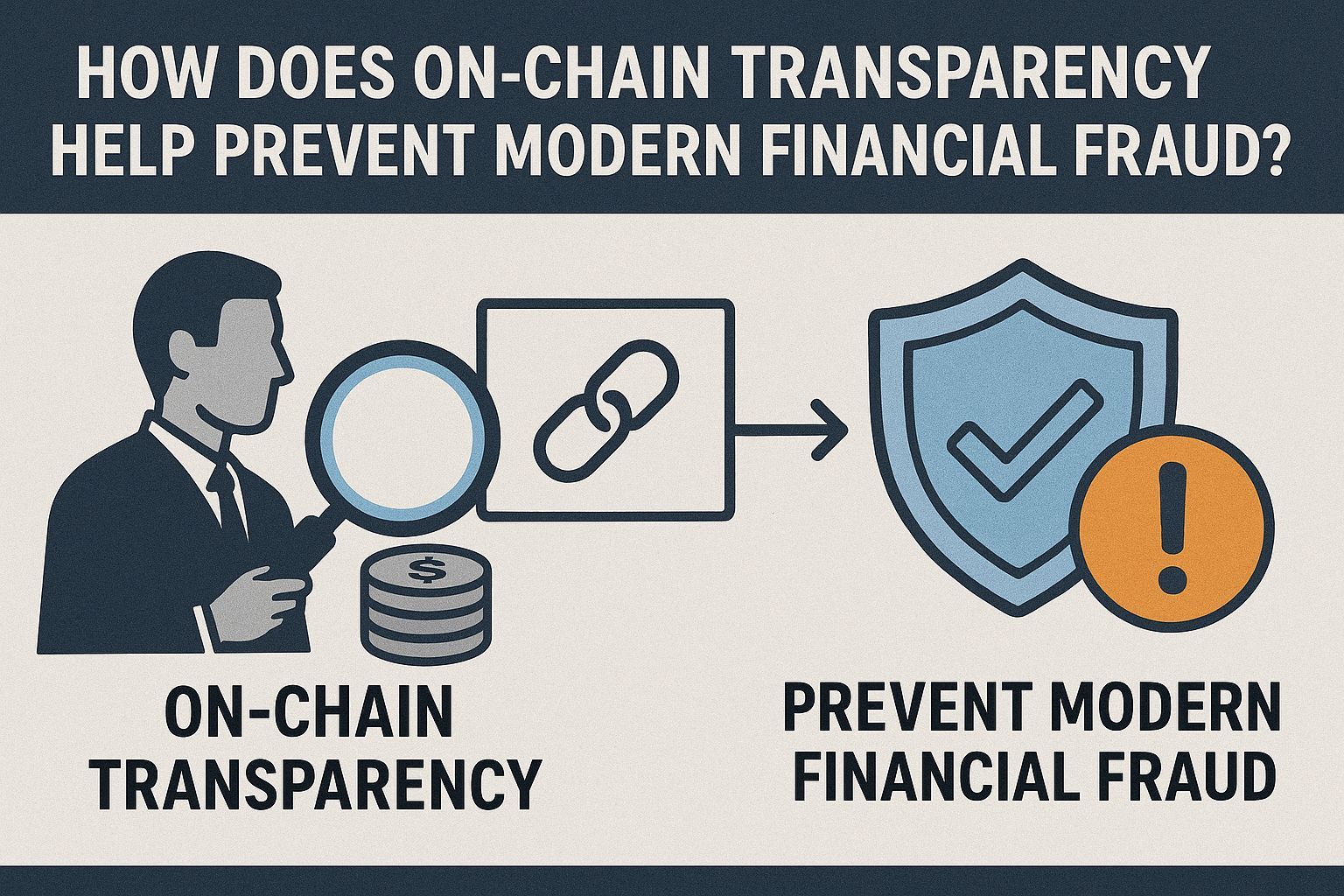
The Blockchain Ledger Effect: How Transparent On-Chain Systems Are Dismantling Fraud Networks
When Every Transaction Leaves a Permanent Fingerprint
Here’s the thing about modern financial fraud: it thrives in the shadows. Traditional banking systems? They’re basically silos-your bank doesn’t talk to PayPal, which doesn’t talk to Zelle, which definitely doesn’t coordinate with crypto exchanges. Scammers have exploited this fragmentation for years, hopping between platforms like digital ghosts. But on-chain transparency is rewriting that playbook entirely, and it’s forcing fraudsters to rethink their entire operation.
The blockchain doesn’t forget. It doesn’t get tired. And most importantly, it doesn’t lie.
Subscribe to our Social Media for Exclusive Crypto News and Insights 24/7!
Key Takeaways
- Real-time verification eliminates information asymmetry: Investors and regulators can independently confirm asset holdings by examining blockchain wallets, bypassing self-reported data entirely[1]
- Immutable audit trails prevent evidence tampering: Every transaction is timestamped and tamper-proof, making it nearly impossible for fraudsters to erase their tracks[4]
- Cross-platform data linking exposes hidden criminal networks: Connecting on-chain activity with off-chain intelligence reveals scam operations that would otherwise remain fragmented and invisible[3]
- 2024 crypto scams cost users $9.9 billion-but detection tools are accelerating recovery: On-chain analysis is becoming the standard defense mechanism across exchanges and DeFi protocols[5]
The Transparency Paradox: Why Visibility Actually Works

You’ve probably heard the argument: “Blockchain is anonymous, so it’s a criminal paradise.” That narrative’s already outdated. Yes, addresses are pseudonymous, but here’s what most people miss-that pseudonymity sits on top of perfect visibility. Every movement. Every timestamp. Every connection. It’s like a security camera that never blinks, never deletes footage, and never lets you bribe the operator.
Here’s how this actually prevents fraud:
Immutability is the game-changer. Traditional ledgers? Hackable. Alterable. Deniable. Blockchain? Once a transaction settles, the chain links every new block to the previous one, creating an unbreakable sequence[4]. A fraudster can’t go back and edit a transaction from three months ago without demolishing every block that came after it. That’s computationally and economically impossible at scale. It’s the difference between forging a bank statement and trying to forge the entire federal reserve’s records.
Real-time settlement kills the ambiguity window. In traditional finance, you’ve got lag time. Days. Sometimes weeks. Disputes happen because nobody knows the real state of the ledger until institutions reconcile. Blockchain? Confirmations on high-throughput networks like TRON average around three seconds, with over 40 million active addresses relying on this speed daily[2]. When a transaction confirms, it’s done. Verified. Immutable. There’s no gray area for fraud to hide in.
Every wallet becomes an open book. Crypto hedge funds, payment processors, exchanges-if they’re operating on-chain, their holdings are verifiable in real-time. An auditor or investor doesn’t need to trust a quarterly report anymore. They can literally check the wallet address themselves, see the exact balances, trace the exact movements[1]. This destroys the classic information asymmetry that fund managers once exploited.
The Great Fraud Conspiracy Unravels When Scammers Can’t Jump Systems

Here’s where it gets really interesting. Caitlin Barnett, Director of Regulation & Compliance at Chainalysis, nailed it: “When funds move from one system to another, such as from Zelle to a crypto wallet, there’s often no built-in mechanism to trace that movement across platforms.”[3]
That’s the crack scammers have been crawling through. Move money from your bank to Venmo, then to a crypto exchange, then to a wallet-and suddenly law enforcement loses the thread. Each system operates in isolation.
But blockchain forensics tools like Chainalysis Alterya are closing that gap. By analyzing data relationships-timestamps, address behaviors, transaction patterns, email addresses, IP logs, account ownership-investigators can now link seemingly isolated incidents across platforms[3]. A scammer’s fragmented activity becomes a connected network. The disconnect between traditional finance and crypto that once protected criminals is collapsing in real-time.
Think about ransomware payments. Or pump-and-dump schemes. Or exit scams. These operations relied on opacity. Now? Every movement gets recorded. Every connection gets traced. Even if a criminal moves funds through ten different wallets, the flow is visible and analyzable to anyone with the right tools.
Anomaly Detection: The AI Bouncer at the Door

Continuous on-chain monitoring doesn’t just create a permanent record-it actively hunts for suspicious patterns[1]. Unusual transfers? Flagged. Sudden portfolio shifts? Detected. Interactions with blacklisted or high-risk addresses? Caught.
It’s proactive, not reactive. You’re not waiting for someone to report a problem. The system identifies the threat before most victims even realize they’ve been compromised. Platforms like Elliptic and AnChain.AI analyze behavioral patterns across the blockchain, linking wallets and addresses to known criminal activity, giving institutions the chance to intervene[4].
That’s the fraud prevention game on hard mode-where the opponent’s every move is visible before they make it.
The Regulatory Tailwind: When Transparency Becomes Compliance

Here’s something crypto critics rarely acknowledge: blockchain transparency actually enables better regulatory compliance, not the opposite. KYC/AML obligations? Blockchain provides auditable trails that traditional systems struggle with[1]. Every transaction has a timestamp. Every fund movement is recorded. Every address interaction is documented.
According to the 2025 Chainalysis Crypto Crime Report, regulatory enforcement is driving transparency across cross-jurisdictional collaboration[5]. FinCEN, international task forces, and blockchain forensics providers are de-anonymizing scam networks and actually recovering illicit funds through asset freezing and blacklisting.
The irony? The same transparency that skeptics feared would enable criminals is actually the foundation of modern law enforcement in crypto.
The Numbers Don’t Lie: Fraud Prevention at Scale
In 2024 alone, crypto scams cost users $9.9 billion[5]. Early 2025 added another $2.5 billion in losses, primarily from wallet compromises and phishing attacks[5]. Those are real people. Real money. Real devastation.
But here’s the silver lining: on-chain analysis is catching scams faster, tracing funds more effectively, and helping recover assets at a pace traditional finance could never match. It’s not perfect-no system is. But the velocity of detection and the quality of evidence are fundamentally superior to what we had even two years ago.
So What Actually Changes When You Choose On-Chain Transparency?
For investors: You stop relying on trust. You verify. You see exactly where your money is, down to the satoshi[2].
For platforms: You signal operational integrity. Embracing transparency isn’t weakness-it’s a competitive advantage. It tells users you’ve got nothing to hide.
For law enforcement: You get the full picture. Not fragments. Not guesses. Not data silos. Connected, immutable evidence that actually holds up in court.
For scammers: Game over. The opacity is gone. The fragmentation is sealed. The permanent record is inescapable.
Modern financial fraud thrived in darkness and disconnection. On-chain transparency removes both. That’s not hype. That’s structural change.
- https://www.nansen.ai/post/boost-crypto-fund-transparency-how-onchain-monitoring-enhances-blockchain-scrutiny
- https://oxapay.com/blog/how-blockchain-transparency-builds-stronger-customer-confidence/
- https://www.chainalysis.com/blog/preventing-crypto-fraud-with-off-chain-on-chain-data/
- https://provenance.io/blog/Blockchains-Role-in-Fraud-Risk-Management
- https://rango.exchange/learn/web3-security/onchain-data-analysis-scams