China Just Slammed the Door on RWA-And It’s Not Coming Back
When Beijing Says “No,” the Market Listens
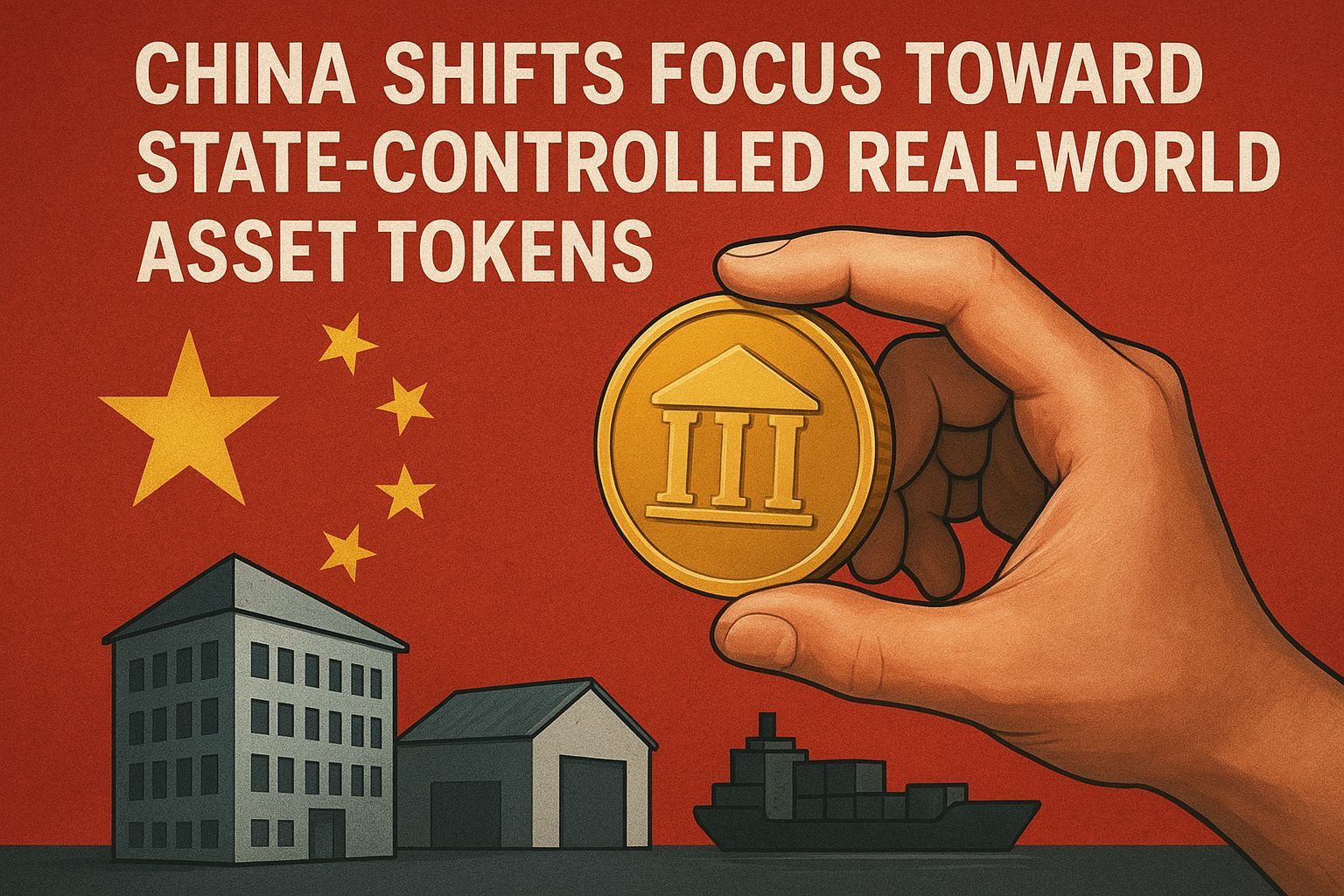
China’s regulatory authorities just dropped a hammer on real-world asset tokenization, and it’s way bigger than another crypto crackdown. On February 6, 2026, eight major government departments-including the People’s Bank of China and the China Securities Regulatory Commission-issued a sweeping notice that effectively bans RWA tokenization domestically and restricts it severely overseas[1][2]. This isn’t a regulatory gray area anymore. This is a hard line drawn in digital ink.
Here’s what actually happened: Beijing formally defined RWA for the first time in ministerial-level policy, then immediately classified it as an “illegal financial activity.” The notice states that RWA-converting asset rights into tokens via blockchain or distributed ledger technology-cannot happen in China except under specific regulatory approval, which, spoiler alert, hasn’t been granted to anyone[2][3].
Subscribe to our Social Media for Exclusive Crypto News and Insights 24/7!
Key Takeaways
- RWA is officially banned onshore with zero approved projects currently operating in China[2][4]
- Overseas RWA activities involving Chinese assets face strict new compliance barriers, including a new regulatory guideline framework[3]
- Chinese entities cannot issue virtual currencies or RWA tokens abroad without prior consent, shutting off the offshore workaround that many projects tried[1]
- State-controlled digital currencies like e-CNY are the approved path forward-not decentralized tokenization[2]
- Seven major financial associations echoed the ban, treating RWA as equivalent to cryptocurrency speculation[4][5]
The Bait-and-Switch Nobody Saw Coming

Here’s the thing: RWA was supposed to be the “legitimate” way to tokenize assets. When Beijing cracked down on stablecoins and cryptocurrencies in 2017, industry players thought they’d found the loophole. Why tokenize coins when you can tokenize real stuff-real estate, receivables, fund shares, whatever?[3] It seemed smart. It seemed compliant. It was neither.
By late 2025, RWA had become what one Peking University finance professor called “an alternative token path within the industry,” a clever way to circumvent regulations using terms like “real-world asset anchoring” and “overseas compliance”[5]. Except Beijing saw it coming from a mile away.
The February 6 notice doesn’t just ban RWA-it dismantles every escape hatch. No domestic entity can issue virtual currencies or RWA tokens abroad. No Chinese company can control overseas entities that do this. Overseas firms can’t provide RWA services to Chinese entities “in any form.”[1] That’s not a loophole; that’s a padlock.
What the Regulatory Guidelines Actually Say

The newly released “Regulatory Guidelines for Offshore Issuance of Asset-Backed Tokenized Securities Based on Onshore Assets” provides the first formal definition: RWA involves cryptographic or distributed ledger technology to convert ownership rights, income rights, or other asset rights into tokens, including issuance and trading[3].
But here’s where it gets surgical. The guidelines establish a negative list of assets that cannot be tokenized, no matter what:
- Assets banned from financing under existing law
- Assets involving national security risks
- Controllers with criminal records
- Assets under investigation or subject to ownership disputes
- Any asset type already prohibited under domestic securitization rules[3]
Translation? The list is longer than the approved list. Which is to say-there is no approved list.
Analyst Xiang Haotian from Peking University’s Guanghua School of Management offered some insight into the logic: the domestic ban targets “illegal fundraising and capital outflows,” while strict overseas regulation reflects concerns about data sovereignty, cross-border regulatory coordination, blockchain security, and investor anonymity[2]. In other words, Beijing doesn’t trust the infrastructure-technical or institutional-to make this work safely.
The Warning Nobody Wants to Hear

Seven major Chinese financial associations-banking, securities, futures, and asset management bodies-jointly issued a warning that RWA tokenization carries “multiple risks, including the risk of fictitious assets, business failure, and speculative activity.”[4][5] They didn’t soften the language. They didn’t hedge. They essentially said: even if your project is legit, the token structure itself cannot guarantee legal ownership or liquidation of underlying assets, and the risk spillover is uncontrollable.[5]
That’s not just regulatory skepticism. That’s a statement that no amount of due diligence, transparency, or technical rigor changes the fundamental problem: tokenized assets in China’s view are speculative instruments, full stop.
So What’s Actually Approved?
While RWA burns, e-CNY-China’s central bank digital currency-gets the green light to expand[2]. Industry insiders note that compliant cross-border RWA tokenization could theoretically help expand e-CNY usage, but that’s the opposite of decentralized tokenization. That’s state-controlled tokenization. That’s Beijing deciding which assets get digitized, how, and when.
The distinction matters: China isn’t anti-tokenization. It’s anti-uncontrolled tokenization. The path forward runs through official channels, regulatory approval, and state oversight-not through clever structuring, offshore vehicles, or creative interpretations of “asset-backed” instruments.
The Bottom Line for Practitioners
The choices left for teams working on RWA are stark[5]: either completely relocate your business system to jurisdictions with zero regulatory overlap with China, or abandon RWA entirely. There’s no middle ground. There’s no “compliant pathway.” There’s no “we’ll wait this out.” Beijing drew a line, and it’s not moving.
For investors and market participants watching from the outside, this signals something crucial: regulatory regimes are hardening around tokenization. If China-with its massive financial market and crypto-native user base-is willing to kill an entire asset class rather than risk the “spillover effects,” other jurisdictions will be watching closely. This isn’t just a China story. It’s a template for how governments handle financial innovation when they decide it’s too risky to permit.
- https://english.news.cn/20260207/687dc009e6cd41ecaa34e8df03131258/c.html
- https://www.chinadaily.com.cn/a/202602/08/WS6988ab79a310d6866eb381ca.html
- https://wublock.substack.com/p/how-to-understand-chinas-new-rules
- https://www.ledgerinsights.com/china-industry-bodies-warn-rwa-tokenization-constitutes-illegal-activity/
- https://www.panewslab.com/en/articles/bd3254ea-7569-40d6-86e1-2d3fb2dc3de8