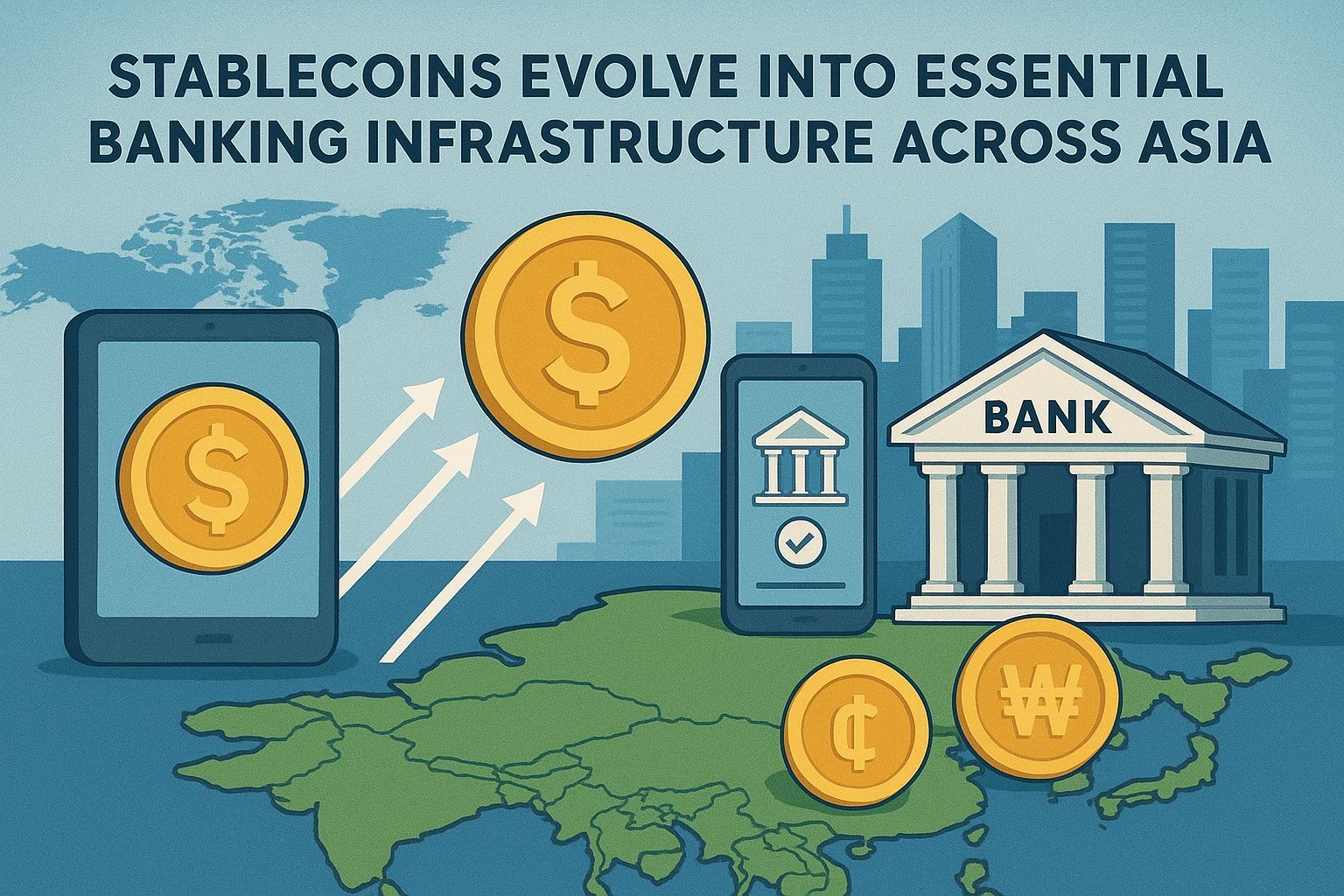
Stablecoins: Asia’s New Financial Backbone (Not Quite “Essential” Yet, But Damn Close)
Hey, if you’ve been watching stablecoins evolve into essential banking infrastructure across Asia, you’re spotting a massive shift. Visa’s dropping their onchain finance toolkit in the region, South Korea’s banks are consortium-building like it’s 1999 dot-com, and Hong Kong’s gearing up for licensed issuers-it’s not hype, it’s happening, phased in from Singapore pilots to full APAC rollout by 2026.[1][2][3]
Key Takeaways
- Visa leads the charge: Their stablecoin service hits Asia-Pacific with issuance, minting, and fiat ramps-think quantum-resistant security audited by Deloitte/PwC. Pilot in Singapore/Hong Kong Q1 2025, full steam by 2026.[1]
- Korea goes all-in: KRW stablecoins legalized Q1 2026; banks like Hana and Shinhan already piloting payments in wallets and delivery apps. Bank of Korea wants 51% bank control to “ensure stability”-fintechs are pushing back hard.[2]
- Regulatory green lights: Hong Kong drops first licensed issuers early 2026; Singapore’s got dedicated rules. Banks aren’t disrupted yet-they’re adapting fast.[3]
- Global rails, Asian speed: Stablecoins morph into B2B payments infra, outpacing sluggish CBDCs. No interest on holders, but “rewards” keep ’em competitive with deposits.[4]
Subscribe to our Social Media for Exclusive Crypto News and Insights 24/7!
Picture this: You’re a treasury manager in Bangkok, legacy wires taking days for cross-border pays. Enter Visa’s platform-boom, seamless USDC-like settlements. Nischint Sanghavi, Visa’s Head of Digital Currency for APAC, nails it: “This enables stablecoin issuance, minting/burning, and fiat conversions,” bridging TradFi to blockchain without the wild west vibes.[1] Honestly, that caught even the skeptics off guard, right?
Visa’s APAC Playbook: Phased, Secure, Scalable
Visa’s not messing around. Their Onchain Finance ecosystem launched in the US, now eyes Asia with a timeline tighter than a bull trap:
| Phase | Markets | Timeline |
|---|---|---|
| Pilot | Singapore, Hong Kong | Q1 2025[1] |
| Expansion | Japan, Australia, South Korea | Q2-Q3 2025[1] |
| Full Deployment | Thailand, Vietnam, rest of APAC | 2026+[1] |
Security? Quantum-resistant crypto, real-time threat detection-beats bank standards, per third-party audits. Conservative estimates: 40% of major Asian banks on board in three years. You’ve seen this before, yeah? Fintech expansions flop on regs, but Visa’s playing cautious, starting in Singapore/Japan/Australia where rules are ripe.[1]
Korea’s Stablecoin Drama: Banks vs. Fintech Showdown
South Korea’s Digital Asset Basic Act drops Q1 2026, legalizing KRW-pegged stablecoins. Banks form consortia-Hana Financial, BNK, iM, SC First. Shinhan pilots food delivery pays; Woori hooks into Samsung Wallet; even KB Kookmin patents auto-credit top-ups for shortfalls.[2]
But drama: Bank of Korea demands 51% bank ownership in consortia for “monetary stability.” Fintechs and Financial Services Commission cry foul-”stifles innovation!” As legal eagle Joo Seong-hwan from Law Firm Gwangjang puts it, this mirrors Japan/EU debates on issuance rules. Imagine holding through that policy ping-pong… Winner? Likely a bank-integrated framework, blending oversight with private speed. Whales ain’t sleeping; they’re rotating into these pilots, fam.[2]
Hong Kong, Singapore: The Licensing Floodgates
Hong Kong announces first licensed stablecoin issuers early 2026-paving “widespread adoption,” say analysts Michael Ho and Jason Ekberg.[3] Singapore’s stablecoin regs are live, no bans like China’s. Japan/UK adapting too. Banks hold edges in trust and distribution, but speed wins: Software firms race ahead, yet Asia’s giants can snag liquidity if they scale fast. “Opportunity ripe for major banks in Europe and Asia,” they note-threat to deposits? Nah, more like evolution.[3]
Payments Infra Reality Check: Stablecoins > CBDCs (For Now)
By 2026, stablecoins aren’t crypto toys-they’re payments infrastructure for B2B, treasury, global flows. Visa’s USDC settlements signal it: Programmable, instant finality, transparent costs vs. correspondent banking sludge.[4] DeFi lending? Shifting to “balance-sheet logic”-BTC/ETH collateral, stablecoins for principal/yield. Stress tests and reserve rules tighten as scale hits.
CBDCs? Lagging hard. Political privacy hogs slow ’em; stablecoins ship now, dominating cross-border even with pilots around. Two tiers emerge: Compliant institutional rails vs. offshore speed demons. Bottom line from the analysts: “Contested infrastructure, shaped by regs and geopolitics.”[4] ETH didn’t swan-dive here-it’s consolidating as collateral king.
Stablecoins as “essential banking infra”? Sources show heavy institutional momentum, but it’s phased-2025 pilots, 2026 scale. No dominance cycles or liquidation cascades detailed (yet), but Korea’s consortium battles scream market mechanics: Banks grip control, fintechs fight for scraps. Regulatory arbitrage? APAC leads.
- https://www.mexc.com/news/695474
- https://evrimagaci.org/gpt/asia-and-africa-lead-fintech-surge-in-2025-and-2026-527742
- https://asianbankingandfinance.net/cards-payments/commentary/will-stablecoins-disrupt-banking-business
- https://www.fintechweekly.com/magazine/articles/stablecoin-predictions-2026-payments-infrastructure-regulation