
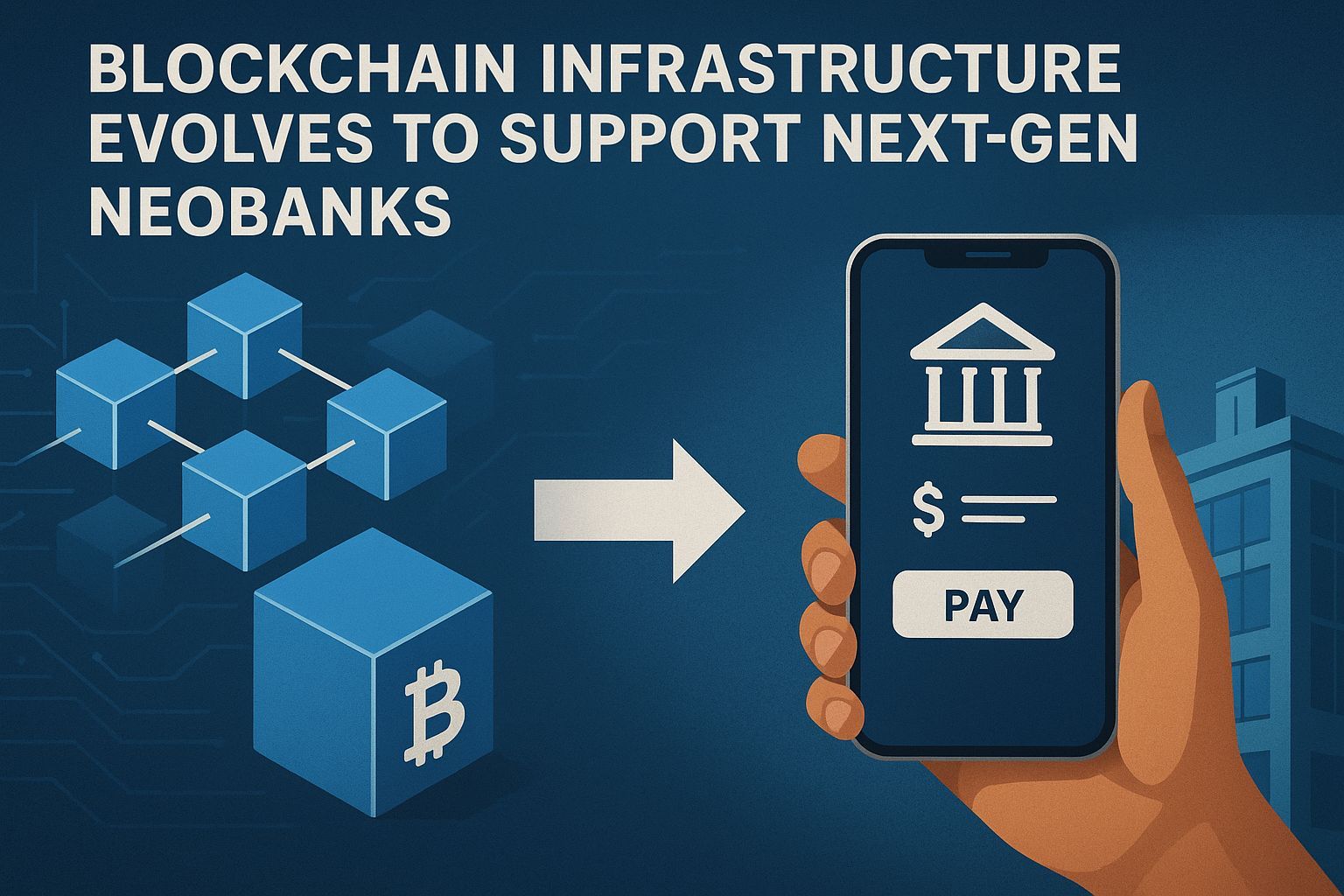
The Blockchain-Native Banking Revolution: How Web3 Infrastructure Is Reshaping Digital Finance
Where Traditional Banking Meets On-Chain Architecture
Look, the neobank space has fundamentally shifted. We’re not just talking about slick mobile apps anymore-we’re witnessing a structural transformation where blockchain infrastructure is becoming the backbone of next-generation banking platforms, and honestly, it’s happening faster than most traditional institutions can adapt[1][4].
The shift isn’t subtle. While Web2 neobanks like Monzo and SoFi built their empires on cloud infrastructure and regulatory partnerships, a new breed of platforms is experimenting with something radically different: stablecoin-native neobanks that use blockchain rails as core infrastructure, not an afterthought[4]. Think of it less as “crypto features bolted onto a bank” and more as “a bank built from blockchain upward.”
Subscribe to our Social Media for Exclusive Crypto News and Insights 24/7!
Key Takeaways: What’s Actually Changing
- Web3-native neobanks eliminate traditional intermediaries entirely-assets live on-chain via smart accounts or MPC-based wallets, settlements happen instantly, and geographic barriers vanish[1]
- Hybrid platforms (Revolut, Wirex, Xapo, Bleap) are the pragmatic middle ground: they offer both fiat and crypto access while keeping familiar card-based payments[1]
- Regulatory reality check: Multiple platforms have filed for full banking charters-Mercury hit $20 billion in deposits before applying for a national bank charter in December 2025, while Nubank and Revolut pursue OCC charters[5]
- AI and real-time controls are now table stakes across the sector, giving neobanks a technological edge that traditional banks struggle to match[3]
The Three-Tier Architecture Battle

Here’s where it gets interesting. The neobank landscape basically splits into three camps, and each solves a different problem[1]:
Tier 1: Traditional Web2 Neobanks
These are your familiar players. Lower fees than legacy banks, better UX, zero branches. But they’re still fundamentally dependent on traditional banking infrastructure and regulatory partnerships. No crypto, limited global reach, familiar constraints.
Tier 2: Hybrid Fiat-Crypto Platforms
Bleap sits here, and so do Revolut and Wirex. These platforms bridge the divide-you get stablecoin access, global Mastercard spending, and self-custody options, but wrapped in a mainstream neobank experience[1]. No hidden FX costs. Transparent asset control. The sweet spot for users who want options without the friction.
Tier 3: Full Web3-Native Neobanks
And here’s where the infrastructure story gets wild. Platforms like Gnosis Pay, Fiat24, Tria, ether.fi, and AllScale operate entirely on blockchain rails[1]. No traditional intermediaries. No deposit insurance from legacy systems-instead, cryptographic security and on-chain transparency. Assets stay in your control through smart accounts. DeFi integration is native. Payments settle instantly. Global transactions without geographic boundaries.
The kicker? Users holding assets directly on-chain get automated payments, direct DeFi access, and complete programmability[1]. It’s not just a different UI-it’s a fundamentally different financial infrastructure.
Why Blockchain Rails Matter (And Why Banks Are Panicking)

Traditional neobanks run on cloud-native infrastructure, sure. They iterate faster than legacy banks, apply real-time AI scoring, and offer better UX[3]. But they’re still constrained by regulatory frameworks, deposit insurance complexity, and partnership dependencies.
Web3-native platforms sidestep that entire stack. Settlement doesn’t wait for banking hours. Compliance is enforced by code. Geographic restrictions? Stablecoin rails don’t recognize borders.
Plaid’s 2026 fintech predictions nailed this: stablecoin-native neobanks represent the “forcing function” pushing the entire sector to rethink infrastructure from the ground up[4]. It’s not hype-it’s architectural inevitability.
The Regulatory Squeeze: From Partnerships to Charters

Here’s the plot twist: the best neobanks aren’t choosing sides anymore-they’re becoming banks.
Mercury managing $20 billion in customer deposits before filing for a national bank charter signals something profound: the line between fintech and banking is collapsing[5]. Nubank applied for an OCC charter. Revolut is pursuing US banking licensing to reduce dependency on partner banks. PayPal filed for an industrial loan company charter[5].
What does that mean for blockchain infrastructure? It means crypto-integrated platforms have a regulatory incentive to go full-stack. Partner bank dependency gets messy. Self-custody becomes simpler when you’re the bank. Stablecoin rails become even more attractive when regulatory oversight pushes toward tighter integration[5].
The FDIC’s 2024 proposed rules on deposit placement through fintechs tightened scrutiny after the Synapse collapse[5]. That pressure? It’s accelerating consolidation toward platforms that own their infrastructure rather than renting it from partners.
The Experience Layer: Why Speed Matters

Neobanks aren’t winning on cost anymore-everyone’s low-fee now. They’re winning on real-time control and transparency.
AI-assisted risk scoring runs on device signals, transaction contexts, and behavior patterns[3]. Virtual cards limit stolen credential reuse. Merchant limits, location-aware prompts, and category restrictions trigger extra verification for anomalies[3]. Card freezing, PIN changes, mobile wallet provisioning-it all happens inside the app after a few authenticated actions.
But here’s what blockchain-native platforms add: they compress latency even further. Traditional neobanks wait for batch settlement windows. On-chain? Verification and settlement overlap. No clearing houses. No reconciliation delays.
For businesses especially, the advantage compounds. Connect your neobank to accounting systems, payroll platforms, and payment processors, then automate policy enforcement through programmable smart accounts[3]. Better data lineage. Faster categorization. Fewer compliance blind spots.
Market Positioning: Who’s Actually Winning?
By 2026, neobanks have bifurcated into super-apps and specialized platforms[5].
Monzo expanded into savings accounts, investments, pensions, credit cards, consumer loans, and home insurance-all inside one app[5]. Engagement through financial journeys, not isolated products. That’s the bundled Web2 approach.
But crypto integration is now standard, not optional[2]. Users expect to buy, sell, and hold digital assets directly within their banking app, bridging fiat and DeFi[2]. The question isn’t “does your neobank support crypto?” anymore. It’s “how native is that integration?”
Web3-native platforms win on that axis. Gnosis Pay, Fiat24, and others integrate DeFi as a core feature, not a side product. Automated payments. Direct yield opportunities. Programmable spending rules tied to on-chain events.
The Hybrid Reality: Where Most Growth Happens
Let’s be honest-pure Web3 neobanks appeal to crypto natives. But the real market expansion? It’s happening in the hybrid middle[1].
Bleap’s design philosophy captures this perfectly: self-custody and on-chain architecture, but with a mainstream neobank feel[1]. Global Mastercard spending. No hidden FX costs. Asset control. Zero complex crypto mechanics.
That’s the design language winning with normies. You get blockchain infrastructure benefits (transparency, control, instant settlement) without the UX friction that keeps regular people away.
Users are signaling what they want: fiat flexibility, crypto optionality, and familiar card-based payments[1]. Not ideological purity. Pragmatic access.
Looking Ahead: Infrastructure as Competitive Moat
The neobank winners won’t be decided by feature checklists or fee schedules anymore. It’ll be infrastructure architecture.
Web2 neobanks face a hard ceiling: they’re dependent on partner banks for deposits, regulatory compliance, and settlement rails[5]. Their advantage is familiarity. Their constraint is structural.
Hybrid platforms offer the broadest appeal-crypto optionality without forcing ideology. That’s why Revolut and Wirex keep gaining traction[1].
Web3-native platforms? They’re the long-term play. No intermediaries. Programmable everything. Global by default. But they require users comfortable with digital asset custody and decentralization[1].
The real insight from Plaid’s 2026 predictions: stablecoin rails won’t remain exotic[4]. They’ll become the default infrastructure for platforms that want to compete on speed, transparency, and automation. Traditional banks will copy features. They can’t copy architecture that quickly.
The blockchain infrastructure story isn’t about replacing banks-it’s about making the banking stack optional. And that’s happening now.
- https://www.bleap.finance/blog/best-neobanks-web2-web3-and-hybrid
- https://www.recharge.com/blog/en-gb/what-is-a-neobank-your-complete-2026-guide
- https://www.fintechweekly.com/magazine/articles/neobanks-ai-credit-debit-card-transformation
- https://lex.substack.com/p/research-plaids-2026-fintech-predictions
- https://www.emarketer.com/content/faq-on-neobanks-how-digital-only-banking-will-grow-2026






