
How DeFi and Traditional Banks Are Actually Merging (Not Fighting)
The Plot Twist Nobody Expected
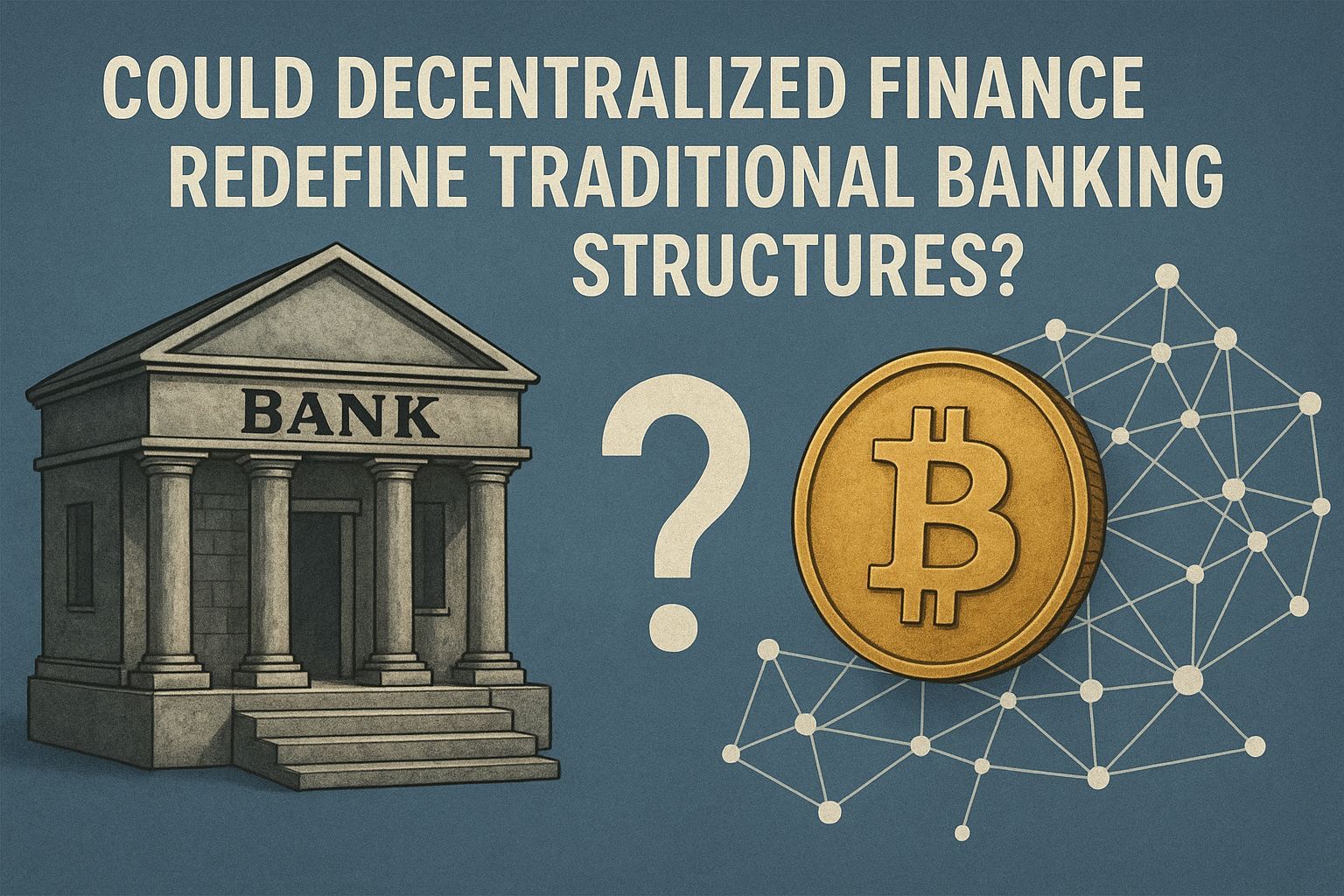
Here’s the thing about decentralized finance and traditional banking-they’re not locked in some epic cage match. Instead, they’re quietly dancing together, reshaping the entire financial infrastructure as we speak. What started as a niche concept challenging centralized institutions has evolved into something far more nuanced: institutional DeFi, where banks aren’t just competing with blockchain tech-they’re adopting it wholesale.[1][3]
The narrative’s shifted. We’re no longer asking “Will DeFi kill banking?” The real question is: “How fast can traditional finance integrate decentralized protocols without losing regulatory credibility?” And honestly? That integration’s already happening.
Key Takeaways
- TradFi-DeFi convergence is accelerating: Major institutions like JPMorgan, Morgan Stanley, Citi, and BlackRock are launching blockchain-powered products, tokenized assets, and stablecoin infrastructure.[1][3][4][5]
- Speed and cost are non-negotiable now: DeFi’s real-time settlements and eliminated intermediaries have forced banks to adopt blockchain rails for payments, lending, and trading.[1][2][4]
- Tokenization is going mainstream: Goldman Sachs, BlackRock, and Franklin Templeton are tokenizing everything from bonds to commodities-basically, traditional assets are moving on-chain.[3]
- Stablecoins are becoming “the internet’s dollar”: Clearer regulations and enterprise adoption mean on-chain dollars are graduating from pilots to actual business plumbing by 2026.[4][5]
- Institutional custody and lending are the gateway drugs: Banks are offering direct digital asset trading, crypto custody partnerships, and DeFi-powered credit products.[4]
Why Banks Can’t Ignore Blockchain Anymore

Let’s be real: traditional banking moves at a snail’s pace. Loan approvals take weeks. Cross-border payments take days and cost a fortune. Settlement happens in a cloud of intermediaries and fees. DeFi basically exposed all of that friction.
Subscribe to our Social Media for Exclusive Crypto News and Insights 24/7!
The speed problem is brutal. In traditional lending, you’re looking at days or even weeks just to get approved for a loan.[1] Meanwhile, on DeFi platforms, you lock up collateral, and boom-instant liquidity, no credit checks required.[1] For regions where traditional credit access is locked down? That’s literally life-changing.
Cross-border payments paint an even starker picture. Traditional remittances crawl across correspondent banking networks for days while eating 5-10% in fees. DeFi facilitates real-time payments at a fraction of the cost using blockchain.[1] You’ve seen this before, right? Once users taste that efficiency, there’s no going back.
Banks caught the signal. Rather than fighting, institutions like JPMorgan created Quorum-their own blockchain protocol-and started building DeFi features into their service offerings.[1] Because here’s the uncomfortable truth for legacy finance: if you don’t evolve, you become the dinosaur in the room.
The Institutional DeFi Takeover (It’s Already Here)

Institutional DeFi isn’t some future fantasy. It’s happening right now, and it’s reshaping how big money moves.[3][4]
Here’s what’s actually rolling out:
Banking Products: Traditional banks are now offering DeFi-powered products directly to customers. SoFi became the first US chartered bank to offer direct digital asset trading from customer accounts.[4] Morgan Stanley, PNC, and JPMorgan are developing crypto trading and settlement products through strategic partnerships.[4] Citi integrated Citi Token Services with 24/7 USD clearing for real-time cross-border payments.[5] That’s not a pilot project-that’s infrastructure.
Tokenized Assets: Goldman Sachs, BlackRock, and Franklin Templeton aren’t just talking about tokenization-they’re launching tokenization platforms.[3] Think about that for a second. The biggest asset managers on the planet are moving bonds, commodities, and treasury instruments onto blockchain rails. When BlackRock moves, the entire ecosystem follows.
Liquidity Transformation: Asset tokenization creates markets for stuff that was previously illiquid. Real estate, fine art, corporate bonds-if it can be tokenized, it becomes tradable 24/7 without exchange hours.[3] Instant settlement means less capital locked up in clearing processes. Fractional ownership lowers barriers to entry. You’re essentially democratizing access to assets that were previously gatekept by wealth requirements.
Lending Gets Smart: Blockchain-enabled lending automates the entire underwriting process through smart contracts.[3] Instant loan approval based on on-chain credit histories. Automated collateral management. Transparent interest rates. Cross-border lending without currency conversion friction.[3] This is the future of how credit actually works.
Why This Actually Matters for Banking Structures

The real disruption isn’t that DeFi kills banks. It’s that banks have to operate differently now. The competitive pressure forces evolution.
Transparency becomes table stakes. In traditional banking, you trust the institution to manage your money correctly. On blockchain, everyone sees the same immutable record.[3] No hidden fees. No execution disputes because smart contracts do exactly what they’re programmed to do.[3] Once that transparency exists, customers are going to demand it everywhere.
24/7 access is now expected. Traditional financial markets have business hours. DeFi operates around the clock, every single day.[2] That’s not a feature-it’s a baseline expectation now. Banks that insist on Monday-to-Friday, 9-to-5 operations are getting left behind.
Intermediaries are disappearing. Banks traditionally made money by being the middleman-taking deposits, lending them out, capturing the spread. DeFi eliminates that middleman layer.[1] When peer-to-peer lending protocols connect borrowers directly with lenders, banks lose that revenue stream unless they become the protocol themselves.
Regulatory compliance gets codified. Here’s the kicker: blockchain transparency actually helps regulators. Audit trails are complete and immutable.[3] Smart contract automation eliminates execution disputes. Regulatory compliance becomes verifiable on-chain.[3] Banks are exploring hybrid models that combine blockchain infrastructure with regulatory oversight.[3]
The Stablecoin Story (Where Real Innovation Happens)

Stablecoins are the unsung heroes here. They’re poised to become “the internet’s dollar”-basically, programmable money that bridges traditional finance and DeFi.[4]
Why? Because stablecoins solve the biggest problem in crypto: volatility. You can’t run a business on an asset that swings 20% in a week. But a dollar-pegged token? That’s usable for actual commerce.
Enterprise adoption is accelerating. Companies are using stablecoins for:
- Cross-border payments and settlement[4][7]
- Treasury operations[4]
- Real-time B2B payments[4]
- Programmable finance products[4]
JPMorgan literally issued their own USD deposit token, JPM Coin, on a public blockchain.[5] That’s a $3 trillion asset manager basically saying “Yeah, on-chain dollars are happening.” When JPMorgan moves, institutional money follows.
And here’s the kicker: stablecoin issuers are becoming significant buyers of Treasury bills. On-chain dollars are graduating from pilots into actual enterprise plumbing-inside treasury workflows, cross-border settlement, programmable B2B payments.[4] That’s real money moving real value.
Real-World Asset Tokenization (The Bridge Between Worlds)
RWA tokenization is bridging traditional and decentralized finance. This is where the magic actually happens.[3]
Imagine tokenizing a real estate portfolio. Instead of managing it through a traditional custodian, you tokenize the assets, and now you’ve got:
- Dramatically improved liquidity for previously illiquid assets[3]
- 24/7 trading without exchange hours[3]
- Automated dividend distribution through smart contracts[3]
- Reduced settlement risk and counterparty exposure[3]
- Lower costs through disintermediation[3]
This isn’t theoretical. BlackRock, Goldman Sachs, and Franklin Templeton are literally doing this right now with bonds and commodities.[3]
The prediction? Seamless integration between centralized and decentralized systems.[3] Your brokerage account won’t ask “Is this a crypto asset or a traditional asset?” It’ll just ask “Do you want to buy it?” The infrastructure handles the backend.
The Unbanked and Underbanked Finally Get Access
Here’s where this gets genuinely important beyond just making rich people richer.
In traditional finance, you need a credit history to borrow money. If you’ve never had a bank account or your credit’s been destroyed, you’re locked out.[6] DeFi eliminates that gatekeeping. You want to borrow? Lock up collateral. That’s it. No arbitrary credit score gatekeeping.[6]
For regions where traditional credit infrastructure is constrained-basically, most of the developing world-this is transformative.[1] Suddenly, millions of people who were financially excluded can access lending, trading, and asset management services that were previously impossible.
That’s not a market feature. That’s actual financial inclusion.
The Convergence Is Messy But Irreversible
Here’s the thing: traditional finance and DeFi aren’t merging because they suddenly became best friends. They’re merging because the economics force it.
DeFi proved that:
- Transactions don’t need intermediaries[1]
- Settlement can be real-time[1]
- Transparency builds trust[3]
- 24/7 markets are possible[2]
- Access shouldn’t depend on geography or wealth[2]
Banks can’t un-know these things. They can’t pretend blockchain technology doesn’t exist or that their customers don’t want faster, cheaper, more transparent services.
So instead of fighting it, they’re integrating it. JPMorgan’s building blockchain infrastructure. Citi’s tokenizing real-time payments. BlackRock’s launching tokenization platforms. Morgan Stanley’s offering crypto trading. SoFi’s offering direct digital asset access to retail customers.
The question isn’t whether DeFi will redefine banking structures anymore. It’s already happening. The real question is: how fast can traditional institutions adapt, and which ones will be left behind?
Sources:
- https://www.openware.com/news/articles/the-impact-of-decentralized-finance-on-traditional-banking
- https://www.infosysbpm.com/blogs/financial-services/decentralised-finance-and-its-potential-to-disrupt-traditional-finance.html
- https://naapbooks.com/insights/blog/how-blockchain-is-changing-financial-services-in-2026/
- https://www.svb.com/industry-insights/fintech/2026-crypto-outlook/
- https://www.weforum.org/stories/2026/01/digital-economy-inflection-point-what-to-expect-for-digital-assets-in-2026/
- https://appinventiv.com/blog/decentralized-finance-defi-guide/
- https://www.taylorwessing.com/en/insights-and-events/insights/2026/02/stablecoins-no-longer-the-new-kid-on-the-block






