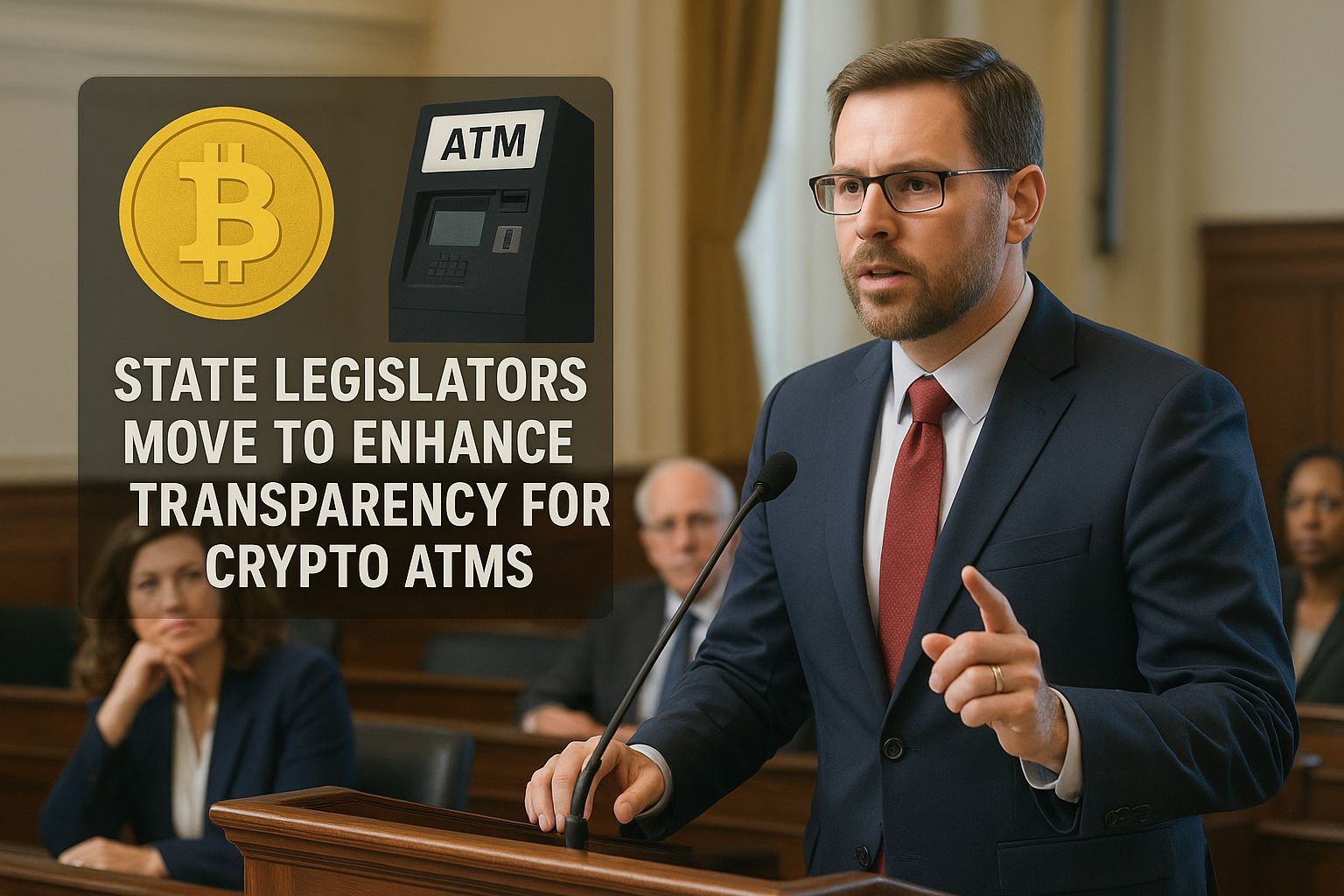
States Are Cracking Down on Crypto ATMs-But It’s Not About Killing Crypto
The Real Story Behind the Regulatory Push
Here’s what’s actually happening: State legislators across the country aren’t trying to ban cryptocurrency itself. They’re targeting crypto ATMs-those kiosks you see in gas stations and convenience stores-because they’ve become a playground for scammers.[1][3] And honestly, the numbers tell a sobering story.
In 2025 alone, 14 states passed laws to protect consumers from crypto kiosk-related scams, bringing the total to 17 states that now have some form of regulation on the books.[4] This isn’t a fringe issue either. In Evansville, Indiana alone, residents lost around $400,000 connected to crypto ATMs in 2025.[3] That’s real money from real people-often the most vulnerable ones.
Subscribe to our Social Media for Exclusive Crypto News and Insights 24/7!
Key Takeaways
- The regulatory tide has turned: Nearly a dozen states passed crypto ATM regulations in 2025, with 17 states total now having laws on the books.[2][4]
- Indiana is going all-in on a ban: Rather than regulate, Indiana lawmakers voted to outlaw crypto ATMs entirely as of February 2026, with bipartisan support.[1]
- Common safeguards include transaction limits, fraud warnings, and licensing requirements-not outright prohibitions.[2][4]
- The federal government is watching: Sen. Richard Durbin filed the Crypto ATM Fraud Prevention Act in February 2025, signaling Congress may preempt state rules.[2][6]
- Industry pushback is real: Crypto ATM operators argue strict regulations make their business model unviable.[1][3]
Why Legislators Are Fed Up (And It’s Not What You Think)
Let’s be clear: This regulatory momentum isn’t about hating crypto. It’s about money laundering, tax evasion, and elderly people getting fleeced by sophisticated scams.[1] Senator Scott Baldwin, who chairs Indiana’s Senate financial institutions panel, put it bluntly: “I can think of no substantial legitimate reasons” to warrant the kiosks.[1] But he also said the state isn’t trying to “kill crypto”-you can still convert your own tax-paid money into crypto using your phone.[1]
The problem? Crypto ATMs operate in the shadows. They’re fast, they’re anonymous, and once your money hits the blockchain, it’s gone. Literally. Transactions move quickly into overseas exchanges that don’t have to comply with U.S. laws, making it nearly impossible for victims to recover funds.[4]
What States Are Actually Doing (And It’s More Nuanced Than You’d Think)

Most states aren’t banning crypto ATMs outright. Instead, they’re implementing guardrails:
Common regulatory approaches across Arizona, Arkansas, Colorado, Iowa, Maine, Maryland, Nebraska, North Dakota, Oklahoma, and Rhode Island include:[2]
- Daily transaction limits (Indiana proposed $1,000 per 24 hours, capped at $10,000 monthly)[3]
- Mandatory fraud warning signs on every machine[2][4]
- Operator licensing requirements and money transmitter registration[2]
- Transaction receipts that include crypto wallet addresses for transparency[2]
- Refund obligations for defrauded customers[4]
Illinois went comprehensive in August 2025 when Governor JB Pritzker signed the Digital Asset Kiosk Act, requiring kiosk operators to register with state authorities and provide clear disclosures about fees, risks, and transaction terms before each transaction.[5]
Indiana’s Aggressive Stance: A Total Ban

Here’s where it gets spicy. Indiana didn’t just tighten the screws-they’re pulling them out entirely. House Bill 1116 started as a regulation play: licensing requirements, identity verification, transaction limits, fee caps. Reasonable stuff, right?[1][3]
Then crypto ATM operators testified. Bitcoin Depot’s government relations manager literally called a 3% fee cap “an eviction notice,” arguing it wouldn’t cover their overhead costs.[3] Law enforcement and retiree advocates countered with horror stories about devastating scams.
The result? Indiana’s Senate committee voted 7-0 to scrap regulations in favor of an outright ban on crypto ATM operations in the state.[1] And unlike some other states’ proposals, this goes into effect immediately upon passage.[1]
The Federal Wild Card

Sen. Richard Durbin filed the Crypto ATM Fraud Prevention Act in February 2025, which would set national standards while technically allowing states to add stricter rules.[2][6] The bill would require:
- Refunds for defrauded new customers (full transaction plus fees)[2]
- Fee reimbursement only for recurring customers[2]
- Verbal confirmation via live video or phone call for transactions over $500 from new users[2]
This federal approach is interesting because it preempts conflicting state provisions-meaning states couldn’t create a patchwork of incompatible rules. But it also lets individual states say, “Nah, we’re banning these entirely,” like Indiana’s doing.
The Industry’s Dilemma
Here’s the tension: Crypto companies aren’t wrong that aggressive fee caps or bans hurt their business model. But regulators aren’t wrong either-the machines are being weaponized by scammers at scale. It’s a genuine collision between innovation and consumer protection.[1][3]
Some states, like Spokane, Washington, and now Indiana, decided consumer protection wins.[1][2] Others, like Vermont, are taking a middle path: regulations plus a moratorium on new machines until they can figure out better safeguards.[2]
What This Means for the Crypto Space
The regulatory crackdown on crypto ATMs doesn’t signal an anti-crypto agenda-it signals that lawmakers are distinguishing between crypto itself and the infrastructure around it.[1] You can still own Bitcoin. You can still transact peer-to-peer. But the days of anonymous, unmonitored cash-to-crypto conversions in convenience stores? Those might be numbered.
The real story is that transparency and consumer protection are becoming non-negotiable in crypto infrastructure, even if it means some business models have to adapt.
- https://www.ipm.org/news/2026-02-11/indiana-committee-advances-crypto-atm-ban-weakened-pension-investment-bill
- https://www.governing.com/policy/fearing-scams-states-add-regulations-to-crypto-atms
- https://www.wfyi.org/news/articles/indiana-lawmakers-push-new-rules-on-crypto-atms-amid-scam-surge
- https://www.aarp.org/advocacy/crypto-atm-fraud-protections/
- https://www.lw.com/en/us-crypto-policy-tracker/legislative-developments
- https://www.congress.gov/bill/119th-congress/senate-bill/710/all-info