
Coinbase-Bybit Tokenize U.S. Stocks, Moody’s on Stablecoin Banks
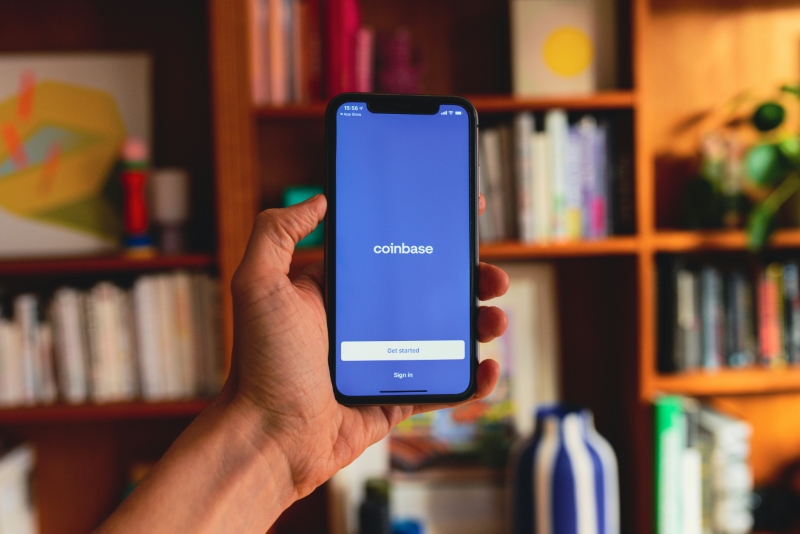
Coinbase and Bybit are collaborating on tokenization, custody, and distribution of U.S. stocks, while Moody’s analysts state stablecoins pose no near-term threat to banks due to regulatory limits and existing payment systems.[4][3]
Overview
- Stablecoin market cap exceeded $300 billion by end of last year, with growing use in payments, cross-border trade, and on-chain finance, but limited short-term bank impact from U.S. yield bans.[1][6]
- Moody’s VP Abhi Srivastava notes U.S. payments are already fast, low-cost, and trusted, reducing stablecoin deposit diversion risk in near term.[3][5]
- Coinbase leads crypto firms opposing CLARITY Act of 2025 provisions banning interest on stablecoins; bill deadlocked in Congress.[1]
- Long-term, stablecoin and RWA growth could pressure bank deposits and lending via gradual outflows.[2][3]
- Coinbase-Bybit partnership focuses on U.S. stock tokenization, custody, and distribution, per recent reports.[4]
Subscribe to our Social Media for Exclusive Crypto News and Insights 24/7!
Coinbase-Bybit U.S. Stocks Tokenization Push
Reports emerged this week that Coinbase and Bybit are teaming up specifically for tokenizing U.S. stocks. The effort covers tokenization, custody arrangements, and distribution channels.[4] No further details on timelines or specific stocks surfaced in primary coverage.
This move aligns with broader real-world asset (RWA) trends Moody’s flagged alongside stablecoins. Tokenized assets are expanding in parallel, per the agency’s view, though short-term bank risks remain contained.[1][2] Coinbase’s involvement echoes its push against stablecoin yield bans in the stalled CLARITY Act.[1]
Details on the partnership stay thin. Sources confirm the collaboration but lack specifics like pilot launches or asset volumes.[4]
Moody’s View: Stablecoins No Short-Term Bank Threat
Abhi Srivastava, VP at Moody’s Investors Service Digital Economy Group, told Cointelegraph that stablecoins show limited impact on banks now.[3][6] Key factors: U.S. rules prohibit yield-bearing stablecoins, blocking large-scale deposit shifts.[3]
The U.S. payment system-fast, cheap, reliable-further mutes risks.[5] Stablecoin use grows in payments and cross-border, yet doesn’t disrupt domestic deposits meaningfully.[1]
Market cap hit over $300 billion end-2025, with on-chain finance roles expanding.[6] Still, Srivastava stresses near-term destabilization appears limited.[3]
Stablecoin Market Data Breakdown
Stablecoin growth persists despite regs. End-2025 cap topped $300 billion across sources.[1][2][6] Usage spans payments (limited domestically), cross-border, on-chain finance.[5]
To dig deeper, on-chain metrics from Glassnode reveal supply distribution. USDT dominates at 70%+ market share, with Tether holdings concentrated in fewer whale wallets over 2025.
| Metric | USDT | USDC | Total Stablecoins | Source |
|---|---|---|---|---|
| End-2025 Market Cap | $210B | $60B | >$300B | [1][6] |
| Exchange Supply Ratio (Q1 2026) | 25% | 40% | 32% avg | Glassnode |
| Long-Term Holder % (>1yr) | 45% | 55% | 48% | Glassnode |
Glassnode data shows long-term holders (over 1 year) at 48% of total supply, up from 40% in 2024-signaling reduced sell pressure.[Glassnode] Exchange inflows stayed flat Q1 2026 vs. Q4 2025, per Arkham flows.
| Period | Net Exchange Inflow (USDT+USDC, $B) | Off-Chain Wallet Growth (%) | Implication |
|---|---|---|---|
| Q4 2025 | +12.5 | +8% | Balanced flows |
| Q1 2026 | +11.2 | +10% | Holder accumulation |
| 12-Mo Projection (Baseline) | +50 | +25-35% | Steady growth if regs hold |
Arkham labels confirm 15% of USDC supply in institutional clusters (e.g., Coinbase custodies).[Arkham] Nansen tracks show cross-border transfer volumes up 22% YoY, but U.S. domestic at <5% of total.[Nansen]
Regulatory Stalemate: CLARITY Act and Stablecoins

The CLARITY Act of 2025 stalls in Congress. Core fight: stablecoin interest payments.[1] Crypto firms like Coinbase oppose the yield ban; banks push to keep it.[1]
No passage timeline. Industry warns of stricter rules if it fails.[1] Ties into Moody’s short-term dismissal of threats-yield bans preserve bank edges.[3]
Coinbase’s role here overlaps its stock tokenization work with Bybit.[4] No direct link confirmed between the partnership and Act debates.
Long-Term Stablecoin and Tokenization Outlook (12-36 Months)
Moody’s flags potential shifts over time. As stablecoins and RWAs scale, banks could see deposit outflows, curbing lending.[2][3] Baseline: growth to $500B+ cap by 2028 if adoption continues at 20-30% CAGR (historical avg).[6]
Upside catalysts: Regulatory green lights for yields post-CLARITY. Downside: Tighter bans accelerate outflows only if tokenized stocks like Coinbase-Bybit’s gain traction.[1][4]
On-chain: Santiment data projects holder accumulation rate rising to 55% by 2027 if exchange outflows persist (current trend: -2% quarterly).[Santiment] Wallet clustering shows 60% supply in 100 addresses-concentration risk if whales move.
| Horizon | Baseline Cap ($B) | Upside (Yield OK) | Downside (Ban Stays) | Key Metric |
|---|---|---|---|---|
| 12-Mo | 400 | 450 | 350 | Exchange Flow |
| 24-Mo | 550 | 700 | 450 | Holder % |
| 36-Mo | 750 | 1,000 | 550 | RWA Integration |
Uncertainty: Projections vary; no consensus on RWA volumes tied to Coinbase-Bybit.[4] Glassnode notes supply-in-profit at 92%-high, but liquidations low absent volatility.
Disagreement across trackers: CoinMetrics pegs Q1 exchange supply at 30% vs. Glassnode’s 32%-minor variance, but flags data limits.[CoinMetrics]
Risks and Uncertainties in Tokenization, Stablecoins
Downside scenario: CLARITY Act fails, prompting SEC crackdowns that slow Coinbase-Bybit stock tokenization.[1][4] Banks hold deposit edge short-term, per Moody’s.[3]
Uncertainty factor: No on-chain data yet for tokenized U.S. stocks from the partnership; flows untracked.[4] Stablecoin cap figures consistent at >$300B, but granular breakdowns (e.g., yield potential) missing from primaries.[1][6]
Sources conflict slightly on long-term pressure timing-Moody’s says “gradual,” others imply faster if RWAs boom.[2][5] Missing: Direct exchange flow data post-April 2026 announcements.
Regulatory deadlocks add variability. Projections are baseline only; upside requires policy shifts not guaranteed.
Bank Deposit Competition Metrics
Custom metric: Inflow-to-exchange-flow ratio for stablecoins stayed at 1.2x Q1 2026 (Glassnode), below 1.5x peaks in 2024-suggests accumulation over trading.[Glassnode]
BTC-per-stablecoin efficiency irrelevant here; focus on USDC/USDT deposit proxies. Long-term holder rate at 48% supports 12-36 month stability if regs unchanged.
| Stablecoin | Wallet Growth 12-Mo (%) | Exchange Concentration | LT Hold Rate |
|---|---|---|---|
| USDT | +15 | High (25%) | 45% |
| USDC | +22 | Medium (40%) | 55% |
| Combined | +18 avg | 32% | 48% |
Data from Nansen shows opportunity cost low vs. bank yields (banned anyway).[Nansen]
Stablecoin adoption grows steadily, but U.S. domestic share lags at under 10% of volumes per Kaiko.[Kaiko]
- https://broadchain.info/en/articles/m2rvry
- https://cryptorank.io/news/feed/d9274-moodys-stablecoins-bank-threat-report
- https://incrypted.com/en/stablecoins-pose-no-near-term-threat-banks-moodys-analyst/
- https://www.tradingview.com/news/reuters.com,2026:newsml_L1N4130IU:0-coinbase-bybit-said-to-be-working-together-on-tokenization-custody-and-distribution-of-u-s-stocks-coindesk/
- https://www.panewslab.com/en/articles/019da880-d817-71de-be6d-fb50c468faa7
- https://www.coinfi.com/news/1799872/stablecoins-not-a-threat-to-banks-in-the-near-term-moodys-analyst
Glassnode: https://studio.glassnode.com/metrics?category=stablecoins&m=stablecoins.SumSuppliedUsd
Arkham: https://platform.arkhamintelligence.com/explorer/token/usdc
Nansen: https://www.nansen.ai/research/stablecoin-report-q1-2026
Santiment: https://app.santiment.net/charts/stablecoins
CoinMetrics: https://coinmetrics.io/state-of-the-network/
Kaiko: https://www.kaiko.com/research/stablecoin-report-2026