
Coinbase CEO Highlights Retail Risk as India Charges $20M Spoofing Scam
Coinbase CEO Brian Armstrong has framed retail investors as collateral in the wake of India’s Enforcement Directorate (ED) filing prosecution charges against Chirag Tomar and seven others for a $20 million crypto spoofing scam [1][3]. On June 15, 2026, Indian authorities announced the filing of a prosecution complaint under the Prevention of Money Laundering Act (PMLA), attaching assets worth INR 64.55 crore (approx. $6.83 million) linked to the alleged proceeds of the crime [1][4]. The scheme involved counterfeit websites mimicking the Coinbase platform to harvest user credentials and two-factor authentication codes, deceiving hundreds of individuals into surrendering access to their crypto wallets [2][3]. Tomar, an Indian national and former customer service agent, was previously sentenced to five years in prison in the United States for wire fraud and conspiracy in a related October 2024 case [2][7].
At a Glance: Key Metrics of the Case
- Total Fraud Amount → Over $20 million in stolen digital assets from Coinbase users [1][3].
- Assets Attached → INR 64.55 crore (approx. $6.83 million) provisionally seized by Indian ED [1][4].
- Number of Defendants → Eight individuals and organizations charged, including Tomar and his associates [1][3].
- Legal Framework → Prosecution complaint filed under India’s Prevention of Money Laundering Act (PMLA) [4][5].
- US Sentencing → Tomar sentenced to 5 years in US prison + 2 years supervised release in October 2024 [2][7].
- Infiltration Method → Fake websites capturing login credentials and 2FA codes to access victim accounts [2][3].
Subscribe to our Social Media for Exclusive Crypto News and Insights 24/7!
The ED inquiry was initiated following Tomar’s apprehension in the United States, with legal proceedings advanced through Mutual Legal Assistance Treaty (MLAT) channels to acquire evidence from US authorities [3]. The investigation revealed that funds generated from the scam were deposited into bank accounts associated with Tomar, his relatives, and affiliated entities before being layered through multiple accounts to acquire movable and immovable property [3]. Armstrong’s recent public comments underscore the vulnerability of retail users when insider-driven breaches or sophisticated spoofing operations target centralized exchange infrastructure [6][8].
Retail Investors as Collateral in Exchange Vulnerabilities
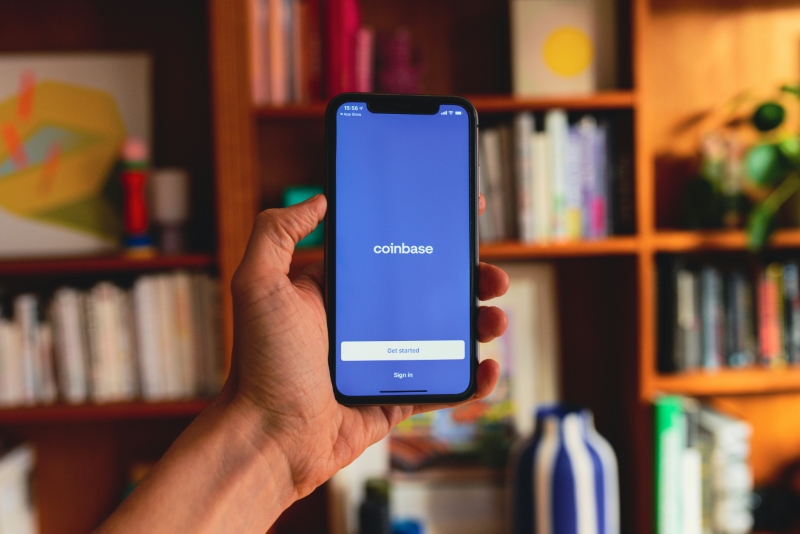
Armstrong’s assertion that retail investors serve as collateral stems directly from the mechanics of the spoofing operation, where the fraudsters bypassed exchange security protocols by tricking users into voluntarily handing over access [2]. The fraud did not involve a direct breach of Coinbase’s core servers but rather a social engineering attack on the user base, effectively turning retail accounts into the primary point of failure [2]. This distinction highlights a critical risk in the current market structure: while centralized exchanges may maintain robust internal security, the perimeter of the user’s device and credential management remains a high-value target for attackers [6].
Analysts note that the scale of the fraud-over $20 million-indicates a coordinated effort likely involving multiple intermediaries to layer the stolen funds and obscure the money trail [3]. The ED’s ability to trace these funds through peer-to-peer transactions and crypto wallets into India demonstrates the increasing sophistication of law enforcement in tracking illicit crypto flows [1]. However, the recovery of the full amount remains uncertain, as assets are often converted into untraceable forms or moved across jurisdictions before seizure [3].
Enforcement Coordination and Cross-Border Implications

The coordination between US and Indian authorities in this case represents a significant milestone in cross-border crypto enforcement. The US Department of Justice handled Tomar’s initial prosecution and sentencing, while the Indian ED pursued the asset attachment and local charges under PMLA [2][3]. This dual-track approach suggests a growing trend where jurisdictions cooperate to dismantle the entire financial ecosystem of a crypto crime ring, rather than focusing solely on the perpetrator’s imprisonment [3].
The ED’s provisional seizure of INR 64.55 crore in assets indicates that investigators successfully traced the proceeds of the crime back to physical and financial holdings within India [3]. This is a critical development in the enforcement landscape, as it demonstrates that even when funds are layered through multiple crypto wallets, law enforcement can still identify and attach the underlying assets [1].
| Jurisdiction | Action Taken | Legal Basis | Outcome |
|---|---|---|---|
| United States | Sentencing & Imprisonment | Wire Fraud Conspiracy, 18 U.S.C. § 1343 | 5 years prison + 2 years supervised release [2][7] |
| India | Asset Attachment & Prosecution | Prevention of Money Laundering Act (PMLA) | INR 64.55 crore seized + prosecution complaint filed [1][4] |
| Intl. Channel | Evidence Sharing | Mutual Legal Assistance Treaty (MLAT) | Critical evidence transferred from US to India [3] |
The use of MLAT channels to transfer evidence underscores the necessity of formal legal frameworks in combating crypto crime, which often operates across borders with minimal regard for jurisdictional boundaries [3]. Without such cooperation, perpetrators could easily evade prosecution by hiding in jurisdictions with weak enforcement capabilities [3].
Market Structure and Custodial Risk Implications

The Tomar case serves as a stark warning for custodial risk management and the integrity of centralized exchange support channels. Tomar was identified as a former customer service agent for Coinbase, and his involvement raises questions about the potential for insider threats within exchange support teams [6][8]. While the fraud primarily relied on spoofing websites, the insider knowledge of user vulnerabilities likely facilitated the precision of the attack [6].
Coinbase CEO Armstrong has publicly stated that the company has “zero tolerance for bad behaviour” and is working closely with law enforcement to bring bad actors to justice [8]. This incident follows a broader trend of insider-driven data breaches and extortion attempts targeting major crypto exchanges, where attackers bribe or coerce customer service representatives to gain access to sensitive customer information [6][8].
Market participants view this as a validation of the shift toward self-custody solutions, where users retain full control of their private keys and are not dependent on third-party custodians for asset security [6]. Data suggests that retail investors are increasingly wary of centralized exchange risks following such high-profile breaches, potentially accelerating the adoption of non-custodial wallets and decentralized finance (DeFi) protocols [6]. However, the complexity of self-custody remains a barrier for many retail users, leaving them vulnerable to the same social engineering attacks that targeted Tomar’s victims [6].
Risk Factors and Uncertainty in Recovery

Despite the successful prosecution and asset seizure, significant uncertainty remains regarding the full recovery of the $20 million stolen. The ED has attached assets worth INR 64.55 crore, but this amount represents only a fraction of the total fraud [1][3]. The remaining funds may have been converted into untraceable assets, moved to offshore jurisdictions, or lost in the process of layering [3].
A key downside scenario is that the perpetrators may have successfully moved the majority of the funds through unregulated peer-to-peer exchanges or privacy-focused cryptocurrencies, making recovery nearly impossible [3]. Additionally, the legal process for returning seized assets to victims can be prolonged and complex, often requiring court orders and international cooperation that may take years to finalize [3].
Another uncertainty factor is the potential for similar insider-driven attacks to recur if exchanges fail to implement stricter internal controls and independent audits of customer support teams [6]. While Coinbase has stated it is working with law enforcement, the systemic risk of insider corruption remains a challenge for the entire centralized exchange industry [6].
Long-Term Positioning and Structural Impact
The Tomar case underscores a structural shift in how crypto crime is prosecuted and enforced globally. The dual prosecution in the US and India signals that regulators are moving beyond isolated national responses to a more integrated, cross-border enforcement model [3]. This could lead to stricter international standards for exchange compliance, particularly regarding customer support verification and insider threat management [6].
Analysts note that the case may prompt a reevaluation of the “custodial risk” narrative, with retail investors potentially demanding higher insurance guarantees or enhanced security protocols from centralized exchanges [6]. In the long term, this could accelerate the adoption of decentralized, non-custodial solutions where users retain full control of their assets, reducing the reliance on third-party custodians [6].
However, the transition to self-custody remains a complex challenge for the average retail user, who may lack the technical expertise to manage private keys securely [6]. As a result, the market may see a hybrid approach where exchanges offer enhanced security features and insurance, while regulators push for stricter oversight to prevent insider-driven breaches [6].
The enforcement actions against Tomar and his associates demonstrate that while crypto crime is a global challenge, coordinated legal efforts can yield significant results. The successful attachment of assets and the filing of prosecution charges in India mark a critical step in the broader fight against crypto fraud, setting a precedent for future cross-border investigations [1][3].
Sources
[1] https://crypto.news/indias-ed-files-charges-in-20m-coinbase-spoofing-case/[2] https://finance.yahoo.com/news/con-artist-used-fake-coinbase-152259322.html
[3] https://www.theblock.co/post/404872/india-files-charges-against-8-defendants-in-alleged-20-million-coinbase-spoofing-scam
[4] https://crypto-economy.com/india-ed-files-charges-in-20m-spoofing-case/
[5] https://crypto.economictimes.indiatimes.com/news/crypto-industry/enforcement-directorate-cracks-down-on-20-million-coinbase-spoofing-fraud-attaches-assets-worth-64-5-crore/131796135
[6] https://www.moneycontrol.com/news/cryptocurrency/coinbase-says-former-agent-arrested-in-india-over-exchange-hack-13744702.html/amp
[7] https://www.law360.com/articles/1891618/man-gets-5-years-for-20m-coinbase-spoofing-scheme
[8] https://www.theweek.in/news/biz-tech/2025/12/27/crypto-coinbase-ceo-hyderabad-police-arrest-ex-customer-service-agent.amp.html
[9] https://www.justice.gov/usao-wdnc/pr/indian-national-pleads-guilty-wire-fraud-conspiracy-stealing-over-37-million-spoofing
[10] https://www.justice.gov/usao-wdnc/pr/indian-national-sentenced-prison-20-million-dollar-fraud-scheme-involving-fake