
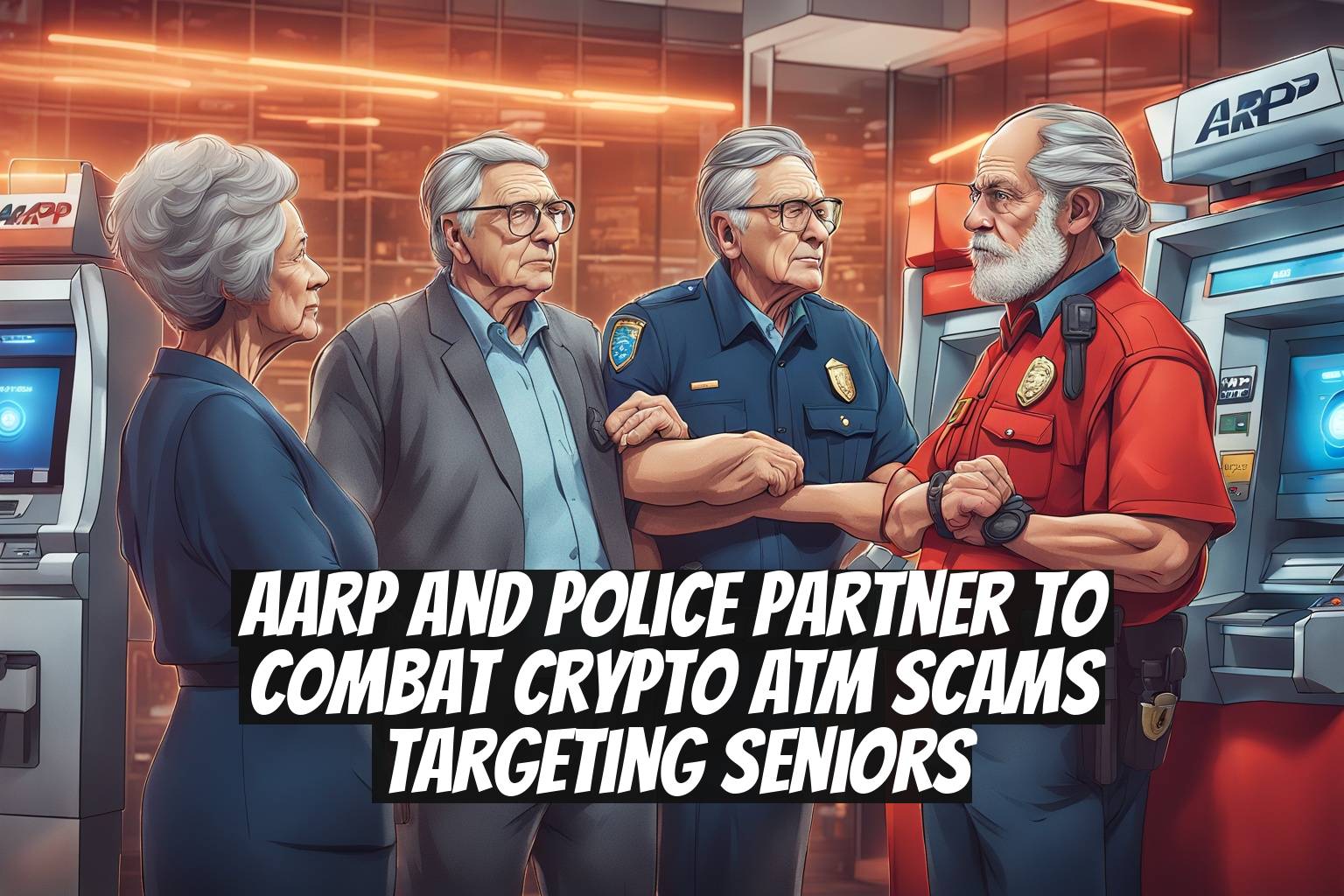
They’re targeting grandma at the crypto ATM - and now AARP and police are fighting back
AARP and local police departments across multiple U.S. states have launched coordinated efforts to educate and warn seniors about crypto ATM scams, citing skyrocketing losses and urging visible warnings, outreach, and stronger investigative units to stop criminals using kiosks to rapidly monetize stolen funds[4][1]. AARP’s research shows older adults are disproportionately victimized by crypto-related fraud and that the scale of losses has surged into the billions, prompting partnerships with city police, attorney generals, and community groups to distribute warnings, stickers and resources at crypto ATM locations[4][1][3].
Key Takeaways
- AARP research finds cryptocurrency-related fraud rose sharply, with older adults (60+) losing billions and crypto ATMs often used by scammers because funds are hard to trace once sent[4].
- Local law enforcement (e.g., Lincoln PD, Wilmington initiatives) are working with AARP and other partners to roll out ordinances, warning stickers, education packets, and dedicated investigators to pursue crypto ATM scams[1][3].
- These efforts mix public awareness with targeted enforcement: posting notices at kiosks, training volunteers to distribute information, and creating specialized police units focused on crypto crimes[1][3].
- For investors and analysts: scams affect public trust in on-ramps (kiosks), can influence regulatory action, and may shift flows toward regulated exchanges or custodial providers - a dynamic worth watching from an on-chain and market-structure perspective.
Subscribe to our Social Media for Exclusive Crypto News and Insights 24/7!
Why this matters: if on-ramps are perceived as unsafe, retail adoption and regulatory scrutiny change - and those changes ripple through liquidity, volatility, and market behavior. Imagine a city ordinance that forces kiosks to display warning stickers; it’s small but visible, and visible signals alter consumer behavior.
What AARP and police are doing, state-by-state (real actions, not just press releases)
- Lincoln, Nebraska: The Lincoln Police Department partnered with AARP Nebraska to begin an educational campaign tied to a new ordinance requiring businesses with cryptocurrency ATMs to post warning notices; 20 AARP volunteers distributed warning packets and stickers to roughly 100 machines, and LPD plans to add a fifth investigator to a Technical Investigations Unit focused on crypto scams[1][2].
- Wilmington, North Carolina: A statewide effort led by the Attorney General, Secretary of State, AARP, Wilmington Police and United Way NC/NC 211 emphasizes public awareness, hotlines (211), and guidance for recognizing common red flags - callers being told to withdraw cash and send it via a crypto ATM is a frequent scam vector[3].
- Broader AARP research and alerts: AARP’s national reporting and state chapters have repeatedly highlighted crypto ATM scams, noting their speed and irreversibility once funds are sent - and providing checklists for spotting scams and reporting them to local authorities or the AARP Fraud Watch Network[4][5].
How crypto ATM scams typically work - the mechanics (the ugly, fast-money flow)
- The hook: A phone call, text, or impersonation (bank, IRS, tech support) claims urgency and instructs the target to “pay” or “protect” funds by converting cash to crypto at a kiosk[3][5].
- The ATM conversion: Victim feeds cash into kiosk → kiosk immediately converts to crypto → funds sent to attacker-controlled wallet. Because many kiosks require little KYC for small purchases and crypto transfers are irreversible, attackers exploit the speed and anonymity[4][5].
- Money motion: Attackers often use mixer services, chain hops, and cross-chain bridges to obfuscate flows[4]. That rapid monetization makes recovery practically impossible without immediate law enforcement and exchange cooperation.
Analyst note: From a market perspective, these scams are not “macro” drivers of price, but they are structural risks. They degrade trust in non-custodial, rapid on-ramps and could accelerate demand for regulated, KYC-heavy onramps - a subtle bid for custodial services that may change retail flow composition over time.
Regulatory & enforcement implications - what to expect

- Local ordinances: Cities (e.g., Lincoln) can require visible warnings at kiosks; these are low-cost, immediate behavioral nudges and can be adopted elsewhere[1].
- Specialized investigators: Adding crypto-savvy investigators signals law enforcement’s recognition that blockchain tracing and exchange cooperation are needed for meaningful investigations[1].
- State & federal cooperation: When attorney generals and state officials join AARP (Wilmington/NC example), we see a move toward statewide public-private anti-scam campaigns that combine hotlines, education, and civil enforcement[3].
- For operators: Expect increased scrutiny, possible local licensing requirements, and pressure to implement stronger KYC/limits on crypto ATMs.
Market and on-chain signals to monitor

- On-ramp flow shifts: Watch trading volumes and deposit sources on major exchanges and custodians; sustained drop in kiosk-derived inflows paired with rising custodial deposits implies retail migration to regulated channels. Use exchange reports and on-chain analytics dashboards to track deposit wallet types.
- Wallet blacklists & freezing: Exchange transparency reports and law-enforcement takedown notices (when available) show which custodial platforms cooperate in blocking illicit funds. Follow exchange transparency centers and law-enforcement advisories.
- Price impact: While scams don’t directly move broad-market VWAP, concentrated extraction events can cause localized volatility in low-liquidity tokens used in scams. Smaller-cap tokens show bigger responses when illicit flows hit DEX pools.
Practical metrics and charts to watch (use TradingView / CoinMarketCap / on-chain tools):
- BTC/ETH dominance cycles: shifts in dominance often presage rotation between safe-haven narratives and speculative alt-season flows. Dominance swings can be tracked on TradingView and CoinMarketCap market overviews.
- ADX & momentum: ADX readings combined with RSI and daily volume spikes can signal whether a move is genuine or likely a fakeout - useful for traders reacting to news-driven spikes caused by scam-related liquidations.
- Liquidation cascades: Monitor open interest and liquidation heatmaps (Deribit, Bybit data aggregators) during episodes of retail panic that could coincide with scam waves.
Example walkthrough - historical lens
- 2022-2023 scam wave lessons: In prior years, widespread social-engineering scams funneled into onramps and exchanges, causing spikes in retail deposits and frantic sell-offs. One anecdote from AARP materials: victims often describe being instructed to “buy Bitcoin at the kiosk now” and then watching funds disappear - a micro-story repeated across states, and one reason organizations like AARP launched targeted outreach[4][5].
- Market mechanics analog: Think back to a flash-crash triggered by a liquidity vacuum - same idea at smaller scale: coordinated extraction (scammers) plus panicked retail moves cause local squeezes. A trader I spoke to said this looked eerily like 2021’s blow-off top in terms of emotional buying then rapid exodus - not identical, but similar psychology.
Analyst take: These scams reveal behavioral weak points in the adoption funnel - speed and irreversibility beat slow, thoughtful due diligence every time when fear is introduced. From a market-design perspective, improving friction (e.g., short KYC holds for kiosk transactions, improved receipt/transparency) might reduce criminal exploitation without killing utility.
How operators, policymakers, and communities can reduce harm
- Clear warnings and signage at on-ramps: Stickers and notices work; Lincoln’s ordinance requires them and AARP volunteers distributed packet - these are immediate low-cost deterrents[1].
- Public education campaigns: Phone hotlines (211 in NC), AARP Fraud Watch Network resources, and community outreach lower the success rate of social-engineering attacks[3][4].
- Tech & process fixes: Kiosks could implement incremental KYC thresholds, transaction throttling, and mandatory cooling-off periods for first-time high-value transactions. These design choices trade convenience for safety.
- Exchange cooperation: Faster takedowns, clear reporting channels, and transparent analytics help law enforcement trace stolen funds before they’re laundered through mixers.
Real-world micro-story: Back in 2022, a holder held ADA through a 60% dump. It was brutal. But that taught him one thing - patience beats panic. Replace “ADA” with “your savings” in scam contexts: emotional pressure is weaponized; education builds the antidote.
Investor-focused implications - be pragmatic
- Retail sentiment & on-ramp trust: If kiosks lose consumer confidence, some retail sellers will migrate to custodial apps; that structurally benefits regulated custodians and may compress fees. Keep an eye on exchange flow reports.
- Volatility and liquidation risk: Watch derivatives open interest and liquidation maps during local panic episodes tied to scam news. A sudden coordination of sell pressure can exacerbate local losses in illiquid tokens.
- Compliance premium: Projects and services emphasizing compliance, auditability, and clear custody tend to fare better in a climate of increasing anti-fraud enforcement.
Want live data? Use these signal sources right now:
- CoinMarketCap for market-cap and dominance data (BTC/ETH market share trends).
- TradingView to overlay ADX, RSI, volume, and dominance-to-price ratios for real-time setup detection.
- On-chain analytics (e.g., Glassnode, Chainalysis) to flag suspicious wallet flows and rapid chain-hopping behaviors.
Decentralized finance
Crypto security
On-chain analytics
Analyst’s closing candor (because I’d’ve expected less of a surprise): Honestly, the whales ain’t sleeping, fam. They’re rotating. But the smaller, cruder frauds that prey on trust and urgency happen at ground level - to the people who didn’t sign up for this wild west. AARP and police are doing the right thing: hitting the kiosks physically and the communities emotionally. That’s where prevention actually works.
External sources used:
1. https://www.lincoln.ne.gov/News/2025/12/16
2. https://klin.com/2025/12/16/lpd-and-aarp-nebraska-begin-fight-against-cryptocurrency-atm-scams/
3. https://states.aarp.org/north-carolina/aarp-helps-launch-crypto-scams-prevention-effort
4. https://www.aarp.org/pri/topics/work-finances-retirement/fraud-consumer-protection/cryptocurrency-fraud/
5. https://states.aarp.org/new-hampshire/scam-alert-be-on-the-lookout-for-these-scams-in-august-2025






