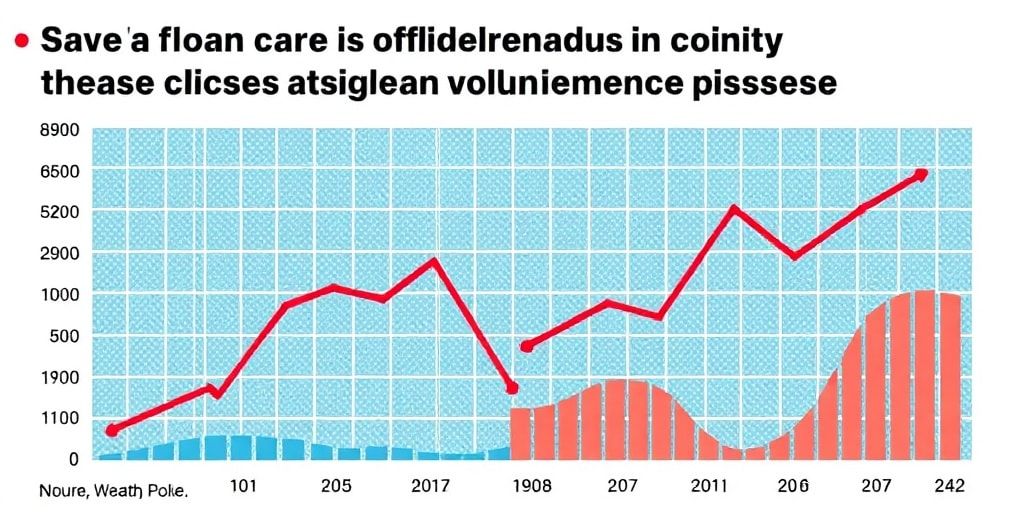
Aave Faces Governance Dispute as Price Slides and Volume Surges: The DeFi Drama Unfolding in Real Time
When DAO Democracy Goes Messy: What’s Actually Happening at Aave
Look, we’ve all seen crypto governance votes before. You know the drill-tokenholders gather, debate happens, vote passes, everyone moves on. But Aave’s latest governance showdown? This one’s different, and honestly, it’s catching way more people off guard than anyone expected. A dispute over who actually controls Aave’s brand and online assets has spiraled into what’s shaping up to be one of the sharpest internal clashes the protocol has faced.[1] The token’s tanking. The community’s divided. And the deeper question everyone should be asking? What does this mean for the future of decentralized governance itself?[2]
Key Takeaways
Subscribe to our Social Media for Exclusive Crypto News and Insights 24/7!
- Aave’s governance vote escalated rapidly, triggering significant backlash over rushed decision-making on brand rights control
- AAVE token price has slid sharply with over 10% losses in recent trading, mirroring the community’s uncertainty
- Trading volume surged as both believers and skeptics repositioned their holdings amid the chaos
- The dispute reveals fundamental tensions between Aave Labs’ operational efficiency and true tokenholder decentralization
- Deeper governance questions loom for one of DeFi’s largest protocols as the market reacts to internal conflict
The Fast-Track That Backfired
Here’s where it gets spicy. Aave Labs decided to move a governance vote on brand rights control to a fast-track escalation process. On paper, this sounds reasonable-you want clarity, you want decisions made, you don’t want endless deliberation grinding everything to a halt. In practice? The community absolutely lost it.[1]
The thing is, DeFi communities are sensitive to optics around control. We’ve been burned before. Remember the early days of Uniswap governance drama? Or how Luna blew up partly because of governance concentration issues? People are rightfully paranoid about who’s pulling the strings behind their favorite protocols. When Aave Labs fast-tracked this vote, it sent a signal to tokenholders: "Hey, we’re moving forward with or without your input on this timeline." That’s not the energy you want in a DAO.
What started as relatively technical questions on governance forums has ballooned into a public dispute over control, incentives, and fundamental tokenholder rights.[4] The fast-tracking didn’t bring clarity-it brought chaos.
The Brand Control Question: Why This Actually Matters
Let’s break down what everyone’s fighting about. It’s not just semantics. Control over Aave’s brand assets, social channels, and digital properties carries real weight. Whoever controls the brand narrative can shape how the protocol’s perceived. They can decide what gets communicated, how fast, and in what tone.[2][3]
In a true DAO, these decisions should flow from the community. But here’s the uncomfortable truth: running a major DeFi protocol isn’t exactly a consensus-building operation. You need speed. You need direction. You need someone making judgment calls when there’s no time for a 7-day voting period.
Aave Labs has always been the operational backbone here. They’ve got the engineers, the infrastructure, the relationships with exchanges and auditors. From a pure logistics standpoint, centralizing brand control under them makes sense. But from a "decentralization" standpoint-which, let’s be honest, is kind of the whole point-it feels like a step backward.
One crypto analyst I’ve been following closely noted that this type of tension isn’t unique to Aave. It’s baked into the entire DAO structure. "The irony," she told me, "is that the most successful protocols are the ones that figure out how to balance operational efficiency with genuine community input. Aave’s struggling with that balance right now, and the market’s punishing them for it."
The Price Action: When Markets Signal Distrust

Here’s where the rubber meets the road. AAVE didn’t just dip slightly-the token has lost over 10% in recent trading.[5] That’s not normal volatility. That’s investors raising their hands and saying, "We’re not comfortable with what’s happening under the hood right now."
Volume surged during the downside move, which tells us something important: this wasn’t a quiet, orderly selloff. Real money was rotating out, and plenty of it. When you see volume spike alongside a 10% drop, you’re looking at conviction selling. People aren’t hoping for a bounce-they’re taking profits and reassessing.
If we dig into the technical picture, AAVE’s been fighting to maintain support levels. The governance dispute hit right as sentiment was already fragile. Imagine being an AAVE holder for the past few months, watching the token consolidate, waiting for that breakout move. Then boom-governance drama. Flash crash. Now you’re sitting there wondering if you should hold or cut losses.
That’s the psychology playing out in real time.
Why Governance Disputes Hit Different Than Normal Market Moves

Here’s something most retail traders don’t fully grasp: protocol governance disputes are structural risks. They’re not like a CEO scandal at a traditional company where you can just replace the person. In DeFi, governance problems suggest something’s fundamentally broken about how decisions get made.
When Bitcoin whales rotate between holdings, sure, price moves. That’s normal. But when a major DeFi protocol’s community fractures over governance? That’s different. It raises questions about sustainability, alignment, and whether the protocol can actually execute its roadmap without tearing itself apart.
The dispute has highlighted deeper governance questions for Aave, arguably one of the biggest DeFi protocols operating right now.[2] If the protocol can’t figure out how to handle brand rights control decisions without triggering community backlash, what happens when it’s time to make even harder calls? What if there’s a security incident? What if the protocol needs to pivot strategy?
These aren’t idle "what-ifs." They’re the kinds of risks that sophisticated investors think about when deciding whether to allocate capital.
The Community Split: Nobody’s Happy
What’s really telling is that this dispute doesn’t have an obvious "correct" side. You’ve got legit arguments on both ends:
Team "Labs Should Control This": Look, Aave Labs built the protocol. They have operational expertise. Brand decisions need speed and coherence. Having 100,000 tokenholders weigh in on every communication strategy is a recipe for disaster. Decentralization is great in theory, but you need some structure to actually ship products and respond to market conditions.
Team "This Is Exactly Why DAOs Exist": If Aave Labs controls the brand, what are we even doing? We could’ve just invested in a traditional VC-backed company. The whole point of tokenholder governance is that the community owns the protocol. Centralizing control is a betrayal of that principle. And the fast-tracking? That’s just disrespectful to the community’s voice.
Both sides have a point. That’s what makes this so messy.
Where DeFi Governance Goes From Here
Here’s my honest take after watching this unfold: DeFi governance is still figuring itself out. We’re in the experimental phase. Some protocols will crack under the pressure of trying to balance decentralization with operational efficiency. Others will find that sweet spot where community input feels real without paralyzing decision-making.
Aave’s got the resources and talent to navigate this. But they’ve got to rebuild trust. A few thoughts on what that looks like:
Transparency is non-negotiable. If Aave Labs wants to make decisions around brand control, fine. But communicate why you’re doing it that way. Walk through the operational realities. Don’t just fast-track votes and expect everyone to be cool with it.
Actually listen to feedback. The governance forums lit up with concerns about the fast-tracking. At some point, when your community’s pushing back that hard, that’s data. Respect it.
Consider hybrid models. Maybe brand control doesn’t have to be fully centralized or fully decentralized. Maybe there’s a structure where Labs has operational control but tokenholders retain veto rights or approval authority. Creative solutions exist if you’re willing to explore them.
The Liquidation Cascade Nobody’s Talking About
One thing that tends to get overlooked in governance disputes is the secondary price pressure from liquidations and stop losses. When AAVE dropped 10%+ in a day, that likely triggered a cascade of liquidations for positions using AAVE as collateral. Across the Aave protocol itself and other platforms where AAVE’s accepted as collateral, those liquidations would’ve created additional selling pressure.
This is the kind of vicious cycle that can amplify price moves. Governance concern → price drop → liquidations → more selling pressure → bigger price drop. It’s not a sustainable spiral, but it explains why the selling felt so sharp.
Where We Go From Here
The question now is whether this governance dispute becomes a one-off speed bump or a symptom of deeper structural problems. Markets are voting with their feet right now-and they’re voting "sell." Whether that’s the correct call probably depends on how Aave handles the fallout.
If they acknowledge the community’s concerns, pump the brakes on aggressive fast-tracking, and recommit to genuine decentralized decision-making? The price could stabilize relatively quickly. Governance issues are repairable.
If they double down on centralization and treat the community’s feedback as noise? You might be looking at a longer-term erosion of confidence. And in crypto, confidence is everything.
For now, the dispute’s unresolved. The vote’s in motion. The community’s divided. And AAVE’s price is reflecting that uncertainty. Which is exactly what it should do.
Additional Context on DeFi governance mechanisms
Understanding how protocols like Aave implement blockchain voting systems is critical for anyone holding governance tokens. The mechanics underlying these systems-how votes are weighted, how quorum thresholds work, how escalation processes function-they all matter immensely when disputes like this emerge.
If you want to go deeper into the weeds, researching tokenomics and protocol control structures across major DeFi protocols will show you how differently projects approach these tensions.
- https://cryptoticker.io/en/aave-labs-faces-backlash-for-fast-tracking-brand-rights-vote
- https://www.tradingview.com/news/cointelegraph:39cbcbe6e094b:0-aave-governance-vote-sparks-backlash-over-rushed-escalation/
- https://www.coindesk.com/markets/2025/12/22/aave-slides-as-community-debates-over-who-controls-the-brand
- https://thedefiant.io/news/defi/aave-dao-controversy-rekindles-debate-on-tokenholder-rights
- https://www.cryptopolitan.com/aave-crashes-after-dao-governance-conflict/