
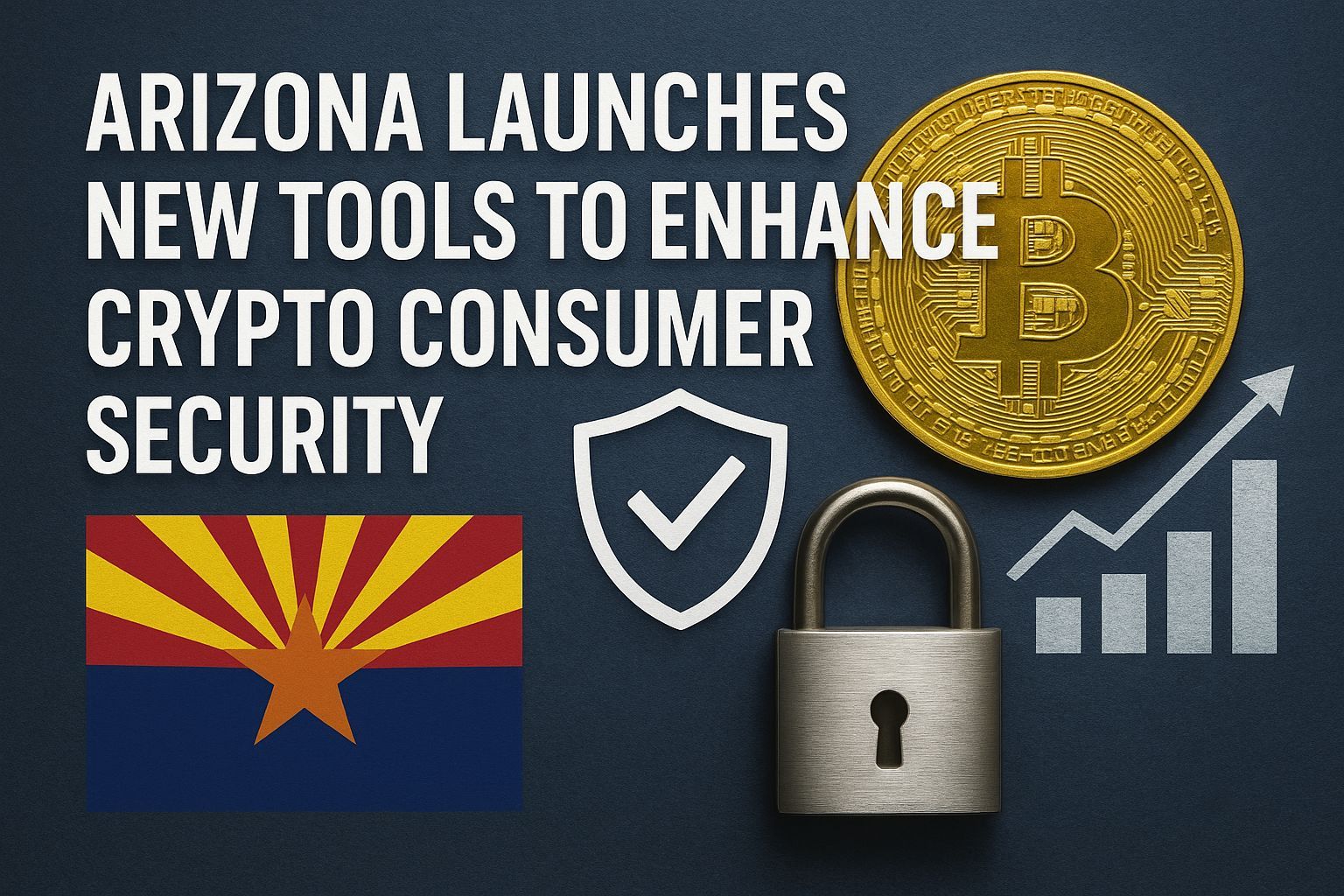
Arizona’s Crypto Kiosk Crackdown: The State’s Bold Play to Stop ATM Scams
When Protection Meets Innovation
Arizona just threw down the gauntlet on cryptocurrency ATM fraud, and honestly, it’s about time. The state launched comprehensive new consumer protections designed to tackle the rising tide of crypto kiosk scams that have been bleeding residents-especially older folks-of serious cash[1]. Think of it as Arizona deciding to build guardrails around an industry that’s been operating like the Wild West for too long.
Here’s what actually went down: On September 26, 2025, Arizona Attorney General Kris Mayes announced the Cryptocurrency Kiosk License Fraud Prevention Law took effect through House Bill 2387[1]. This wasn’t some symbolic gesture either. The law fundamentally rewired how cryptocurrency ATM operators do business in the state, creating detailed obligations that directly address where the bleeding was happening.
Subscribe to our Social Media for Exclusive Crypto News and Insights 24/7!
Key Takeaways
- Daily transaction limits cap at $2,000 for new customers and $10,500 for existing customers to prevent massive losses in single transactions[1]
- Kiosk operators must now use blockchain analytics and tracing software to block transfers to wallets flagged for fraud activity[1]
- Fraud victims get full refund rights (including fees) within 30 days if they can produce a law enforcement report[1]
- Operators must staff 24/7 live customer service with toll-free numbers displayed on every kiosk[1]
The Real Problem: Crypto ATMs Became Scam Machines
Let’s be real-cryptocurrency ATMs exploded across Arizona, but they became perfect hunting grounds for romance scammers, investment fraudsters, and just about every predatory operator with a scheme[1]. Victims would get convinced to send crypto to a “secure investment” or a “loved one,” only to realize they’d been swindled. The problem? There was almost no friction in the system. You could walk up, drop thousands, and vanish into the crypto void with zero recourse.
That’s where the transaction limits come in. Capping new customers at $2,000 per day sounds restrictive, sure, but it’s basically a circuit breaker[1]. You get ten days as a new customer before moving to the $10,500 daily limit. The idea: give people time to realize they’ve been duped before they dump their life savings into a scam wallet[1].
The Blockchain Analytics Game-Changer
Here’s where it gets interesting. Operators now have to deploy blockchain analytics and tracing software and maintain written anti-fraud and AML/KYC compliance policies[1]. This is crypto’s version of know-your-customer rules, but applied to the transaction layer itself.
In practice, this means when someone tries to send crypto to a wallet that’s already been flagged as a scam destination, the software throws up a red flag. The operator can’t just let it slide. It’s not foolproof-blockchain is immutable, so you can’t undo a transaction-but you can at least warn people before they hit send. And if fraud happens anyway? The operator’s now on the hook to issue full refunds to new customers within 30 days[1].
The Bigger Picture: Arizona’s Crypto Leadership

This isn’t happening in a vacuum. Governor Katie Hobbs signed a slew of cryptocurrency measures into law in May 2025, establishing Arizona as a state that’s trying to walk the tightrope between innovation and consumer protection[2]. The legislation included the Bitcoin and Digital Assets Reserve Fund, which allows the state to hold unclaimed cryptocurrency in its native form and profit from staking rewards and airdrops[4].
But here’s the thing: while Arizona’s being progressive about blockchain adoption-letting smart contracts exist in commerce, protecting blockchain node runners in homes-the state’s also getting serious about the human cost of unregulated crypto activity[3][4]. The kiosk law is proof that innovation without guardrails is just a con game with extra steps.
What This Means for the Crypto Community

For exchanges like Coinbase, Binance, and Gemini (all registered as money transmitters in Arizona), this law basically says: “We’re not killing crypto-we’re professionalizing it”[3]. The burden shifts to operators to actually care about their users instead of just facilitating transactions.
The 24/7 customer service requirement? That’s the kicker[1]. It forces operators to staff up, which means costs go up. Smaller, shadier operators might bail on Arizona entirely. That’s not a bug-it’s a feature. It’s friction designed to protect people without crushing the entire industry.
The Refund Gambit
The refund guarantee is bold. If a new customer reports fraud within 30 days and produces law enforcement documentation, operators must refund everything-principal plus fees[1]. This essentially makes the operator an insurer against fraud for the first 30 days. It’s a bet that people will figure out they’ve been scammed relatively quickly, and it forces operators to actually monitor for suspicious activity.
Think about it: a scammer used to prey on someone, take their $5,000, and the victim would only realize days or weeks later when they couldn’t contact the “investment advisor.” Now that victim can walk back into the same kiosk and demand their money back. That changes the entire calculus for bad actors.
Where We Go From Here
Arizona’s joining a growing wave of states prioritizing consumer protections in cryptocurrency kiosks and digital assets[1]. Other states are watching. Some will copy these protections. Some will go further. The federal regulatory landscape is still a mess-the SEC, IRS, and FinCEN are all still figuring out their positions-but states like Arizona are essentially saying, “We’re not waiting”[4].
Attorney General Kris Mayes is also setting her sights on broader crypto consumer protection priorities for 2026, including tackling scams across the state[5]. The momentum’s real.
The Bottom Line
Arizona’s new cryptocurrency kiosk law is a masterclass in protecting consumers without killing an entire asset class. It’s not perfect. Blockchain’s immutability means you can’t truly undo fraud. But by layering in transaction limits, fraud monitoring, customer service requirements, and refund guarantees, the state’s created enough friction to make scamming exponentially harder while still allowing legitimate operators to function.
For investors and crypto users in Arizona, this is a win. For operators who were running lean and cutting corners? Time to either step up or step out.
- https://www.consumerfinanceandfintechblog.com/2025/10/arizona-cryptocurrency-kiosk-law-takes-effect/
- https://azcapitoltimes.com/news/2025/05/16/gov-hobbs-approves-cryptocurrency-regulation-and-reserve-fund/
- https://stevenscenter.wharton.upenn.edu/publications-50-state-review/
- https://gottlieblawaz.com/2025/05/27/growing-role-cryptocurrency-in-arizona-real-estate-transactions/
- https://www.youtube.com/watch?v=030Et63nbFU






