
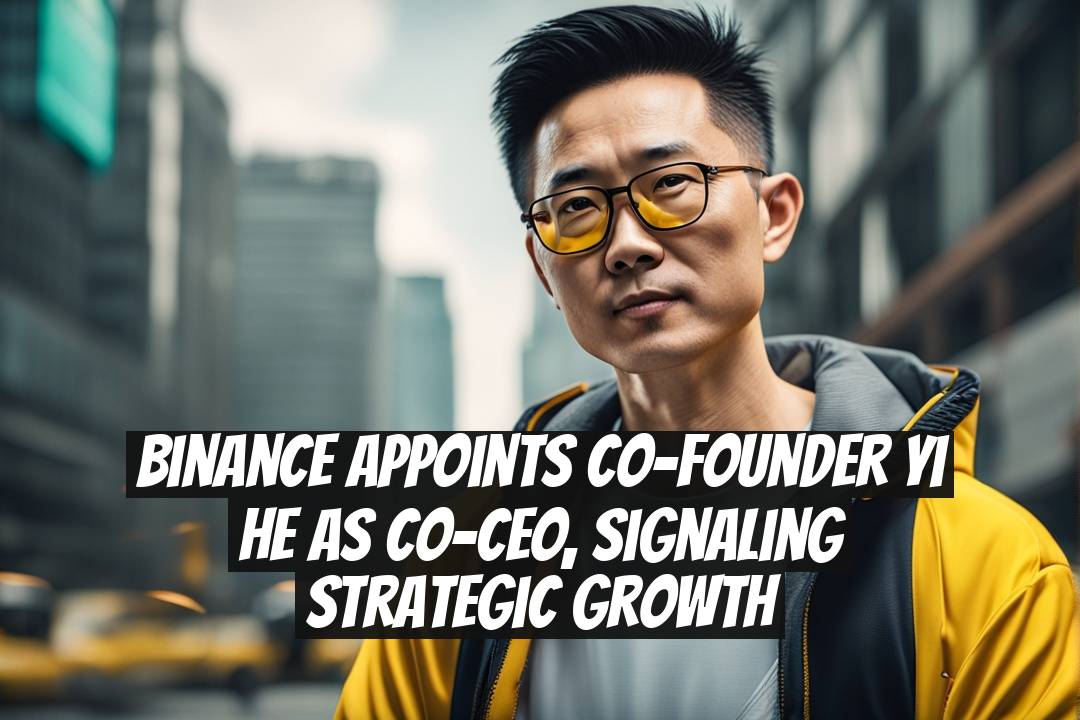
Binance’s Power Play: Yi He Steps Up as Co-CEO-What This Means for Crypto’s Future
? The Leadership Shift That’s Reshaping Crypto’s Biggest Exchange
Binance just made a move that’s been brewing behind the scenes for months. On December 3, 2025, the world’s largest cryptocurrency exchange announced that co-founder Yi He is stepping into the role of Co-CEO alongside Richard Teng[1][2]. Now, if you’ve been following crypto long enough, you know leadership changes at exchanges like this don’t happen in a vacuum. They signal something bigger-a strategic pivot, a bet on the future, a repositioning for what’s coming next in the industry[3].
Here’s the thing: Binance appointing Yi He as co-CEO isn’t just corporate reshuffling. It’s a calculated move to double down on user-centric innovation while the company charges toward an ambitious one billion user target[1]. The company’s currently sitting at nearly 300 million users, which means they’re only a third of the way to their vision[2]. That’s a massive runway, and honestly, the timing couldn’t be more interesting.
Subscribe to our Social Media for Exclusive Crypto News and Insights 24/7!
Key Takeaways
- Yi He, Binance’s co-founder, has been named Co-CEO alongside Richard Teng, marking a dual-leadership structure[1][2]
- The appointment signals Binance’s focus on scaling to one billion users while strengthening regulatory compliance globally[1]
- Yi likely handles retail operations and product innovation; Teng focuses on legal and regulatory matters[4]
- This move comes as Binance nears 300 million users and faces evolving regulatory pressures worldwide[2]
- The crypto exchange industry is consolidating leadership expertise to compete in an increasingly regulated environment[3]
? Who Is Yi He, Anyway? Why Does This Matter?
Let me give you some context. Yi He isn’t some newcomer parachuting into a cushy exec role. She’s been there since day one. We’re talking 2017, when Binance launched and basically became the world’s biggest exchange in just over a year[4]. That kind of explosive growth? Someone had to be steering that ship from the inside, and Yi was instrumental in shaping Binance’s vision, culture, and product roadmap[1].
Here’s what makes her different: she’s known for her marketing savvy and her ability to work directly with customers on the front lines[4]. In the crypto space, where trust is everything and retail users are your lifeblood, that’s not a small thing. Back in 2014, Yi was working at OKX (then OKCoin), where she actually recruited Changpeng Zhao-yes, that Zhao-to be the CTO[4]. So when Zhao started Binance in 2017, Yi was one of the first people he brought in. That’s institutional memory. That’s credibility.
The woman reportedly owns at least 10% of Binance, making her a multi-billionaire[6]. She’s not just a figurehead; she’s got serious skin in the game.
? The Strategic Calculation: Why Now? Why This Structure?
Okay, so why announce a co-CEO role right now? Honestly, the timing’s telling. Binance is operating in an increasingly complex regulatory environment. Richard Teng, the current CEO, brings decades of experience in regulated financial markets-he was literally one of the first people to regulate crypto back in its early days[2]. But running a global exchange that’s trying to become the "most trusted and regulated" one on the planet? That’s a two-person job now.
Here’s how I see it playing out: Teng handles the boring-but-critical stuff-legal frameworks, regulatory relationships, administrative machinery. Yi handles what the company’s known for-engaging users, driving product innovation, building community[4]. It’s a complementary split. Think of it like this: Teng’s the diplomat negotiating with regulators; Yi’s the engineer building the products people actually want to use.
The company prevented nearly $7 billion in potential scams in 2025, safeguarding around 9 million users[6]. That’s not a random stat. That’s Binance signaling that user protection is central to their strategy moving forward. And that’s Yi’s fingerprints all over it. She’s the one who’d champion that kind of focus.
? What Does This Mean for Binance’s Growth Trajectory?
Let me lay out what’s really happening here. Binance’s got 300 million users now, right? To reach one billion, they need to essentially triple their user base[2]. That’s not growth you achieve by sitting still. You need aggressive expansion, product diversification, and-critically-trust. Users aren’t gonna move trillions of dollars in assets to a platform they don’t believe in.
The co-CEO structure strengthens Binance’s long-term governance strategy as it scales in regulated markets[6]. That phrase "regulated markets" is key. The crypto industry’s matured. Gone are the days when an exchange could operate in regulatory gray zones. Now you need licenses, compliance teams, audit trails. Yi and Teng together represent that evolution-innovation and responsibility.
Here’s what’s particularly smart about this move: it signals stability. When you’ve got two co-CEOs with completely different backgrounds and complementary skill sets, you’re essentially protecting the company from key-person risk. If Teng got pulled into a regulatory hearing or Yi needed to focus on a specific product launch, the other’s there to maintain continuity[3]. That’s not flashy, but it’s how you build something that lasts.
The Web3 infrastructure play is also worth noting. Both Yi and Teng are emphasizing Binance’s commitment to building Web3 infrastructure and promoting financial freedom[1]. That’s not just marketing speak. That’s the company positioning itself as foundational infrastructure for the next phase of crypto-not just an exchange, but an ecosystem. And you can’t build an ecosystem with one person. You need complementary visions, which is what you’re getting here.
? The Regulatory Backdrop: Why Leadership Matters Now More Than Ever
Look, I gotta be real with you. Binance’s been under scrutiny. The company pleaded guilty to violating U.S. anti-money-laundering requirements in 2023, and former CEO Changpeng Zhao served four months in prison[5]. That left a mark on the company’s reputation, even if they’ve since paid massive fines and overhauled their compliance infrastructure.
Enter Richard Teng: a guy with deep roots in regulated finance, who understands how regulators think and what they need to see[4]. The message Binance’s sending with this co-CEO structure is: we’re serious about operating within the rules. Yi He brings legitimacy on the retail and innovation side; Teng brings legitimacy on the regulatory side.
And here’s something fascinating-when asked whether her ex, Changpeng Zhao, would have influence over Binance’s operations, Yi responded directly: "My personal life is independent from my professional life. My achievements and capabilities as co-founder are often overlooked with my personal life in question."[4] That’s a power move. She’s asserting her own credibility, not riding on her personal relationships. That distinction matters for regulatory perception.
? What About Tokenomics and Market Dynamics?
Here’s where it gets interesting from a market mechanics perspective. When you’ve got an exchange that’s scaling to hundreds of millions of users, the infrastructure they build affects the entire market. Think about order flow, liquidity pools, fee structures-these things ripple through the ecosystem.
The Binance Coin (BNB) ecosystem benefits from exchange stability and innovation[6]. If Yi’s managing product development while Teng’s locking down regulatory relationships, you’re looking at a scenario where Binance can simultaneously scale up user acquisition and deepen market penetration. That’s bullish for their native token over the medium to long term, though obviously, broader market conditions matter too.
What traders and analysts I’ve spoken to find compelling is the signaling effect. When an exchange says "we’re appointing a co-founder known for product innovation as co-CEO," the market reads that as: this exchange is betting big on user growth and product differentiation, not just being a trading venue. That confidence can attract both retail users and institutional partners.
? The Personal Touch: Why Yi He’s Marketing Savvy Matters
You’ve probably noticed that crypto exchanges are becoming increasingly competitive. Coinbase, Kraken, Bybit, OKX-they’re all fighting for user attention. Binance’s still the biggest by volume and users, but dominance isn’t guaranteed if you stop innovating.
Yi’s known for being able to connect with users on a human level[4]. In an industry sometimes bogged down by technical jargon and regulatory complexity, that’s valuable. She understands that most people don’t care about the intricacies of blockchain consensus mechanisms-they care about whether they can easily buy Bitcoin, whether their assets are safe, and whether the fees are reasonable.
The Web3 infrastructure build-out under joint leadership means you’re likely to see products that are both technically sophisticated and accessible to regular people. That’s harder to execute than it sounds, but it’s also what creates durable competitive advantages.
? What’s Next? Reading Between the Lines
So what should you actually take away from this? Binance’s making a clear bet that the next phase of crypto adoption runs through user-friendly platforms that play well with regulators. Yi and Teng together represent that vision-innovation without recklessness, ambition without regulatory friction.
The one billion user target isn’t just a number. It’s a statement that Binance believes crypto’s going mainstream. To get there, you need someone like Yi managing the product and community side, and someone like Teng managing the regulatory and operational side.
Is this a slam dunk move? Nothing’s guaranteed in crypto. But as strategic plays go, this one makes sense. It’s a company betting on its own future by putting complementary leadership in place and signaling that they’re serious about responsible growth.
Common Questions About Binance’s Leadership Reshuffle and Co-CEO Appointment
Q1: What exactly does a co-CEO structure mean for how Binance operates?
A1: A co-CEO structure means two leaders share the top executive responsibilities, typically dividing duties based on their strengths. In Binance’s case, Teng focuses on regulatory and legal matters while Yi handles product development and user engagement. This model allows the company to pursue aggressive growth while maintaining compliance across multiple jurisdictions simultaneously.
Q2: How does Yi He’s appointment affect Binance’s competitive position against other exchanges?
A2: Yi’s promotion signals Binance’s commitment to user-centric product innovation and community building at a time when competition intensifies. Her track record managing front-line customer relationships and product strategy positions Binance to attract and retain users more effectively than competitors focused primarily on trading infrastructure alone.
Q3: Will this leadership change impact Binance’s regulatory standing or compliance efforts?
A3: Likely not negatively. Teng’s regulatory expertise remains front and center, while Yi’s appointment actually strengthens governance by distributing oversight. The dual-leadership model demonstrates mature corporate structure to regulators, potentially helping rather than hindering Binance’s path toward becoming a fully regulated global exchange.
Q4: Why is Binance targeting one billion users, and is that realistic?
A4: Binance’s growth target reflects the massive addressable market for crypto adoption globally-billions of people currently lack access to traditional financial services. With 300 million users now, reaching one billion would require tripling their base, which demands aggressive geographic expansion, product innovation, and regulatory compliance-all areas this co-CEO appointment addresses.
Q5: Could Changpeng Zhao’s influence be an issue now that Yi He is co-CEO?
A5: Yi directly addressed this concern, emphasizing that her professional capabilities stand independently from personal relationships. Regulatory frameworks also restrict Zhao’s involvement per his U.S. legal settlement. The co-CEO structure with Teng-a compliance-focused executive-further ensures independent governance without personal influence.
Q6: What does this appointment signal about Binance’s future direction in crypto markets?
A6: The appointment signals Binance is pivoting toward sustainable, regulated growth focused on mainstream adoption rather than speculative trading volume. The emphasis on Web3 infrastructure development and user protection over the next phase suggests Binance sees itself becoming foundational infrastructure for decentralized finance, not just an exchange.
- https://www.binance.com/en/square/post/12-03-2025-binance-appoints-yi-he-as-co-ceo-to-drive-global-growth-and-user-centric-innovation-33204043160458
- https://www.prnewswire.com/news-releases/binance-co-founder-yi-he-appointed-co-ceo-as-the-company-nears-300-million-users-302631498.html
- https://www.fintechweekly.com/magazine/articles/binance-appoints-yi-he-co-ceo
- https://fortune.com/2025/12/03/binance-names-cofounder-yi-he-as-new-co-ceo/
- https://www.morningstar.com/news/dow-jones/202512031236/binance-names-co-founder-yi-he-as-co-ceo-of-crypto-exchange
- https://entrepreneurloop.com/binance-he-yi-co-ceo-appointment-crypto-leadership/
- https://www.coindesk.com/business/2025/12/03/yi-he-arguably-crypto-s-most-powerful-woman-becomes-binance-s-new-co-ceo






