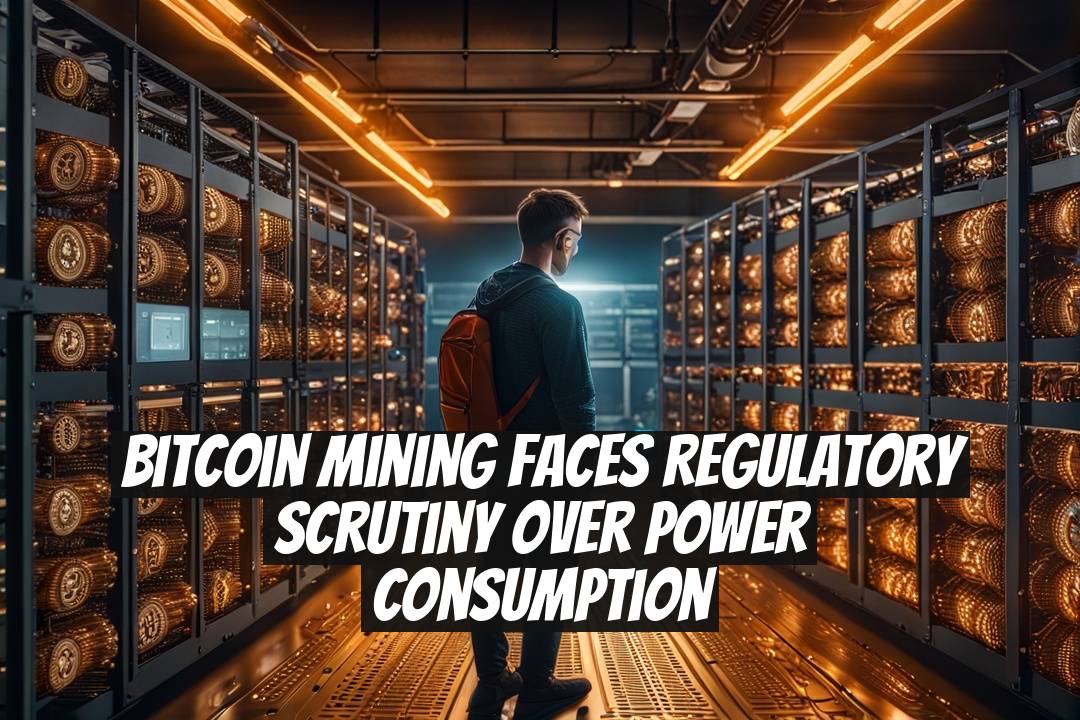
What Does the Growing Power Appetite of Bitcoin Mining Mean for Us All?
Bitcoin mining is grabbing headlines again-but not for price surges or big tech breakthroughs. Instead, it’s under the regulatory microscope because of its massive power consumption. If you’ve been wondering why governments and regulators seem increasingly concerned about Bitcoin mining’s electricity use and what that means for the crypto market-and even your potential investments-this detailed deep dive is just for you. We’ll explore the energy footprint of Bitcoin mining, the regulatory pushback it’s sparking, practical tips for investors, and the broader crypto market implications from a friendly crypto analyst’s viewpoint.
Key Takeaways: What You Absolutely Need to Know About Bitcoin Mining Power Use
- Bitcoin mining’s annual energy consumption reached 173 terawatt-hours (TWh) in 2025, comparable to the energy usage of entire countries[1].
- Around 54% of mining energy now comes from renewable sources, but fossil fuels still play a significant role[1].
- Regulatory bodies in at least 16 countries are imposing direct regulations focused on cryptocurrency mining’s energy impact[1].
- In places like Texas, Bitcoin mining is creating tensions over power grid stability and pricing[2][4].
- Legal scholars argue for careful, climate-friendly regulations due to mining’s "unprecedented and massive" electricity consumption[3].
- Energy costs for mining operations can be heavily subsidized by cheaper industrial power rates, causing public backlash[4].
Subscribe to our Social Media for Exclusive Crypto News and Insights 24/7!
️ Bitcoin Mining’s Insatiable Power Hunger and Regulatory Spotlight
Imagine a small town’s entire electrical demand being consumed non-stop by computers solving mathematical puzzles. That’s Bitcoin mining today-a global operation with a staggering 173 TWh annual energy use in 2025, according to the Cambridge Bitcoin Electricity Consumption Index (CBECI)[1]. That equals roughly 0.78% of global electricity consumption, putting Bitcoin’s environmental footprint in bold relief.
Why so much power? Bitcoin mining works by solving complex cryptographic puzzles, a process called “proof of work.” Miners compete to validate transactions, earning Bitcoin rewards, but this competition requires intense computing power running 24/7. As a result, Bitcoin’s mining hash rate surged 38% year-over-year in 2025 to an astonishing 617 exahashes per second (EH/s)[1].
Regulators are increasingly uneasy about what this means for climate goals and sustainability. The European Union’s Markets in Crypto-Assets (MiCA) regulation and regulations from 16 countries target mining activities with direct energy-use restrictions[1]. These rules aim to rein in mining facilities’ electricity demands or push them toward cleaner energy.
? Environmental Impact and Economic Pressure - The Double Whammy
The environmental costs aren’t just numbers; they are playing out in community power bills and public outrage. For example, Texas, one of the world’s biggest cryptocurrency mining hubs, is facing lawsuits and controversy about Bitcoin miners’ electricity consumption[2][4]. Mining operations there secure contracts for cheap electricity and sometimes resell power to the grid. This practice, coupled with their unpredictable shutdowns in response to price incentives, complicates grid management and could raise overall electricity costs for residents by up to 80% if mining demand spikes further[4].
Such dynamics fuel criticism of Bitcoin mining as a "parasitic load" that strains power supplies without contributing proportionally to grid stability[2]. Meanwhile, legal scholars highlight the urgent need for regulations that consider both climate impact and energy economics, emphasizing that unchecked mining activity could accelerate the world’s road to climate disaster[3].
? What This Means for You: Crypto Market and Investor Insights
If you’re thinking crypto is just about price swings, think again. The tightening restrictions and public pushback over energy use could have profound effects:
- Mining costs may increase. Stricter regulations could lead to higher energy prices or forced use of renewable power, both potentially raising costs for miners. Higher costs usually translate to narrower profit margins and, sometimes, price volatility for Bitcoin itself.
- Mining centralization risks. Regulations might push miners into regions with cheaper or less regulated power, sometimes concentrating mining power in fewer locations. This can affect Bitcoin network decentralization and security.
- Market perception shifts. Investors increasingly demand “green” credentials. Cryptocurrencies linked to sustainable energy use may attract premium valuation and institutional interest.
- Regulatory ripple effects. Other countries may follow the EU and US with their own energy-centric mining regulations, adding compliance complexity for global miners.
Despite these challenges, there is a silver lining: with over half of mining energy now coming from renewables, the industry is moving toward sustainability[1]. This global trend could help ease regulatory pressures over time and align Bitcoin mining with environmental goals.
? Practical Tips for Crypto Investors Navigating the Energy Debate

Want to keep your crypto portfolio healthy amid rising regulatory scrutiny? Here are some friendly tips:
- Stay informed about jurisdictional policies. Mining regulation varies widely. Countries like the US and in the EU have different rules. Knowing local policies can help you anticipate market moves.
- Favor cryptocurrencies with sustainable mining models. Look into coins and platforms that use proof of stake or other low-energy validation methods as alternatives or complements to Bitcoin.
- Support mining operations transparent about their power sourcing. Projects emphasizing renewable energy use or purchasing carbon offsets may offer more long-term stability.
- Watch Bitcoin’s hash rate trends. Sudden drops might reflect regulatory restrictions, while growth could mean expanding mining in less regulated areas.
- Consider broader energy market conditions. Rising electricity costs and supply issues may affect miner profitability and ultimately market prices.
? Personal Thoughts From Your Crypto Analyst Friend
I often think of Bitcoin mining as a bit like the classic story of the ravenous monster under the bed-it keeps growing and needs more power every day, scaring regulators and environmentalists alike. But here’s the paradox: Bitcoin also pushes innovation in clean energy adoption. Miners are already among the largest renewable energy buyers in some regions because it cuts their costs. If regulators strike the right balance-pushing for greener yet sustainable mining practices-we could see a crypto market that’s both profitable and planet-friendly.
What keeps me optimistic is seeing public and private sectors thinking hard about solutions to harmonize mining with energy grids, like flexible demand response programs. The tension is real but so are the opportunities. In the end, Bitcoin’s power struggle might be a catalyst for modernizing our grids and accelerating clean energy transitions.
So, the next time you read about Bitcoin mining’s energy use, ask yourself: Can innovation and regulation work together to tame this digital beast? The future of crypto may well depend on that answer.
Explore more on these topics:
Bitcoin Mining Power Consumption
Cryptocurrency Mining Regulations
Bitcoin Energy Consumption
Sources:
- https://coinlaw.io/bitcoin-energy-consumption-statistics/
- https://www.texastribune.org/2025/08/11/texas-public-utility-commission-cryptocurrency-mining-power-lawsuit/
- https://www.theregreview.org/2025/03/19/bradley-the-energy-costs-of-cryptocurrency/
- https://earthjustice.org/experts/mandy-deroche/how-much-do-we-subsidize-cryptocurrency-minings-electricity-use-no-one-knows
- https://www.nature.com/articles/s41598-025-92314-z