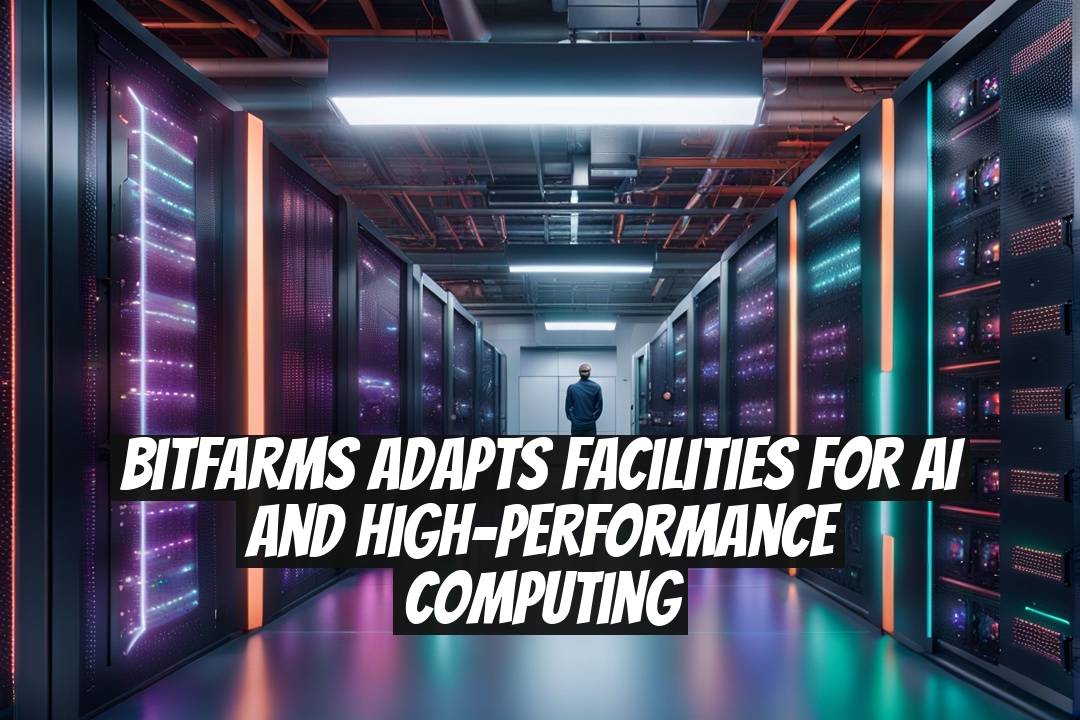
Bitfarms’ Strategic Pivot: Why This Bitcoin Mining Giant Is Going All-In on AI Infrastructure ?
What Does It Mean When Crypto Giants Abandon Mining for AI? ?
The crypto landscape is experiencing a seismic shift, and it’s happening right now in 2025. Bitfarms, one of North America’s most prominent digital infrastructure companies, just made a bold announcement that’s got everyone in the industry talking. The company is converting its 18 MW Bitcoin mining facility in Washington State into a high-performance computing (HPC) and artificial intelligence powerhouse. But here’s the thing-this isn’t just a random pivot. This is a calculated, strategic decision that reveals something profound about where the industry is heading, and frankly, it deserves our full attention.
Think about it: a company that built its reputation on Bitcoin mining is voluntarily stepping back from crypto to embrace the AI revolution. That alone tells you something significant is shifting beneath the surface of the digital infrastructure world. In this article, we’re going to explore what this means for the crypto market, why Bitfarms made this move, and what savvy investors should be watching for in the coming months.
Subscribe to our Social Media for Exclusive Crypto News and Insights 24/7!
Key Takeaways ?
- Bitfarms is converting its Washington site from Bitcoin mining to support Nvidia GB300 GPUs with advanced liquid cooling
- The company targets December 2026 completion with modular infrastructure for scalability
- This strategic shift signals growing competition between AI infrastructure and crypto mining for premium power and cooling resources
- Bitfarms maintains a 2.1 GW North American energy portfolio, positioning it as a major player in both sectors
- The move reflects broader industry trends where crypto companies are diversifying into AI to capture emerging revenue streams
- With nearly a billion dollars in cash and secured supply chains, Bitfarms is pursuing both colocation and cloud monetization strategies
The Strategic Announcement: What Bitfarms Just Revealed ?
On November 13, 2025, Bitfarms made waves in the tech and crypto communities with its announcement regarding the Washington facility transformation. This isn’t just about swapping out some hardware here and there. We’re talking about a complete reimagining of how a major energy and digital infrastructure company operates.
The Washington site, which currently operates as an 18 MW Bitcoin mining facility, will become the company’s first fully converted HPC/AI workload center. The facility is specifically being designed to support Nvidia GB300 GPUs-next-generation processors that represent the cutting edge of artificial intelligence acceleration technology. But what makes this particularly interesting is the level of sophistication Bitfarms is bringing to the table.
Ben Gagnon, Bitfarms’ Chief Executive Officer, laid out the vision clearly: the company plans to leverage state-of-the-art liquid cooling systems, validated reference designs for Nvidia GB300 compatibility, and a fully secured supply chain of IT infrastructure equipment. The modular infrastructure approach means the company can scale operations gradually, with an ambitious target of December 2026 for full completion.
Understanding the Technical Transformation ?
Advanced Liquid Cooling: The Game Changer ️

Let’s talk about what makes this transformation technically significant. AI workloads, particularly those running on cutting-edge GPUs like Nvidia’s GB300s, generate tremendous amounts of heat. Traditional air cooling simply doesn’t cut it anymore. That’s where advanced liquid cooling comes into play.
Bitfarms is designing the Washington facility with proven thermal and power management systems specifically engineered for HPC/AI workloads. This is critical infrastructure that separates the serious players from the amateurs. Liquid cooling allows for higher performance densities, more efficient power utilization, and ultimately, better economics for the operator. It’s not glamorous, but it’s absolutely essential for running world-class AI infrastructure.
Modular Infrastructure: Building for Tomorrow ?️

Here’s something that often gets overlooked but shouldn’t be: the modular infrastructure approach. Traditional data centers were built monolithically-you designed everything, built it all at once, and then you were stuck with that configuration. Bitfarms is taking a different approach.
The modular infrastructure enables phased deployment and scalability. What does this mean in practical terms? It means Bitfarms can bring portions of the facility online as customers demand capacity, rather than betting the entire company on a single big bang launch. This reduces risk significantly. It also means the facility can be adjusted and upgraded as GPU technology evolves-and trust me, in the AI space, technology is evolving rapidly.
Nvidia GB300: The Next Generation ?
The focus on Nvidia GB300 GPUs is telling. These aren’t today’s GPUs; these are tomorrow’s. Nvidia’s next generation of Vera Rubin GPUs represent a significant leap forward in AI acceleration capabilities. By positioning the Washington facility to support these processors from day one, Bitfarms is making a bet that AI infrastructure demand will continue accelerating.
Why This Move Matters for the Crypto Market ?
Now, let’s address the elephant in the room: what does a major mining company transitioning away from Bitcoin mining mean for cryptocurrency?
The Economics Have Shifted ?
The reality is stark and undeniable. Bitcoin mining profitability has become increasingly challenging. Competition is fierce, power costs are rising in many jurisdictions, and newer ASICs (application-specific integrated circuits) are constantly making older equipment obsolete. Meanwhile, AI infrastructure is experiencing explosive demand growth. The economics have simply tilted.
Bitfarms’ decision to convert the Washington site isn’t a rejection of Bitcoin or cryptocurrency. Rather, it’s a pragmatic assessment of where the better returns lie in the digital infrastructure space right now. The company isn’t closing down; it’s reallocating capital toward higher-margin, faster-growing opportunities.
This signals to the market that sophisticated infrastructure operators believe AI services will generate better returns than cryptocurrency mining going forward. That’s significant. When you’ve got a company with deep expertise in power management, cooling systems, and digital infrastructure making this call, it carries weight.
Competition for Prime Resources
Here’s something that deserves more attention: Bitfarms’ decision represents a reallocation of premium resources-specifically, power and cooling capacity-from cryptocurrency mining to AI infrastructure. The company’s 2.1 GW North American energy portfolio is substantial, and every megawatt that gets reallocated away from crypto and toward AI is one less megawatt available for mining.
This trend, if it accelerates across the industry, could actually be supportive for Bitcoin prices in a counterintuitive way. Less mining capacity means less new supply hitting the market. And in a market where demand is relatively fixed, supply reduction typically benefits price.
The Bigger Picture: What This Means for Industry Dynamics ?
Cryptocurrency Companies Adapting to Market Realities ?
Bitfarms’ move isn’t happening in isolation. Across the industry, crypto-native companies are recognizing that their core business-whether it’s mining or trading-faces structural headwinds. The response from sophisticated operators has been diversification and adaptation.
What makes Bitfarms’ approach particularly smart is that they’re not abandoning their core competencies. They’re applying them in a new direction. The skills required to operate a massive Bitcoin mining facility-managing massive power consumption, deploying advanced cooling systems, optimizing for efficiency-are directly transferable to AI infrastructure operations. Bitfarms is essentially using its existing infrastructure expertise as a competitive advantage in the AI space.
Supply Chain Advantages ?
One detail that jumped out at me: Bitfarms has already secured a full supply chain of IT infrastructure equipment. In today’s environment, where AI chips and supporting infrastructure are in high demand and often supply-constrained, this is enormous. The company has essentially locked in access to critical components that other potential competitors may struggle to obtain.
This suggests Bitfarms saw this transition coming and planned accordingly. They didn’t wake up one morning and decide to pivot; they’ve been quietly positioning themselves for this move. That kind of strategic foresight is characteristic of management teams that tend to perform well over time.
Monetization Strategies: Multiple Paths Forward ?
Bitfarms is pursuing both colocation and cloud monetization strategies with the Washington facility. Let’s unpack what this means.
Colocation means Bitfarms will rent rack space and power to customers who bring their own servers and equipment. This is a stable, recurring revenue model with relatively low execution risk.
Cloud services means Bitfarms will operate the GPU resources themselves and sell access to computational power on an as-needed basis. This has higher margins but also higher operational complexity and customer acquisition requirements.
By pursuing both strategies, Bitfarms is hedging its bets. It’s ensuring that even if one revenue stream doesn’t materialize as expected, the facility can still generate attractive returns through alternative channels.
Financial Positioning and Future Outlook ?
A War Chest for Expansion ?
Let’s talk about Bitfarms’ financial position because it matters enormously for their ability to execute this strategy. The company reports nearly a billion dollars in cash, plus unused credit facilities. That’s not loose change-that’s real financial firepower.
With this capital, Bitfarms can fund the Washington conversion without straining its balance sheet. But more importantly, it creates optionality. The company can explore GPU financing options, pursue additional acquisitions, or invest in other infrastructure projects. Financial flexibility in a capital-intensive business is everything.
The Role of Bitcoin Holdings ?
Here’s an interesting wrinkle that deserves attention: Bitfarms holds Bitcoin. While the company is pivoting away from mining at the Washington site, it maintains cryptocurrency holdings, which suggests management still believes in the long-term value of digital assets. This isn’t a wholesale abandonment of crypto; it’s a repositioning.
This matters because it shows consistency in management’s views. They’re not saying, "Bitcoin is dead, we’re getting out." They’re saying, "We can generate better returns by operating AI infrastructure, but we’ll maintain our exposure to Bitcoin upside through our holdings."
Practical Considerations for Investors ?
What Should You Watch For? ?
If you’re considering Bitfarms as an investment, here are the key metrics to monitor:
Execution Timeline: The December 2026 target is aggressive but achievable. Any delays could signal operational challenges.
Customer Wins: Keep an eye on whether Bitfarms successfully signs up colocation and cloud customers. Announced capacity means nothing if it remains unused.
Capital Efficiency: Monitor how capital spending progresses relative to revenue generation. Are they deploying capital efficiently, or is spending exceeding projections?
Industry Trends: Watch the broader AI infrastructure market. If growth slows or competition intensifies, returns may not materialize as projected.
Remaining Mining Operations: Track performance of Bitfarms’ remaining Bitcoin mining operations. If mining remains profitable, the company might reconsider future conversions.
Risk Factors to Consider ️
Let’s be honest about the risks here. First, timing risk. AI infrastructure is hot right now, but markets change. By the time the Washington facility is fully operational in late 2026, the competitive landscape could look very different.
Second, execution risk. Deploying cutting-edge infrastructure at scale is hard. Things go wrong. Costs overrun. Timelines slip. Bitfarms has experience, but that doesn’t eliminate execution risk entirely.
Third, customer acquisition risk. Having supply is one thing; filling it with paying customers at profitable rates is another. The company will need to execute effectively on sales and marketing to make this work.
Personal Insights and Broader Implications ?
Why This Matters Beyond Bitfarms ?
Bitfarms’ move is a bellwether for the broader digital infrastructure industry. When a company of this scale makes a major strategic pivot, it sends signals that ripple through the ecosystem. Other mining and infrastructure companies are watching. Investors are taking notes. Regulators are monitoring the shift in where capital is flowing.
Here’s what I find particularly compelling: this move suggests that sophisticated capital allocators believe AI infrastructure demand will outpace cryptocurrency value creation over the coming years. That doesn’t mean crypto is going away-far from it. But it does suggest that the infrastructure layer serving AI is where the best risk-adjusted returns lie in the near to medium term.
The Convergence of Crypto and AI ?
There’s a fascinating convergence happening here that deserves attention. Bitcoin and other cryptocurrencies require computational power and energy infrastructure. AI systems require computational power and energy infrastructure. These aren’t competing needs; they’re complementary needs that can be served by similar infrastructure.
Smart operators like Bitfarms are positioning themselves to serve both markets. The company isn’t choosing between crypto and AI; it’s choosing to build infrastructure that can serve both, depending on where returns are best. That’s intelligent capital allocation.
What’s Next? ?
Looking ahead, I expect we’ll see more announcements from crypto-infrastructure companies regarding AI pivots or diversification strategies. The Washington conversion is just the beginning. Bitfarms has indicated that its focus remains on developing infrastructure to support Nvidia’s next-generation Vera Rubin GPUs across most of its portfolio.
That suggests the company sees this Washington project as a proof of concept. If it succeeds, expect additional conversions and new builds focused on AI infrastructure. The company’s 2.1 GW portfolio provides a substantial foundation for additional AI infrastructure deployment.
Final Thoughts: What Questions Should You Ask Yourself? ?
As you consider what Bitfarms’ strategic shift means for your investment thesis, ask yourself these questions:
Do you believe AI infrastructure demand will outpace cryptocurrency growth over the next three to five years? Do you think companies like Bitfarms have the operational expertise to execute successfully in the AI infrastructure space? And perhaps most importantly: if major infrastructure companies are shifting resources from crypto to AI, what does that tell you about where smart money thinks returns will be best?
The answers to these questions will help determine whether Bitfarms’ pivot represents a canary in the coal mine or a savvy allocation of capital toward the future.
Relevant Resources:
Source Links: