Can Brazil’s New Crypto Rules Change the Game Forever?
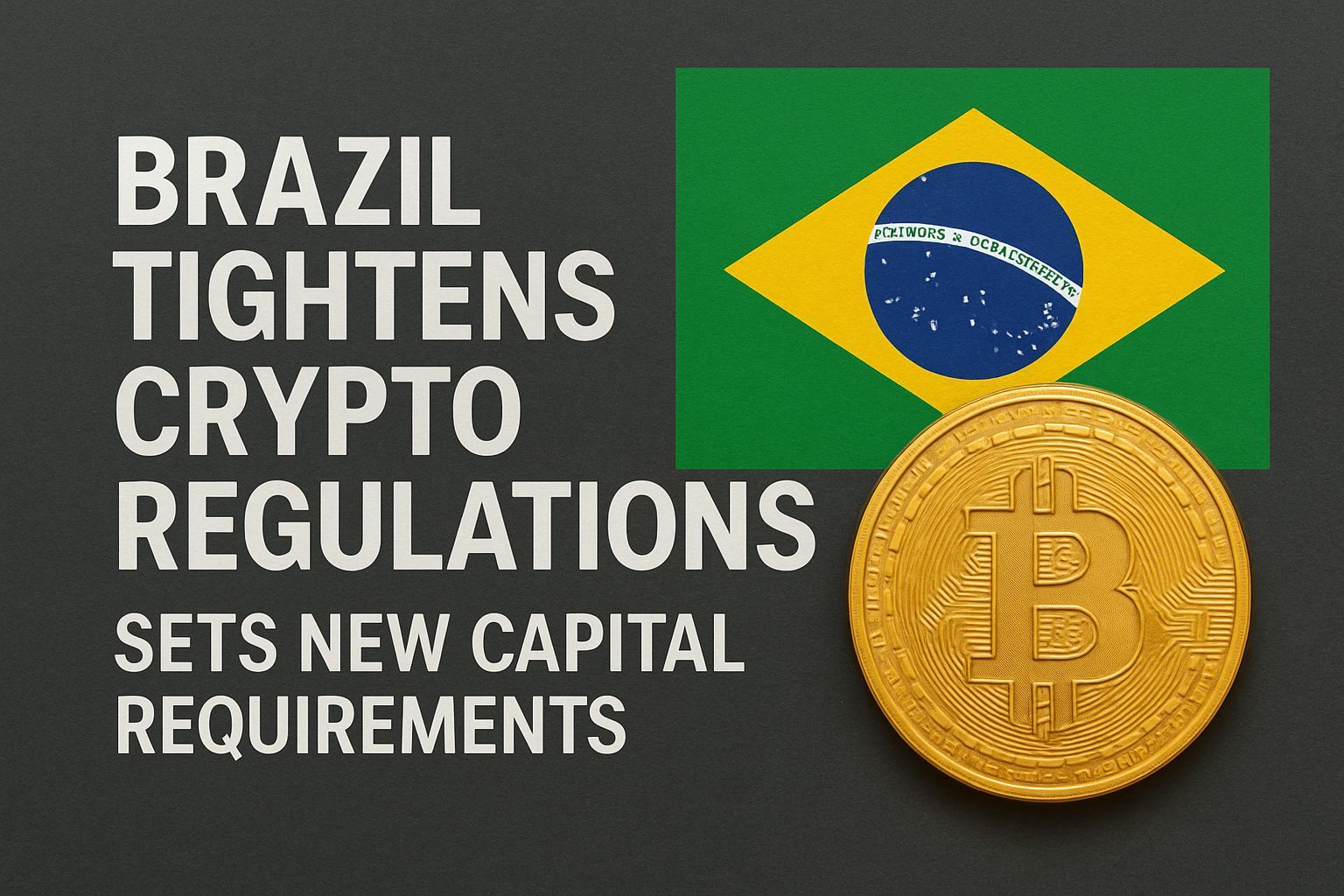
If you’ve been watching the crypto world - or thinking of jumping in - you’ve probably heard that Brazil tightens crypto regulations and sets new capital requirements. This isn’t just another government announcement; it reshapes the landscape of crypto trading and investing in Latin America’s biggest economy. For investors, traders, and crypto enthusiasts alike, understanding these changes is vital. So, what does this mean for the broader crypto market? And how should you navigate this evolving environment? Let’s unpack this, shall we?
Key Takeaways - What You Need to Know Right Now!
- Brazil classifies crypto-to-fiat transactions as foreign exchange operations starting February 2026, bringing them under traditional forex regulation.
- New capital requirements and licensing rules for Digital Asset Service Providers (DASPs) will be enforced by the Central Bank of Brazil (BCB), focusing on anti-money laundering (AML), counter-terrorism financing (CFT), governance, and customer protection.
- Tax reforms unify crypto gains with other financial investments, eliminating previous exemptions and imposing a flat tax rate.
- Regulatory tightening follows major fraud cases, aiming to instil greater trust and security in Brazil’s crypto market.
- Market players, including domestic giants like Mercado Bitcoin and international stars such as Binance, will face stricter oversight and higher compliance costs.
Subscribe to our Social Media for Exclusive Crypto News and Insights 24/7!
? What Do Brazil’s New Crypto Regulations ? Really Mean for the Market?
Brazil just turbocharged its crypto rules by reclassifying crypto-to-fiat transactions as foreign-exchange operations from February 2026. This means every deal where cryptocurrencies meet Brazilian reais (BRL) will now fall under strict forex regulatory frameworks managed by the Central Bank of Brazil (BCB)[2]. To put it plainly: crypto trading won’t be a free-for-all anymore. Instead, service providers must adopt stringent governance, anti-money laundering (AML), and counter-terrorism financing (CFT) measures - similar to what banks endure.
Why does this matter? It’s an effort to stamp out illicit activities and protect investors, but it also means increased operational complexity and cost for crypto exchanges and custodians. So, while the hardened controls can boost market legitimacy, they may curtail smaller players who struggle to meet new capital thresholds and licensing.
More specifically:
- Digital Asset Service Providers (DASPs) will face formal licensing regimes by early 2026.
- Compliance with transparency, cybersecurity, and customer protection will no longer be optional perks - they’re mandatory.
- International transfers involving crypto could be capped at $10,000 per transaction to stop multinational laundering schemes[2].
Such moves follow infamous fraud events (e.g., the $540 million Lusocoin scandal), shining a light on why regulators are getting serious about crypto in Brazil.
? Capital Requirements & Licensing: Raising the Stakes For Crypto Service Providers ?
Under Brazil’s Law 14.478/2022 established the legal framework for digital assets, but the Central Bank has now fleshed out the specifics. Expect harsher capital requirements for crypto exchanges and wallets, meaning these firms will need stronger financial backstops before operating. This cements their credibility, reduces default risk, and protects customers’ funds.
For you as an investor, this is a double-edged sword:
- On one hand, it’s reassuring - fewer shady players and a safer environment.
- On the other hand, smaller startups might exit, reducing innovation or pushing more trading volume towards big players.
Notably:
- No license is needed simply to own or hold crypto, but anyone offering crypto services must be authorized by the BCB[1].
- The crackdown includes vigorous Know Your Customer (KYC) and AML checks, tightening the grip on possible money laundering or terrorist financing.
- Investors must report crypto sales exceeding BRL 30,000 monthly; failure to comply could result in fines or penalties.
? Taxation & Reporting Overhaul - What Investors Should Brace For ?
If you thought crypto gains in Brazil had some breathing room, think again. The government proposes scrapping the monthly BRL 35,000 gain exemption and levying a flat 17.5% tax on cryptocurrency profits - the same rate for other financial investments starting in 2025[1]. Plus:
- Crypto holdings above BRL 5,000 need reporting in the annual tax declaration.
- Trading between cryptocurrencies without converting to fiat is also taxable.
- Non-compliance can bring steep penalties, including fines of BRL 1,500 or 3% of undeclared amounts.
This move signals Brazil’s intent to harmonize crypto taxation with traditional finance rules, likely nudging traders to keep cleaner books and consider tax strategies seriously.
? How Does This Affect You as an Investor or Trader?
So far, we’ve seen Brazil setting a tougher stage - but what are the practical implications for you?
Trust and Security: The new regulations will foster a safer environment by reducing fraud and increasing transparency. This is great news for long-term investors looking for reliability.
Increased Compliance Costs: Exchanges and service providers will bear higher compliance expenses, which might translate into increased fees for users.
Market Consolidation: Smaller exchanges may struggle or close, leaving market share to bigger players like Binance, Mercado Bitcoin, or NovaDAX - possibly reducing competition and innovation but stabilizing market structure.
Tax Complexity: Brazilian crypto traders must plan carefully for tax reporting. Professional advice or crypto tax software may become necessities rather than luxuries.
Limits on Cross-Border Transfers: Caps on international crypto transactions could restrict high-volume arbitrage or international businesses relying on crypto payments.
? Practical Tips for Navigating Brazil’s New Crypto Landscape ?️
Stay Informed: Keep abreast of regulatory updates as the Central Bank publishes further details ahead of the February 2026 enforcement date.
Choose Licensed Providers: Stick to exchanges and wallets authorized by the BCB to ensure legal protection and fund security.
Keep Detailed Records: Document every transaction meticulously; this will simplify tax filings and help avoid penalties.
Prepare for Compliance Complexity: If you run or invest in crypto businesses, boost anti-money laundering and cybersecurity measures to meet licensing standards.
Consult Experts: Tax and legal professionals specializing in Brazilian crypto law can provide essential guidance through the evolving rules.
? Personal Insights - Why Brazil’s Crypto Clampdown Is Both a Challenge and an Opportunity
From a crypto analyst’s perspective, Brazil’s enhanced regulations mark a pivotal moment. It’s clear the government is moving from crypto laissez-faire toward structured integration within its financial ecosystem. This transition, while initially jarring, may ultimately boost investor confidence by mitigating risks and preventing fraud.
For investors, it means less chance of surprise scams or market manipulation - a good thing for those keen to hold positions long-term. However, the increased barrier to entry for smaller providers might slow down certain innovations and raise transactional costs.
In many ways, Brazil’s path is a microcosm of global trends: embracing blockchain technology’s promise with prudence and caution. It reminds us that regulation is not necessarily kryptonite for crypto but rather a phase that shapes maturity.
? So, as Brazil tightens the reins on crypto with new capital requirements and stringent rules, the real question is: Is this the dawn of a safer, more credible crypto market - or will heavy regulation stifle the very innovation that made crypto revolutionary?
Explore More:
Brazil tightens crypto regulations
Capital requirements for crypto
Brazil crypto market regulation
Sources:
[1] https://www.globallegalinsights.com/practice-areas/blockchain-cryptocurrency-laws-and-regulations/brazil/
[2] https://www.financemagnates.com/cryptocurrency/brazil-to-classify-crypto-fiat-transactions-as-forex-under-new-central-bank-rules/