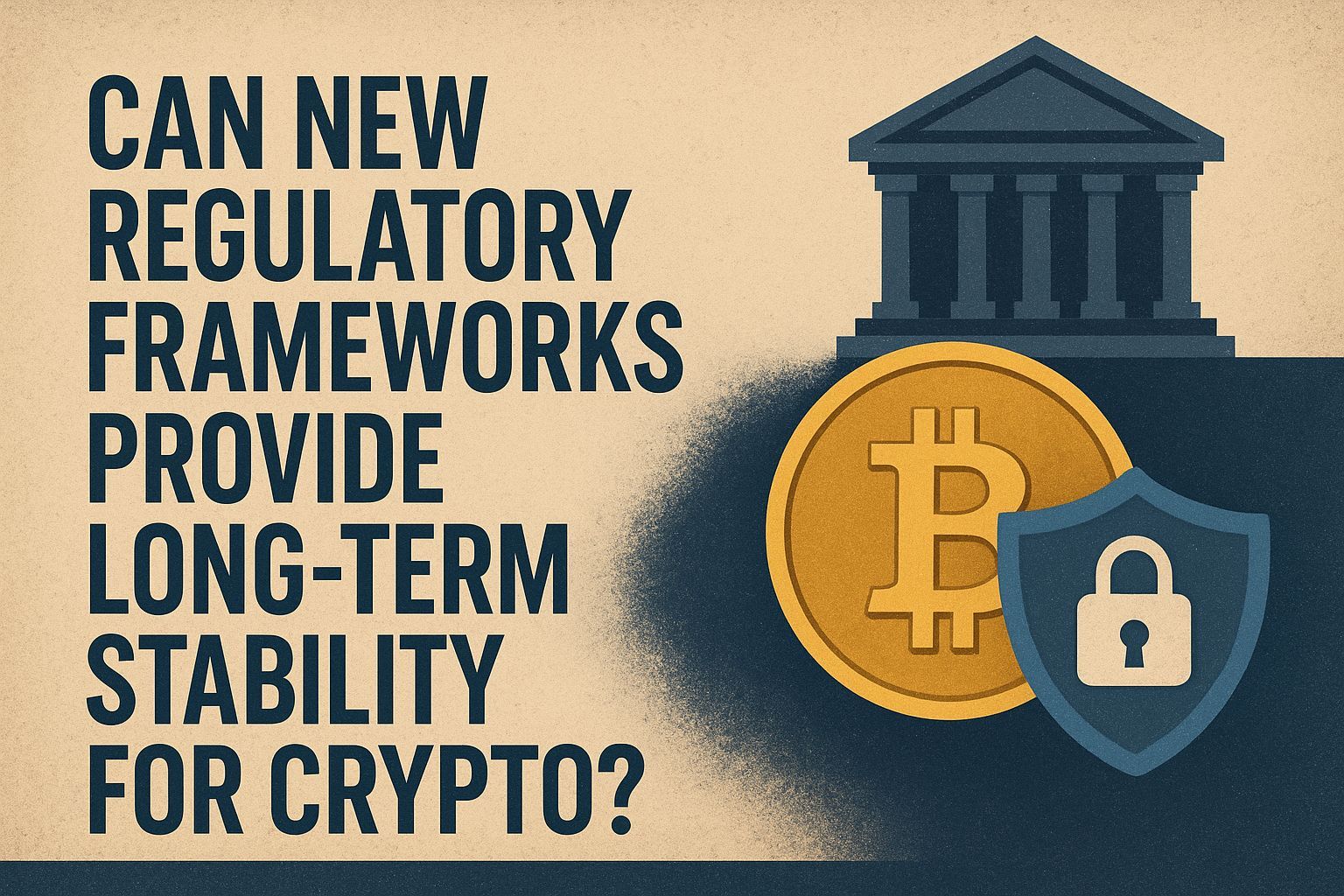
Regs: Crypto’s New Guardrails or Just More Red Tape?
Hey, let’s cut to the chase-new regulatory frameworks like the EU’s MiCA and the US GENIUS Act are stepping up big time in 2026, aiming to tame crypto’s wild rides and inject some long-term stability. But are they the silver bullet? Spoiler: They’re promising maturity, yet inconsistency and enforcement gaps mean it’s no sure thing. You’ve watched BTC yo-yo through crashes-imagine if clearer rules could’ve softened those blows.[1][2][4]
Key Takeaways from 2026’s Reg Shift
- Enforcement ramps up globally: From MiCA’s full throttle in the EU to US stablecoin blueprints-regulators ain’t playing anymore.[2][4]
- Innovation gets a sandbox: Exemptions and tech experiments (think AI-powered AML) balance rules with growth.[3]
- Costs climb, but winners emerge: Compliant firms in stablecoins and tokenized assets? They’re primed to feast.[1][7]
- Illicit flows adapt: $158B hit shady wallets in 2025, mostly stablecoins-regs are forcing crooks underground, not out.[6]
Subscribe to our Social Media for Exclusive Crypto News and Insights 24/7!
Why MiCA Feels Like Crypto’s EU Coming-of-Age Party

Picture this: EU’s MiCA flips the script from “wild west” to “watched west” by 2026. National watchdogs shift from hand-holding to hair-pulling enforcement-licensing CASPs, mandating white papers, and slamming market abuse with real teeth. ESMA and EBA guidance? Operational now. Firms better have controls that work, not just look good on paper. It’s like telling your DeFi protocol, “Show me the receipts-or else.”[2]
Missed it last year? 2025’s FATF update praised AML progress but called out laggards on VASP licensing. Weak spots in one country? They drag the whole chain down, per PwC. Enforcement’s spotty too-hello, higher compliance costs. But here’s the upside: Convergence means global players with ironclad AML and transparent reserves can expand like bosses into tokenized assets and regulated DeFi.[1]
US Steps Up: GENIUS Act Saves Stablecoins from the Sidelines

Across the pond, the GENIUS Act drops the mic on stablecoin drama. No more “are they securities?” gray zone-these bad boys get their own federal lane under OCC, Fed, and crew. It legitimizes them for everyday payments, boosting confidence. Congress eyeing a “market infrastructure” bill next? That could clarify brokers, dealers, even DEXs dealing tokenized secs. SEC’s dangling sandboxes and “super app” licenses too-innovation exemptions to let you test without the full straitjacket.[4]
Elliptic’s outlook nails it: Regulators pivoted to pro-innovation in 2025-US SEC clarity on stablecoins and memes, Aussie exemptions for quick stablecoin rollout. 2026? More sandboxes, AI in blockchain analytics to slash compliance grunt work. But slack off on maturity? Expect the hammer.[3] Honestly, that stablecoin blueprint feels like the blueprint we’ve craved since Terra’s swan-dive.
Global Patchwork: Dubai’s Firm-Led Twist and Illicit Whispers

Not all regs are cookie-cutter. Dubai’s DFSA just flipped to firm-led suitability checks for crypto tokens-no more nanny state. Firms call the shots on what’s kosher. Middle East heating up.[5] Meanwhile, TRM Labs’ 2026 Crime Report drops a bombshell: Sanctioned crews funneled $158B (up from $64.5B) via stablecoins into risky channels. They’re embedding in crypto infra itself-beneficial ownership’s the new battleground. Regs force adaptation, not eradication. Whales ain’t sleeping; they’re just sneakier.[6]
Cross-border? Sidley warns: Uneven rules mean strategic navigation or bust. Banks tokenizing deposits to fight back? TradFi convergence in motion.[7]
The Stability Verdict: Guarded Optimism, Not Guarantees
These frameworks scream maturity-less volatility via integrity checks, more institutional buy-in via clarity. World Economic Forum echoes: Reg clarity = adoption rocket fuel for tokenization.[8] But gaps persist: Inconsistent enforcement, rising costs, illicit pivots. Firms with robust setups win; fly-by-nights? Toast.
You’ve seen dominance cycles flip on headlines-remember 2022’s cascade when regs spooked markets? Now, imagine holding through that with MiCA-grade stability nets. Will it stick long-term? Regs provide scaffolding, but crypto’s chaos needs enforcement muscle. Compliant plays like regulated stablecoins? Bet on ’em. The rest? Proceed with eyes wide open, fam.[1][2][3][4]
- https://sumsub.com/blog/global-crypto-regulations/
- https://vinciworks.com/blog/what-to-expect-in-2026-for-crypto-law-and-policy/
- https://www.elliptic.co/blog/elliptics-2026-regulatory-and-policy-outlook-global-pivot-to-innovation
- https://www.clearygottlieb.com/news-and-insights/publication-listing/2026-digital-assets-regulatory-update-a-landmark-2025-but-more-developments-on-the-horizon
- https://www.cliffordchance.com/insights/resources/blogs/talking-tech/en/articles/2026/02/global-crypto-roundup-january-2026.html
- https://www.trmlabs.com/reports-and-whitepapers/2026-crypto-crime-report
- https://www.sidley.com/en/insights/newsupdates/2026/01/sidley-blockchain-bulletin-blockchain-in-2026-business-legal-and-regulatory-outlook
- https://weforum.org/stories/2026/01/digital-economy-inflection-point-what-to-expect-for-digital-assets-in-2026/