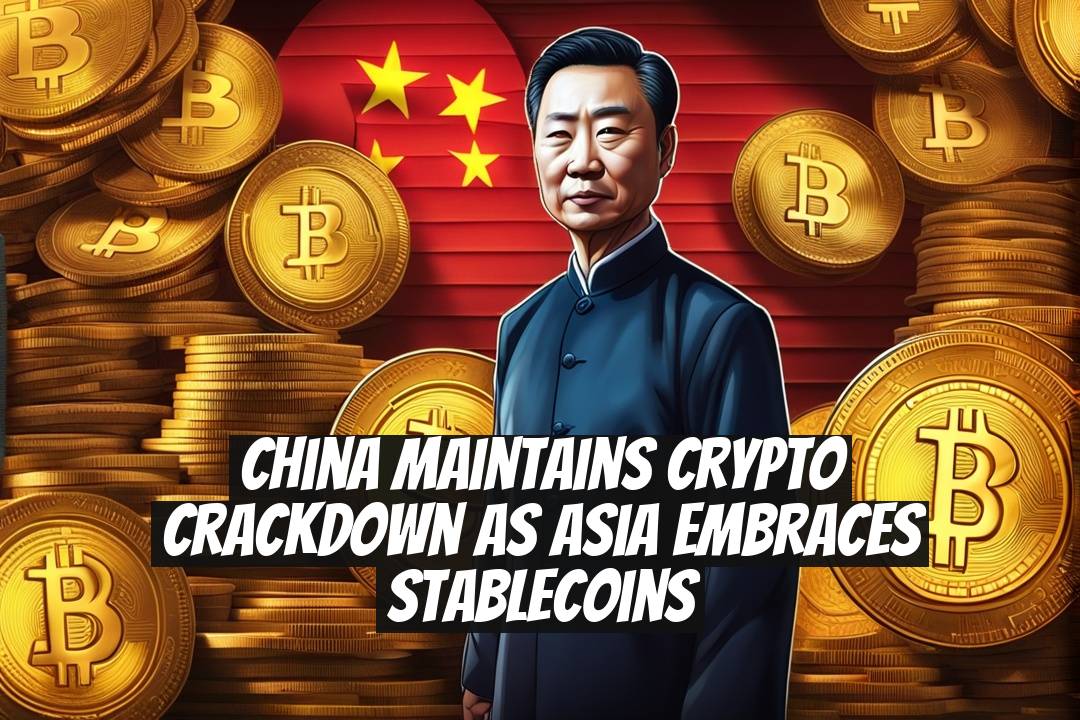
Why Is Asia Betting Big on Stablecoins While China’s Crypto Crackdown Goes On?
The world of digital finance is churning, and nowhere is that story more dramatic than in Asia, where stablecoins are surging into the mainstream just as China doubles down on its aggressive crypto crackdown. It’s a tale of two Asia-Pacific regions: one opening its arms to USDC, USDT, and a host of private stablecoins as a cornerstone of cross-border commerce, and the other-China-tightening the screws on anything crypto. The numbers don’t lie: Asia’s stablecoin adoption rate is the highest globally, with 56% of institutions already live and $2.4 trillion in stablecoin activity in the last year alone[1][2]. Meanwhile, China’s zero-tolerance stance is forcing its vibrant crypto ecosystem underground or offshore, reshaping the region’s financial landscape in real time[1].
Key Takeaways ?
- Asia is the new global hub for stablecoin adoption, with Singapore, Hong Kong, Seoul, and Tokyo leading the charge[1][2].
- China’s crypto crackdown continues unabated, contrasting sharply with the rest of Asia’s embrace of stablecoins[1].
- Stablecoins are no longer niche: Businesses from travel agencies to luxury retailers now accept them as payment, and regulators are racing to keep up[1].
- Regulatory divergence is creating both opportunities and risks-investors and institutions must navigate a patchwork of local rules and global flows[1][2].
- Practical tips for navigating this landscape include focusing on regulated jurisdictions, diversifying exposure, and staying agile in the face of rapid change.
Subscribe to our Social Media for Exclusive Crypto News and Insights 24/7!
The Great Asian Stablecoin Surge ?
If you’ve been following crypto over the last year, you’ve probably heard about the rise of stablecoins-tokens pegged to fiat currencies like the US dollar, designed to minimize volatility. But what’s truly striking is just how fast they’ve become part of Asia’s financial fabric. According to Circle’s Yam Ki Chan, on-chain stablecoin activity in Asia-Pacific hit a jaw-dropping $2.4 trillion between June 2024 and June 2025[1]. That’s not just crypto enthusiasts swapping coins; it’s real businesses, from travel giant Wetrip to luxury reseller Ginza Xiaoma, using stablecoins for everyday transactions[1].
Singapore and Hong Kong have emerged as the second- and third-largest stablecoin markets globally, after the US, with the Singapore-China corridor now the busiest for cross-border digital currency flows[1]. In fact, monthly corporate transactions in stablecoins have ballooned from under $100 million in early 2023 to over $3 billion by early 2025[1]. This isn’t just adoption-it’s acceleration.
Why is this happening? For starters, Asian businesses are increasingly global. Whether you’re a steel exporter in Seoul, an e-commerce startup in Jakarta, or a freelance developer in Manila, your customers and partners are scattered across borders. Stablecoins offer fast, cheap, and transparent settlements-exactly what businesses need to compete in a digital-first world[2]. As Eric Barbier, CEO of Triple-A, puts it: “Global trade corridors move billions daily-and now they’re doing it faster with stablecoins. Adoption is being driven by traditional B2B players like ship brokers and steel traders, not just crypto or tech firms”[2].
China’s Crypto Crackdown: A Counter-Narrative ??
While the rest of Asia is diving headfirst into stablecoins, China continues to enforce one of the world’s strictest anti-crypto regimes. The government has banned all crypto trading, mining, and most forms of stablecoin activity, driving a once-thriving crypto sector underground or offshore[1]. This has created a stark divide: Chinese traders and firms must either avoid crypto entirely or find creative, often risky, ways to access global markets.
China’s approach isn’t just about cracking down on speculation-it’s about control. The government is pushing its own digital yuan (e-CNY), a central bank digital currency (CBDC), as the only “official” form of digital money. But while the e-CNY is making headway domestically, it can’t match the global reach or liquidity of USDC or USDT. For Chinese businesses and individuals looking to transact internationally, this leaves a gap-one that many are filling through “gray” channels, VPNs, and offshore accounts.
What Does This Mean for the Crypto Market? ?
The contrast between China’s crackdown and Asia’s stablecoin boom has major implications for the global crypto ecosystem.
Liquidity and Innovation

Asia’s embrace of stablecoins is turbocharging liquidity. USDT alone routinely processed $700 billion a month, peaking at over $1 trillion in June 2025[5]. This liquidity is a magnet for institutional and retail investors alike, creating a virtuous cycle of adoption and innovation. More businesses accepting stablecoins means more use cases, more developers building on top of them, and more regulators scrambling to create frameworks that don’t stifle growth[1][2].
Regulatory Patchwork
The regulatory landscape is a mixed bag. Places like Singapore and Hong Kong are actively shaping policies to support stablecoin adoption, while others-China, obviously, but also some Southeast Asian nations-remain wary[1]. This patchwork creates both opportunities and risks. For investors, it’s a reminder to do your homework: jurisdictions matter. A stablecoin-friendly hub like Singapore offers clarity and protection; a restrictive regime like China’s could leave you out in the cold.
Market Fragmentation
The Asia-Pacific region is becoming a microcosm of the global crypto market’s fragmentation. On one side, you have open, innovation-friendly cities with deep liquidity and clear rules. On the other, you have markets like China, where crypto is forced into the shadows. This fragmentation isn’t necessarily bad-it can create arbitrage opportunities and drive competition-but it does add complexity for anyone trying to operate at scale.
The Ripple Effect
Japan’s crypto market, for example, has seen explosive growth-up 120% in the 12 months to June 2025-partly thanks to regulatory reforms that are making it easier to list stablecoins and other digital assets[4]. South Korea, India, and Indonesia are also seeing strong growth, though from already high baselines[4]. In contrast, Vietnam’s market is maturing, with crypto deeply embedded in remittances and everyday transactions[4].
Meanwhile, South Asia-especially India-has emerged as the fastest-growing region for crypto adoption globally, with an 80% year-on-year increase and $300 billion in transaction volume in the first half of 2025 alone[3]. This growth is being driven by a mix of tech-savvy populations, high remittance flows, and increasingly clear (if not always friendly) regulations.
Practical Tips for Navigating Asia’s Stablecoin Landscape ?️
So, what’s a savvy investor or business to do in this complex, fast-moving environment? Here are some practical steps:
- Focus on regulated jurisdictions: Singapore and Hong Kong are leading the way with clear, progressive rules. If you’re serious about stablecoins, these are the places to watch-and possibly set up shop[1].
- Diversify your exposure: Don’t put all your eggs in one basket. Spread your stablecoin holdings across a few of the major players (USDC, USDT, etc.) and consider geographic diversification, too.
- Stay agile: Regulations can change overnight. Keep an eye on policy announcements, especially in markets like China, where the rules are strict and enforcement is unpredictable[1].
- Educate yourself: Know the difference between privately issued stablecoins and government-backed CBDCs. Both are part of the future, but they serve different purposes and come with different risks.
- Build relationships: Asia is a relationship-driven market. Partner with local fintechs, payment providers, and regulators to stay ahead of the curve.
Personal Insights: A Crypto Analyst’s Take ?
From where I sit, the story of Asia and stablecoins is just beginning. The region’s hunger for fast, cheap, cross-border payments isn’t going away-if anything, it’s growing. Stablecoins are filling a gap that traditional banks and even government CBDCs can’t quite match, especially for international trade and remittances[2].
China’s crackdown, while significant, is unlikely to reverse this trend. If anything, it’s pushing innovation and liquidity into other parts of Asia, making cities like Singapore and Hong Kong even more important as crypto hubs[1].
But there are risks. Regulatory divergence means that stablecoin projects must be extra careful about compliance. And while stablecoins are stable in name, they’re not risk-free-recent collapses have shown that backing matters. Investors should always do their due diligence before jumping in.
Emotionally, it’s hard not to feel a little excitement (and maybe a touch of anxiety) watching this unfold. Stablecoins are becoming the railroads of the digital economy-critical infrastructure that will shape how money moves for decades to come. For those willing to navigate the complexity, the opportunities are real.
Final Thought: A Question to Ponder ?
As Asia’s stablecoin revolution charges ahead and China’s crypto crackdown shows no sign of slowing, here’s something to chew on: In a world where money is increasingly digital and borderless, can any country afford to shut itself off completely from the global crypto economy-or will the tide of innovation eventually prove too strong to resist?
For investors, businesses, and even regulators, this isn’t just an academic question. The choices being made today in Beijing, Singapore, Hong Kong, and beyond will shape the financial landscape for generations. So, where do you see yourself in this new world-on the sidelines, or in the thick of it?
stablecoin adoption in Asia
China crypto crackdown
cross-border crypto payments
1 https://cryptorank.io/news/feed/b5457-stablecoin-transactions-hit-2-4-trillion-as-asia-drives-adoption
2 https://www.fireblocks.com/blog/stablecoins-go-mainstream-in-asias-payment-ecosystem/
3 https://altsignals.io/post/crypto-adoption-growth-2025-report
4 https://www.chainalysis.com/blog/asia-pacific-crypto-adoption-2025/
5 https://www.chainalysis.com/blog/2025-global-crypto-adoption-index/
6 https://fulcrum.sg/how-stablecoins-could-destabilise-southeast-asian-economies/