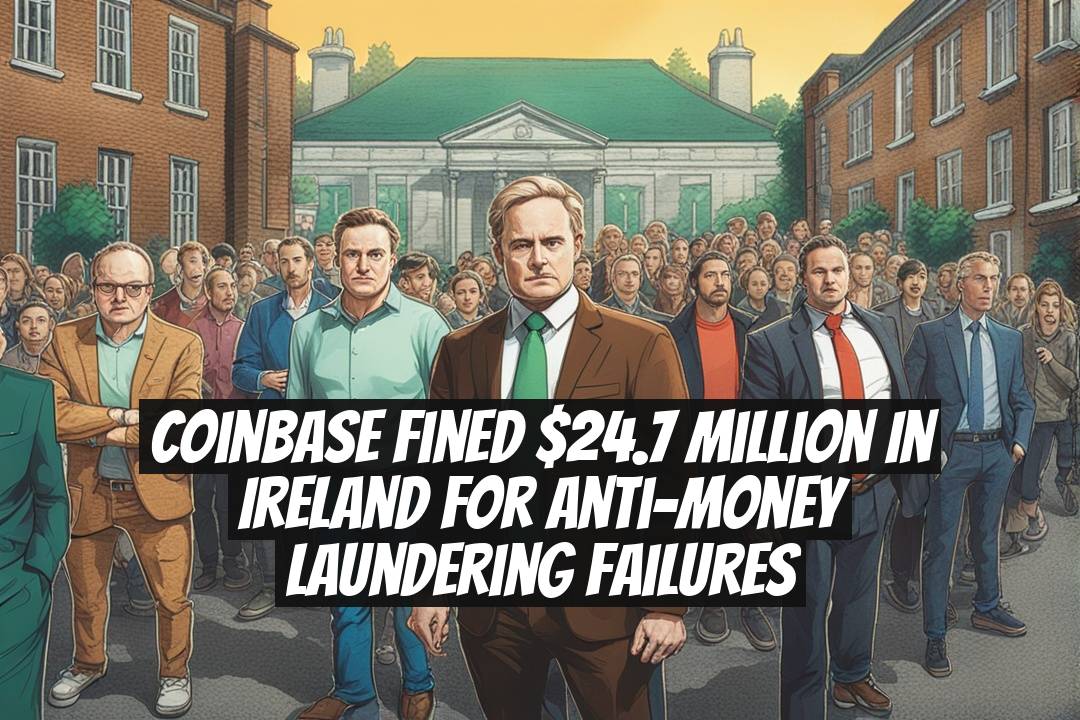
What does a $24.7 Million Fine Mean for Coinbase and the Crypto Market? ?
The news just hit that Coinbase has been fined $24.7 million in Ireland for anti-money laundering failures-an eye-watering penalty that’s shaking up the crypto world. This hefty fine stems from Coinbase’s failure to properly monitor over 30 million transactions worth more than €176 billion (approximately $203 billion) due to coding errors in its compliance systems between 2021 and 2022. Since Coinbase’s European operations are based in Ireland, this penalty from the Central Bank of Ireland isn’t just a slap on the wrist-it’s a loud reminder that regulatory scrutiny is tightening around crypto exchanges[1][2][3][4][5][6].
Key Takeaways ?
- Coinbase Europe paid €21.5 million (~$24.7 million) fine for failing to monitor suspicious transactions properly.
- The problem was rooted in coding errors affecting transaction screening systems, leading to over 30 million transactions unsupervised.
- This oversight covered roughly 31% of Coinbase Europe’s transactions in that period, severely impacting AML (anti-money laundering) compliance.
- It took Coinbase almost three years to fully review and report suspicious activities related to money laundering, fraud, and other serious crimes.
- The fine underscores the EU’s strict new MiCA (Markets in Crypto-Assets) regulations, which demand tougher crypto compliance.
- Crypto exchanges must step up monitoring and compliance controls or face huge penalties.
- Coinbase cooperated, resulting in a 30% discount on the fine and committed to upgrading compliance systems[1][2][4][5][6].
Subscribe to our Social Media for Exclusive Crypto News and Insights 24/7!
? Coinbase’s Compliance Breakdown: What Really Happened?
Let’s break down what went wrong at Coinbase’s European branch. Their transaction monitoring system was supposed to screen all customer transactions for suspicious behavior like money laundering or terrorist financing. But because of three coding bugs, five out of 21 monitoring scenarios failed to detect or flag transactions. The specific technical glitch? Transaction addresses that included special characters weren’t picked up correctly by the system[4].
What’s staggering is that this failure lasted about 12 months, during which Coinbase missed the proper monitoring of:
- Over 30 million transactions
- Worth more than $203 billion (€176 billion)
- Accounting for roughly 31% of total Coinbase Europe transactions in the period
These lapses delayed filing Suspicious Transaction Reports (STRs), with Coinbase ultimately submitting 2,708 STRs related to crimes including drug trafficking, ransomware attacks, fraud, and child sexual exploitation[3][4][6]. The scale of transactions affected and the nature of crimes flagged make this not just a compliance hiccup but a massive risk factor for the entire crypto ecosystem.
? What Does This Mean for Coinbase as a Crypto Exchange?
As a leading cryptocurrency exchange, Coinbase’s reputation for compliance matters hugely to investors, institutional partners, and users. This fine shows that even major players can slip in adherence to AML regulations.
Here’s what this situation implies for Coinbase:
- Urgency to overhaul AML frameworks: Coinbase already upgraded systems EU-wide, but the fine signals that comprehensive internal controls and robust technical fixes are critical.
- Heightened regulator attention: The Central Bank of Ireland’s enforcement shows it won’t tolerate gaps in anti-money laundering efforts.
- Investor confidence hit: Fines on this scale raise red flags for potential and current investors about risk management.
- Leadership under pressure: Coinbase’s management must now prove they have the systems and governance to prevent recurrence.
- Financial impact: While the fine is about 0.5% of Coinbase’s 2024 revenue, it’s a major expense and reputational cost nonetheless[1][4][5].
? Ripple Effects on the Broader Crypto Market and Regulation

What’s happening with Coinbase isn’t an isolated case-this fine marks a landmark moment for regulatory enforcement in crypto across Europe and likely beyond.
Here’s why the ripple effect matters:
- MiCA enforcement kicks into action: The Markets in Crypto-Assets (MiCA) regulation, implemented in 2024, sets uniform standards across the EU for crypto firms. Coinbase’s fine is the first major enforcement under this law, sending a message that compliance is mandatory, not optional[1].
- Increased scrutiny on all crypto exchanges: Regulatory bodies are doubling down on transaction monitoring and anti-money laundering safeguards globally. Other exchanges are on notice.
- Compliance sophistication expected: Firms will need advanced, error-free software systems to handle the complexities of AML monitoring in crypto’s decentralized world.
- Transparency and reporting heightened: More suspicious activity reports (SARs) will be demanded, with regulatory penalties for failures.
- Potential shakeout in the industry: Smaller crypto players with weaker compliance infrastructure could face similar or worse outcomes, possibly pushing consolidation or exit by risky operators.
- Investor awareness raised: Crypto investors should now weigh regulatory compliance as a core factor in their decisions[2][5][6].
️ Practical Tips for Investors and Crypto Operators on Coinbase’s Fine

If you’re an investor or crypto enthusiast, here’s how to look at the situation constructively:
- Investigate Coinbase’s compliance improvements: Check if Coinbase publicly details upgrades to their AML processes or audits post-fine.
- Evaluate exchange AML records: Don’t just look at fees or usability-review a platform’s records on regulatory compliance and enforcement actions.
- Diversify with caution: Spread your crypto holdings but prefer exchanges with clear, proven AML certifications.
- Stay updated on regulation: In jurisdictions where you trade, keep informed about evolving crypto laws like MiCA.
- Use wallets and exchanges with transparency: Favor services that publish transparency reports or third-party audits.
- Demand accountability: If you’re part of crypto communities or forums, push companies for compliance improvements.
- Understand risks: Compliance failures can mean transaction freezes, legal investigations, or loss of access, which can affect your investments[1][4][6].
️ Crypto Analyst’s Personal Take: Navigating the New Compliance Landscape
Sitting in my analyst chair, the Coinbase fine feels like a wake-up call-not just for Coinbase but for the whole crypto market. It’s a stark reminder that crypto isn’t the Wild West anymore, at least not where regulators have teeth. Compliance isn’t just a box to tick; it’s the backbone protecting the integrity and future of digital finance.
Coinbase’s transparency in reporting the issue and cooperation with regulators shows the company’s willingness to learn and adapt. But it also points to the enormous complexity of AML systems in crypto. Bugs happen-no system is perfect-but when dealing with billions in transactions, even a small error becomes massive.
Investors should view this as a historic moment where security, trust, and tech rigor converge. Exchanges that can convincingly demonstrate solid AML programs will likely dominate. It could also spark innovations in monitoring tech powered by AI and blockchain itself to assure regulatory investors and users.
That’s the new crypto reality: technology, compliance, and finance fused tighter than ever. And the cost of failure? Tens of millions in fines and a potential dent in credibility.
? Looking Ahead: Can Crypto Exchanges Balance Growth and Regulation?
The Coinbase fine poses a big question to all of us in crypto: Can exchanges effectively grow their ecosystems while managing detailed and rapid-fire regulatory demands? Coin compliance is no simple task-especially in a fast-evolving global landscape. But striking the right balance could make or break crypto’s future as a trusted financial channel.
For Coinbase and its peers, the message is clear: strict compliance, technical excellence, and transparency have become non-negotiable pillars. Will other crypto exchanges step up, or will more fines reshape the industry?
What do you think this means for the future of crypto regulation-and your investments?
Coinbase Fined
Anti-Money Laundering Failures
Crypto Compliance
Sources:
[1] https://coinpaprika.com/news/coinbase-ireland-aml-fine-2025-eu-penalty/[2] https://cryptorank.io/news/feed/5d299-coinbase-fine-ireland-compliance
[3] https://www.irishexaminer.com/business/companies/arid-41737719.html
[4] https://parameter.io/coinbase-coin-stock-fined-24m-in-ireland-for-transaction-monitoring-issues/
[5] https://www.centralbank.ie/news/article/press-release-enforcement-action-against-coinbase-europe-limited-6-November-2025
[6] https://www.lawsociety.ie/gazette/top-stories/2025/november/crypto-services-firm-fined-21.5-million