The Mainstream Moment: Bank-Backed Stablecoin Adoption Just Hit an Inflection Point
When Your Bank Offers Crypto Without the Crypto Talk
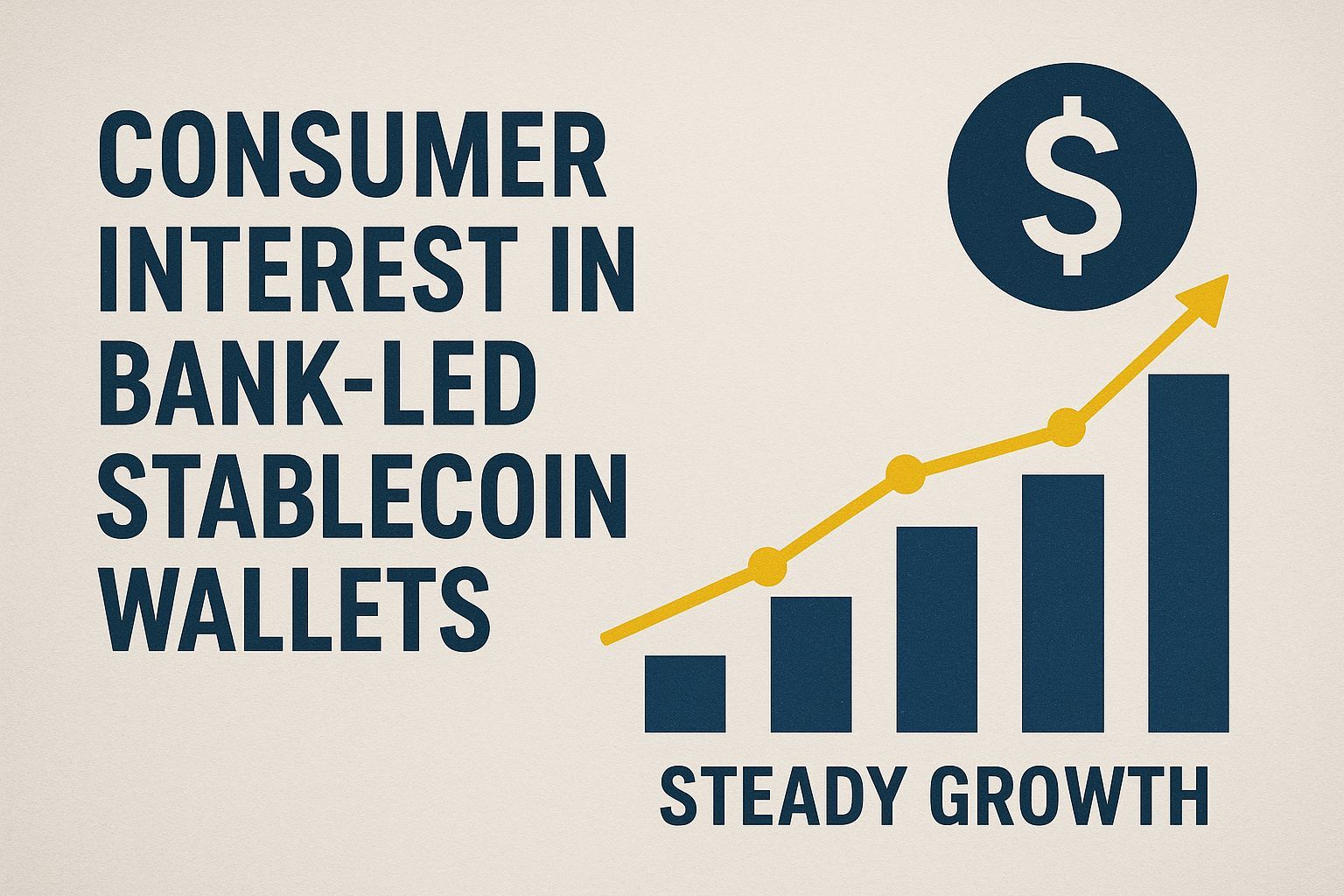
Here’s what’s actually happening right now: 77% of crypto users say they’d open a stablecoin wallet with their primary bank or fintech provider if offered[2]. That’s not fringe adoption. That’s a signal that stablecoins have quietly moved from “experimental crypto thing” to “expected financial product.” And the data backing this shift? It’s substantial.
The stablecoin market didn’t just grow in 2025-it fundamentally transformed. We’re talking about a $308+ billion market cap by December 2025, up nearly $100 billion from the year’s start[5]. Monthly transaction volumes repeatedly exceeded $1 trillion[3]. For context, that’s outpacing Visa’s annual volume-and stablecoins are doing it in a single month, multiple times over[5].
Subscribe to our Social Media for Exclusive Crypto News and Insights 24/7!
Key Takeaways: Why This Matters Right Now
- Banks are finally integrating stablecoins as settlement infrastructure, not experimenting with them. Visa expanded USDC settlement capabilities in the U.S., signaling this is now core infrastructure[4].
- Consumer appetite outpaces actual spending opportunities. 42% of people want to spend stablecoins on major purchases; only 28% currently can[2]. That gap is shrinking fast.
- Over 30 million active wallets are using stablecoins regularly, up 53% year-over-year[5]. That’s not early adopter numbers anymore.
- Lower fees, security, and global access drive adoption-not ideology. People care about what stablecoins do, not what they represent[2].
The Real Story: Stablecoin Cards Just Went Mainstream Without You Noticing
Crypto-funded cards are processing roughly $18 billion annualized as of late 2025, with monthly spend climbing from $100 million in early 2023[1]. That’s a 180x increase in three years. And here’s the wild part-most cardholders don’t even know they’re using stablecoins. USDC and DAI are zipping around in the background while you swipe your card like it’s any other payment method[1].
The year-over-year growth exceeded 100%, massively outpacing P2P crypto payments, which basically flatlined[1]. This tells you something crucial: people don’t want to learn about blockchain. They just want their payments to work faster, cheaper, and without their bank taking a cut.
Stripe’s moving from experimentation to integration[1]. Once you expose stablecoin functionality to developers, thousands of fintech products could adopt it with minimal friction. That’s the distribution network nobody was talking about six months ago.
Why Banks Finally Got Serious About Stablecoins

Let’s be honest-institutional adoption was always the missing piece. Institutions need near real-time settlement and cross-border value transfer that doesn’t depend on banking hours. Stablecoins deliver that[4]. No correspondent banking fees. No three-day settlement windows. Just instant, programmable money.
Tokenized real-world assets hit $23 billion in the first half of 2025, growing at one of the fastest rates in digital assets[4]. That’s institutional capital, full stop. And it’s not speculative-it’s driven by institutions wanting better settlement speed, improved liquidity, and programmable asset management[4].
Standard Chartered’s projecting the stablecoin market could hit $2 trillion by 2028[5]. When traditional finance throws those kinds of estimates at you, it’s because the infrastructure’s already in place.
The Consumer Signal That Changed Everything

That BVNK and YouGov survey? They talked to over 4,600 early adopters and crypto-natives across 15 countries[2]. The findings are blunt:
52% of stablecoin holders have already purchased something because a merchant accepted them. That number rises to 60% in emerging markets. These aren’t hypothetical users-they’re already spending.
The average holder keeps $200 in stablecoins in their wallet, using them as everyday currency, not as a savings instrument or speculative bet[2]. That behavioral shift is everything. You’re not hodling. You’re transacting.
And here’s what’s wild: the demand for actual spending opportunities exceeds current merchant acceptance. 42% want to spend stablecoins on major or lifestyle purchases, but only 28% actually can today[2]. That gap gets tighter every quarter.
Anthony Yim from Artemis put it plainly: “We’re experiencing a significant behavioral shift in the way that people are using stablecoins”[2]. Stablecoin supply increased 500% over five years, with multiple countries passing legislation to support it[2]. That’s not trend noise. That’s momentum with regulatory tailwind.
The Infrastructure Play Nobody’s Talking About

Marketplaces, gig-economy platforms, gaming ecosystems, and creator networks are turning to stablecoins as a payout option, particularly where domestic payment systems are clunky or introduce volatility[6]. Stripe’s pushing this hard-once stablecoin settlement is a default option rather than a pilot feature, adoption curves will steepen fast.
Thunes calls 2026 “the year stablecoins go to work”[6]. And they’re right. Tokenized USD can reach emerging markets instantly, with FX conversion handled locally or through integrated payout partners. That’s not fintech innovation-that’s financial infrastructure optimization that actually works.
The regulatory picture is crystallizing too. Clear, supportive stablecoin frameworks in major jurisdictions would push market cap toward $1 trillion and pull big tech and commerce platforms into native stablecoin integration[1]. We’re not there yet, but the path is visible.
The Elephant in the Room: Illicit Activity and Scale
Here’s where it gets uncomfortable. In 2025, illicit entities received approximately $141 billion via stablecoin wallets[3]. The concentration is heavy-mostly sanctions evasion and large-scale money laundering[3]. That’s a regulatory headache nobody wants, but it’s also proof that stablecoins have become actual financial infrastructure. Criminals don’t use emerging tech. They use what works at scale.
The data shows adoption is increasingly uneven. Sanctions-linked networks and laundering facilitators rely heavily on stablecoins. Other crime types use them selectively[3]. That’s not random-it’s operational optimization. When your payment rails need to move billions quietly, stablecoins are a natural fit.
This matters because regulators are watching. Stablecoins will remain central to both legitimate crypto activity and consequential crypto-enabled crime, making them a critical focus for law enforcement and financial institutions going forward[3].
What’s Actually Coming in 2026
The conservative scenario? Adoption rises gradually, stablecoin settlement stays a pilot feature, and funding shifts toward compliance rather than aggressive expansion[1]. That’s the cautious read.
But the accelerated adoption scenario looks more likely right now: favorable policy, major jurisdictions delivering supportive frameworks, and attractive cash yields pulling users and businesses into stablecoins. Big tech and commerce integrate stablecoin funding as default. Visa and Mastercard move from pilots to core-network integration[1].
For now, 2026 looks set to be the year stablecoin cards move from proof-of-concept to everyday reality for millions[1]. Most won’t even know what USDC or DAI is. They’ll just tap their card and wonder why it’s so fast.
Sources
- https://insights4vc.substack.com/p/the-state-of-stablecoin-cards
- https://www.prnewswire.com/news-releases/from-paychecks-to-purchases-stablecoins-are-becoming-everyday-money-finds-global-survey-302688684.html
- https://www.trmlabs.com/resources/blog/stablecoins-at-scale-broad-adoption-and-highly-concentrated-illicit-networks
- https://vaultody.com/blog/550-institutional-interest-in-crypto-adoption-is-accelerating-in-2024-2026
- https://alphapoint.com/blog/stablecoin-treasury-management-for-institutions-the-definitive-2026-guide/
- https://www.thunes.com/insights/trends/stablecoin-trends-shaping-global-payments/