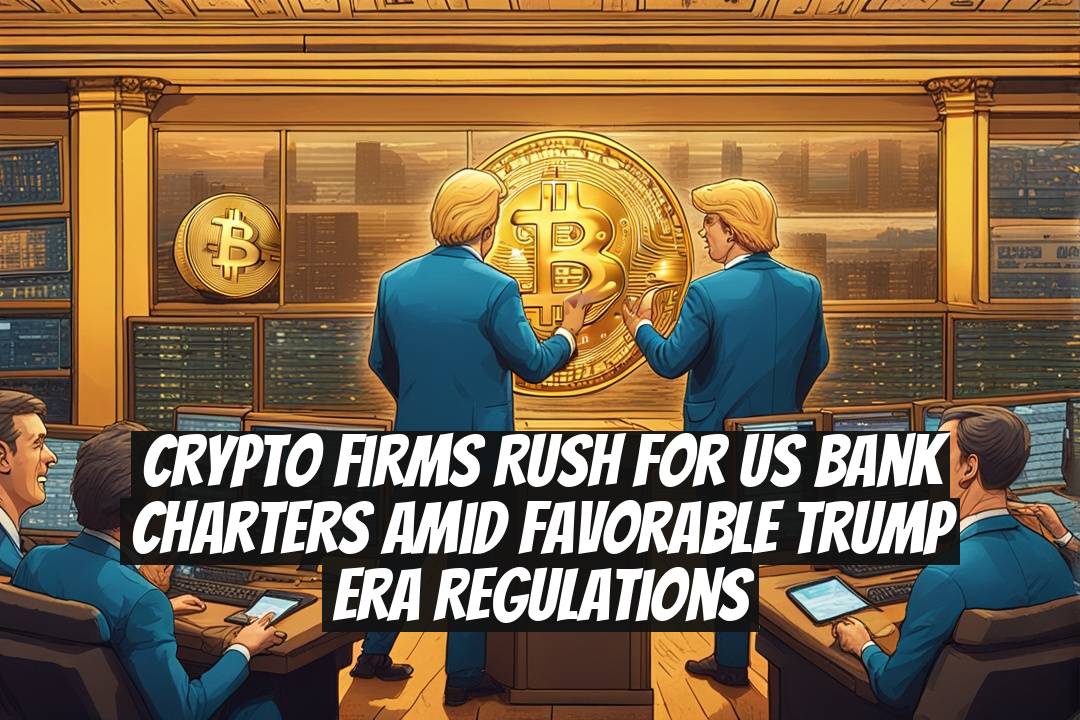
Are Crypto Firms About to Become Your New Favorite Banks? Let’s Break It Down
In the whirlwind world of cryptocurrency, a new buzz is stirring - crypto firms rushing for US bank charters amid favorable Trump era regulations. This isn’t just a tweet-worthy headline; it’s a seismic shift signaling how digital asset companies like Ripple, Circle, and BitGo are positioning themselves to blend into America’s traditional banking landscape. Why now? Because these firms see golden regulatory opportunities under the Trump administration’s friendlier stance toward crypto, aiming to ride the wave with national trust bank charters from the Office of the Comptroller of the Currency (OCC) [1][2][3].
Let’s unpack what this means for the crypto market, why it matters, and what savvy investors like you should watch for.
Key Takeaways
Subscribe to our Social Media for Exclusive Crypto News and Insights 24/7!
- Crypto firms are applying for national trust bank charters to gain regulatory clarity and operate nationwide without cumbersome state licenses.
- The Trump administration’s regulatory environment is seen as more welcoming to digital assets compared to previous regimes.
- These charters enable firms to custody cryptocurrencies, offer payment processing, and back stablecoins with US Treasuries.
- Kraken is taking a slightly different angle by launching debit and credit cards instead of a bank charter.
- The move represents a massive step towards mainstream financial integration for crypto companies.
- Investors should note increased regulatory compliance, potential service expansions, and growing legitimacy within the U.S. financial system.
? Crypto Firms Racing Toward US Bank Charters: What’s Driving This Rush?
Imagine trying to scale a skyscraper but being stopped at every floor by dozens of gatekeepers-in this analogy, those gatekeepers are state-level financial licenses needed to operate in the U.S. crypto firms have long struggled with these hurdles, making nationwide service complicated and expensive.
Now, thanks to the Trump-era regulatory climate, firms like Ripple and Circle see a smoother ride through federal-level national trust bank charters. This OCC approval allows them to operate coast to coast without juggling state licenses, making day-to-day crypto business more straightforward and legally sound [1][2].
Besides operational ease, these charters carry a prestige boost. For crypto players, it’s akin to getting a “golden ticket” to legitimate banking, granting capabilities to:
- Custody crypto assets securely
- Handle crypto payment processing
- Hold reserves backing stablecoins in U.S. Treasuries
- Integrate more deeply with the federal banking system
Ripple’s CEO Brad Garlinghouse is on the move too, applying for a Federal Reserve master account, which would put Ripple on almost equal footing with traditional Wall Street banks regarding stablecoin management [1].
? Kraken’s Card Play: Different Path, Same Goal
Not all firms are after charters. Kraken, a major crypto exchange, is launching debit and credit card offerings before month’s end. Co-CEO Arjun Sethi calls this a “natural convergence.” Kraken doesn’t want to become a full-service lender but aims to partner with banks to offer mortgage and other financial services [1][3].
This move broadens their financial product lineup without the regulatory complexity of a bank charter, demonstrating that there’s more than one way to crack the code of mainstream financial integration.
? What Does This Mean for the Crypto Market?

This rush signals a major evolution: crypto is no longer just about speculative trading or decentralized ideals; it’s aggressively entering traditional finance territory. What does this imply?
- Increased legitimacy: Federal charters indicate government acknowledgment and acceptance, reducing some institutional skepticism.
- Regulatory clarity and compliance: Charters require adhering to strict rules, which will help stabilize crypto’s wild image and risks.
- Growth in service offerings: Charters enable crypto firms to launch products like payment processing, custody, and tokenized assets, potentially attracting more users and investors.
- Impact on stablecoins: New legislation like the proposed Genius Act will require stablecoins to be backed by US Treasuries and issued by federally chartered banks - making these bank-chartered firms leaders in the stablecoin arena [1][4].
Yet, the market should also tread carefully. With bigger regulatory scrutiny comes increased reporting requirements, operational costs, and possible constraints on innovation.
? Practical Tips for Investors and Crypto Enthusiasts
Thinking about diving deeper into this evolving landscape? Here are some practical tips:
- Watch for regulatory announcements: The passage of stablecoin legislation (like the Genius Act) will affect which firms can legally issue compliant stablecoins.
- Follow bank charter approvals: Firms with OCC charters are positioned to offer safer, regulated crypto services-often a good sign for investments.
- Keep an eye on Kraken’s product launches: Financial products like crypto debit and credit cards may become mainstream gateways for new users.
- Diversify exposure: Consider both crypto-native firms pursuing charters and exchanges expanding services outside banking to hedge regulatory risks.
- Stay updated on stablecoin backing: Firms holding stablecoin reserves in US Treasuries reduce the risk of instability compared to unbacked tokens.
? My Take: The Crypto Playing Field Is Changing Fast
If you asked me over coffee last year about crypto firms becoming banks, I might have responded with raised eyebrows. But now? It feels inevitable. The Trump administration’s friendlier approach has emboldened crypto executives to seek federal charters, signaling that the industry is ready to shed much of its “wild west” image.
This isn’t just about compliance-it’s about survival and growth. Crypto firms know that integration into the traditional financial system opens doors to institutional funds, smoother payment systems, and broader adoption. But they must balance innovation with the responsibility of regulation.
As an investor or enthusiast, it’s an exciting time but also one requiring vigilance. Embrace the change, but keep your risk radar on.
Are we witnessing the birth of crypto’s next big era-where it walks hand in hand with traditional banking-or will regulatory friction stall this ambitious merger? Only time will tell. What do you think this means for crypto’s future?
Explore more about these exciting developments:
Crypto Firms Rush for US Bank Charters Amid Favorable Trump Era Regulations
Crypto firms push into US banking as Trump signals friendlier stance
Crypto Firms Expand into Banking as Trump Administration Warms to Digital Assets
Sources:
[1] https://www.ainvest.com/news/crypto-firms-rush-bank-charters-favorable-trump-era-regulations-2507/
[2] https://www.firstpost.com/tech/crypto-firms-push-into-us-banking-as-president-trump-signals-friendlier-stance-13906152.html
[3] https://www.ainvest.com/news/crypto-firms-expand-banking-trump-administration-warms-digital-assets-2507/
[4] https://www.axios.com/2025/07/03/bank-charters-circle-stablecoins-crypto