
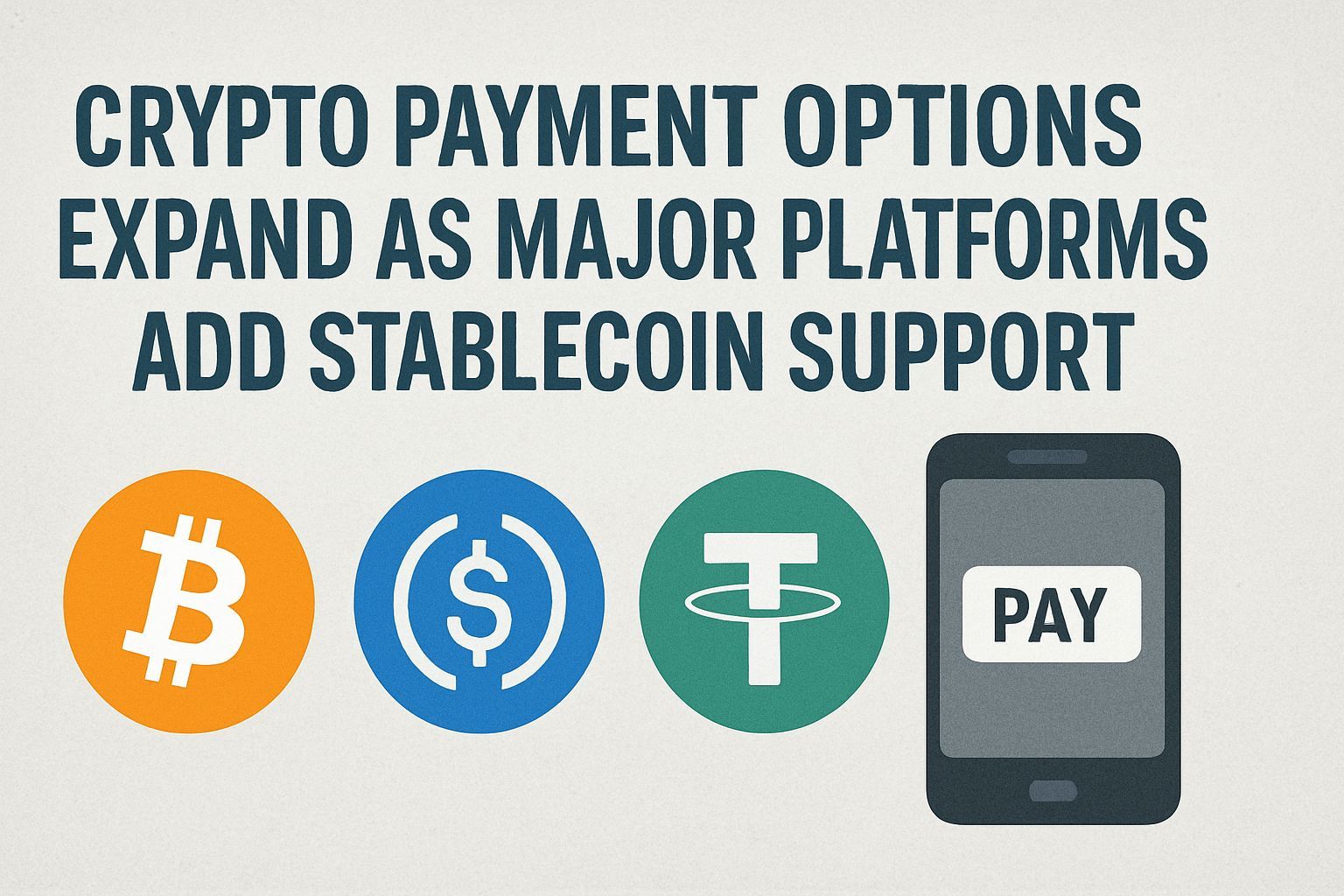
When Crypto Payments Go Cozy With Stablecoins: A Gamechanger in the Making
If you thought crypto payments were just a niche hustle, think again. The landscape is morphing fast - crypto payment options are expanding as major platforms jump on the stablecoin bandwagon. This isn’t just some passing fad; it’s a seismic shift with big implications for merchants, consumers, and institutional players alike. So, buckle up - let’s unpack why stablecoin support is setting off fireworks in the payments world and how you can navigate this rapidly evolving space.
By the way, did you know that in September 2025 alone, stablecoin transactions on just Ethereum and Tron blockchains hit a staggering $772 billion? That’s a 64% slice of all crypto transaction volume that month[1]. Makes you wonder, right? How did we get here so fast?
Key Takeaways
Subscribe to our Social Media for Exclusive Crypto News and Insights 24/7!
Stablecoin support is becoming a payment titan as big players like PayPal, Shopify, and Stripe double down on crypto-enabled commerce.
Traditional finance giants (Visa, JPMorgan, Fidelity) are inching closer to crypto payments, leveraging stablecoins for seamless transactions.
Market mechanics behind stablecoins reveal interesting dominance cycles, liquidity shifts, and growing institutional appetite.
Stablecoin-backed payments drastically cut fees, speed up cross-border transactions, and reduce volatility risks.
Major stablecoins like USDT, USDC, and PayPal USD (PYUSD) dominate, each catering to different needs within this exploding ecosystem.
? Why Stablecoins Are the New Payment MVPs

Alright, let’s get this straight. You love crypto for its promise of decentralization and fast, cheap transfers. But volatility? That’s the party pooper nobody invited. Enter stablecoins - digital currencies pegged to stable real-world assets (mostly the US dollar). They’re like crypto’s chill cousin: all the speed and borderless freedom, none of the stomach-churning price swings.
That stablecoin volume explosion we mentioned? Not just hype. PayPal dropped its own stablecoin, PYUSD, weaving it into a gigantic global payments network[2]. Shopify’s building payment rails with stablecoins too. Meanwhile, Stripe’s acquisition of Bridge - a stablecoin infrastructure platform - is like them planting the flag saying, “We’re all in on crypto payments now”.
And it’s not just startups or crypto natives. The majors - Visa, JPMorgan, Fidelity - they’re working to add crypto products seamlessly to their offerings. Imagine being able to buy your morning coffee with a stablecoin powered by your traditional bank! The GENIUS Act passed in mid-2025 cleared regulatory obscurity, giving crypto projects and institutions a regulatory nod to innovate without sweating lawsuits[1].
? Market Mechanics: A Peek Behind the Stablecoin Curtain
Stablecoins aren’t just sitting pretty; they’re actively reshaping market dynamics. Here’s where it gets interesting - let’s break down a few market mechanics that shape this space:
| Factor | What’s Happening | Why You Should Care |
|---|---|---|
| Dominance Cycles | USDT and USDC make up over 75% of the stablecoin market[5]. While new entrants like PYUSD grow, giants hold sway. | Liquidity clusters around these, meaning tight spreads and deep order books. Good news for traders and payment ops. |
| Liquidity and Trading Volume | USDT processes $20 billion daily; high turnover outpaces card networks[5]. | Stability plus liquidity makes instant payments possible globally. |
| Cross-Border Flows | Stablecoins exceed unbacked crypto in cross-border transfers since 2022, widening the gap[4]. | Payment corridors that once took days now take minutes, disrupting remittance markets. |
| DeFi and TVL (Total Value Locked) | TVL hit $156B in Q3 2025, with Ethereum grabbing 60% of DeFi market share[4]. | Stablecoin use in lending & borrowing fuels liquidity for payments and enterprise use cases. |
Here’s a fun historical nod: Back in early 2022, many hodlers got rekt holding ADA during its ~60% crash. Those who had stablecoin exposure (USDT/USDC) could offload positions quickly or jump into safer DeFi pools - no rocket science but a smart play. This taught a lot of us the importance of liquidity and stability in wild markets.
?️ Stablecoin Payment Options: Meet the Heavy Hitters
Here’s a quick lineup of stablecoins ruling payment rails right now:
Tether (USDT): The OG stablecoin, with $146B in circulation. Its trillions in daily volume mean you get deep liquidity, tighter spreads, and near-instant settlements. Perfect for merchants needing quick turnover, especially in unstable FX regions[5].
USD Coin (USDC): Issued by Circle, now a Nasdaq-listed company, USDC is famed for transparency and regulatory compliance. Its backing by cash & US Treasury bills helps merchants sleep better at night[5].
PayPal USD (PYUSD): Launched in 2023, PYUSD has leveraged PayPal’s massive user base and trust factor. It’s turbocharging usage in everyday e-commerce and remittances, bridging fiat and crypto effortlessly[2].
Binance USD (BUSD): Heavily used in the trading ecosystem, BUSD partners with Paxos for maximum trust and regulation, sees high adoption within Binance’s ecosystem, and sports excellent transaction speeds[2][8].
Seeing these toppers jam together on payment platforms means merchants can pick options that fit their liquidity, fees, and jurisdiction needs - no more one-size-fits-all headaches.
? The Dance of ADX, Liquidations, and What Traders See
Feeling fancy? Let’s talk technical for a sec.
Liquidity flows on stablecoins influence broader crypto market moves. When a stablecoin pair loses liquidity suddenly (say, due to a big liquidation cascade in volatile markets), prices of volatile assets can swing dramatically.
Imagine this: In mid-2023, a cascade of liquidations around the FTX implosion sent shockwaves through BTC and ETH markets. Stablecoins became havens for escaping volatility, skyrocketing their demand. The ADX (Average Directional Index) readings for BTC also showed strong trending moves as traders fled into stable-assets or used them to re-enter the market at “safer” entry points.
A trader I spoke with compared it to 2021’s blow-off top in BTC - same story: early signs of exhaustion, but stablecoin liquidity saved many traders from bloodbath losses. The whales weren’t sleeping; they were rotating capital through stablecoins before the next leg.
? Real-World Ripple Effects: Why This Matters for You
You might ask: “Why should I care about stablecoins and their payment expansion beyond just trading?” Here’s the deal:
Payment Speed: Forget waiting days for international wire transfers. With stablecoins, cross-border payments clear in minutes, slashing friction for freelancers, merchants, and global businesses.
Cost Efficiency: Stablecoins cut out hefty bank fees and FX spreads. If you’re running an international biz (or just paying your crypto tax guy abroad), these savings stack up fast.
Volatility Hedge: Using stablecoins protects against wild swings - no more watching your paycheck evaporate overnight.
Financial Inclusion: Emerging markets especially benefit. Merchants and consumers keep earnings stable, paying suppliers without relying on slow or unreliable banking rails[5].
Here’s A Useful Chart For Visual Folks
(Live data snapshot from CoinMarketCap on Stablecoin Market Cap)
Wrapping Up: The Crypto Payments Revolution Is Just Heating Up
Honestly, this wave of stablecoin-powered payments surging through major platforms isn’t just the future - it’s the now. Institutional adoption is no longer a tease; it’s full steam ahead. The whales are rotating, regulators are clarifying, and merchants finally have payment options that marry crypto speed with fiat stability.
If you’re an investor or a merchant, staying on top of these moves isn’t just smart; it’s survival in a rapidly digitizing economy. And hey, maybe next time you pay for pizza or send cash overseas, your stablecoin of choice will sneak in there, quietly changing the game.
? Crypto Payment Options Expand with Stablecoin Support: Must-Know FAQ
Q1: What exactly are stablecoins and why are they crucial for crypto payments?
A1: Stablecoins are cryptocurrencies pegged to stable assets like the US dollar, lowering volatility. This stability enables faster, cheaper, and more predictable crypto payments, making them ideal for merchants and consumers.
Q2: How are major platforms like PayPal and Shopify using stablecoins in payments?
A2: These platforms are integrating stablecoins (e.g., PayPal USD) to facilitate instant, low-cost transactions across borders, enhancing everyday commerce and expanding blockchain’s reach to traditional customers.
Q3: What role do institutional players have in the stablecoin payment expansion?
A3: Firms like Visa and JPMorgan are building crypto products that use stablecoins to offer regulated, fiat-backed digital asset services, accelerating mainstream adoption and trust.
Q4: How does the GENIUS Act impact stablecoin payments?
A4: Passed in 2025, the GENIUS Act provides a federal regulatory framework requiring stablecoins to maintain 100% reserves and obtain licenses, increasing transparency and security in crypto payments.
Q5: What are the risks for merchants and users adopting stablecoin payments?
A5: Risks include regulatory changes, operational security flaws, and reliance on the stablecoin issuer’s transparency. However, top stablecoins like USDC and USDT offer audited reserves and broad acceptance to mitigate these risks.
Q6: Can stablecoin payments replace traditional payment methods completely?
A6: While stablecoins enhance speed and cost-efficiency, traditional methods still dominate due to regulatory and infrastructural hurdles. Hybrid use cases are expected before full replacement occurs.
Crypto Payment Options
Stablecoin Support
Crypto Payments Expansion
- https://a16zcrypto.com/posts/article/state-of-crypto-report-2025/
- https://www.moonpay.com/learn/cryptocurrency/stablecoins-list
- https://eco.com/support/en/articles/11788679-top-10-stablecoin-swap-and-conversion-platforms-complete-guide-for-2025
- https://www.imfconnect.org/content/dam/imf/News%20and%20Generic%20Content/GMM/Special%20Features/GMM%20Special%20Feature%20-%20Crypto%20Monitor%20October%202025.pdf
- https://www.rapyd.net/blog/top-stablecoins-analysis/






