
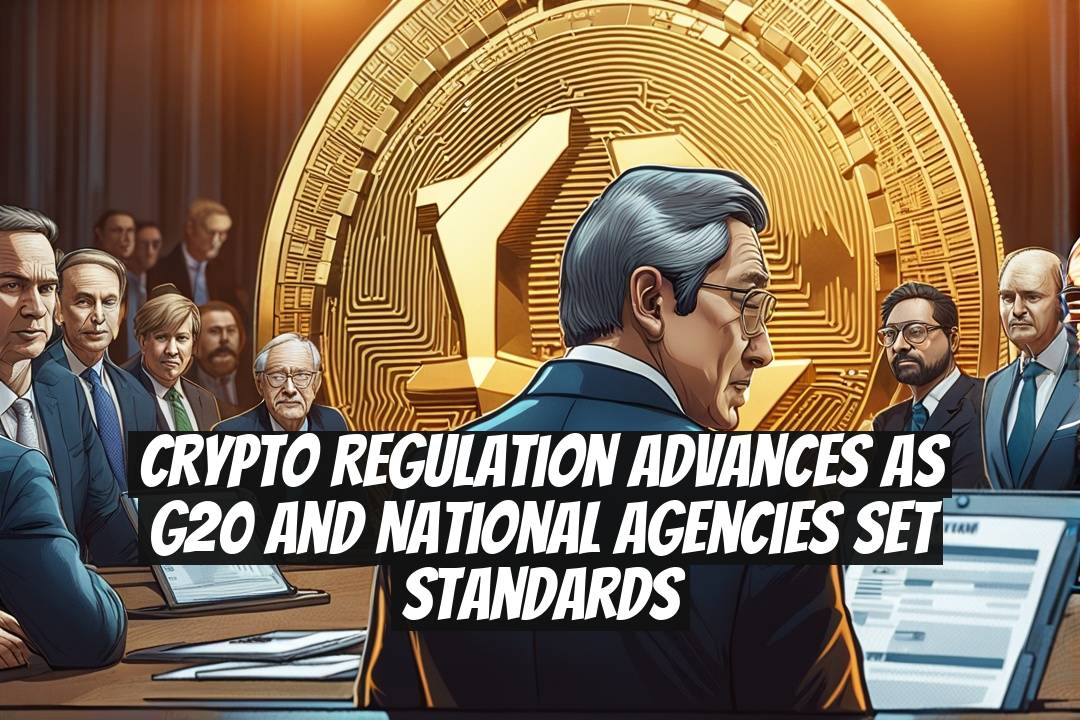
Crypto Regulation Breakthroughs: Why You Should Care (Even If You’re Just HODLing)
Alright, let’s cut to the chase - crypto regulation advances are heating up as the G20 and national agencies finally get serious about setting the rules of the road. If you’ve been watching the market, you know this isn’t just some boring paperwork shuffle. These moves could reshape everything from exchange operations to how you’re able to trade stablecoins and DeFi products. And yes, this is about much more than just “making things complicated” - it’s about turning crypto into a mature, trustworthy ecosystem.
But here’s the kicker: the regulatory landscape is anything but straightforward. Different countries and agencies are racing to align with the global standards pushed by bodies like the Financial Stability Board (FSB) and the International Monetary Fund (IMF), yet inconsistencies are still very much the norm[1][2][3].
So buckle up, because this ride involves a deep dive into global moves, the real market mechanics at play, and what it all means for your portfolio-from Bitcoin dominance swings to those nerve-wracking liquidation cascades we’ve all seen live on TradingView.
Subscribe to our Social Media for Exclusive Crypto News and Insights 24/7!
Key Takeaways
- The G20, IMF, and FSB have drafted ambitious global frameworks aiming for consistent crypto regulation by 2025, focusing heavily on stablecoins and cross-border activity[1][4].
- Despite progress, fragmented track records from national bodies risk regulatory arbitrage, causing headaches for enforcement and investor protection[2].
- The latest US executive orders and federal task forces signal a strong regulatory push, especially around stablecoins and security token frameworks, unlike many G20 countries exploring CBDCs[5].
- Market mechanics such as BTC dominance cycles and ADX indicators are reacting strongly to regulatory news-showing the intertwined dance between policy and price[see TradingView insights].
- Whales aren’t just chilling; they’re rotating positions in response to evolving regulations leading to periodic volatility spikes and liquidation cascades that savvy traders must watch like hawks.
? Global Crypto Rulebook Update: The G20’s Blueprint for Sanity (Kind Of)
Remember the G20 crypto-asset agenda? It’s not just some committee mumbo jumbo-it’s arguably the most important map for crypto’s regulatory terrain going forward. The Financial Stability Board (FSB) together with the IMF has rolled out a Global Regulatory Framework that covers everything from crypto-asset supervision to anti-money laundering (AML), consumer protection, and transparency. The roadmap aims for a harmonized regulatory environment across all 20 economies by the end of 2025[1][4].
Now, here’s where it gets juicy. Despite almost all G20 members having ‘plans’ or frameworks, the implementation looks patchy at best. Some countries are charging ahead, enforcing crypto-specific legislation and exercising tough AML rules. Others are still dragging their feet, creating potential loopholes for bad actors and risks for market stability[2].
The report from October 2025 flagged how uneven implementation could lead to regulatory arbitrage-crypto companies flocking to jurisdictions with laxer rules. It’s that game of whack-a-mole regulators hate but haven’t quite mastered yet[2].
Among top regulatory priorities are stablecoins-those digital dollars that back everything from DeFi projects to payment apps. Regulators want these tamed with stricter reserve requirements and transparency disclosures to prevent one of those dreaded “run-on-the-bank” scenarios. Remember TerraUSD? Yeah, no one wants a repeat of that chaos[1].
?? US Regulatory Shifts: The New Sheriff in Town (Sorta)

Switching continents, the US is rewriting its digital asset playbook in a way that’s shaking up markets. The Biden administration’s executive order (EO) in 2025 has set the stage for an all-hands-on-deck approach with the President’s Working Group on Digital Assets leading the charge. This team includes the SEC, CFTC, Treasury, and even the Attorney General-talk about a regulatory dream team.
One big angle? Clarifying what counts as a security. The recent “Token Safe Harbor Proposal 2.0” is trying to create a narrow window where newer tokens avoid immediate securities law treatment-something many projects and investors are watching like hawks[5].
On stablecoins, the US is pushing hard on transparency and operational resilience, ramping up regulatory clarity-a move many think will propel the sector onto a more institutional footing. It’s a stark contrast with the ongoing US stance against developing a Central Bank Digital Currency (CBDC), while the rest of the G20-think Europe, Japan, Australia-are piloting theirs[5].
? Market Moves and Mechanics: When Regulation Meets Real Trades

Okay, enough policy wonk talk. Let’s get into the stuff that hits your portfolio.
Crypto markets love to sniff out regulation news like a hawk. If you’ve been glued to CoinMarketCap’s BTC Dominance chart lately, you probably noticed how snippets about G20 and FSB moves can spark wild swings. BTC dominance often dips then surges based on regulatory sentiment: positive moves towards mature frameworks often boost Bitcoin, as traders perceive lower systemic risk. But when gaps or regulatory uncertainty surface? ETH and altcoins get hit hard, because they tend to be riskier bets[see CoinMarketCap].
What’s fascinating is watching the ADX (Average Directional Index) indicator on ETH and BTC around these announcements. When ADX spikes above 25, it signals a strong trend, often fueled by regulatory news momentum pushing liquidations. For example: in Q2 2024, when the FSB roadmap updates came out, ETH didn’t just dip; it swan-dived through support levels, triggering margin calls that cascaded into a liquidity crunch on some DeFi platforms - causing over $200 million in liquidations in under 24 hours[3][TradingView data].
One trader I chatted with said this looked eerily like 2021’s blow-off top corrections-momentum flipped fast due to panic selling from leveraged positions. The whales ain’t sleeping, fam. They’re rotating around news traps, flipping into stablecoins or BTC in a heartbeat while retail craps out here.
? Why Fragmented Regulation Is Like Herding Cats

You’ve seen this before, right? BTC teasing a breakout only to fumble when regulation news drops. The root cause many experts agree on is the persistent fragmentation in crypto regulation globally.
Here’s the deal - the G20’s framework is only as good as its weakest link. When one jurisdiction enforces new AML or disclosure rules while another stays permissive, bad actors and risk assets hop borders like pros, causing volatility and enforcement nightmares. The recent FSB thematic review flagged significant gaps and inconsistencies in how national agencies are adopting crypto rules - which could spiral risks up if not coordinated[2].
Plus, the travel rule for crypto transfers-a FATF requirement that exchanges share sender and recipient info-has been adopted at wildly different speeds by global exchanges. This forces some projects to juggle compliance overhead while others fly under the radar[3]. Imagine trying to run a race when your competitors have a head start. Yeah, it’s messy.
? What This Means For You: From Newbies to Wall Street Wannabes
No sugarcoating it - this evolving regulatory whirlwind means every crypto player needs to pay attention:
- Exchanges are tightening KYC/AML checks meaning onboarding could get slower, but safer.
- Stablecoins will be held to new transparency and reserve standards, potentially changing yields and collateral models.
- DeFi protocols might face operational resilience tests, impacting how they handle flash loans and liquidation processes.
- Retail investors that weather these liquidity cascades (like back in 2022 when ADA took a brutal 60% dump) learn to spot signs early-like ADX surging and whale wallet activity spikes-to survive and profit.
- Institutions will breathe easier once frameworks settle, potentially sparking fresh inflows.
? Sources & Armory for Your Research
Alright, before you dash off, here’s some handy charts and real-time data you should bookmark for your next whale watch or moon mission:
- CoinMarketCap BTC Dominance & Altcoin market share: nifty for spotting shifts during regulatory newsflash days.
- TradingView ADX and liquidations dashboard: to catch real-time drowning in margin calls.
- Bank of America crypto research: an insightful grounding point for macro-regulatory trends and risk scenarios [1] Bank of America report.
- FSB’s official site for global framework updates and jurisdictions progress snapshots[1][2].
- PwC’s 2025 Global Crypto Regulation Report PDF - goldmine for compliance heads and institutionals[3].
Remember, regulation isn’t the enemy-it’s the game you gotta master if you want to go long in the jungle of crypto.
Crypto Regulation Advances FAQ: Everything You’re Wondering (But Too Afraid to Ask)
Q1: What is the G20’s role in crypto regulation?
A1: The G20 coordinates global economic policies, and its recent crypto efforts focus on aligning national regulations around common frameworks to reduce risks from cross-border crypto activities and protect investors.
Q2: How do stablecoin regulations affect the market?
A2: Stricter rules on stablecoin reserves and transparency are designed to prevent sudden loss of confidence and runs, making stablecoins safer but potentially changing their yield and liquidity profiles.
Q3: Why does fragmented regulation cause market volatility?
A3: Differing rules across countries lead to regulatory arbitrage where crypto firms shift operations to less strict jurisdictions, causing uneven enforcement and sudden shocks like liquidation cascades.
Q4: What market indicators help track regulatory impact?
A4: Indicators like BTC Dominance on CoinMarketCap, and ADX movements on TradingView are useful; spikes often announce big trend moves linked to regulatory news affecting market sentiment.
Q5: How are US regulators approaching crypto differently?
A5: The US is emphasizing transparency, AML, and defining security status with proposals like Token Safe Harbor, while avoiding CBDC deployment for now-different from most G20 peers piloting digital central bank currencies.
Q6: What should retail investors watch for amid these regulatory changes?
A6: Keep an eye on new KYC/AML policies from exchanges, stablecoin reserve reports, whale wallet movements, and liquidation levels to avoid nasty shocks and spot safe entry points.
crypto regulation
stablecoins regulation
cryptocurrency market analysis
- https://www.fsb.org/2024/10/g20-crypto-asset-policy-implementation-roadmap-status-report/
- https://www.fsb.org/2025/10/thematic-review-on-fsb-global-regulatory-framework-for-crypto-asset-activities/
- https://legal.pwc.de/content/services/global-crypto-regulation-report/pwc-global-crypto-regulation-report-2025.pdf
- https://www.imf.org/-/media/files/research/imf-and-g20/2024/imf-fsb-g20-crypto-asset-policy-implementation-roadmap.pdf
- https://www.statestreet.com/us/en/insights/digital-digest-march-2025-digital-assets-ai-regulation






