
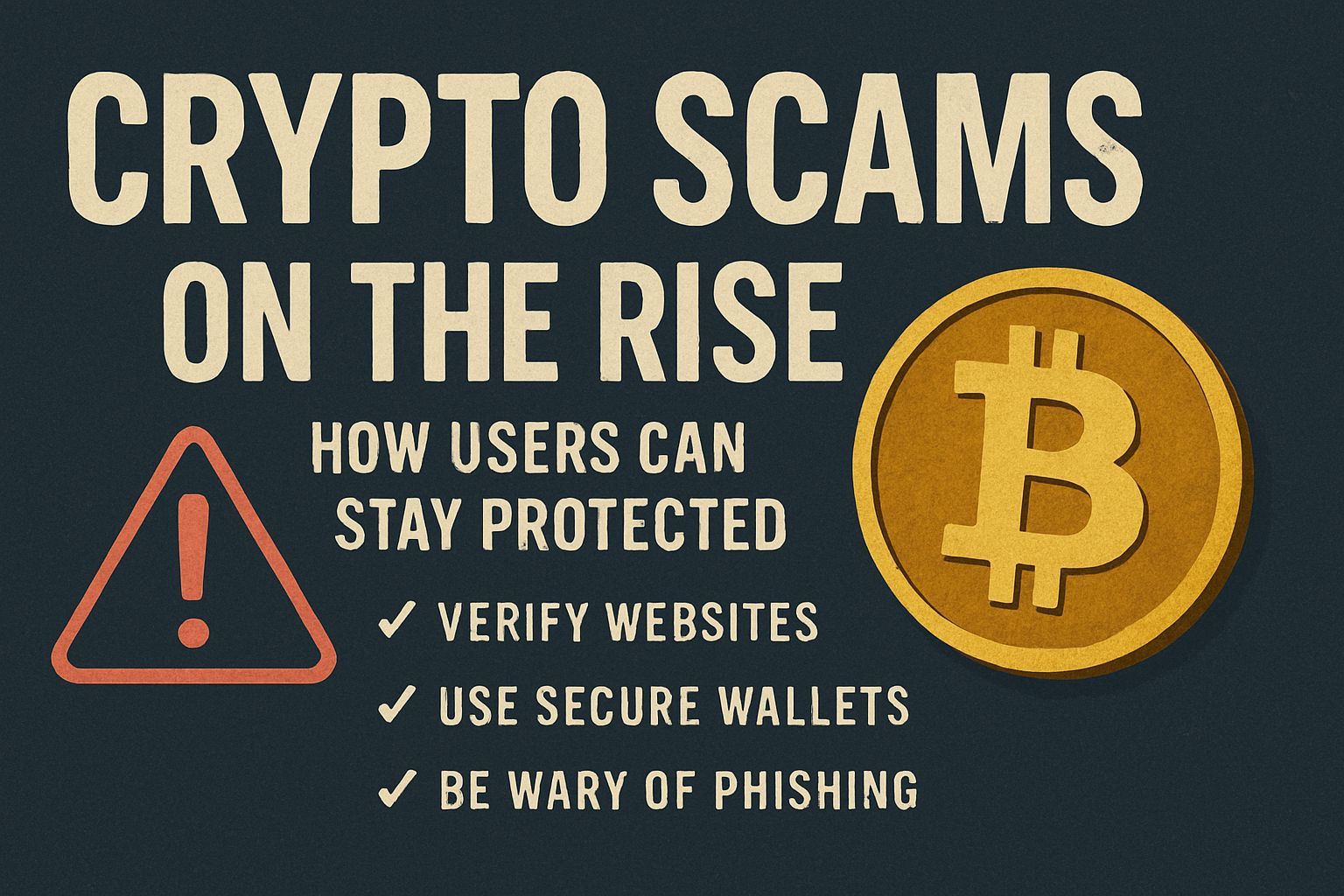
Why Crypto Scams Are Skyrocketing - And How You Can Dodge the Bullet
Crypto scams aren’t just crawling out from the dark corners anymore - they’re setting up camp right in the mainstream, making investors of all stripes sweat bullets. With crypto scams on the rise in 2025, the losses aren’t pocket change; we’re talking billions drained from wallets worldwide. From phishing to fake exchanges, and AI-powered deepfakes luring users into traps, it’s a wild jungle out there. If you’re not geared up with the right knowledge and tools, you’re basically sitting duck. So, how exactly do you stay protected when the bad actors seem to be inventing new schemes daily? Let’s dive deep into the crypto underbelly, from on-chain data insights to tactical defense hacks - no jargon, just what you really need to know.
Key Takeaways ?️
Crypto scams accounted for roughly $12 billion in illicit gains in 2024, with losses already topping $3 billion in H1 2025 alone[1][2][3].
Despite the massive dollar figures, only 0.14% of total on-chain transactions were illicit in 2024 - the wild west feel comes from the scale, not the percentage[1][3].
The rise of stablecoins in illicit laundering networks and AI-enhanced scam techniques signals evolving, sophisticated threats[3][2].
Hardware wallets and verified software downloads remain your first crucial shield against malware and phishing[1].
Market mechanics like liquidation cascades and dominance shifts can sometimes trigger rapid crashes that scammers prey on - knowing these can help you plan exits better.
Subscribe to our Social Media for Exclusive Crypto News and Insights 24/7!
? The Scam Explosion: Numbers That’ll Make You Blink
Alright, picture this. According to Chainalysis and blockchain security reports, $41-51 billion flowed to illicit crypto addresses in 2024 - and that’s just the tip of the iceberg[1][3]. What’s insane is that scam-related addresses snatched roughly $12 billion of that haul. Yeah, you read it right - billions of crypto assets vanish yearly via scams, hacks, and fraud.
Fast forward to the first half of 2025, and we see scammers already netting around $3.1 billion, a pace suggesting we’re in for a bumpy ride[1][2]. These figures don’t come from a handful of rookie mistakes - they’re tied to sophisticated schemes like Ponzi ICOs, fake trading apps, romance cons (aka “pig butchering”), and ransomware crypto ransoms[2][3].
And here’s a kicker: most crypto users don’t realize the ease with which scammers exploit blockchain’s irreversible, pseudonymous nature, making stolen funds almost impossible to trace and recover.
?️️ How These Scammers Work: Dive Into Their Playbook

The scammer’s toolkit is no joke. Some recent trends:
Deepfake Videos and Fake Promos: Remember those slick YouTube livestreams with fake CEOs promising double your crypto if you send funds? Spoiler alert: it’s a trap. Victims send ether and see zero returns[4].
Fraudulent Crypto Exchanges & Wallets: Sites like Denoex lure newbies with fake trades and then freeze withdrawals, demanding additional “verification” fees[4].
Smart Contract Exploits: DeFi platforms are juicy targets. Hackers drain millions exploiting protocol bugs.
AI-Powered Social Engineering: With AI chatbots mimicking human behavior, scammers get craftier and harder to detect - imagine a bot convincing you to click a phishing link.
Ransomware & On-Chain Laundering: Criminals demand crypto ransoms and then hide the proceeds via mixers and privacy coins to throw investigators off.
According to the FBI, U.S. losses alone hit a staggering $9.3 billion in 2024 thanks to spreading scams backed by industrial-level fraud operations[5].
? Market Madness & Scam Timing: Why Knowing Your TA Matters

Crypto isn’t just about buying low, selling high - it’s about understanding the subtle beast of market mechanics that scammers prey on:
When Bitcoin dominance dips, altcoins become the playground for pump-and-dump schemes.
The Average Directional Index (ADX) movements around 25 to 40 often spot trend strength - weak trends can mean scammers double down on fake hype.
Liquidation cascades, like the infamous May 2021 ETH crash where millions in leveraged positions blew sky-high, create panic - and that panic is exactly when scammers pounce on fearful traders[6].
One trader I recently spoke with said, "Watching ETH swan-dive into support during 2022’s crash was brutal-but it sharpened my scam radar. If investors aren’t wary there, they’ll walk right into fraud traps."
?️ Real-World Protection Hacks: How to Keep Scammers at Bay

Enough gloom. Here’s where it gets practical, friend:
Use Hardware Wallets: Devices like Ledger Nano X isolate your private keys offline. Even if your PC is malware-riddled, funds are safer. Just don’t approve transactions on a compromised device[1].
Verify Sources: Before clicking any link or downloading apps, triple-check URLs- scammers love typosquatting domains (e.g., “bitocin” instead of “bitcoin”).
Keep Malware Software Updated: A fresh anti-virus on all your connected devices isn’t old-school-it’s crypto-school[1].
Leverage Blockchain Analytics: Tools from Elliptic or Chainalysis help trace funds and flag suspicious wallets-great for exchanges and vigilant investors[5][7].
Stay Skeptical of “Too Good to Be True”: If some random tweet or livestream promises crazy returns with zero risk, walk away. Trust me, whales ain’t giving away free ETH.
Diversify Information: No single news source or influencer holds all the truth. Mix your feeds between trusted research (like Bank of America’s crypto reports[1]) and real on-chain data from CoinMarketCap or TradingView.
? Data Insights & What Charts Say About Scam Trends
Looking at on-chain analytics from Chainalysis gives us a cold, hard peek: scam wallet inflows peaked alongside certain market bubbles - for example, the boom-bust cycle in early 2021. As BTC dominance slid under 40% in Q1 2021, altcoin scams exploded, mirroring investor FOMO spikes[7].
TradingView data shows increasing ADX values during crypto bull rallies, which ironically coincide with spikes in fraudulent new token launches - scammers exploit hype phases like pros.
Even liquidation data from 2022-23 reveals cascade effects where a 10% dip can trigger multiple margin calls, heightening panic and inviting scammy “support” tokens to swoop in. These technical flashpoints aren’t just market events; they’re scam hotspots.
? Imagine Holding SOL Through That Crash-and Lessons Learned
Back in 2022, I stuck with SOL through a brutal 60% dump. Felt like watching paint dry while your portfolio bled. But that grind taught me a key lesson: scams thrive during despair and confusion.
When prices drop fast, scammers ramp up fake recovery schemes - “send 1 SOL, get 10 back” scams flood Telegram groups. Been there, seen those losses.
Moral? Emotional trading = scammer playground. Patience and verified info shield your stack better than any hype.
Final Thoughts: The Whales Ain’t Sleeping, Fam
Market dominance shifts, ADX spikes, and liquidation cascades aren’t just nerdy jargon-they’re the battlefield where scammers play their game. The whales rotate, and so should your vigilance.
Crypto scams in 2025 are no backyard business. They’re engineered, industrial frauds exploiting every glitch and emotion. But being savvy, using the right tools, and staying honest with yourself about market moves keeps you in the game and your gains intact.
Remember: you’re not just holding tokens - you’re guarding your financial future.
Crypto Scams on the Rise: How Users Can Stay Protected - Essential FAQs
Q1: What are the most common types of crypto scams in 2025?
A1: Common scams include fake crypto exchanges, phishing with deepfake videos, Ponzi schemes, DeFi exploits, and AI-powered social engineering. Romance scams and ransomware demanding crypto ransoms have also surged[1][2][5].
Q2: How significant are crypto scams compared to overall crypto transactions?
A2: While billions are lost yearly, illicit activities represent around 0.14% of total on-chain transactions, meaning most crypto activity is legit but scams impact users deeply due to scale and sophistication[1][3].
Q3: Can hardware wallets fully protect me against crypto scams?
A3: Hardware wallets significantly reduce risk by keeping private keys offline, but users must avoid signing transactions on infected devices. Software from official sources and updated malware protections complement these wallets[1].
Q4: How does market volatility increase scam risks?
A4: Rapid price drops trigger liquidation cascades and panic selling, during which scammers launch fraud tokens or fake recovery offers. Understanding dominance cycles and ADX helps predict and avoid these danger zones[6][7].
Q5: Are there tools to track or prevent crypto scams effectively?
A5: Yes, blockchain analytics tools by Elliptic and Chainalysis offer real-time scam detection and wallet flagging, aiding both exchanges and investors in mitigating fraud risk[5][7].
Q6: What’s the best mindset to avoid falling victim to crypto scams?
A6: Stay skeptical of unreal guarantees, verify sources meticulously, Don’t chase hype or panic trade, and diversify your crypto info channels. Patience and due diligence are your best defenses.
crypto scam protection
blockchain analytics
hardware wallets
- https://www.ledger.com/academy/topics/security/the-state-of-crypto-scams-in-2025
- https://deepstrike.io/blog/crypto-crime-report-2025
- https://coinledger.io/research/crypto-crime-report
- https://dfpi.ca.gov/consumers/crypto/crypto-scam-tracker/
- https://www.elliptic.co/blog/the-state-of-crypto-scams-2025-keeping-our-industry-safe-with-blockchain-analytics
- https://www.connectcu.org/index.php/blog/204-crypto-and-defi-investment-scams-in-2025-what-you-need-to-know
- https://go.chainalysis.com/2025-Crypto-Crime-Report.html






